
Where Is The Starter On A Jeep Grand Cherokee 3.6/5.7: Guide
 Reading Time: 10 minutes
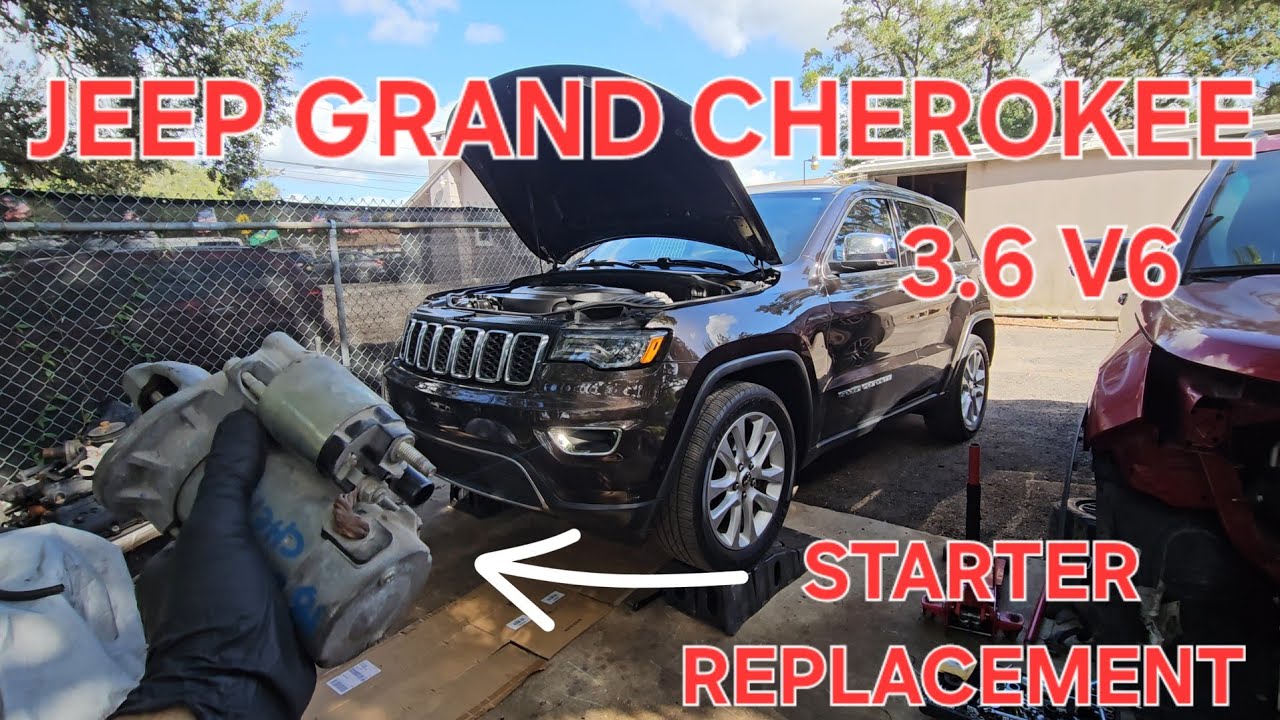
The starter on most 2011–2022 Jeep Grand Cherokee models with the 3.6L Pentastar V6 or 5.7L HEMI V8 sits low at the rear of the engine, where the engine meets the transmission. It is usually reached from under the Jeep.
- 3.6L Pentastar V6: Mounted at the rear of the engine near the transmission bell housing. The intake manifold can limit access from above.
- 5.7L HEMI V8: Mounted low on the driver-side area of the engine, close to the transmission bell housing. It is normally accessed from below.
The exact view can change by model year, drive system, and engine package. Always confirm the location by VIN-specific service information before removing parts.

Starter Location on the 3.6L Pentastar V6
The 3.6L starter is at the rear of the engine, near the engine-to-transmission connection. The transmission bell housing is the large case that joins the engine and transmission. The starter bolts into this area so its small gear can engage the engine’s flywheel or flexplate.
On the Grand Cherokee, the starter is low and partly hidden. The intake manifold may block a clear view from the top of the engine. In many cases, the best inspection point is underneath the vehicle.
How to identify it
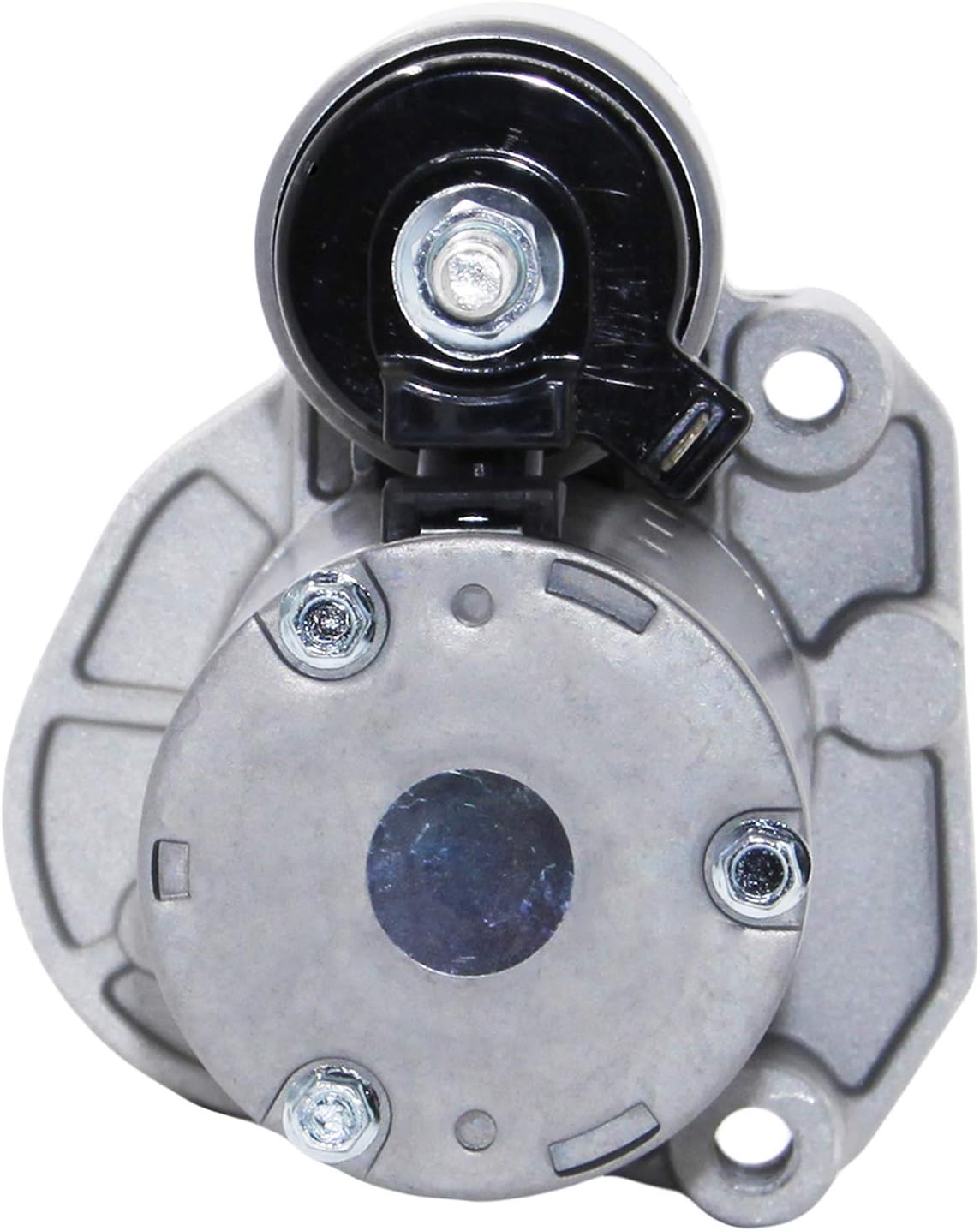
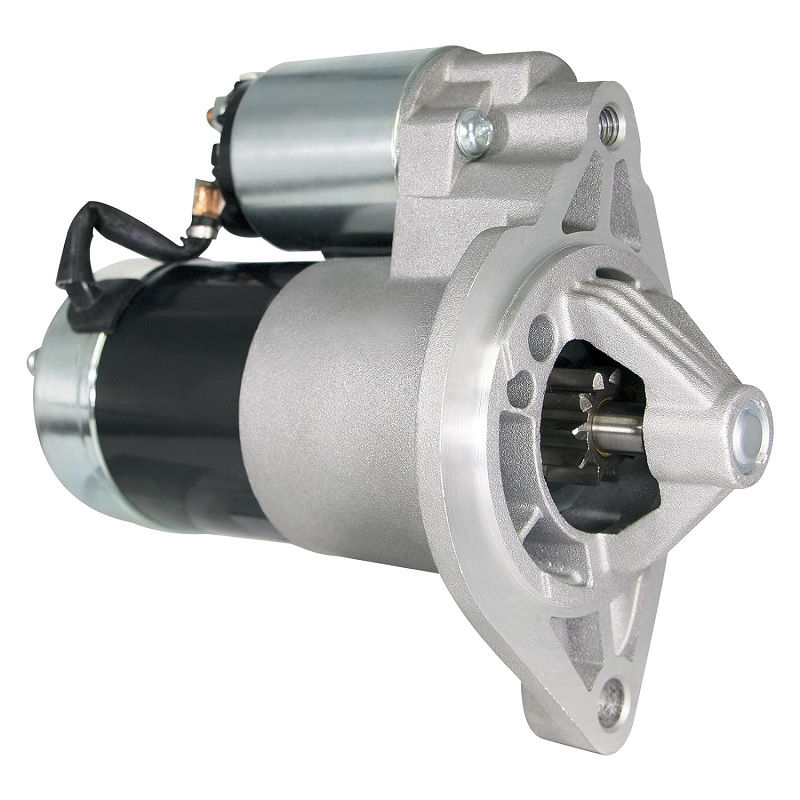
Look for a short, round electric motor with:
- A thick battery cable
- A smaller control wire
- Two or more mounting bolts
- A small gear housing facing the transmission
The starter is not the alternator. The alternator sits higher on the front of the engine and has a belt around its pulley. The starter has no belt.
Typical access path
For many 3.6L Grand Cherokee models, access follows this general path:
- Park on a level surface.
- Disconnect the negative battery cable.
- Raise the front of the Jeep with a rated floor jack.
- Support it with jack stands placed at approved lift points.
- Remove any lower splash shield that blocks the view.
- Look toward the rear of the engine near the transmission.
- Trace the heavy battery cable to the starter.
Some 3.6L repairs may require removing the intake manifold or other parts for top-side access. Do not remove the intake only because a video for another Chrysler vehicle shows that step. The required work can differ between a Grand Cherokee model years, drivetrain layouts, and emissions packages.
Starter Location on the 5.7L HEMI V8
The 5.7L HEMI starter is mounted low on the driver-side area of the engine, close to the transmission bell housing. It is positioned near the lower rear portion of the engine rather than at the front near the serpentine belt.
From underneath, look above the oil pan and near the point where the engine joins the transmission. The starter may be partly hidden by the exhaust system, heat shields, wiring, or a skid plate.
How to identify the 5.7L starter
The starter normally has:
- A large cylindrical motor body
- A smaller solenoid attached to it
- A thick positive battery cable
- A smaller starter-control wire
- Mounting bolts that enter the engine or transmission housing
The 5.7L HEMI alternator is higher on the engine and belt-driven. If the part has a pulley and a belt, it is not the starter.
Typical access path
A general inspection method is:
- Disconnect the negative battery cable.
- Lift and support the Jeep safely.
- Remove the lower shield if it blocks the starter.
- Find the transmission bell housing.
- Scan the driver-side lower rear area of the engine.
- Follow the heavy battery cable to the starter solenoid.
The exhaust pipe may make the starter look harder to reach than it is. Avoid moving or loosening exhaust parts unless the service procedure for the specific Jeep requires it.

3.6 vs. 5.7 Starter Location
Both engines place the starter near the engine and transmission joint, but the surrounding parts are different. This affects visibility and the tools needed for removal.
| Engine | General starter position | Usual inspection direction | Common obstruction |
|---|---|---|---|
| 3.6L Pentastar V6 | Rear of engine near the bell housing | From below; sometimes from above | Intake manifold and wiring |
| 5.7L HEMI V8 | Low driver-side rear of engine near the bell housing | Mainly from below | Exhaust parts, shields, and skid plates |
The key point is that neither starter is normally found at the front of the engine. Search near the transmission connection, not near the radiator or accessory belt.
Vehicle orientation can also cause confusion. When this article says driver side, it means the left side of a U.S.-specification Jeep when you are sitting in the driver’s seat. When facing the Jeep from the front, that side appears on your right.

How to Reach the Starter Safely
The starter carries high battery current even when the ignition is off. A metal tool touching the starter terminal and the vehicle body can create a short circuit, sparks, heat, or vehicle damage.
Before inspecting or removing the starter:
- Turn the ignition off.
- Remove the key or keep the key fob away from the Jeep.
- Set the parking brake.
- Place the transmission in Park.
- Disconnect the negative battery cable.
- Wait several minutes before working near wiring or electrical connectors.
- Use jack stands if you must work under the Jeep.
Never rely on a floor jack alone. A jack can lower or shift without warning. Use stands rated for the vehicle’s weight and place them on firm, approved support points.
Battery-disconnect caution
Some Grand Cherokee systems may lose stored settings after battery power is removed. The Jeep may need to relearn certain functions, such as idle behavior or window settings. Check the owner’s manual before disconnecting the battery if you are concerned about saved settings.
Do not disconnect the battery while the engine is running. Do not test the starter by bridging terminals with a screwdriver.
Symptoms That Point to the Starter
A starter problem often causes a no-start condition, but not every no-start problem comes from the starter.
| Symptom | Possible cause |
|---|---|
| One strong click and no crank | Weak battery, poor cable connection, solenoid, or starter |
| Rapid clicking | Low battery voltage or poor battery connection |
| No sound at all | Battery, fuse, relay, park/neutral switch, wiring, or starter control issue |
| Slow engine cranking | Weak battery, corroded cables, poor ground, or failing starter |
| Grinding during cranking | Starter gear, flexplate, or mounting problem |
| Starter spins but engine does not turn | Starter drive or flexplate issue |
Start with the battery and cable connections. A weak battery can imitate a bad starter. Check for clean, tight terminals and inspect the engine ground connection.
If the battery is charged and the cables are sound, a technician can test for voltage at the starter’s main terminal and control terminal during a start request. This test helps separate a starter fault from a relay, wiring, security, or transmission-range problem.
Important distinction
If the engine cranks at normal speed but does not run, the starter is already doing its main job. The fault may involve fuel, spark, air, engine timing, or a security system.

Starter Removal: What Usually Changes by Engine
The exact removal steps depend on the model year and drivetrain. A 3.6L and a 5.7L do not always use the same access method, even when they are installed in the same Grand Cherokee generation.
On the 3.6L Pentastar
The starter may be hidden behind or below the intake manifold. Some service procedures provide access from underneath, while others require the removal of nearby components. Intake removal brings extra risks, including:
- Damaging intake seals
- Leaving debris in an open intake port
- Mixing up electrical connectors
- Incorrectly routing wiring
- Failing to tighten bolts in the correct order
Cover open intake ports with clean material during service. Do not use loose shop towels where they could fall into the engine.
On the 5.7L HEMI
The starter is often easier to locate from below, but exhaust routing and heat shields can limit hand space. Allow the exhaust to cool fully before working nearby. Do not use the starter housing or wiring as a place to pry against the exhaust.
Before removing the mounting bolts, support the starter with one hand. The unit can be heavier than it looks, and the cable may still hold it near the vehicle.
Common Mistakes When Finding the Starter
The most common mistake is looking at the front of the engine. The alternator, air-conditioning compressor, and belt tensioner are in that area. The starter is normally low and toward the transmission.
Other mistakes include:
- Confusing the starter with the alternator
- Working under a Jeep supported only by a jack
- Forgetting to disconnect the negative battery cable
- Assuming every 3.6L or 5.7L uses the same access route
- Pulling on wiring instead of releasing the connector
- Installing a replacement starter without checking the part number
- Reusing damaged cable nuts or heat shields
- Ignoring a weak battery and replacing the starter first
A replacement starter should match the Jeep’s year, engine, transmission, and electrical configuration. Compare the original unit with the replacement before installation.

Does the Starter Location Change by Grand Cherokee Generation?
Yes. The answer is most consistent for the WK2 Grand Cherokee, sold in the United States from the 2011 model year through the 2022 model year. Earlier and later generations may use different engine layouts, access points, shields, and wiring.
The 5.7L HEMI was also used in earlier Grand Cherokee models, including some WK vehicles. Those vehicles may place the starter in a similar engine-to-transmission area, but the surrounding parts and removal steps can differ.
For an accurate procedure, identify:
- Model year
- Engine size
- Two-wheel drive or four-wheel drive
- Transmission type
- U.S. market configuration
- Any factory skid plates or special equipment
A VIN-specific repair manual is the best source for bolt locations, torque values, connector procedures, and required component removal. Do not use torque values from a different engine or generation.

Frequently Asked Questions
Is the starter on a Jeep Grand Cherokee located under the intake manifold?
On some 3.6L Pentastar applications, the intake manifold partly blocks access to the starter. The starter itself remains at the rear of the engine near the transmission. Whether the intake must be removed depends on the model year and the service method.
Can I see the starter from the top of the engine?
Usually, the starter is easier to locate from underneath. On the 3.6L, the intake and rear engine parts may hide it from above. On the 5.7L, the driver-side lower area often provides the clearest view.
Which side is the starter on the 5.7 HEMI?
On the Grand Cherokee 5.7L, look low on the driver-side rear area of the engine near the transmission bell housing. Always confirm the position against the actual vehicle because shields and exhaust parts can change the visible access point.
Do I need to remove the transmission to replace the starter?
Normally, no. The starter is designed to be removed without removing the transmission. However, nearby shields, intake parts, wiring, or exhaust components may need to be moved depending on the Jeep’s configuration.
How can I tell whether the starter or battery is bad?
Test the battery state of charge, terminal condition, and cable voltage drop first. If the battery and cables pass testing but the starter receives the correct start signal and does not crank the engine, the starter becomes a stronger suspect.
Final Answer
On a U.S.-market Jeep Grand Cherokee with the 3.6L Pentastar, the starter is at the rear of the engine near the transmission and may sit beneath the intake manifold area. On the 5.7L HEMI, it is low on the driver-side rear of the engine near the transmission bell housing.
Disconnect the negative battery cable before touching the starter. Support the Jeep with jack stands, identify the part by its heavy battery cable and motor body, and verify the exact procedure for the vehicle’s model year before removing components.