
Best And Worst Years For Jeep Compass: Years To Avoid
 Reading Time: 13 minutes
For U.S. used-car buyers, the 2021 and 2022 Jeep Compass are sensible starting points, while the 2018 Compass deserves extra scrutiny for reported oil-use, stalling, and electrical concerns. The 2007–2008 models are less appealing budget buys because age, rust, and potential continuously variable transmission repairs can outweigh a low purchase price.
These are buying priorities, not a proven reliability ranking. A well-kept Compass with service records can be a better choice than a newer one with low oil, poor shifts, or hidden crash damage. The 2017 model year also needs special care: Jeep sold two different Compass generations in the United States that year.
This guide focuses on U.S.-market vehicles, their main powertrain differences, and the checks that matter before you buy. Live recall records and current complaint totals were not available for verification, so the recommendations below are conditional—not claims of measured failure rates.

Best and Worst Jeep Compass Years at a Glance
Start with a clean 2021–2022 Compass, inspect a 2018 closely, and judge older models by transmission type and condition. There is not enough verified evidence here to label every vehicle from one model year good or bad.
This table separates practical buying advice from claims that would require a current, sales-adjusted reliability study.
| U.S. model year | Buying position | Main reason | Key condition |
|---|---|---|---|
| 2007–2008 | Generally pass unless exceptionally well documented | Oldest examples; age, corrosion, and CVT exposure can make repairs hard to justify | Thorough rust and transmission inspection |
| 2009–2013 | Budget-only choices | Age and drivetrain condition matter more than small year-to-year differences | Identify the exact transmission |
| 2014–2016 | Selective budget options | A six-speed automatic became available on many configurations | Do not assume every automatic is a six-speed |
| 2017 | Identify the generation before deciding | Both outgoing and redesigned Compass models were sold | Confirm body style, drivetrain, and service history |
| 2018 | High-scrutiny year | Owner reports include oil use, stalling, and electrical or drivability faults | Check oil history, recalls, codes, and cold-start behavior |
| 2019 | Consider with extra engine checks | Shares the second-generation 2.4-liter engine family | Look for oil-use records and completed applicable updates |
| 2020–2021 | Reasonable used-car shortlist | Later examples of the established second-generation layout | Buy on inspection results, not model year alone |
| 2022 | Strong starting point for shoppers who want the updated cabin | Revised interior and Uconnect 5 infotainment | Test all electronics; the older powertrain remains |
| 2023 and newer | Consider for the newer powertrain, not proven longevity | Turbocharged engine and eight-speed automatic introduced for 2023 | Less long-term evidence than older models |
The practical distinction is simple: 2021–2022 are starting points for shopping, while 2018 is a prompt for deeper checks. Neither label replaces a vehicle-specific inspection.
Why the Compass Generation and Transmission Matter
A Compass badge does not tell you which engine, transmission, or generation you are buying. These details can change the risk more than a one-year difference.
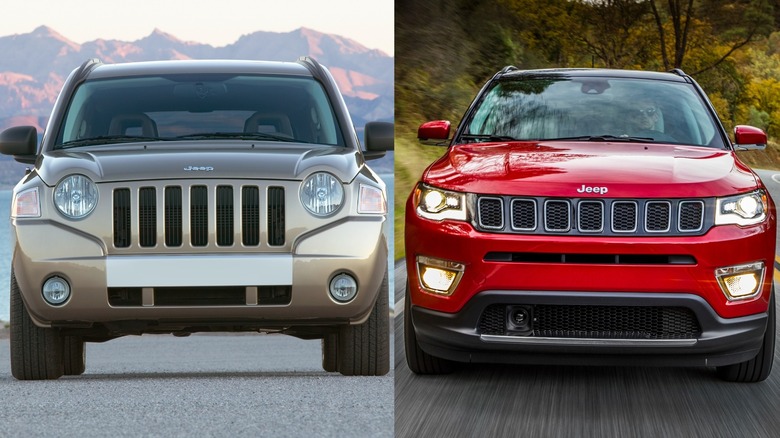
First generation: 2007–2017
The original U.S. Compass offered several engine and transmission combinations. Many automatic versions used a continuously variable transmission, or CVT. Unlike a conventional automatic, a CVT changes its ratio without a fixed set of normal gear steps.
For 2014, a conventional six-speed automatic became available on many configurations. Some versions retained the CVT, including configurations tied to the Freedom Drive II off-road package. Manual-transmission models also exist.
A listing that says only “automatic” is not enough. Ask for the build information and have the shop verify the transmission.
Second generation: introduced during 2017
The redesigned Compass arrived during the 2017 model year. Through 2022, U.S. versions used a 2.4-liter four-cylinder engine, with transmission choices that varied by year and drivetrain. Many all-wheel-drive versions used a nine-speed automatic.
For 2023, the U.S. Compass switched to a 2.0-liter turbocharged four-cylinder, an eight-speed automatic, and standard four-wheel drive. That is a major mechanical change—not just a trim update.
Why 2017 listings can mislead buyers
Two 2017 Compass listings can describe quite different vehicles. Do not compare prices, problems, or repair advice until you know which generation each one belongs to.
Ask the seller for the VIN, a window sticker or build sheet if available, and clear photos of the cabin and exterior. Have the inspection shop confirm the configuration.
Best Jeep Compass Years to Consider
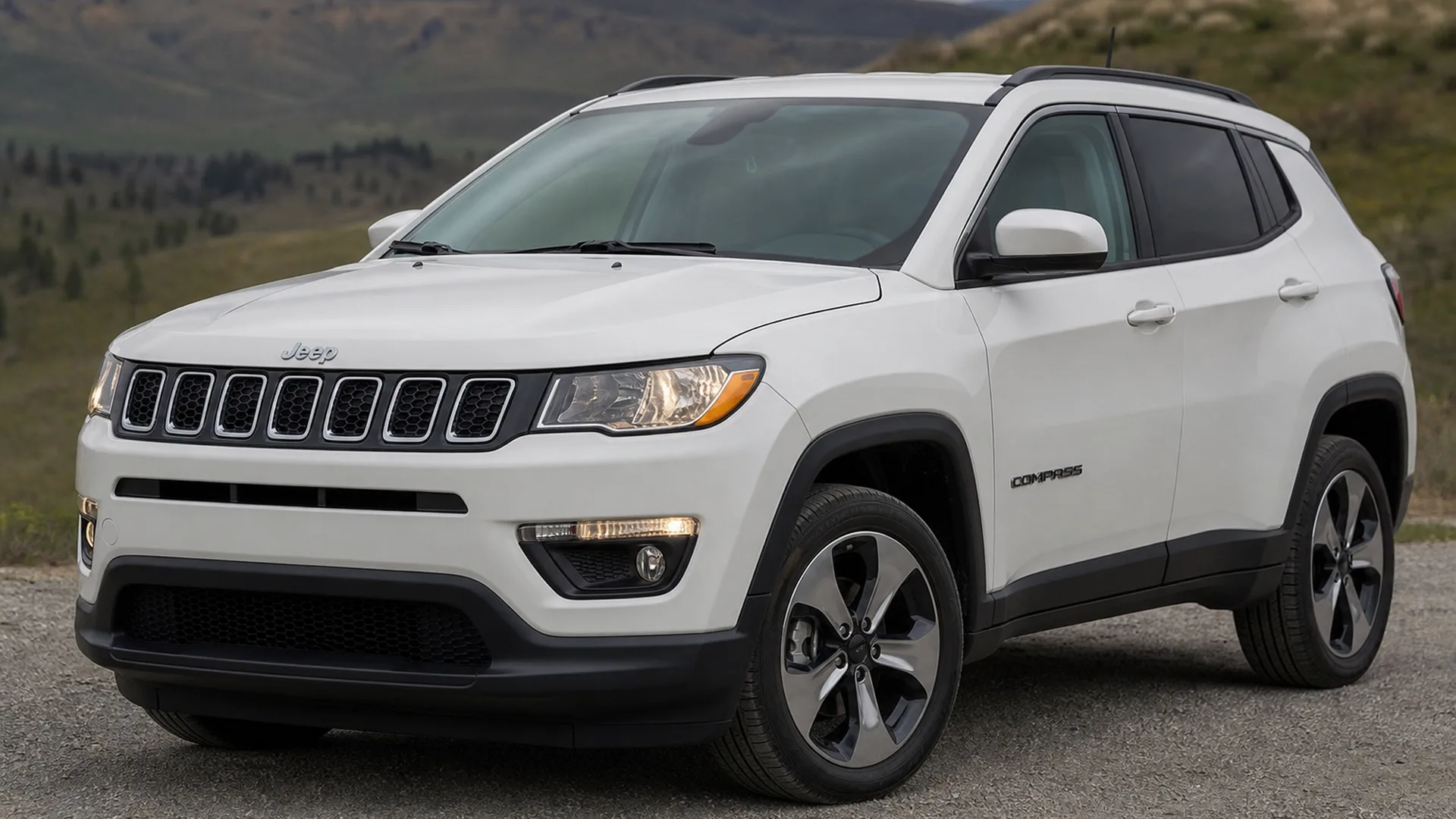
The most useful shortlist is 2021–2022, followed by a well-kept 2020 or a carefully chosen older six-speed model. These choices balance equipment, age, and known mechanical distinctions. They are not verified winners in a controlled reliability study.
2021 Jeep Compass: a practical place to start
The 2021 Compass suits buyers who want a later second-generation vehicle without paying for the redesigned 2022 cabin.
It uses the established 2.4-liter engine rather than the turbocharged powertrain introduced for 2023. That gives buyers more service history to examine, but it does not prove that the engine will last longer.
Look for:
- Consistent oil-change records.
- No pattern of low oil between services.
- Smooth shifts when cold and fully warm.
- No unresolved warning lights or stored fault codes.
- A price that reflects mileage, condition, and needed work.
A neglected 2021 should not outrank a well-maintained 2020.
2022 Jeep Compass: best fit for buyers who value the updated interior
The 2022 Compass brought a substantially revised cabin and Uconnect 5 infotainment. That makes it a useful option if screen layout, controls, and cabin design matter to you.
The key limit is mechanical: the 2022 cabin update did not bring the 2023 turbo engine and eight-speed transmission. Do not pay a premium under that assumption.
During the test drive, check the screen, phone connection, backup camera, climate controls, and driver-assistance features fitted to that vehicle. Cabin upgrades add value only if they work.
2020 Jeep Compass: worth considering when the price is right
A clean 2020 can make more sense than a newer example with weak records. Use the price difference to judge whether it leaves room for tires, brakes, scheduled service, and unexpected repairs.
The same engine and transmission checks still apply. Its place on the shortlist is a practical buying judgment, not evidence that 2020 has a known lower failure rate.
2014–2016 Compass: selective budget choices
For a lower budget, a 2014–2016 Compass with a verified conventional six-speed automatic may be worth inspecting. It avoids the CVT-specific concerns that affect the buying decision on many older examples.
Yet age remains a major factor. Rust, worn suspension parts, leaks, and deferred maintenance can erase the value of a low asking price. A manual-transmission model also needs a clutch and gearbox check; a manual is not a guarantee of trouble-free ownership.
Jeep Compass Years to Avoid or Inspect Closely
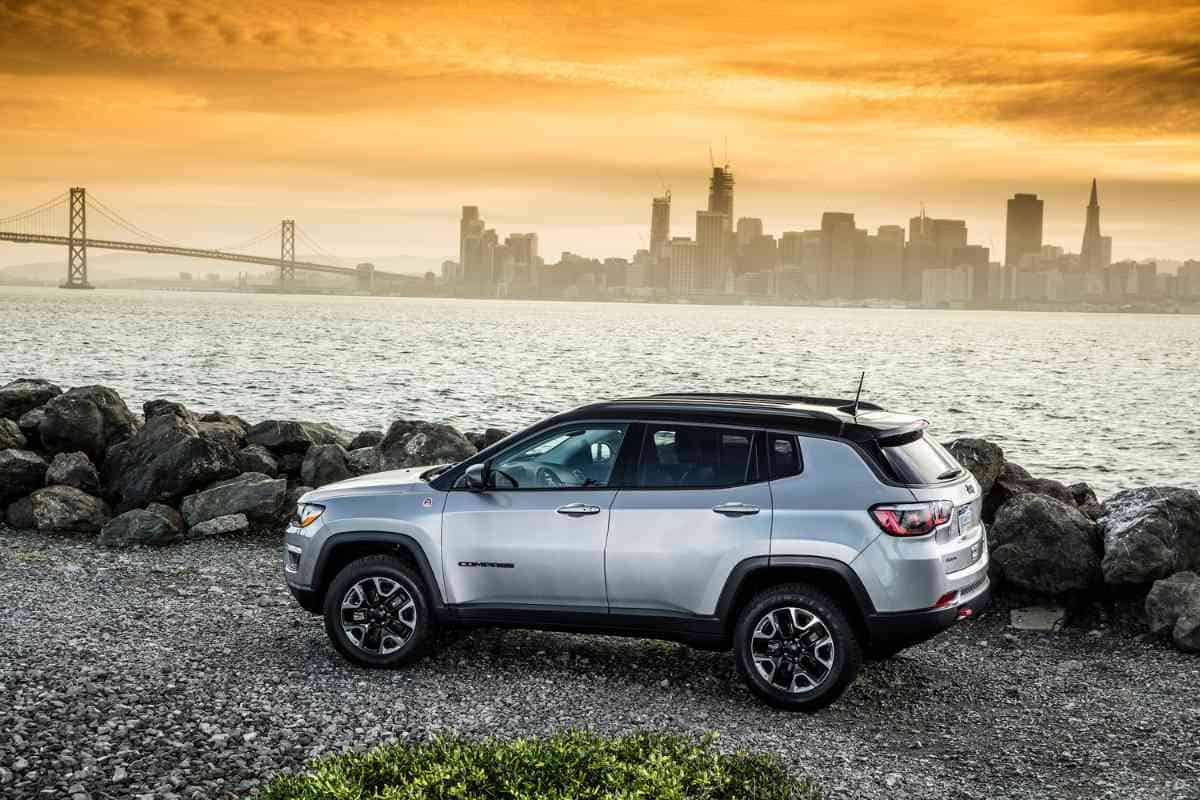
Treat 2018 as a high-scrutiny year and 2007–2008 as high-age-risk purchases. Use extra care with 2017 and 2019 rather than treating them as automatic rejects.
2018 Jeep Compass: investigate oil use and stalling reports
The 2018 Compass warrants close review because owner-report sources include complaints about excess oil use, stalling, electrical faults, and drivability.
Those reports show that buyers have encountered these symptoms. They do not establish what share of all 2018 vehicles will fail, nor do they prove that every stall has the same cause.
Before buying, ask:
- Has the engine needed oil between changes?
- Has an oil-consumption test been performed?
- Has the vehicle stalled, lost power, or needed repeated jump-starts?
- Were engine software updates or other repairs completed?
- Are the repair orders available?
Some 2.4-liter vehicles were subject to manufacturer actions related to oil consumption. Applicability must be checked by VIN. A software update is not proof that an engine previously run low on oil has no wear.
Walk away if the seller will not allow a cold start, an oil-level check, or an independent inspection.
2007–2008 Jeep Compass: low price, high inspection burden
The earliest Compass models are now old enough that condition is often the main risk. On many automatic examples, CVT condition adds another major concern.
Reported transmission symptoms can include whining, overheating, poor acceleration, or loss of drive. A shop must diagnose the cause; noise alone does not prove the transmission has failed.
In U.S. road-salt regions, inspect the underside, subframes, mounting points, and brake lines. Structural corrosion is not a cosmetic flaw. A cheap vehicle can become costly if the structure or drivetrain needs major work.
2017 Jeep Compass: avoid buying without identifying it
The strongest reason to pause on a 2017 listing is ambiguity. The outgoing model and redesigned model have different layouts and buying concerns.
For an outgoing-generation example, confirm whether it has a CVT, six-speed automatic, or manual. For the redesigned version, use the engine, oil-use, electrical, and transmission checks that apply to the later generation.
The year alone is too vague to support a useful verdict.
2019 Jeep Compass: check the engine’s history
A 2019 Compass should not be rejected solely because it shares an engine family with earlier models. It should, however, receive a careful oil-history review.
Ask for records of top-ups, oil-consumption tests, applicable updates, and engine repairs. A seller’s claim that oil use is “normal” is not enough without a documented rate and the relevant manufacturer guidance.
Common Jeep Compass Problems: Symptoms and What to Check
Separate the symptom from the diagnosis. A weak battery, a software issue, and a mechanical fault can produce similar warning lights or poor drivability.
| Symptom | Possible causes—not a diagnosis | Useful next step |
|---|---|---|
| Oil level falls between services | External leak, internal consumption, incorrect fill, or other engine fault | Check records and have a shop inspect; a formal consumption test may be needed |
| Engine stalls or loses power | Fuel, electrical, sensor, software, or mechanical fault | Scan for codes and review applicable recalls and service actions |
| CVT whines or loses performance when hot | Transmission, cooling, fluid, or other drivetrain issue | Have a shop test it at operating temperature |
| Automatic shifts harshly or hesitates | Software, adaptation, fluid, mount, or internal fault | Diagnose before accepting “they all do that” |
| Screen resets or start-stop stops working | Battery condition, charging fault, software, or module issue | Test the battery system and scan the vehicle |
| Knocks, clunks, or uneven tire wear | Suspension wear, alignment, tire damage, or crash damage | Inspect on a lift and check alignment |
Oil warnings need the right response
Low oil level and low oil pressure are not the same thing. Follow the owner’s manual when checking the level.
If an oil-pressure warning appears while driving, stop safely and shut off the engine. Do not keep driving simply because the vehicle still runs. Arrange qualified help.
Start-stop faults need a battery-system check
Some Compass configurations use an auxiliary battery as part of the stop-start system. Where fitted, both batteries and the charging system may need testing.
Do not assume that a new main battery rules out an electrical problem.

How to Check a Used Jeep Compass Before You Buy
Arrange an independent pre-purchase inspection before signing or paying a nonrefundable deposit. A vehicle-history report is useful, but it cannot confirm oil use, transmission health, or every past repair.
1. Confirm the exact vehicle
Record the VIN, model year, generation, engine, transmission, and drivetrain. Verify these details against the listing.
This is vital for 2017 models and older automatic versions.
2. Check recalls and service actions
Use the NHTSA recall lookup to check for unrepaired safety recalls by VIN. Then ask a Jeep dealer about applicable manufacturer campaigns and repair history.
A recall, a service bulletin, and a customer-satisfaction campaign are different things. A service bulletin describes repair guidance; it does not always mean the repair is free.
Keep proof of completed work. The absence of an open recall does not prove the vehicle is mechanically sound.
3. Review the records
Look for regular oil changes using the specified oil, plus records for cooling-system, transmission, and drivetrain service where required.
Gaps do not prove neglect, but they add uncertainty. Repeated top-ups, recurring warning lights, and the same repair performed several times deserve an explanation.
4. Start it cold and drive it warm
Ask the seller not to warm the vehicle before you arrive. Watch for smoke, rough idle, unusual noise, and warning lights.
If it is safe to drive, test it long enough to reach normal operating temperature. Include low-speed turns, stop-and-go traffic, highway driving, and reverse.
Do not continue the test if it overheats, loses drive, stalls in traffic, or shows an oil-pressure warning.
5. Have the shop scan it and inspect it on a lift
Ask for a scan of available control modules, not just a basic engine-code check. Recently cleared codes or incomplete emissions monitors need an explanation, though they do not by themselves prove deception.
The lift inspection should cover rust, leaks, suspension, brakes, tires, and crash repairs. Ask for a written list of urgent repairs and near-term costs.
A good result is a consistent story: the records, scan, road test, and physical condition should agree. If they do not, resolve the conflict before buying—or choose another vehicle.

What the Evidence Can—and Cannot—Tell You
No single public source provides a complete Jeep Compass reliability ranking. Each source answers a different part of the buying question.
- NHTSA: Safety recalls, investigations, and owner complaints. Complaints are reports, not confirmed failure rates.
- Jeep and Mopar: Vehicle specifications, owner’s manuals, maintenance guidance, and VIN-specific campaign information.
- Owner-report databases: Useful leads on symptoms, but subject to self-selection and uneven reporting.
- Repair records and inspection findings: Evidence about the individual vehicle you may buy.
Useful starting points include NHTSA, Mopar recall information, Mopar vehicle information and manuals, and CarComplaints’ Jeep Compass reports.
Raw complaint counts can mislead. Older vehicles have had more time to develop faults, and popular years may generate more reports simply because more were sold. Low counts on a newer model do not establish long-term durability.
Research limits and next-question gap map
Live competitor pages, current complaint totals, and VIN-specific records were not inspected for this guide. No current search position, competitor omission, or observed search demand is claimed.
The following questions are inferred from the buyer’s task, not verified search-demand data.
| Next question | Reader stage and basis | Competitor coverage | Reader benefit and evidence | Priority and placement |
|---|---|---|---|---|
| Which 2017 generation is listed? | Before shopping; inferred from the two-generation model year | Not checked | Prevents mismatched comparisons; vehicle specifications and build records | High; generation section |
| Does this “automatic” have a CVT? | During shortlisting; inferred from transmission choices | Not checked | Clarifies drivetrain risk; build data and physical verification | High; year guide and inspection steps |
| Does a completed campaign end the oil-use concern? | Before purchase; inferred from engine-history risk | Not checked | Separates an update from proof of engine health; repair records and testing | High; 2018 section |
| What should happen after a warning light? | During test drive or ownership; inferred safety need | Not checked | Reduces risk from continued driving; owner’s manual and diagnosis | High; problem checks |
The clearest supported improvement is to treat year, generation, powertrain, and vehicle condition as separate decisions, rather than reducing the purchase to a single “best year” label.

FAQs
How many miles can a Jeep Compass last?
There is no defensible mileage promise for every Compass. Maintenance, corrosion, overheating, oil level, and transmission condition all affect service life. Treat claims that every example will reach 200,000 miles as unsupported.
Is a low-mileage Compass always the better buy?
No. Long periods of storage, short trips, old fluids, and road-salt exposure can harm a low-mileage vehicle. Compare condition and records before paying a mileage premium.
Is the Compass Trailhawk more reliable than other trims?
The Trailhawk’s off-road equipment does not establish better engine or transmission reliability. Inspect for underbody impacts and evidence of hard use. Choose it for the capability you need, not as a reliability shortcut.
Is the 2023 Compass more reliable than the 2022?
That is not established here. The 2023 model introduced a different engine and transmission, so findings about the 2022 powertrain cannot simply be carried forward. The newer design also has a shorter long-term record.
Should I buy a Compass with a replaced engine or transmission?
Only after reviewing why it was replaced, who did the work, what parts were used, and whether any warranty remains. A documented replacement can be preferable to a failing original unit, but it still needs an independent inspection.
Conclusion
For most U.S. shoppers, begin with a well-maintained 2021 or 2022 Jeep Compass. Consider a clean 2020 if it offers better value. A 2014–2016 model with a verified six-speed automatic may fit a tighter budget, provided rust and overall condition check out.
Give the 2018 Compass extra scrutiny, be cautious with 2007–2008 models, and identify the generation before judging any 2017 listing.
Your next step is to get the VIN, confirm the powertrain, review recall and service records, and book an independent inspection. The right individual Compass matters more than a favorable year on a list.