
Best And Worst Years For Jeep Cherokee KL And XJ: Buy Smart
 Reading Time: 13 minutes
For U.S. used-car buyers, the 2020–2022 Jeep Cherokee KL with the 3.2-liter V6 and the 1997–1999 Cherokee XJ with the 4.0-liter inline-six are sensible starting points. The 2014–2015 KL deserves the most caution. For the XJ, inspect 2000–2001 4.0-liter models closely for cylinder-head trouble, and approach 1984–1986 models with the 2.8-liter V6 as specialist purchases.
These are buying priorities, not proven failure-rate rankings. A well-kept Jeep from a caution year can be a better buy than a neglected one from a preferred year. In the U.S., road salt, flood damage, off-road use, repair records, and open recalls can change the answer more than the model year alone.

Best and Worst Jeep Cherokee Years at a Glance
Shop by generation, engine, and condition—not by the Cherokee name alone. The XJ is an older, solid-axle SUV. The KL is a much newer crossover with more complex electronics and drivetrain options.
This table gives a practical shortlist for U.S.-market vehicles.
| Generation and years | Buying assessment | Preferred configuration or main concern |
|---|---|---|
| KL: 2020–2022 | Preferred starting point | Consider the 3.2L V6; still check transmission operation, leaks, and recalls |
| KL: 2023 | Worth considering | Final KL year; U.S. engine choices differ from earlier years |
| KL: 2017–2019 | Conditional value | A documented 3.2L V6 model can make sense; inspect the exact drivetrain |
| KL: 2014–2015 | Highest-caution KL years | Early nine-speed transmission concerns and applicable safety recalls |
| KL: 2016 | Inspect closely | Do not assume all early drivetrain concerns ended after 2015 |
| XJ: 1997–1999 | Preferred starting point | 4.0L inline-six, sound unibody, stock or modestly modified |
| XJ: 1991–1996 | Strong alternatives | 4.0L High Output engine; age and rust remain decisive |
| XJ: 2000–2001 | Conditional purchase | Check the 4.0L cylinder head and cooling history |
| XJ: 1987–1990 | Better for hands-on owners | Earlier engine controls and aging wiring need informed diagnosis |
| XJ: 1984–1986 with 2.8L V6 | Lower-priority purchase | Less appealing for routine use than a sound 4.0L example |
The key distinction: “best year” means a useful place to begin shopping. It does not mean every vehicle from that year is reliable.
There is no representative, condition-adjusted dataset here that proves one Cherokee model year has the lowest failure rate. The recommendations below combine documented configurations, official safety resources, known repair concerns, and practical inspection priorities.

Cherokee KL vs. XJ: Know Which Jeep You Are Buying
The Cherokee XJ and Cherokee KL are different vehicles with different ownership risks. Neither should be confused with the Jeep Grand Cherokee.
| Feature | Cherokee XJ | Cherokee KL |
|---|---|---|
| U.S. model years | 1984–2001 | 2014–2023 |
| Basic layout | Longitudinal engine; rear-wheel-drive-based drivetrain | Transverse engine; front-wheel-drive-based drivetrain |
| Front suspension | Solid front axle | Independent front suspension |
| Common gasoline engines | 2.5L four-cylinder and 4.0L inline-six; early models also offered a 2.8L V6 | 2.4L four-cylinder, 3.2L V6, and later 2.0L turbo four-cylinder |
| Main buying risks | Structural rust, heat damage, age, and modifications | Transmission behavior, engine condition, electronics, and four-wheel-drive hardware |
| Best suited to | Buyers willing to maintain an older utility vehicle | Buyers seeking a newer daily driver |
Both use unibody construction, which means the body structure carries loads that a separate frame would carry on some trucks. Severe rust in the XJ’s structural rails or suspension mounts is not just a cosmetic flaw.
The KL offers more modern comfort and available safety equipment. The XJ offers a simpler layout, but simplicity does not undo decades of wear or provide modern crash protection.

Best Years for the Jeep Cherokee KL
Start with a well-maintained 2020–2022 KL, especially one with the 3.2L V6. This is a configuration-based recommendation, not proof that these years have a specific reliability advantage.
2020–2022: The strongest starting point
These years avoid the KL’s earliest production period and offer a useful choice of engines and equipment. For many used buyers, the naturally aspirated 3.2L V6 is a straightforward place to start.
That does not make the V6 trouble-free. Have a mechanic check for oil leaks, coolant leaks, abnormal valvetrain noise, and stored fault codes. A persistent tick needs diagnosis; sound alone cannot confirm a failed rocker arm or camshaft.
The nine-speed automatic still needs a full road test. Reject the idea that every harsh shift is “just how these drive.”
2023: Worth considering, but check the engine
The 2023 Cherokee is the final KL model year. However, the U.S. 2023 lineup did not offer the 3.2L V6.
Instead, the reduced lineup paired the Altitude Lux with the 2.4L engine and the Trailhawk with the 2.0L turbo. A recommendation for a “late-model V6 Cherokee” therefore does not include 2023.
Treat the turbo engine as its own purchase decision. Check oil-service records, cooling-system condition, leaks, and operation under load.
2017–2019: Potential value with the right records
A clean, well-serviced 2017–2019 V6 Cherokee may be a better purchase than a newer example with gaps in its history. These years should not be rejected as a group.
The 2019 refresh also introduced the available 2.0L turbo engine. Do not assume a 2019 turbo, V6, and 2.4L Cherokee share the same repair risks.
For any KL, confirm the engine and four-wheel-drive system from the VIN or factory build information. A trim badge does not tell the whole story.

Worst Years for the Jeep Cherokee KL—and Why
The 2014–2015 KL deserves the most scrutiny, especially when service records are thin. These are caution years, not an automatic verdict against every vehicle.
2014–2015: Early transmission concerns
The KL launched for the 2014 model year with a nine-speed automatic. Owner complaints and repair reporting have described harsh shifts, delayed engagement, hesitation, and other drivability issues in early vehicles.
Those reports establish symptoms worth checking. They do not, by themselves, establish a failure rate or prove that every symptom has the same cause.
During an inspection, check for:
- A long delay when selecting Drive or Reverse.
- Engine speed rising without matching acceleration.
- Repeated hard shifts when warm.
- Warning lights or stored transmission faults.
- Poor response when merging or pulling away.
Some problems may involve software or adaptation. Others may involve wiring or internal hardware. Do not accept “it only needs an update” without a written diagnosis.
Certain early KL vehicles were also included in transmission-related recall actions. Use the VIN to check the specific vehicle rather than assuming all examples qualify.
2016: Not an automatic escape from early issues
The 2016 Cherokee is not a clean dividing line between troublesome and trouble-free KLs. Engine choice, transmission history, and four-wheel-drive equipment still matter.
Selected KL vehicles were subject to power transfer unit, or PTU, recalls. The PTU routes power toward the rear wheels on applicable four-wheel-drive systems. Certain failures can cause loss of drive and may affect the vehicle’s ability to remain stationary in Park.
Recall coverage depends on the vehicle’s build and equipment. A two-wheel-drive Cherokee does not have the same PTU risk.
The 2.4L engine: Check oil use across model years
Some 2.4L Tigershark applications have been the subject of oil-consumption concerns and manufacturer service actions. The practical risk is an owner allowing the oil level to fall too low.
Before buying a 2.4L Cherokee:
- Check the oil level using the owner’s-manual procedure.
- Ask how much oil the seller adds between changes.
- Request records of any oil-consumption test or engine repair.
- Ask a Jeep dealer to check the VIN for applicable campaigns.
A clean exhaust and a short test drive do not rule out oil consumption. A freshly topped-off dipstick does not prove the engine holds its oil level.
The NHTSA recall lookup is the primary U.S. starting point for open safety recalls. A dealer check adds information about service campaigns that may not be safety recalls.

Best Years for the Jeep Cherokee XJ
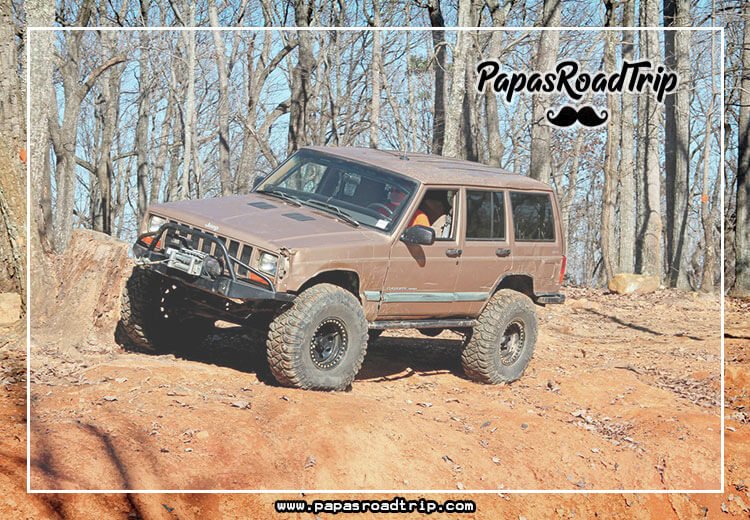
For most buyers, a structurally sound 1997–1999 XJ with the 4.0L engine is the best place to start. The 1991–1996 models are also worth a close look.
1997–1999: A useful balance of engine and equipment
The 1997–1999 XJ combines the later body and interior update with the 4.0L inline-six. These years precede the 2000–2001 cylinder-head concern discussed below.
A stock or lightly modified example is often easier to assess than a heavily lifted trail vehicle. With fewer changes, there are fewer unknowns in the steering, suspension, wiring, and driveline.
Many automatic 4.0L XJs use the AW4 transmission. Its favorable reputation does not replace a fluid check and road test.
Look for prompt engagement, consistent shifts, and no slipping under load. Verify four-wheel-drive operation using the correct procedure for the installed transfer case.
1991–1996: Worth buying on condition
The 1991 model year brought the High Output version of the 4.0L engine. A well-kept 1991–1996 XJ can be a sound alternative to a later example.
Do not treat this range as mechanically identical. Engine controls and diagnostic access changed over time; U.S. 1996 vehicles use OBD-II, which can make basic fault-code checks easier.
At this age, a rust-free 1994 with service records may be a far better buy than a neglected 1999. The body is the foundation: replacing worn parts cannot restore badly weakened structural metal.

Worst Years for the Jeep Cherokee XJ—and Important Exceptions
The XJ’s main caution groups are 2000–2001 4.0L models and early 2.8L V6 models. Neither concern justifies calling every early or late XJ a bad vehicle.
2000–2001: Inspect the 0331 cylinder head
Certain 4.0L engines from this period use the 0331 cylinder-head casting, which has a recognized cracking concern. The area between cylinders three and four is a common focus during diagnosis.
Possible warning signs include:
- Coolant loss with no clear external leak.
- Sludge or coolant contamination in the oil.
- A history of overheating.
- Misfires or an unexplained cooling-system pressure problem.
These symptoms can have other causes. A qualified shop may need pressure testing and further checks to identify the fault.
A documented replacement with a suitable revised head can change the buying decision. Later heads marked TUPY are often discussed as an improvement, but a casting mark alone does not prove the whole engine is healthy.
1984–1986 with the 2.8L V6: A narrower buyer fit
The early 2.8L V6 is generally a less appealing starting point for routine ownership than a sound 4.0L XJ. Its performance, age, and repair needs make it a better fit for an enthusiast who wants that specific vehicle.
This is an engine-specific caution. It should not be stretched into a claim that every 1984–1986 Cherokee has the same weaknesses.
Early four-cylinder and diesel models also need separate assessment. Confirm the actual engine rather than trusting a broad model-year ranking.
1987–1990: Not bad, but less beginner-friendly
The 1987–1990 4.0L XJ uses the earlier Renix engine-management system. These Jeeps can run well, but diagnosis may call for more familiarity with grounds, wiring, sensors, and connectors.
They are better suited to an owner with mechanical skills or access to a shop that knows the system. Being older than OBD-II does not make an XJ unreliable; it changes how faults are found.

How to Inspect a Used Cherokee Before You Buy
Inspect the individual vehicle before negotiating around its model-year reputation. Use an independent shop that knows the generation, and ask for written findings.
1. Verify identity, records, and recalls
Match the VIN on the vehicle to the title and service records. Confirm the engine, drivetrain, and factory equipment.
Check the VIN through NHTSA, then ask a Jeep dealer about recall completion and applicable campaigns. A recall repair does not prove that all related wear or damage has been ruled out.
Use the National Motor Vehicle Title Information System to find approved vehicle-history providers. No history report can guarantee that every crash, flood, or repair was recorded.
2. Inspect the structure before the powertrain
On an XJ, pay close attention to:
- Unibody rails and steering-box mounting areas.
- Floor pans and rocker panels.
- Rear leaf-spring mounts and surrounding metal.
- Suspension attachment points.
- Cracks or poor repairs near heavily loaded mounts.
Fresh undercoating can hide defects as well as protect metal. Ask to see what lies beneath suspicious patches.
On a KL, check for crash repairs, flood signs, damaged wiring, and underbody impact damage. Rust exposure varies within the U.S.; where the Jeep lived matters more than where it is now listed.
3. Start the engine cold and test it fully warm
Ask the seller not to warm the vehicle before you arrive. A cold start may reveal noises, smoke, or rough running that are less obvious later.
Test a KL’s transmission both cold and warm. On an XJ, monitor coolant temperature and check for leaks after the drive.
Stop the test if the engine overheats, oil pressure is lost, or the vehicle develops a serious steering or braking fault. Have it assessed rather than driving farther to “see if it clears.”
4. Check modifications and four-wheel drive
Poorly planned lifts can create steering, brake-hose, alignment, and driveshaft problems. Large tires also place more load on parts.
Have a qualified person check modified suspension and steering. For part-time four-wheel-drive systems, follow the owner’s manual and avoid testing locked modes on dry, high-grip pavement.
5. Price the repair plan, not just the Jeep
Compare the full near-term cost:
Purchase price + immediate repairs + overdue service + tires + inspection costs.
For example, a hypothetical $6,000 XJ needing $4,000 in urgent work is not cheaper to put right than a $9,000 example needing $500. Structural rust may be a reason to walk away rather than negotiate.
Evidence, Limits, and Next-Question Coverage
Use these recommendations as a screening guide, not a measured reliability league table. No live competitor pages, current VIN results, or repair databases were inspected for this article. Current recall status and vehicle-specific conclusions therefore require fresh checks.
The main U.S. verification resources are:
- NHTSA recalls: VIN-specific open safety recalls and model-level safety records.
- NHTSA vehicle search: Complaints, investigations, recalls, and manufacturer communications.
- Mopar owner resources: Factory operating instructions and model-specific manuals.
- NMVTIS: Access to approved title-history reporting services.
Recall records document specific safety defects. Owner complaints identify reported experiences, but raw complaint counts are not failure rates: sales volume, vehicle age, mileage, and reporting habits differ.
The following next needs are inferred from the buying task, not claimed as observed search demand. Competitor coverage is not checked.
| Next question | Reader stage and basis | Reader benefit | Evidence needed | Priority and placement |
|---|---|---|---|---|
| Does this VIN have an open recall? | Before purchase; inferred safety need | Finds an actionable defect | Current NHTSA and dealer checks | High; inspection section |
| Does a replacement head change a 2000–2001 XJ’s risk? | Shortlisting; inferred repair-history need | Avoids rejecting a properly repaired Jeep | Invoice, part identification, engine tests | High; XJ caution section |
| Is rust worse than high mileage? | Inspection; inferred condition trade-off | Helps avoid unsafe structural damage | Lift inspection and repair assessment | High; inspection section |
| Can the Jeep be flat-towed? | Ownership planning; inferred compatibility need | Prevents drivetrain damage | Exact-year manual and installed drivetrain | Medium; FAQ |
The most useful next step is not another generic year list. It is a VIN check followed by a generation-specific inspection.

Frequently Asked Questions
Is a high-mileage Cherokee always a bad buy?
No. Mileage needs context. A high-mileage Jeep with sound structure and clear service records may be preferable to a lower-mileage vehicle with overheating damage, severe rust, or long maintenance gaps.
Still, records do not stop parts from wearing out. Budget for age-related work, especially on an XJ.
Does a completed recall make an early KL a safe purchase?
It resolves the recall only to the extent described by that repair. It does not certify the condition of the transmission, engine, PTU, brakes, or body.
Ask for completion records and still get an independent inspection.
Is the Cherokee Trailhawk more reliable?
The Trailhawk badge identifies an off-road-focused configuration, not a proven reliability advantage. Its condition depends on maintenance, drivetrain health, and how it was used.
Inspect skid plates, underbody components, tires, and suspension for damage. Off-road equipment does not make impact damage harmless.
Can every Cherokee be flat-towed behind an RV?
No. Flat-towing approval depends on the exact model, transmission, and transfer case or four-wheel-drive system.
Follow the recreational-towing section of the correct owner’s manual. A four-wheel-drive badge alone does not establish approval.
Is an XJ a good first car for a teen?
An XJ’s age and older safety design make it a compromise for a new driver. Mechanical simplicity should not be confused with modern occupant protection.
For routine commuting, compare newer vehicles with stability control, more airbags, and sound crash-test performance. Inspect any candidate carefully rather than choosing by reputation alone.
Conclusion: Which Cherokee Should You Buy?
For a newer daily driver, start with a 2020–2022 Cherokee KL 3.2L V6 and verify its service history, transmission behavior, and recall status. Give 2014–2015 KL models extra scrutiny, and check oil-use history on any 2.4L candidate.
For an older utility vehicle, start with a rust-free 1997–1999 Cherokee XJ 4.0L, while keeping clean 1991–1996 examples on the list. Treat 2000–2001 cylinder-head history and early 2.8L V6 models as separate inspection decisions.
Choose the individual Jeep, not just the year. A sound structure, documented repairs, and a clean independent inspection matter more than a “best year” label.