
What Year Jeep Compass To Avoid: Years To Watch
 Reading Time: 7 minutes
For U.S. used-car shoppers, 2007–2008 and 2011–2012 Jeep Compass models deserve the most caution because owner complaint records include recurring concerns about the continuously variable transmission (CVT), engine, and related drivability issues. The 2014 and 2018 models also merit careful checks, but a model year alone does not prove that a specific Compass is faulty.
A well-maintained Compass with repair records may be a better buy than a newer one with neglected service or unresolved problems. Before you decide, confirm the vehicle’s recall status, identify its exact transmission, and have an independent mechanic inspect it.
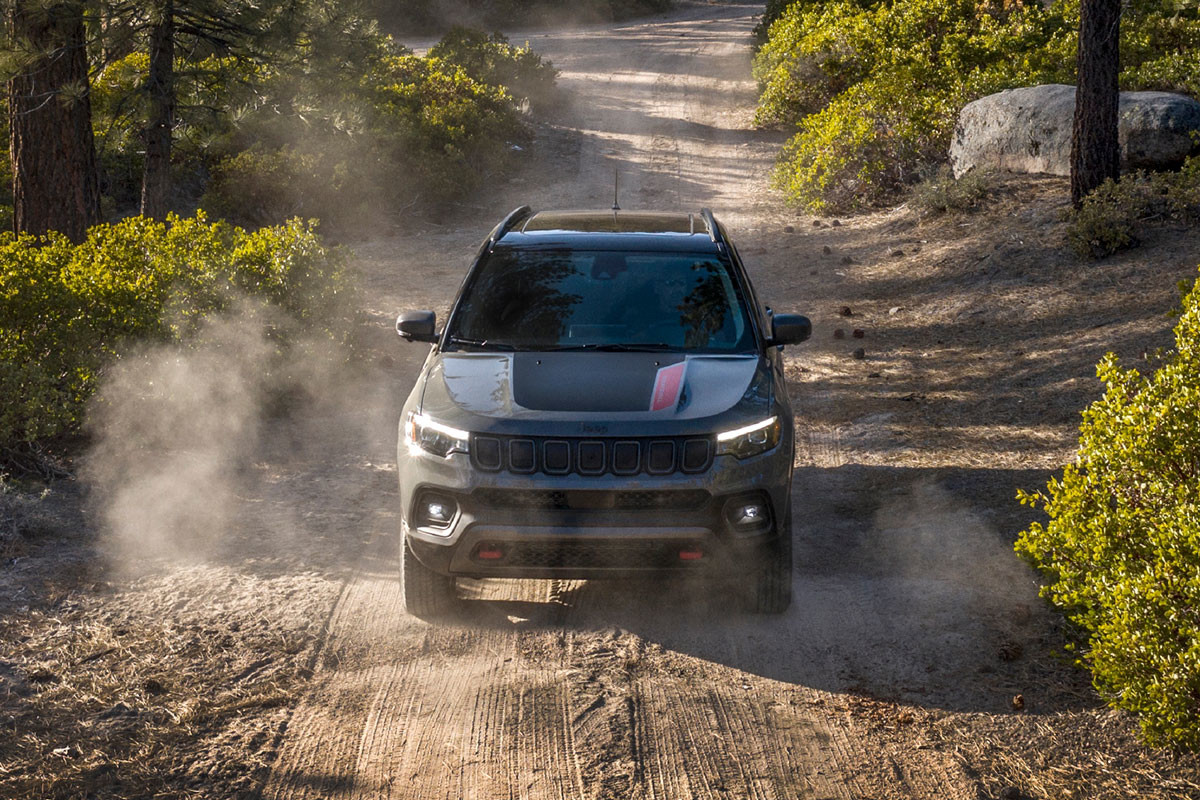
Jeep Compass years to avoid or inspect closely
The years below are best treated as higher-risk starting points for research, not as a guarantee that every vehicle from that year is unreliable. Complaint databases collect reports from owners; they do not show how often a problem occurs across all vehicles sold.
| Model year | Buyer’s risk level | What to check |
|---|---|---|
| 2007–2008 | Highest caution | CVT operation, engine noise, warning lights, and proof of transmission service or repair |
| 2011–2012 | High caution | CVT behavior, engine performance, and any history of stalling, overheating, or loss of power |
| 2014 | Inspect closely | Transmission type and condition, shifting behavior, and repair records |
| 2018 | Inspect closely | Transmission response, engine performance, electrical functions, and unresolved warning lights |
| Other years | Check the individual vehicle | Recall status, maintenance history, service records, and condition |
The Jeep Compass complaint history at CarComplaints can help identify reported patterns by year. Treat those reports as clues, not failure rates: people who have a problem may be more likely to file a complaint than owners whose vehicles work as expected.
The National Highway Traffic Safety Administration (NHTSA) offers vehicle-specific complaint and recall information. Search by year, make, and model, then check the VIN for open recalls. A recall record applies to certain vehicles and defects; it does not establish that every Compass from that year has the same issue.

Why some Jeep Compass years raise more concern
The Compass spans two generations. The first generation ran from 2007 through 2016, while the redesigned second generation began with the 2017 model year. A new generation can bring new parts and systems, so its first years deserve a closer look—but that alone does not make them bad choices.
Some older Compass models were offered with a CVT. A CVT changes its gear ratio without the fixed gear steps used by a conventional automatic transmission. Owner reports describe symptoms such as whining, hesitation, shuddering, or loss of drive. Those symptoms can have more than one cause, so a report is not a diagnosis. The vehicle’s year, engine, drivetrain, and transmission all matter.
That is why “avoid this year” lists can be too broad. Different trims may use different drivetrains or transmissions, and a past repair can change the risk for one specific vehicle. Check the VIN and the vehicle’s original equipment details rather than assuming that every Compass from one year has the same setup.
A complaint count also needs context. It does not tell you how many vehicles were sold, how many were maintained well, or whether a reported fault was confirmed by a mechanic. Use complaint records to decide what to inspect—not as proof that a vehicle will fail.
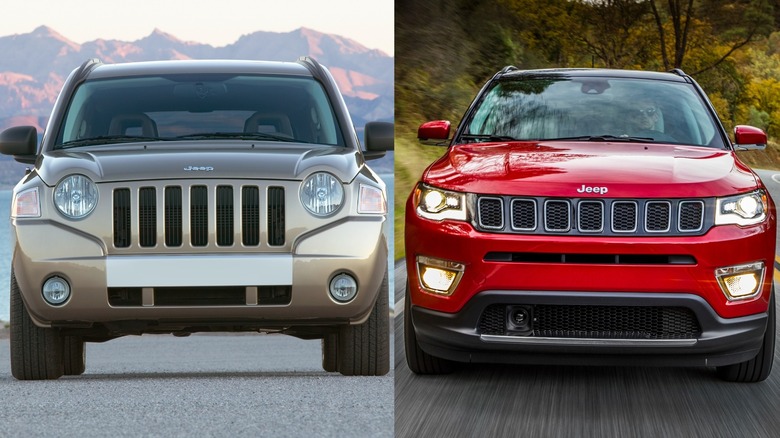
How to check a used Jeep Compass before buying
A careful inspection can help you spot problems that a model-year list cannot. Ask for the VIN and service records before you travel to see the vehicle.
- Check recalls by VIN. Use the NHTSA recall lookup. Ask the seller for proof that any required recall work was completed. A recall repair is generally handled through the manufacturer’s dealer network; confirm the details for that vehicle.
- Confirm the powertrain. Verify the engine, drivetrain, and transmission using the VIN, original window sticker, or a reliable vehicle-history report. Do not rely on a listing that says only “automatic.”
- Review service and repair records. Look for regular maintenance and clear paperwork for major transmission or engine work. A claimed repair without a dated invoice is hard to verify.
- Test-drive the Compass from a cold start. If possible, drive it in stop-and-go traffic and at steady road speed. Watch for delayed engagement, shuddering, unusual whining, slipping, harsh shifts, warning lights, or loss of power.
- Get an independent inspection. Ask a mechanic familiar with the Compass to scan its computer and inspect the engine, transmission, brakes, suspension, and signs of leaks or past damage. A seller’s recent inspection is not a substitute for one you arrange.
If the transmission makes unusual noises or the vehicle hesitates, do not assume that fresh fluid or a reset will fix it. Ask a qualified mechanic to diagnose the issue before you agree to buy. A test drive can reveal symptoms, but it cannot confirm how much a repair will cost.
Should you buy a Jeep Compass from a year on the caution list?
You may still consider one if it has strong maintenance records, no unresolved warning lights, a clean inspection, and a price that reflects its age and condition. Walk away or pause the deal if the seller will not allow an independent inspection, cannot explain major repairs, or dismisses transmission symptoms without evidence.
Compare the specific Compass with other used vehicles at a similar price. A newer model is not automatically safer or more reliable than an older one with a documented repair history. Likewise, a clean vehicle-history report does not prove that the engine or transmission is healthy.
Set aside room in your budget for routine maintenance and repairs, especially if you are considering an older vehicle. For a Compass with a history of transmission trouble, ask the inspecting mechanic whether the current symptoms point to a major repair. Get an estimate before you make an offer.
Common mistakes when choosing a Compass
Treating owner complaints as failure rates is a common mistake. Complaint records can point to issues worth checking, but they do not show the share of all vehicles that failed.
Other mistakes can lead to a poor purchase:
- Assuming every trim has the same transmission. Equipment can vary by year, engine, and drivetrain.
- Skipping the inspection because the car drives well briefly. Some problems appear only after the vehicle warms up or in certain driving conditions.
- Using a recall check as a full reliability check. Recalls cover specific safety or compliance issues; they are not a complete record of mechanical condition.
- Trusting a seller’s verbal repair claim. Ask for an invoice that names the work and the date.
- Buying based on model year alone. Condition, maintenance, repair quality, and price all affect whether a specific Compass makes sense.
FAQs about Jeep Compass years
What is the worst Jeep Compass year?
There is no single worst year for every buyer or every vehicle. The 2007–2008 and 2011–2012 models deserve extra caution, especially when transmission history is unclear. Use owner complaint records to guide your checks, then judge the specific vehicle on its inspection and repair records.
Is the 2018 Jeep Compass a model year to avoid?
Not automatically. The 2018 Compass is worth a careful test drive and inspection, particularly for transmission response, engine performance, and warning lights. A clean inspection and documented maintenance matter more than the year by itself.
Are all Jeep Compass models with a CVT bad?
No. A CVT is a type of transmission, not proof that a vehicle is defective. But if a particular Compass has whining, shuddering, hesitation, or loss of drive, have a mechanic diagnose it before purchase.
Does a completed recall mean a used Compass is reliable?
No. It means a specific recall repair was completed, if the repair is recorded for that VIN. It does not confirm that the vehicle has no other mechanical problems or that routine maintenance was done.
What should I do if a seller refuses an inspection?
Treat that as a reason to pause or walk away. An independent inspection is a practical way to check for issues that a short test drive or clean-looking exterior may not reveal.
Conclusion
For a U.S. used-car buyer, approach 2007–2008 and 2011–2012 Jeep Compass models with the most caution. Inspect 2014 and 2018 models carefully, too, but do not reject a vehicle based on its year alone.
Before you commit, check the VIN for recalls, confirm the transmission, review repair records, take a thorough test drive, and arrange an independent inspection. If the seller will not allow those checks—or if the vehicle shows transmission symptoms—look for another Compass or another vehicle.