Where Is The OBD2 Port On A Jeep Grand Cherokee: Easy Guide
 Reading Time: 9 minutes
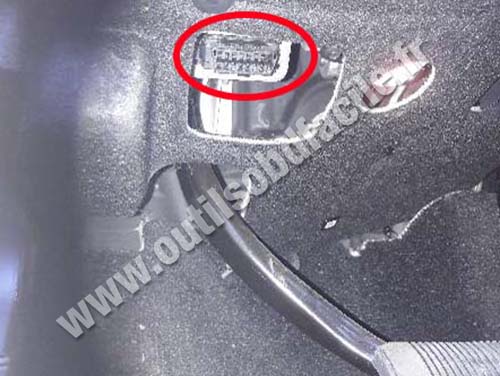
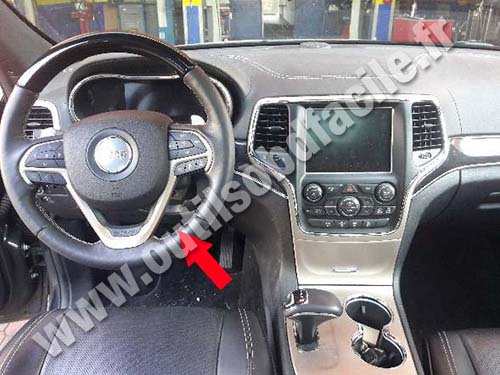
On a U.S.-market Jeep Grand Cherokee, the OBD2 port is usually under the dashboard on the driver’s side. Look below the steering wheel, above the brake pedal area, and near the lower dash trim.
The port is a small, black, 16-pin connector with a trapezoid shape. It may be open and easy to see, or it may sit slightly above the pedals behind a lower dash panel.
This location applies to most Jeep Grand Cherokee models built for the United States from 1996 onward.

Quick Answer: Find the OBD2 Port Under the Driver’s Side Dash
Sit in the driver’s seat and look below the steering column.
The OBD2 port is normally:
- Under the lower dashboard
- To the left of, or just above, the brake pedal
- Near the steering column
- Close to the driver’s left knee area
- Mounted to a small metal bracket or plastic dash support
You should not need to remove major panels. Use a flashlight if the connector is tucked behind the lower edge of the dashboard.
The port may have a removable plastic cover, but many Grand Cherokee models leave the connector exposed. Do not confuse it with the fuse box, a wiring plug, or an accessory connector.
OBD2 Port Location by Jeep Grand Cherokee Generation
The location is similar across Grand Cherokee generations, but the exact position can vary by model year and trim.
| Jeep Grand Cherokee generation | Typical U.S. model years | Usual OBD2 port location |
|---|---|---|
| ZJ | 1996–1998 | Under the driver’s side dash, near the steering column |
| WJ | 1999–2004 | Below the dashboard, left of or above the brake pedal |
| WK | 2005–2010 | Under the driver’s side dash, near the lower steering column |
| WK2 | 2011–2022 | Below the steering wheel and above the pedals |
| WL | 2022 and newer | Under the driver’s side lower dashboard |
These year ranges describe the common U.S. generation names. A production date, trim package, or previous repair may affect the exact position.
1996 and older Grand Cherokee models
Federal OBD2 requirements began affecting most U.S. passenger vehicles in the 1996 model year. A 1996 Grand Cherokee generally has the standard 16-pin OBD2 connector.
Some earlier Jeep models may use a Chrysler diagnostic connector rather than a standard OBD2 port. That connector may look different and may not work with a basic OBD2 scanner.
If your Jeep is a 1995 model or older, check the owner’s manual or use a scanner that specifically supports older Chrysler diagnostic systems.

How to Access the OBD2 Port
You can usually reach the connector from the driver’s footwell without tools.
Follow these steps
- Park the Jeep on a level surface.
- Turn off the engine.
- Set the parking brake.
- Open the driver’s door.
- Move the driver’s seat back if you need more room.
- Look below the steering wheel with a flashlight.
- Check above and slightly to the left of the brake pedal.
- Find the 16-pin connector.
- Make sure the connector is not loose or damaged before plugging in a scanner.
The connector has a shape that prevents incorrect installation. The wider edge normally faces upward, although the exact angle depends on how the bracket holds the port.
Do you need to remove a panel?
Usually, no. The OBD2 port should be reachable without removing the dashboard.
On some Grand Cherokee models, a small knee bolster or lower trim panel may partly block the connector. Do not pull hard on the panel. If you need to remove trim, check for hidden clips and screws first.
Avoid disturbing wiring near the steering column, pedals, airbag system, or fuse box. A loose connector can cause scan problems and may create an electrical fault.
How to Connect an OBD2 Scanner to a Jeep Grand Cherokee
Once you find the port, connect the scanner carefully.
- Confirm that the scanner supports OBD2 and your Jeep’s model year.
- Insert the plug into the connector without forcing it.
- Turn the ignition to the ON position.
- Leave the engine off unless the scanner instructs you to start it.
- Wait for the scanner to power up.
- Select the vehicle information requested by the tool.
- Read stored diagnostic trouble codes.
- Write down the code before clearing anything.
Many scanners receive power through the OBD2 port. If the scanner does not turn on, check whether:
- The plug is fully inserted.
- The ignition is in the ON position.
- The scanner cable is damaged.
- The OBD2 fuse has failed.
- The port has loose or bent terminals.
- The vehicle battery is too weak.
A code tells you which system reported a fault. It does not always identify the failed part. For example, an oxygen sensor code may result from a wiring problem, an exhaust leak, or an engine issue rather than a defective sensor.
When should you scan the Jeep?
Scanning is useful when:
- The check engine light is on.
- The Jeep runs poorly.
- The engine stalls or hesitates.
- The vehicle fails an emissions test.
- A warning light appears after a repair.
- You want to check for stored or pending codes before buying a used Jeep.
Do not erase codes before recording them. Clearing codes also resets many emissions monitors. The Jeep may then need several normal drive cycles before it can complete its self-checks.
What to Do If You Cannot Find the Port
If the OBD2 connector is not immediately visible, search in a set order.
1. Check the driver’s footwell
Use a flashlight and look upward, not only straight ahead. The connector may be mounted high under the dash and hidden by the steering column.
2. Look near the lower dash edge
Inspect the area near the driver’s left knee and the plastic panel beneath the steering wheel. Some ports sit farther left than expected.
3. Check above the brake pedal
Do not place your hands near moving pedals while the vehicle is running. With the engine off, look above the brake pedal for the trapezoid-shaped plug.
4. Inspect for a cover or loose bracket
A previous owner or repair shop may have pushed the connector behind the dash. The port may still be attached to a bracket or may hang from its wiring.
Do not pull on the wires. Hold the plastic connector body instead.
5. Verify the model year
A pre-1996 Grand Cherokee may not have a standard OBD2 port. Older diagnostic connectors require different equipment and may be placed in another area.
6. Check the owner’s manual
The owner’s manual may identify the diagnostic connector or show the lower dash area. A factory service manual can provide more detailed wiring and connector information.
If the connector is missing, damaged, or pushed deep behind the dashboard, a qualified technician can locate and repair it. Do not bridge terminals or apply outside power to the connector.

OBD2 Port Problems and Common Mistakes
The most common problem is not the location. It is a poor connection or a blown power circuit.
The scanner does not turn on
The diagnostic port normally receives power from the vehicle’s electrical system. If the scanner remains blank, inspect the related fuse using the correct fuse chart for your model year.
Replace a fuse only with one of the same amperage. A larger fuse can damage wiring and create a fire risk.
The scanner connects but cannot read codes
- An incompatible scan tool
- A weak vehicle battery
- An ignition switch that is not in the ON position
- Damaged connector terminals
- A communication fault
- A problem with the vehicle’s data network
A basic code reader may read engine and emissions codes but may not access systems such as the transmission, airbag, anti-lock brakes, body control module, or four-wheel-drive system.
The check engine light returns after clearing
Clearing a code does not repair the cause. The light may return when the vehicle repeats the conditions that triggered the fault.
If the check engine light is flashing, reduce driving and seek service promptly. A flashing light can indicate a severe misfire that may damage the catalytic converter.
The port looks different
A standard OBD2 port has 16 possible pin positions in two rows. Some positions may be empty. Do not assume that every empty position indicates a problem.
An older Chrysler connector, aftermarket alarm wiring, or a damaged replacement connector may look different. Confirm the connector type before using an adapter.
OBD2 Safety Tips for Jeep Grand Cherokee Owners
Use the port only with compatible equipment. The connector gives access to vehicle data and, on some tools, allows commands to be sent to control modules.
Keep these precautions in mind:
- Do not force a scanner into the port.
- Do not insert paper clips or bare wires.
- Do not short two terminals together.
- Keep cables away from the brake and accelerator pedals.
- Do not scan while driving unless the equipment is designed for that purpose.
- Avoid cheap tools with damaged plugs or exposed wiring.
- Record diagnostic codes before clearing them.
- Disconnect the tool before servicing electrical parts.
- Follow the scan tool’s instructions for programming or module tests.
Some professional tools can change vehicle settings or program modules. Use those functions only when the tool supports the exact Jeep model and the procedure is documented.
If the Jeep has airbag, brake, steering, or powertrain warnings, an OBD2 code reader may not be enough. Use a scan tool that supports the affected module or have the vehicle inspected by a qualified technician.

Frequently Asked Questions
Is the OBD2 port always under the steering wheel on a Jeep Grand Cherokee?
It is usually under the driver’s side dashboard, but the exact position can vary. Check below the steering column, above the brake pedal, and near the driver’s left knee area.
Does a Jeep Grand Cherokee have an OBD2 port?
Most U.S.-market Jeep Grand Cherokee models from 1996 onward have a standard OBD2 port. Older models may use a different Chrysler diagnostic connector.
Can I leave an OBD2 scanner plugged in?
You can leave some low-power devices connected, but it is safer to unplug a scanner when the Jeep is parked for a long time. Some devices can draw battery power or interfere with vehicle electronics.
Can an OBD2 scanner reset the check engine light?
Many scanners can clear diagnostic codes and turn off the check engine light. The light will return if the underlying fault remains. Clearing codes may also reset emissions readiness monitors.
Why will my scanner read engine codes but not ABS codes?
Basic OBD2 readers often focus on federally required engine and emissions data. ABS, airbag, transmission, and body modules may require a scan tool with enhanced Jeep or Chrysler coverage.
Final Answer
The OBD2 port on a U.S.-market Jeep Grand Cherokee is normally under the driver’s side dashboard, below the steering wheel and near the brake pedal. Look for a black, 16-pin, trapezoid-shaped connector.
For most 1996-and-newer models, connect a compatible scanner with the ignition switched to ON. If the scanner has no power or cannot communicate, check the vehicle fuse, battery, connector condition, and scan-tool compatibility before assuming the port is in a different location.