

Jeep Grand Cherokee WL Pros And Cons: 2026 Buyer Guide
 Reading Time: 19 minutes
Introduction
The Jeep Grand Cherokee WL is the fifth-generation Grand Cherokee sold in the United States for the 2022 through 2026 model years. It offers a strong mix of comfort, off-road ability, towing power, and available plug-in hybrid performance. However, it also has higher prices, complex electronics, and less cargo space than some family-focused rivals.
Quick answer: The 2022–2026 Jeep Grand Cherokee WL is a good choice for U.S. drivers who want a refined SUV with real trail ability. The two-row model suits buyers who value a shorter body and better maneuverability. The Grand Cherokee L adds a third row but costs more and is less compact. The best version depends on your priorities: lower running costs, towing, off-road use, comfort, or long-term value.
This guide explains the main Jeep Grand Cherokee WL pros and cons by model year. It also covers the gas engines, 4xe plug-in hybrid, Grand Cherokee L, reliability concerns, ownership costs, recalls, and what to check before buying a used example.
What Is the Jeep Grand Cherokee WL?
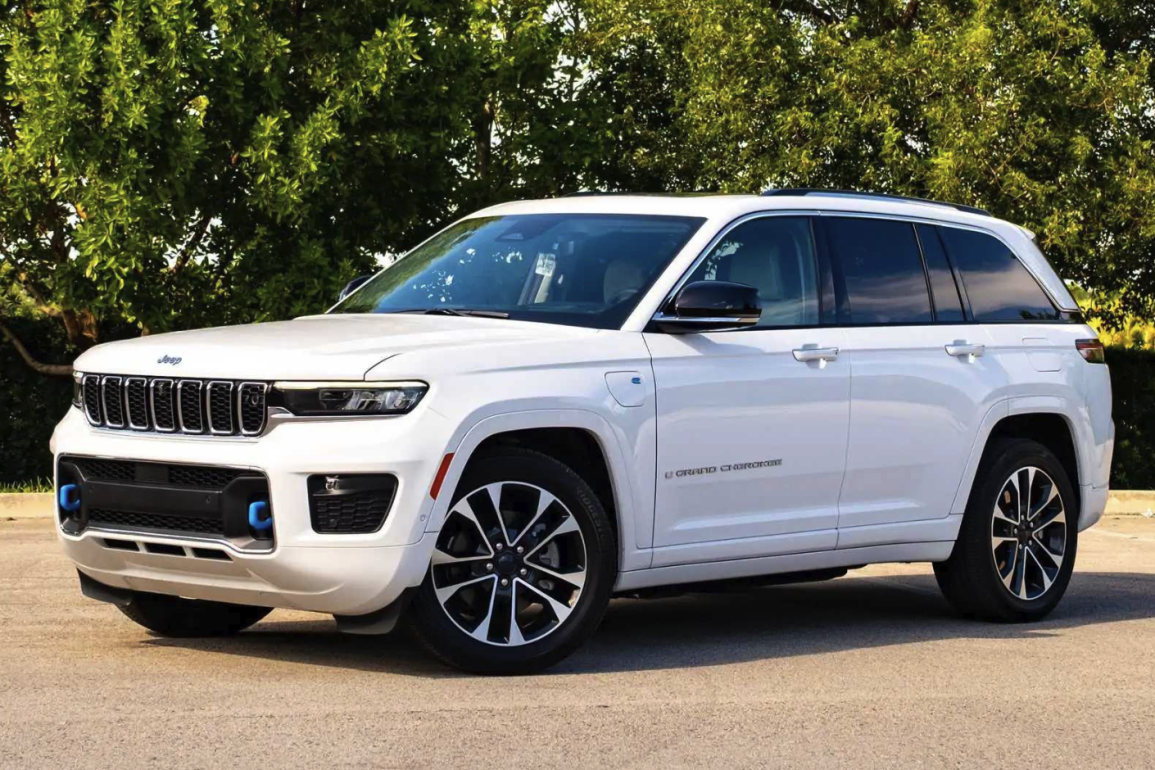
The WL is the internal platform code for the fifth-generation Jeep Grand Cherokee. Jeep introduced the two-row WL Grand Cherokee for the 2022 U.S. model year. The longer-wheelbase Grand Cherokee L arrived as a related model with three rows.
The WL replaced the older WK2 Grand Cherokee. The newer SUV uses a more modern cabin, an updated suspension design, available air suspension, and a larger infotainment system. It is still a unibody SUV, but Jeep designed it to keep more off-road ability than most midsize crossovers.
The main U.S. versions include:
- Grand Cherokee: Two-row SUV
- Grand Cherokee L: Three-row SUV with a longer body
- Grand Cherokee 4xe: Plug-in hybrid two-row SUV
- Trailhawk: Off-road-focused trim, available in selected years and configurations
- Summit and Summit Reserve: Higher-trim versions with more luxury equipment
The WL is not the same vehicle as the older Grand Cherokee WK2. Parts, software, engines, interiors, and many repair procedures differ. Shoppers should use the exact model year and VIN when checking equipment, recalls, service history, or replacement parts.
Jeep Grand Cherokee WL Pros and Cons at a Glance
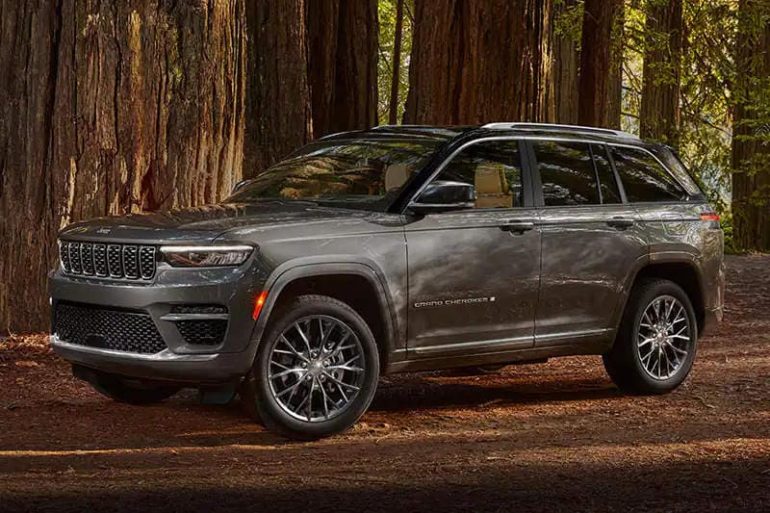
The Grand Cherokee WL’s biggest strength is its range. It can act as a comfortable daily driver, a family SUV, a tow vehicle, or an off-road machine. Its main weakness is that higher trims can become expensive without matching the space of a full-size SUV.
| Area | Main advantage | Main drawback |
|---|---|---|
| Ride comfort | Smooth ride with independent suspension | Air suspension may raise repair costs |
| Off-road ability | Available four-wheel drive, low range, and Trailhawk hardware | Specialized equipment adds weight and cost |
| Interior | Quiet cabin and upscale design on higher trims | Some controls and software can be frustrating |
| Engines | V6, V8 in earlier years, and 4xe plug-in hybrid choices | Fuel economy and long-term complexity vary widely |
| Towing | Up to 7,200 pounds in properly equipped versions | Maximum capacity requires the correct engine and package |
| Cargo space | Useful two-row cargo area | Less room than some competitors, especially with 4xe hardware |
| Seating | Two-row and three-row body styles | The Grand Cherokee L’s third row is not as roomy as a full-size SUV |
| Technology | Large screens and many driver aids | More electronics mean more possible software and sensor issues |
| Price | Broad trim range | Upper trims can cost as much as larger luxury SUVs |
| Used value | Older V6 models can offer a reasonable entry price | Depreciation, recalls, and repair history need close review |
The right model is therefore less about finding a single “best” year and more about matching the SUV to your use. A commuter may prefer a simpler V6 two-row model. A buyer who tows often may want a properly equipped V8 model from an earlier year. An owner with home charging may find the 4xe more appealing.
The Biggest Pros of the 2022–2026 Jeep Grand Cherokee WL
1. Strong ride comfort and road manners
The WL Grand Cherokee feels more settled on U.S. highways than the older generation. Its independent suspension helps the SUV absorb broken pavement and freeway expansion joints. Higher trims may also include air suspension, which can change ride height and improve ground clearance.
The Grand Cherokee is not a sports SUV, but it feels stable in normal driving. The steering is light enough for parking and firm enough for highway use. Its upright driving position also gives the driver a clear view over traffic.
The trade-off is weight. A heavier SUV can feel planted, but it may also use more fuel and need more expensive tires and brakes.
2. Real off-road capability
Many midsize SUVs look rugged but have limited trail equipment. The Grand Cherokee can be different when ordered with the right four-wheel-drive system.
Depending on the year and trim, available equipment may include:
- Two-speed transfer case
- Low-range gearing
- Selectable drive modes
- Hill-descent control
- All-terrain tires
- Skid plates
- Electronic limited-slip or locking rear differential
- Increased ground clearance
- Trailhawk-specific suspension tuning
- Selec-Terrain traction management
The Trailhawk is the most serious off-road version in the WL range. It is designed for buyers who drive on rough trails, loose surfaces, steep grades, and uneven ground. It is not simply a cosmetic package.
A key limitation is that off-road hardware does not remove the need for skill. Tire pressure, line choice, recovery equipment, weather, and driver judgment still matter. Four-wheel drive can help with traction, but it does not shorten stopping distance on ice or wet pavement.
3. Comfortable and upscale cabin
The WL interior is one of its strongest features. The dashboard has a cleaner layout than the previous Grand Cherokee, and upper trims use leather, metal, wood, and soft-touch surfaces. The cabin can feel close to a luxury SUV in Summit and Summit Reserve versions.
Common available features include:
- Heated and ventilated front seats
- Heated rear seats
- Heated steering wheel
- Panoramic roof
- Premium audio
- Digital instrument display
- Head-up display
- Front passenger display on selected trims
- Massaging front seats on selected versions
- Wireless smartphone charging
- Apple CarPlay and Android Auto
The cabin’s quality depends heavily on trim level. A lower trim with cloth or basic synthetic upholstery will not feel like a Summit Reserve. Buyers should inspect the actual vehicle rather than assume every WL has the same interior materials.
4. Useful towing ability
When correctly equipped, the Grand Cherokee can tow more than many compact and midsize crossovers. Earlier WL models with the available 5.7-liter V8 can tow up to 7,200 pounds under the proper configuration. The 3.6-liter V6 has a lower maximum, commonly listed at up to 6,200 pounds with the right equipment. The 4xe has its own towing limit, commonly listed at up to 6,000 pounds.
The exact limit depends on:
- Engine
- Drive system
- Wheelbase
- Trailer-tow package
- Axle ratio
- Vehicle payload
- Number of passengers
- Cargo weight
- Trailer brakes
- Model-year rating
A trailer’s loaded weight matters more than its empty brochure weight. Owners should use the vehicle’s door-jamb payload label and owner’s manual. Never assume that a trim name alone confirms maximum towing capacity.
5. Multiple powertrain choices
The WL range gives U.S. buyers several powertrain paths.
The 3.6-liter Pentastar V6 produces about 293 horsepower in common configurations. It is the basic engine for many model years and offers adequate power for daily use and moderate towing.
The 5.7-liter HEMI V8 produces about 357 horsepower and 390 pound-feet of torque in earlier WL model years. It gives stronger acceleration and higher towing capacity, but it uses more fuel and may cost more to maintain. Availability changes by model year, and shoppers should confirm whether a specific 2025 or 2026 vehicle actually has a V8.
The 4xe combines a turbocharged four-cylinder engine with electric motors and a battery pack. Jeep lists system output at about 375 horsepower and 470 pound-feet of torque. Its EPA electric range is approximately 25 miles, although real-world electric range varies with temperature, speed, terrain, climate use, and driving style.
6. Better technology than the previous generation
The WL offers a more modern digital experience than the older Grand Cherokee. Depending on the trim and year, drivers may get a 10.1-inch central touchscreen, digital gauges, navigation, wireless phone integration, and a broad group of driver-assistance features.
Available safety technology may include:
- Automatic emergency braking
- Adaptive cruise control
- Blind-spot monitoring
- Rear cross-traffic alert
- Lane-keeping assistance
- Rear parking sensors
- Surround-view camera
- Night vision on selected trims
- Intersection collision assistance on selected trims
Technology availability changes by trim and model year. A used vehicle listing may describe a package incorrectly, so confirm features with the window sticker, VIN report, or physical inspection.
The Biggest Cons of the 2022–2026 Jeep Grand Cherokee WL
1. High trims can become very expensive
The Grand Cherokee begins as a mainstream SUV, but the price rises quickly with four-wheel drive, premium packages, larger wheels, air suspension, and luxury trim levels. A highly equipped Summit Reserve can overlap with the price of larger SUVs and entry-level luxury vehicles.
This creates a key buying question: do you need the expensive features?
If you mainly drive on paved roads, a lower or mid-level trim may offer better value. If you need a panoramic roof, premium audio, advanced cameras, and luxury seating, the higher trims may make sense. However, buyers should compare total price, insurance, taxes, and repair costs rather than only the advertised monthly payment.
2. Complex electronics may create ownership frustration
The WL uses many cameras, sensors, control modules, screens, and software systems. These features improve convenience, but they also create more possible fault points.
Possible complaints can include:
- Infotainment freezes
- Slow screen response
- Camera or parking sensor warnings
- Driver-assistance alerts
- Wireless phone connection problems
- Battery or charging-system warnings
- Random warning lights
- Software updates that change system behavior
A warning message does not always mean a major mechanical failure. It does mean the owner should document the message and have the vehicle scanned if it returns. Repeated warnings should not be ignored, especially when they affect braking, steering, power delivery, or high-voltage systems.
3. Fuel economy is only average with the V6 and V8
The V6 is a practical engine, but the Grand Cherokee is heavy and often uses four-wheel drive. Real fuel economy depends on traffic, weather, tire size, driving speed, and load.
The V8 offers useful towing power, but fuel consumption is a clear disadvantage. Large wheels and aggressive tires can reduce fuel economy further.
The 4xe can reduce gasoline use when the owner charges it often and drives within its electric range. It may provide little fuel-saving benefit on long trips when the battery is depleted. Public charging costs, home electricity rates, cold weather, and gasoline prices all affect the result.
4. The 4xe has added weight and complexity
The plug-in hybrid is attractive because it can handle short daily trips on electricity. It can also provide strong low-speed torque and quiet operation.
The disadvantages include:
- Higher purchase price
- Less cargo space than the regular two-row model
- Added battery and hybrid-system weight
- Need for regular charging to capture its main benefit
- More complex service requirements
- Possible loss of convenience on long trips
- High-voltage repair work that requires trained technicians
A 4xe is not automatically cheaper to own. The buyer should estimate daily electric miles, home charging access, electricity cost, gasoline cost, local incentives, and expected ownership period.
5. The third row is useful but not full-size
The Grand Cherokee L adds a third row, but it is not as spacious as the third row in a full-size SUV such as a Chevrolet Tahoe, Ford Expedition, or Jeep Wagoneer.
The third row is best for children and shorter trips. Adults may find legroom and access limited, especially when the second-row seats are positioned far back.
The Grand Cherokee L makes sense when occasional third-row seating matters. It may disappoint families who regularly carry seven passengers and large amounts of luggage.
6. Cargo space trails some family rivals
The two-row Grand Cherokee has useful cargo room, but it is not the class leader. The 4xe gives up some under-floor storage because of its battery and hybrid hardware.
Approximate published cargo figures for the two-row model are:
- About 37.7 cubic feet behind the second row
- About 70.8 cubic feet with the rear seats folded
The Grand Cherokee L offers more total space, but its third-row configuration changes how much luggage fits behind the seats. Always test the vehicle with your stroller, sports gear, work equipment, or pet crate before buying.
7. Air suspension can increase repair exposure
Available Quadra-Lift air suspension improves ride height control and can help off-road clearance. It also adds compressors, air springs, valves, sensors, and control software.
That does not mean every air-suspension Grand Cherokee will fail. It means the system can be more costly to diagnose and repair than conventional coil springs. A used buyer should check for:
- A vehicle that leans while parked
- Slow height changes
- Compressor noise that runs too long
- Suspension warning messages
- Uneven ride height
- Moisture or damage near air-system components
A pre-purchase inspection should include the suspension at every height setting.
2022 vs. 2023 vs. 2024 vs. 2025 vs. 2026 Grand Cherokee WL
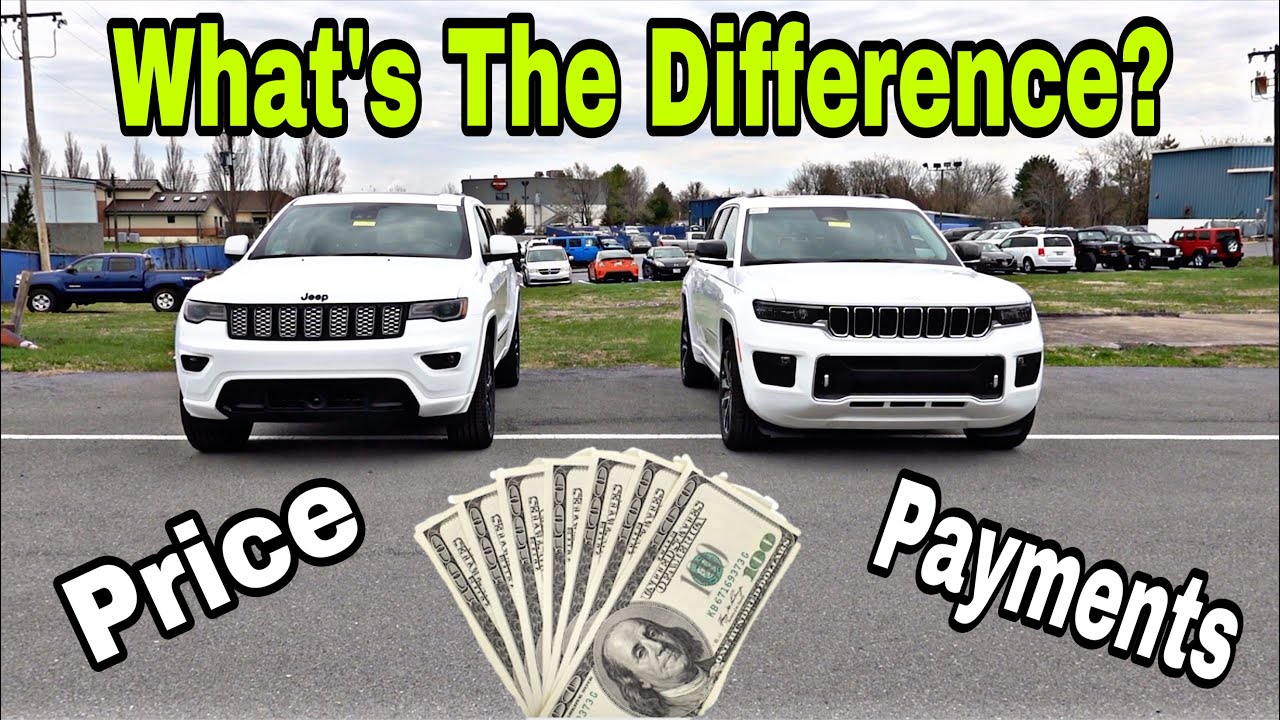
The model-year differences matter because the WL changed equipment, powertrain availability, software, pricing, and trim packaging over time.
| Model year | Main points for U.S. buyers |
|---|---|
| 2022 | First year of the two-row WL; new design, new technology, V6 and available V8; early-production software and quality concerns deserve careful inspection |
| 2023 | Continued two-row and L versions; 4xe available; equipment and package details vary by trim |
| 2024 | Continued WL lineup with updated packaging; 4xe remained an important choice in the range; verify recalls and service records |
| 2025 | Availability, pricing, engine packaging, and trim content may differ from earlier years; confirm the exact window sticker, especially for V8 and 4xe assumptions |
| 2026 | Treat listings and pre-release information carefully; confirm official U.S. specifications, powertrain, trim, and incentives for the exact vehicle |
Is the 2022 Grand Cherokee WL a good buy?
The 2022 model offers the new WL design at the lowest used-market entry price. It has the newer cabin, updated suspension, and modern technology.
The main concern is first-year risk. Early examples may have more software updates, manufacturing corrections, or unresolved service history than later models. A 2022 can still be a good purchase if it has:
- Complete maintenance records
- Completed recall work
- No repeated warning lights
- Smooth transmission operation
- A clean vehicle history report
- A professional inspection
Is the 2023 Grand Cherokee WL better?
The 2023 model benefits from one additional year of production experience, but it is still part of the early WL period. It may offer a useful balance between purchase price and newer-vehicle condition.
Do not assume that the 2023 model fixed every issue from 2022. Check the VIN for open recalls and look for documented software updates or dealer repairs.
Is the 2024 Grand Cherokee WL reliable?
The 2024 model remains a modern, electronics-heavy SUV. Reliability depends on the engine, trim, maintenance, mileage, use, and repair history.
A 2024 may cost more than a 2022 or 2023, but the newer vehicle may have fewer miles and more factory warranty coverage. That price difference can be worthwhile if it reduces near-term repair risk.
What should buyers know about 2025 and 2026?
Do not rely on a generic “2025 Grand Cherokee” or “2026 Grand Cherokee” article when shopping. Jeep can change engine availability, trim names, standard equipment, packages, and prices between model years.
For a specific vehicle, confirm:
- The VIN and model year
- The engine shown on the window sticker
- Two-wheel drive or four-wheel drive
- Towing-package equipment
- 4xe battery warranty terms
- Open recalls
- Factory warranty status
- Current Jeep U.S. specifications
This step is especially important for 2025 and 2026 listings because online dealer data may contain incorrect or incomplete equipment descriptions.

Which Grand Cherokee WL Engine Is Best?
The best engine depends on how the SUV will be used.
3.6-liter Pentastar V6: best for balanced ownership
The V6 is the sensible choice for many buyers. It is widely available, offers adequate power, and usually costs less to buy and operate than the V8 or 4xe.
Choose the V6 if you:
- Drive mainly on roads
- Tow only occasionally
- Want a lower purchase price
- Prefer a simpler powertrain than the 4xe
- Want a broad selection of used vehicles
The V6 can feel busy when the SUV is fully loaded or towing near its limit. It is adequate, not especially quick.
5.7-liter HEMI V8: best for frequent towing
The V8 produces stronger torque and improves acceleration under load. It is the better fit for frequent towing, steep terrain, or drivers who prefer a relaxed engine at highway speeds.
Choose the V8 if you:
- Tow regularly
- Carry heavy loads
- Need the higher rated towing capacity
- Accept higher fuel use and possible maintenance costs
Confirm the exact towing rating. A V8 without the required tow equipment may not achieve the maximum advertised capacity.
4xe plug-in hybrid: best for short daily electric trips
The 4xe can be a strong choice for an owner who can charge at home or work. It may cover many daily commutes without starting the gasoline engine, depending on distance and conditions.
Choose the 4xe if you:
- Have reliable charging access
- Drive many short daily trips
- Want stronger combined output
- Understand the battery and hybrid warranty
- Can accept reduced cargo flexibility and added complexity
Avoid choosing it only because “hybrid” sounds more efficient. Without regular charging, its financial and fuel-saving case becomes weaker.

Two-Row Grand Cherokee vs. Grand Cherokee L
The two-row Grand Cherokee is easier to park and generally better suited to buyers who do not need a third row. It also has a shorter body, which helps on narrow trails and in crowded U.S. parking garages.
The Grand Cherokee L gives families more seating flexibility. It is the better choice when a third row is used often, but it is not a substitute for a full-size SUV if all three rows must carry adults and luggage.
| Buyer need | Better fit |
|---|---|
| Easier parking and trail use | Two-row Grand Cherokee |
| Occasional third-row seating | Grand Cherokee L |
| Frequent adult passengers in all rows | Consider a larger full-size SUV |
| Maximum cargo behind the second row | Compare exact two-row and L measurements |
| Lower purchase and operating cost | Usually the two-row V6 |
| Luxury-focused family travel | Either, depending on space needs and trim |
The Grand Cherokee L also adds more weight and length. That can affect fuel use, maneuverability, and garage fit.

Grand Cherokee WL Reliability: What Owners Should Check
Reliability is not one fixed score for every WL. The engine, drivetrain, mileage, maintenance, software condition, and previous use all matter.
The safest used-buying process is a condition check, not a model-year guess.
Pre-purchase inspection checklist
Before buying a used Grand Cherokee WL, check the following:
-
VIN and recall status
Use the official NHTSA recall lookup and ask the dealer to confirm completed work. -
Service history
Look for oil changes, transmission service where required, brake work, tire replacement, and 4xe-specific service. -
Cold start
Listen for unusual engine noise, rough idle, warning lights, or delayed startup. -
Transmission behavior
During a road test, check for harsh shifts, hesitation, clunks, or unexpected gear changes. -
Four-wheel-drive operation
Test drive modes and confirm that no drivetrain warning appears. Use a qualified technician for low-range testing if you are not familiar with the system. -
Air suspension
Raise and lower the vehicle if equipped. Watch for slow movement, uneven height, or warning messages. -
Electronics
Test every screen, camera, speaker, USB port, seat function, window, lock, and driver-assistance feature. -
4xe charging system
If it is a 4xe, inspect the charging port, test charging with compatible equipment, and confirm battery warranty coverage. -
Underbody and frame areas
Look for off-road damage, bent suspension parts, skid-plate impacts, leaks, and corrosion. -
Tires and alignment
Uneven wear can point to alignment, suspension, or accident damage.
A dealer inspection is useful, but an independent shop familiar with Jeep products may provide a less sales-focused assessment.

Grand Cherokee WL Safety and Recall Research
The Grand Cherokee WL has modern crash-avoidance technology, but safety equipment and test results can vary by model year and configuration. Buyers should review the exact year at the Insurance Institute for Highway Safety and the National Highway Traffic Safety Administration.
Safety ratings are not interchangeable across all versions. A rating for the two-row Grand Cherokee does not automatically apply to the Grand Cherokee L, and a rating from one model year may not cover another.
Recall research also needs care. A recall applies to specific vehicles or production groups, not automatically to every SUV of the same name. Use the VIN, not only the year and trim.
Owners should address recalls promptly. If a recall involves braking, steering, fuel, airbags, electrical power, or high-voltage components, follow the manufacturer’s instructions and avoid unsafe repairs at home.
Grand Cherokee WL Ownership Costs
The purchase price is only one part of the cost. A realistic budget should include:
- Fuel or electricity
- Insurance
- Tires
- Brakes
- Scheduled service
- Registration and taxes
- Charging equipment for a 4xe
- Repairs after the factory warranty
- Towing equipment
- Depreciation
Large wheels often cost more to replace and may provide less sidewall protection on rough roads. Air suspension can improve comfort but may increase out-of-warranty repair exposure. V8 fuel costs can be significant for high-mileage drivers.
For a 4xe, compare the cost of home charging with gasoline. A simple estimate is:
Electric cost per mile = electricity price per kilowatt-hour ÷ electric miles per kilowatt-hour
For example, if electricity costs $0.18 per kWh and the vehicle uses 0.40 kWh per mile, the estimated electric cost is:
$0.18 ÷ 0.40 = $0.45 per mile
This is only a hypothetical calculation. Actual results depend on charging loss, temperature, speed, battery condition, and utility rates.

Common Buying Mistakes to Avoid
Assuming every Grand Cherokee has the same equipment
A base Grand Cherokee and a Summit Reserve may look related, but they can differ in suspension, cameras, audio, seating, lighting, and driver aids. Check the window sticker.
Buying by trim name alone
“Limited,” “Overland,” “Trailhawk,” and “Summit” do not tell you every detail. Packages and drivetrain choices can change the vehicle’s capability.
Ignoring payload while checking towing
A trailer may be below the advertised maximum and still overload the SUV when passengers, luggage, and tongue weight are added. Use the door-jamb payload label.
Choosing 4xe without a charging plan
The 4xe’s main efficiency benefit depends on regular charging. If charging is difficult, compare it with the V6 before purchasing.
Treating a clean vehicle history report as a full inspection
A history report may miss some accidents, maintenance issues, flood damage, or electronic faults. A mechanical inspection remains useful.
Assuming a warning light is harmless
Modern SUVs can display temporary software warnings, but repeated alerts need diagnosis. A warning that affects brakes, steering, power, or high-voltage operation requires immediate attention.
Who Should Buy the Jeep Grand Cherokee WL?
The Grand Cherokee WL is a strong match for U.S. buyers who want:
- A comfortable midsize SUV
- Available four-wheel-drive hardware
- Better off-road ability than most crossovers
- Strong towing in the correct configuration
- An upscale cabin
- A two-row or three-row choice
- A plug-in hybrid option
- More ground clearance and utility than a typical sedan-based crossover
It may not be the best match for buyers who want:
- The lowest possible operating cost
- Maximum third-row room
- Simple mechanical systems
- The lowest repair risk
- Class-leading cargo space
- A small, easy-to-park crossover
- Frequent heavy towing without carefully checking specifications
Frequently Asked Questions
Is the Jeep Grand Cherokee WL reliable?
The WL can be reliable, but reliability varies by vehicle condition, powertrain, software history, maintenance, and use. Early vehicles deserve careful inspection because they introduced a new platform and many new electronic systems. Check recalls, service records, warning lights, and suspension operation before buying.
What does WL mean on a Jeep Grand Cherokee?
WL is Jeep’s internal code for the fifth-generation Grand Cherokee. It includes the two-row Grand Cherokee and the longer three-row Grand Cherokee L.
Which Grand Cherokee WL year is best?
There is no universal best year. A well-maintained 2023 or 2024 may offer a useful balance of age, equipment, and price. A 2022 can be a good value when its recall work and service history are complete. For 2025 and 2026, confirm the exact U.S. powertrain and trim equipment rather than relying on general model-year claims.
Is the Grand Cherokee 4xe worth it?
The 4xe is most compelling for drivers who can charge at home or work and make many short trips within its electric range. It is less compelling for buyers who take frequent long trips, cannot charge regularly, or want the simplest long-term powertrain.
Is the Grand Cherokee L good for a large family?
The Grand Cherokee L works well for families that need a third row occasionally or for shorter passengers. Families who regularly carry adults in all three rows, plus luggage, may need a larger full-size SUV.
Can a Jeep Grand Cherokee WL tow 7,200 pounds?
Some earlier V8-equipped Grand Cherokee configurations can tow up to 7,200 pounds with the proper equipment. The exact rating depends on model year, engine, drivetrain, wheelbase, tow package, payload, and trailer setup. Verify the vehicle’s owner’s manual and door-jamb information before towing.
Should I buy a Grand Cherokee WL with air suspension?
Air suspension can improve ride comfort and ground clearance. It may be worthwhile for buyers who value those features and plan to keep the vehicle maintained. Buyers focused on lower out-of-warranty repair risk may prefer conventional suspension where available.
Conclusion
The 2022–2026 Jeep Grand Cherokee WL offers more capability and luxury than many midsize SUVs. Its main advantages are ride comfort, available four-wheel drive, strong towing, a refined interior, and broad powertrain choice.
Its main drawbacks are high prices on upper trims, complex electronics, average fuel economy with gas engines, added 4xe complexity, and limited third-row space in the Grand Cherokee L.
For most used buyers, the best approach is to choose the body style first, then select the engine based on real use. Check the VIN, recall record, window sticker, towing equipment, service history, and suspension before signing a purchase contract. The right Grand Cherokee WL can be a versatile U.S. family and adventure SUV, but the wrong configuration can make ownership more expensive than expected.