Where Is The OBD2 Port On Wrangler TJ & JK: Quick Guide
 Reading Time: 11 minutes
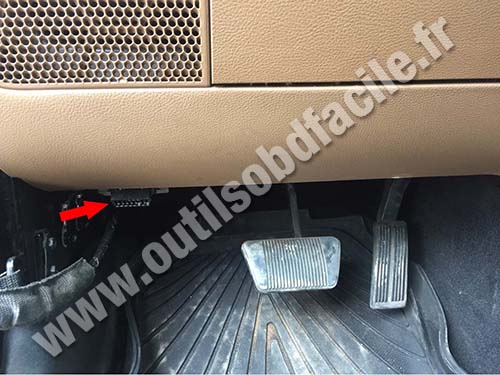
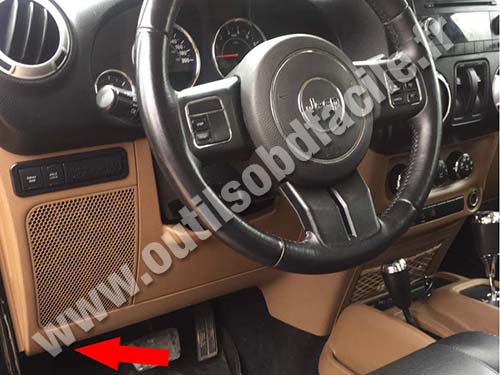
For U.S.-market Jeep Wranglers, the OBD2 port is inside the cabin on the driver’s side, below the dashboard and near the steering column. On both the Wrangler TJ (1997–2006) and Wrangler JK (2007–2018), you can usually reach the port without removing major trim.
The port is a small, black, 16-pin connector. It lets a scan tool communicate with the Jeep’s engine computer and other control modules.
Quick Answer: OBD2 Port Location on a Jeep Wrangler TJ and JK
The OBD2 port is in nearly the same place on both generations:
- Jeep Wrangler TJ, 1997–2006: Under the driver’s side dashboard, close to the steering column and lower dash.
- Jeep Wrangler JK, 2007–2018: Under the driver’s side dashboard, near the steering column and above or near the brake pedal area.
- Left-hand-drive U.S. models: Look below the steering wheel on the left side.
- Right-hand-drive models: The port may be positioned differently because the steering column is on the opposite side.
Sit in the driver’s seat, look below the steering wheel, and follow the lower edge of the dashboard toward the steering column. The connector may point downward or toward the driver.
How to Find the OBD2 Port on a Jeep Wrangler TJ
On a Jeep Wrangler TJ, the diagnostic connector is under the driver’s side dash. It is normally near the lower edge of the dashboard and close to the steering column.
The connector may be easy to see, but some TJs have wiring or trim that partly hides it. You should not need to remove the dashboard.
Steps for a TJ
- Park the Jeep on level ground.
- Turn the ignition off.
- Open the driver’s door and sit or kneel outside the Jeep.
- Look below the steering wheel.
- Check the area to the left and right of the steering column.
- Look for a trapezoid-shaped, 16-pin socket.
- Follow the wiring if the connector is not immediately visible.
- Check that the port is not tucked behind a loose lower dash panel.
The OBD2 socket has a shape similar to a wide trapezoid. It is larger than most ordinary electrical plugs and usually has two rows of terminals.
TJ location by model year
The TJ was sold from 1997 through 2006. The exact mounting position can vary slightly by year, factory options, and previous repairs.
| Wrangler generation | Typical OBD2 port position |
|---|---|
| 1997–2002 TJ | Under the driver’s side dash near the steering column |
| 2003–2004 TJ | Under the driver’s side dash, usually low and close to the column |
| 2005–2006 TJ | Under the driver’s side dash near the lower instrument panel |
A previous owner may have moved the port to install an alarm, remote starter, radio, winch controller, or aftermarket gauge. If you see a loose connector or added wiring, avoid pulling on it.
How to Find the OBD2 Port on a Jeep Wrangler JK
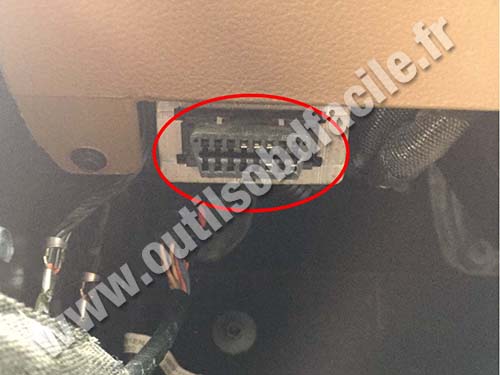
On a Jeep Wrangler JK, the OBD2 port is also under the driver’s side dashboard. It is near the steering column and commonly sits above or close to the brake pedal area.
The port is often easier to reach on a JK than on a TJ. You may be able to plug in a scanner while sitting in the driver’s seat, although the position can be tight if the scanner has a large body or a short cable.
Steps for a JK
- Turn the Jeep off and remove the key.
- Open the driver’s door.
- Look under the steering wheel and lower dashboard.
- Check around the steering column and above the brake pedal.
- Find the 16-pin trapezoid-shaped connector.
- Make sure the connector is fully attached to its bracket.
- Plug in the scan tool with the wider side of the plug aligned correctly.
Do not force the scanner into the socket. The plug should slide in with moderate, even pressure. If it does not fit, turn it around and check for bent pins or an obstruction.
JK model-year notes
The JK ran from 2007 through 2018, with some differences between two-door and four-door models. The basic OBD2 port location remains under the driver’s side dash.
| Wrangler generation | Typical OBD2 port position |
|---|---|
| 2007–2010 JK | Under the driver’s side dash near the steering column |
| 2011–2013 JK | Under the lower dash, close to the steering column |
| 2014–2018 JK | Under the driver’s side dash near the brake pedal and column area |
The 2018 Wrangler JL is a different generation. Its port is also inside the cabin, but this guide focuses on the TJ and JK.
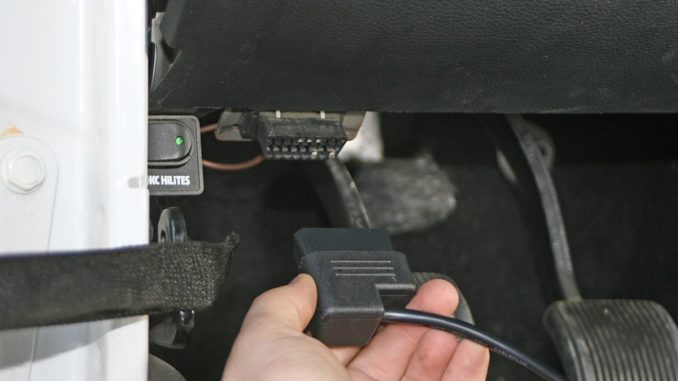
What the Jeep Wrangler OBD2 Port Looks Like
The OBD2 port is a standardized diagnostic connector with 16 pin positions. It has a wide, slightly tapered shape and is often mounted with the opening facing down.
It may be black, gray, or another dark color. The color is not a reliable way to identify it.
Look for these features:
- A wide trapezoid shape
- Two rows of small metal terminals
- A fixed mount under the dashboard
- A short wire harness leading into the dash
- A location within reach of the driver
Do not confuse the OBD2 port with:
- A 12-volt power outlet
- A fuse box
- A trailer-brake connector
- An aftermarket alarm plug
- A radio wiring harness
- A small airbag or steering-column connector
The OBD2 port is normally wider than a telephone jack and has a distinct trapezoid outline.
What the port does
The OBD2 port is also called the diagnostic link connector, or DLC. A compatible scan tool uses it to read information from the Jeep’s onboard computers.
Depending on the Jeep and the scan tool, the port may provide access to:
- Check-engine trouble codes
- Live engine data
- Emissions-related monitor status
- Vehicle speed and engine speed data
- Freeze-frame information
- Some body or chassis module data
A basic code reader may only read and clear engine-related codes. A more advanced tool may communicate with the transmission, airbag, body, or anti-lock brake systems if the tool supports those modules.
How to Plug in an OBD2 Scanner Safely
Finding the port is only the first step. Use the scanner carefully to avoid damaging the connector or losing useful diagnostic information.
Before connecting the scanner
- Park safely.
- Set the parking brake.
- Turn off accessories such as the radio and lights.
- Keep the gear selector in Park or Neutral.
- Inspect the connector for dirt, water, or bent pins.
- Do not use force.
For a manual-transmission Jeep, place the transmission in Neutral and apply the parking brake. Keep your feet clear of the clutch and brake pedals while working under the dash.
Connecting the scanner
- Turn the ignition off.
- Plug the scanner into the OBD2 port.
- Turn the ignition to the ON position without starting the engine.
- Allow the scanner to power up.
- Select the vehicle information if the scanner asks for it.
- Read and record the stored codes before clearing them.
- Start the engine only if the scanner or test requires live data.
The ON position powers the vehicle electronics. On many Jeeps, this means turning the key one position before the engine starts.
Do not clear codes too soon
Clearing a code erases useful information and may reset the emissions monitors. If the Jeep must pass an emissions inspection, the monitors may need time to run again before the vehicle is ready for testing.
Write down:
- The exact code, such as P0301 or P0456
- The date and mileage
- Whether the light is steady or flashing
- Any symptoms
- Recent repairs or fuel-system work
A trouble code identifies a system or fault area. It does not always identify the failed part. For example, an oxygen-sensor code may result from a wiring problem, exhaust leak, intake leak, or fuel issue.
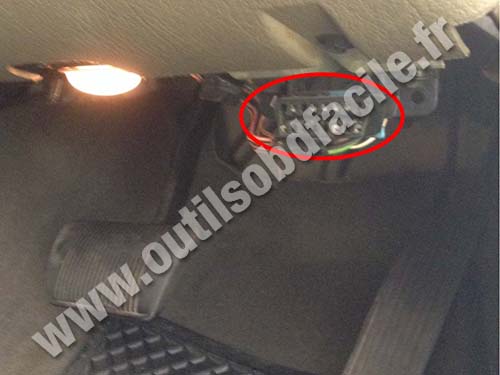
What to Do If You Cannot Find the Port
If the OBD2 connector is not visible, search methodically. Most location problems come from poor visibility, added accessories, or a connector that has been pushed behind the trim.
Check these areas first
- Look directly below the steering wheel.
- Check both sides of the steering column.
- Look above the brake pedal.
- Use a flashlight to inspect behind the lower dash.
- Follow any visible diagnostic wiring.
- Check whether an aftermarket alarm or remote starter is covering the port.
- Inspect the lower dash panel for signs that it has been removed.
Do not remove the steering wheel, airbag, or major dash panels just to find the connector.
If the port is loose
A loose connector may still work, but repeated movement can damage the wiring. Support the connector while inserting the scanner. Do not let a heavy scan tool hang from the port during a long drive.
If the connector has fallen behind the dashboard, a trim panel may need to be removed. Disconnecting the battery may be appropriate before working near electrical wiring, but follow the repair manual for the specific Jeep. Airbag wiring and yellow connectors require special care.
If the scan tool will not power up
Check the following:
- The scanner is compatible with OBD2 vehicles.
- The plug is fully inserted.
- The ignition is in the ON position.
- The connector has no bent or pushed-back terminals.
- The vehicle battery is charged.
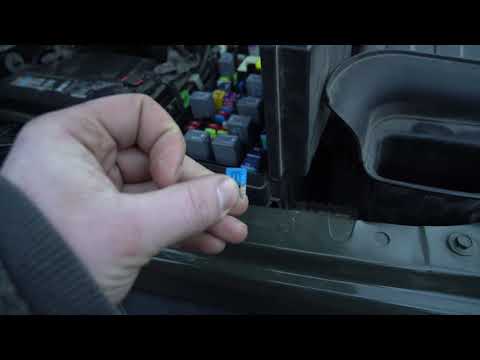
- The OBD2 power circuit fuse is intact.
On many vehicles, the scan tool receives power through the diagnostic connector. A blown fuse can make the port appear dead even when the connector itself is present.
Do not replace a blown fuse with a larger fuse. If the replacement fuse fails again, stop and diagnose the short or have a qualified technician inspect it.

TJ vs. JK OBD2 Port Location
The main difference is not the side of the Jeep. Both U.S.-market generations place the port beneath the driver’s dashboard.
| Feature | Wrangler TJ | Wrangler JK |
|---|---|---|
| Model years | 1997–2006 | 2007–2018 |
| General location | Under driver’s side dash | Under driver’s side dash |
| Nearby area | Steering column and lower dash | Steering column and brake pedal area |
| Connector type | 16-pin OBD2/DLC | 16-pin OBD2/DLC |
| Usual access | Reach under the dash | Reach under the dash |
| Common issue | Hidden by wiring or trim | Tight access with bulky scanners |
The exact angle and mounting bracket can vary. Factory service work, aftermarket electronics, and off-road modifications may also change how easy the connector is to see.
Common Mistakes to Avoid
Looking under the hood
The OBD2 port is inside the passenger cabin, not in the engine bay. You may see other diagnostic connectors under the hood, but they are not the standard port used by most modern scan tools.
Searching on the passenger side
On U.S.-market, left-hand-drive Wranglers, start on the driver’s side. A right-hand-drive export Jeep may have a different position.
Trying to use a phone charger
An OBD2 adapter may connect to a phone, but a standard USB charger cannot read vehicle codes. The device must support OBD2 communication and use a compatible app or scan system.
Assuming every scanner reads every module
A low-cost reader may only access powertrain and emissions data. It may not read airbag, ABS, body, or transmission faults on every Wrangler.
Driving with a flashing check-engine light
A flashing check-engine light can indicate a severe misfire that may damage the catalytic converter. Reduce driving and seek prompt diagnosis. A steady light still requires attention, but the condition may be less urgent.
Frequently Asked Questions
Does a Jeep Wrangler TJ have an OBD2 port?
Yes. U.S.-market Jeep Wrangler TJs from 1997 through 2006 use an OBD2-style diagnostic connector. It is under the driver’s side dashboard near the steering column.
Does a Jeep Wrangler JK have an OBD2 port?
Yes. The 2007–2018 Wrangler JK has a 16-pin OBD2 diagnostic port under the driver’s side dash, close to the steering column and brake pedal area.
Can I leave an OBD2 scanner plugged into my Wrangler?
You can leave a low-power device connected only if the device manufacturer states that it is suitable for continuous use. Some adapters can drain the battery, interfere with sleep mode, or remain active when the Jeep is parked.
Will an OBD2 scanner reset the check-engine light?
Many scanners can clear a check-engine light after reading the stored code. Clearing the light does not repair the fault. If the cause remains, the light may return.
Why does my scanner connect but show no codes?
A scanner may connect but show no codes because no supported fault is stored, the wrong vehicle information was selected, the fault is in a module the scanner cannot access, or the problem is not monitored through the system being checked.
Key Takeaways
- The Wrangler TJ and JK OBD2 ports are under the driver’s side dashboard.
- Start near the steering column and check above the brake pedal.
- The port has a wide, 16-pin trapezoid shape.
- U.S.-market, left-hand-drive models usually place it on the driver’s side.
- Record diagnostic codes before clearing them.
- Do not force a scanner into the connector.
- A code points to a system; it does not always identify the failed part.
Conclusion
For a U.S.-market Jeep Wrangler TJ or JK, look beneath the driver’s side dashboard near the steering column. On the JK, also check the area above and around the brake pedal. Once you find the 16-pin connector, inspect it before connecting a compatible scan tool.
If the port is missing, loose, damaged, or has no power, avoid forcing the plug or replacing a fuse with the wrong rating. A repair manual or qualified technician can help trace wiring and diagnose faults safely.