How To Take Off Soft Top Jeep: Easy Removal Guide
 Reading Time: 13 minutes
 Introduction
To take off a soft-top Jeep Wrangler in the United States, remove the windows first, release the top from the windshield and body-retaining channels, fold or lift the fabric and bows as designed, and secure the folded top or store it separately. The exact sequence depends on the Wrangler generation, body style, and soft-top system, so use the owner’s manual for your specific Jeep before forcing any latch or fastener.
This guide applies primarily to U.S.-market Jeep Wrangler models, including the TJ, JK, and JL generations. It covers removing the fabric soft top for open-air driving, seasonal storage, cleaning, or replacement. It does not assume that every aftermarket or factory top uses identical hardware.

What You Need Before Removing a Jeep Soft Top
Prepare the Jeep and work area before opening any fasteners. Soft-top fabric, plastic windows, and retaining hardware can be damaged when removed on a cold day, in strong wind, or on a dirty surface.
Basic equipment
You will usually need:
- The Jeep’s factory tool kit or a suitable Torx-bit set
- A clean, dry place to lay the windows
- A soft blanket or storage bag
- Two people for lifting or removing the complete top assembly
- The Jeep owner’s manual
- Mild soap and water if the top or window channels are dirty
- Painter’s tape and a marker for labeling unfamiliar hardware
Many factory Wrangler tops use Torx fasteners, but the required size varies by generation and component. Do not assume that one Torx bit fits every fastener on the vehicle.
Check the weather and temperature
Remove a soft top when the fabric and plastic windows are warm enough to flex. Cold vinyl windows can become stiff and more likely to crease, crack, or develop permanent marks. Avoid working during:
- Rain or snow
- High winds
- Freezing temperatures
- Extreme heat that makes the fabric difficult to handle
- Conditions where the removed top could blow into traffic or become contaminated
Park on level ground, set the parking brake, turn off the engine, and keep the ignition key away from the vehicle if another person is working around it.
Identify the type of removal you want
“Take off the soft top” can mean two different things:
- Fold the top down: The top remains attached to the Wrangler and can be raised again.
- Remove the complete soft-top assembly: The fabric, bows, and frame are taken off the Jeep for long-term storage or replacement.
The first option is generally faster and is the normal choice for open-air driving. The second option usually requires removing additional fasteners and lifting the assembly with a helper.
Important model differences
- TJ Wrangler: Older tops may use separate door surrounds, plastic retainers, and a different bow arrangement.
- JK Wrangler: Factory soft tops commonly use removable windows, door surrounds, and rear-body retaining strips.
- JL Wrangler: The top may include revised latches, rear-window hardware, and a Sunrider-style folding mechanism.
- Aftermarket tops: Hardware, bows, clips, and removal steps may differ substantially from the factory design.
A 2018 Wrangler JL is not mechanically identical to a 2007 Wrangler JK, even though both may look similar. Match the instructions to the vehicle and top manufacturer.
How to Take Off a Jeep Soft Top: Step-by-Step
The safest general sequence is to remove the windows, release the fabric from the body, fold the top down, and only then decide whether the frame should be removed.
1. Photograph the installed top
Before loosening anything, take photos of:
- The front latches
- Door-surround placement
- Rear-window retainers
- Bow positions
- Straps and clips
- Any unusual fasteners
These photos provide a useful reference when reinstalling the top. If hardware is not symmetrical, label left and right components rather than relying on memory.
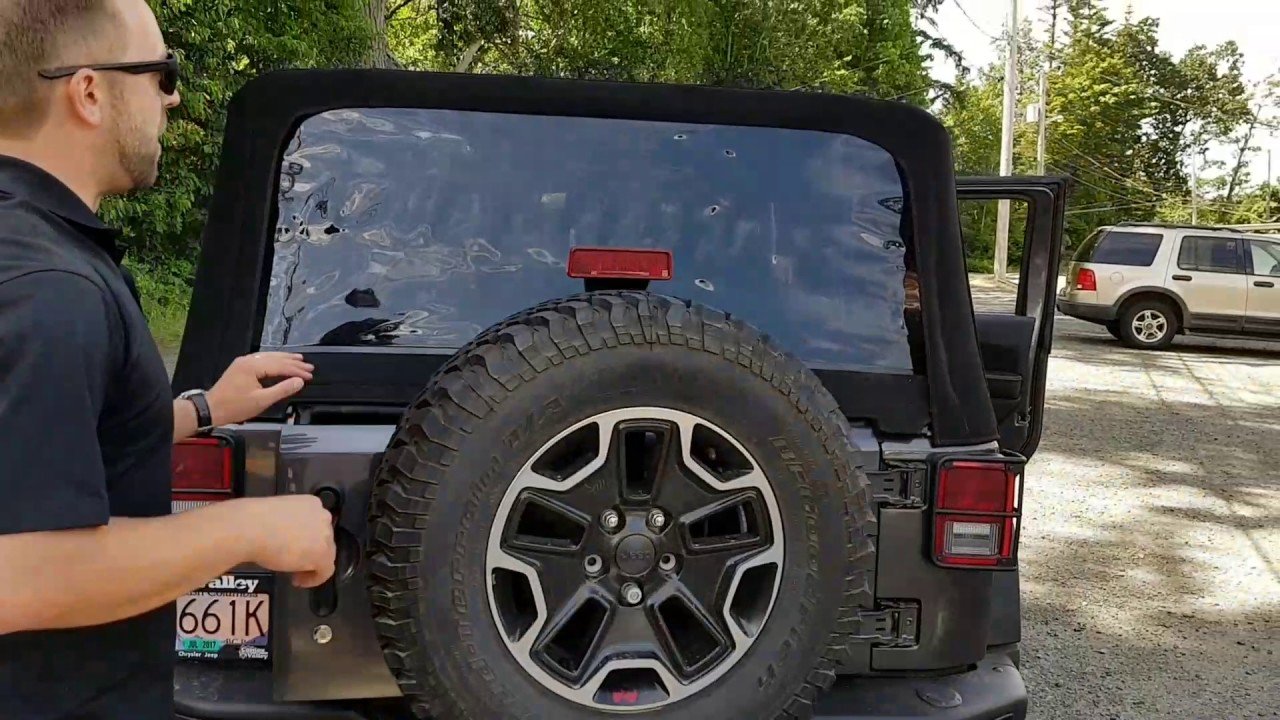
2. Remove the rear window
Open the tailgate or swing gate as required by the Jeep design. Remove the rear window according to the window’s construction:
- Release the upper and side zippers or retainers.
- Detach the lower edge from the rear body channel.
- Support the window so it does not drag across the bumper or ground.
- Avoid sharply folding the clear plastic.
Some Wrangler soft tops use a zipper around part or all of the rear window. Others use a combination of zippers, plastic strips, and clips. Start and stop zippers smoothly. If a zipper resists, inspect it for dirt or fabric tension instead of pulling harder.
Place the rear window flat or roll it only as directed by the manufacturer. Do not place heavy objects on the clear plastic.
3. Remove the side windows
Remove one side window at a time:
- Release the rear and upper zipper or retaining connection.
- Pull the plastic retaining strip from the body channel without twisting it.
- Remove the front edge from the door surround or vertical channel.
- Set the window aside on a clean, padded surface.
Do not drag a plastic window over the Jeep’s body, roll it tightly, or leave it in direct sunlight under weight. Creases can become difficult or impossible to remove.
If the side windows are dirty, rinse away grit before wiping them. Abrasive particles can scratch the transparent plastic.
4. Release the lower rear and side retainers
With the windows removed, locate the fabric edges tucked into the body channels near the rear wheel wells and rear corners. Pull the plastic retainer out gradually rather than yanking a long section at once.
Work from one end toward the other. Keep the fabric supported as it comes free so that it does not hang from a single clip or bow.
If the retainer will not release:
- Check whether a zipper is still attached.
- Look for a missed clip or body screw.
- Confirm that the fabric is not under tension.
- Clean visible dirt from the channel.
- Consult the manual before using a tool.
A flat plastic trim tool may help with an especially tight retainer, but avoid metal screwdrivers that can cut the fabric, scratch painted surfaces, or deform the channel.
5. Release the front windshield header
Move to the front of the Jeep and release the soft-top header latches from the windshield frame. Most factory designs use latches that hold a front header bar against the windshield frame.
Support the header while releasing the latches. Once free, do not allow the header to drop onto the hood or windshield.
If the latches are difficult to release, the top may still be under tension. Slightly repositioning the frame or pressing down on the header can reduce tension, but never force a latch with excessive leverage. A bent latch or header can prevent the top from sealing correctly later.
6. Fold the soft top rearward
Fold the top according to the bow sequence for your Wrangler. In general:
- Move the front header rearward.
- Collapse or fold the bows in their intended direction.
- Keep the fabric from catching on the door surrounds.
- Use the factory straps to hold the folded top in place.
- Check that no fabric is pinched between metal parts.
Do not sit or kneel on the folded top. Do not allow the bows to snap together. Soft-top frames can pinch fingers, and sudden movement can damage the bow joints.
On some Wrangler models, the top can remain in a folded position behind the rear seats. On others, the complete frame must be lifted out or secured with specific straps. Follow the model-specific instructions rather than treating every “top-down” position as interchangeable.
7. Remove the door surrounds if required
Many Wrangler soft tops use removable door surrounds or side rails. These components may need to come off before the top can be completely removed.
Remove them only after the fabric is no longer applying tension. Depending on the design, you may need to:
- Open the front doors
- Release plastic clips
- Remove Torx fasteners
- Lift the surround from its locating pins
- Store left and right pieces separately
Do not drive with door surrounds, brackets, or rails loosely attached. A component that appears secure while parked may move in airflow.
8. Remove the complete top assembly, if needed
For full soft-top removal, have a helper stand on the opposite side of the Jeep. Confirm that:
- All windows are removed
- The front header is released
- Rear body retainers are free
- Door surrounds and required brackets are removed
- No wiring, straps, or accessories are attached
- The lift path is clear
Lift the assembly evenly and place it on a padded surface. Do not drag the frame across the paint or allow the bows to rest on unsupported joints.
Some factory and aftermarket tops are designed to remain installed while folded and are not intended to be removed as one piece by one person. If the assembly feels unusually heavy, twisted, or stuck, stop and identify the remaining attachment point.
9. Secure or store the soft top
Before storage, remove loose dirt and allow the fabric to dry completely. Store the top:
- In a cool, dry location
- Away from rodents, chemicals, and sharp objects
- Without heavy items placed on the windows
- With plastic windows supported or stored as specified by the manufacturer
- With bolts and small hardware labeled by location
Do not store a damp soft top in a sealed container. Moisture can encourage mildew and create odor.
Signs that the removal was successful
The soft top has been properly released when:
- The windows are completely free of their channels
- No fabric remains trapped in the body retainers
- The windshield header is no longer latched
- The bows fold without unusual resistance
- No clips, zippers, or straps are carrying unexpected tension
- The frame can be lifted without twisting or scraping the Jeep

How to Fold a Jeep Soft Top Without Damaging It
Fold the top loosely and follow its natural bow movement. The most common damage comes from forcing stiff fabric, sharply creasing clear windows, or allowing metal bows to pinch the material.
Protect the windows
Clear soft-top windows are usually made from flexible plastic rather than glass. To reduce damage:
- Keep them clean before folding or rolling.
- Do not place them on gravel, concrete, or a dirty garage floor.
- Avoid tight bends and sharp creases.
- Do not stack tools or cargo on them.
- Keep them away from exhaust heat and direct sunlight during storage.
If the manufacturer supplies window storage sleeves, use them. If not, place a clean, soft layer between window surfaces and support them so they do not develop hard folds.
Use the factory retaining straps
Factory straps help control the folded fabric and frame. Attach them only after the top is fully in its intended folded position. Straps should hold the top in place without crushing the bows or pinching the fabric.
If a strap will not reach its attachment point, the top may not be folded correctly. Do not extend it with improvised rope around a moving frame unless the owner’s manual specifically allows that arrangement.
Avoid forcing the bows
A soft-top bow is a structural support member that shapes the fabric and helps maintain tension. A bow that is bent, installed backward, or forced against a retainer may cause:
- Poor sealing
- Wind noise
- Water leaks
- Window misalignment
- Premature fabric wear
If the top does not fold smoothly, unfold it slightly and look for a trapped edge, misaligned door surround, or unreleased retainer.

Folding the Top Down vs. Removing It Completely
Folding the top is usually the better choice for short trips because it avoids repeated hardware removal and reduces the chance of losing small components. Complete removal makes more sense when storing the top for a season, replacing it, or installing a hardtop or another roof system.
| Objective | Better option | Main consideration |
|---|---|---|
| Open-air driving for the day | Fold the top down | Secure the folded assembly |
| Protect the top during winter storage | Remove and store it | Keep fabric and windows dry |
| Install a hardtop | Remove the soft-top assembly | Follow the hardtop manufacturer’s hardware instructions |
| Clean the exterior fabric | Keep the frame installed if possible | Avoid saturating interior components |
| Replace damaged fabric | Remove the necessary bows and retainers | Photograph the original routing |
| Transport or sell the top | Complete removal | Label all brackets and fasteners |
A folded soft top may obstruct rear visibility or occupy cargo space. A completely removed top requires more lifting and more storage room. The correct choice depends on how often you plan to use the Jeep without its roof.

Common Problems When Removing a Wrangler Soft Top
The zipper will not move
A stuck zipper is often caused by dirt, fabric tension, or a misaligned zipper track. Stop pulling, reduce tension by supporting the window, and inspect the track. Remove loose grit carefully. If the zipper remains stuck, check the top manufacturer’s care instructions before applying any lubricant.
A plastic retainer will not come out
Confirm that no zipper, clip, screw, or corner retainer is still attached. Pull the retainer gradually while supporting the fabric. Do not pry aggressively against painted body panels.
The top is stuck at the front
The front header may still be latched, or the fabric may be under tension because a rear retainer remains installed. Release the tension in the correct sequence instead of bending the header.
The top will not fold evenly
Uneven folding usually indicates that one bow, door surround, strap, or fabric edge is out of position. Unfold the top slightly, inspect both sides, and compare the arrangement with your photos or owner’s manual.
The windows have permanent-looking creases
Warm the windows naturally in mild sunlight and let them relax; do not use a heat gun or hair dryer at close range. Severe creases may not disappear. Repeated tight folding accelerates window wear.
The fabric is stuck to the channel
Dirt, age, cold temperatures, or hardened material can make the retainer difficult to remove. Warm the Jeep, clean the area, and work slowly. If the channel or fabric begins to tear, stop and have a Jeep upholstery or soft-top specialist inspect it.

Safety Precautions for Jeep Soft-Top Removal
A Wrangler soft top is not merely a sheet of fabric. Its bows, latches, retainers, and windows can create pinch points and can affect weather protection and vehicle operation after reinstallation.
Follow these precautions:
- Use two people to remove a complete top assembly.
- Keep fingers clear of folding bows and latch mechanisms.
- Never stand on the seats, hood, or body panels to reach the top.
- Do not drive with loose windows, brackets, or door surrounds.
- Do not operate the Jeep with missing structural soft-top components unless the vehicle and top manufacturer specifically permits that configuration.
- Keep removed parts out of the roadway and away from moving traffic.
- Check that doors close and latch normally after reinstalling surrounds.
- Confirm that the top does not obstruct mirrors, lights, or the driver’s view.
- Avoid modifying latches or drilling body channels without documented instructions.
The Jeep owner’s manual remains the controlling source for the exact hardware and operating procedure for the vehicle. Jeep provides owner information through its official owner resources, and the National Highway Traffic Safety Administration provides vehicle safety information for U.S. drivers.
How to Reinstall the Jeep Soft Top
Reinstall the top in the reverse general order, but do not rush the final alignment. The top should be warm enough for the fabric to stretch naturally into position.
- Position the frame or folded assembly correctly.
- Install door surrounds and required brackets.
- Attach the front header to the windshield frame.
- Reinsert the side and rear fabric retainers.
- Install the side windows without twisting the zipper tracks.
- Install the rear window and engage all retainers.
- Close the doors and inspect the seals.
- Secure every latch, strap, clip, and fastener.
- Check the roof from both sides for even fabric tension.
Do not judge fit by forcing one corner into place. If the last window or retainer is extremely difficult to install, an earlier component may be misaligned. Recheck the frame position and the installation sequence.
After installation, inspect for:
- Gaps around the windshield header
- Loose fabric
- Pinched seals
- Uneven window tension
- Missing fasteners
- Unlatched bows
- Water paths around the doors and rear corners
A short, low-speed inspection in a safe area can reveal rattles or loose hardware before normal driving. Never test a questionable installation at highway speed.

Maintenance After Removing and Storing the Soft Top
Clean the top with water and a mild cleaner approved for automotive fabric. Avoid harsh household chemicals, abrasive brushes, petroleum-based products, and high-pressure spraying close to seams or windows.
Before putting the top away:
- Remove leaves, sand, and road debris.
- Dry the fabric fully.
- Check seams and stitching for damage.
- Inspect zippers and retaining strips.
- Look for cracked windows or stretched edges.
- Store screws, clips, and brackets in labeled containers.
- Keep the storage area dry and ventilated.
If the top has mildew, severe tears, damaged stitching, or a broken bow, repair it before reinstallation. Continuing to use damaged hardware can create a loose top, poor weather sealing, or a component that separates while driving.
Frequently Asked Questions
Can one person remove a Jeep soft top?
One person can often fold the top down, depending on the Wrangler model and top design. Completely removing the frame is safer with two people because the assembly is awkward, can twist, and may contact the bodywork.
Do I have to remove the windows before folding the top?
For most Wrangler soft tops, yes. The windows generally need to be removed or positioned according to the manufacturer’s instructions before the main top is folded. Leaving windows attached can crease the plastic or stress the zippers and retainers.
Can I drive a Jeep Wrangler with the soft top removed?
A Wrangler can be driven without its soft top only when the remaining components are correctly secured and the vehicle configuration complies with the owner’s manual and applicable safety requirements. Do not drive with loose brackets, unsecured bows, missing door surrounds, or detached window hardware.
How should I store Jeep soft-top windows?
Store the windows clean, dry, supported, and protected from sharp folds, heavy objects, extreme heat, and abrasive surfaces. Use the manufacturer’s storage sleeves or recommendations when available.
Why is my new or recently removed soft top difficult to reinstall?
Cold fabric, incorrect bow positioning, retained hardware, or a misaligned header can make installation difficult. Warm the top naturally, verify the sequence, and avoid forcing zippers or plastic retainers. If the fabric or frame appears damaged, seek help from a qualified soft-top installer.
Key Takeaways
- Remove the windows before folding or removing most Jeep Wrangler soft tops.
- Release retainers and windshield latches in the correct order.
- Use two people for complete frame removal.
- Keep plastic windows clean, warm, flat, or stored as the manufacturer recommends.
- Never force zippers, bows, latches, or body retainers.
- Photograph and label parts before disassembly.
- Recheck every latch, strap, seal, and fastener before driving.
Conclusion
The safest way to take off a soft-top Jeep is to work slowly from the windows to the retainers, then the windshield header, and finally the folding frame. The exact steps vary among TJ, JK, JL, factory, and aftermarket systems, so the owner’s manual should settle any difference in hardware or sequence.
For occasional open-air driving, fold the top down and secure it with the intended straps. For long-term storage or a hardtop installation, remove the complete assembly with a helper, protect the windows, and label every component for reinstallation.