Jeep P0420: Causes, Fixes, And Repair Costs
 Reading Time: 13 minutes
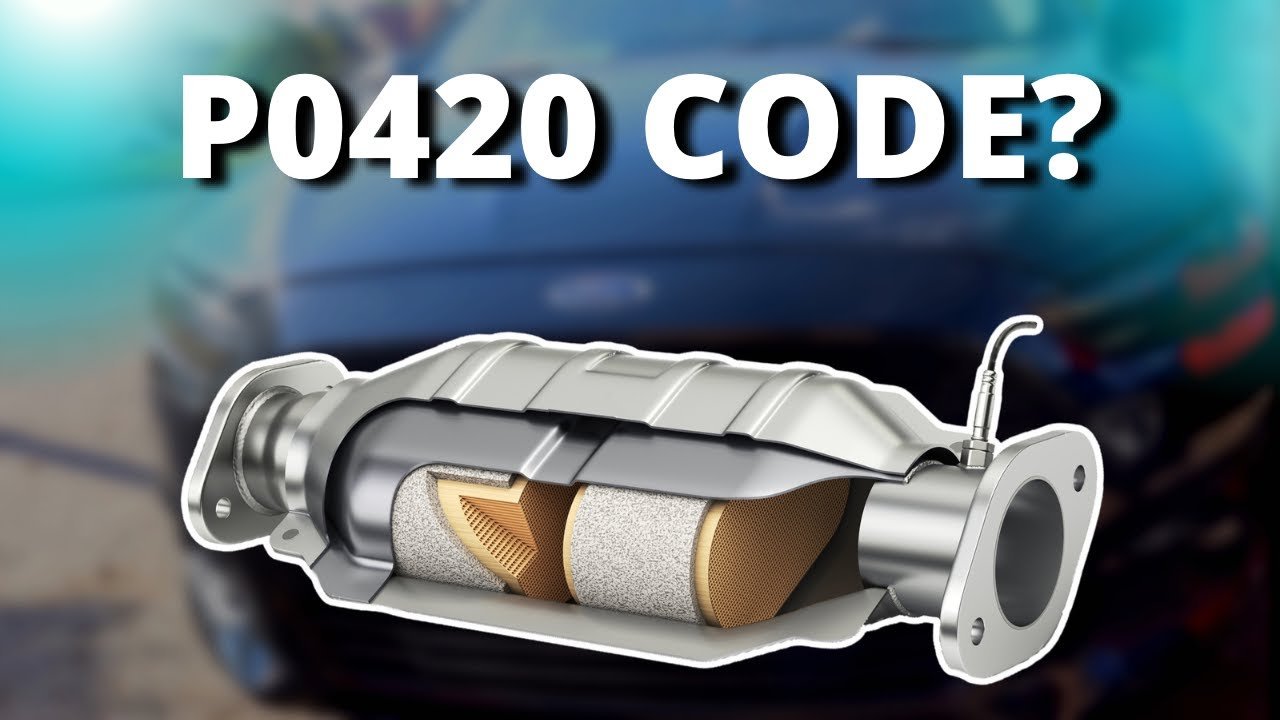
 A P0420 code on a Jeep means the engine computer has detected that the Bank 1 catalytic converter is not reducing exhaust emissions as effectively as expected. The code is commonly displayed as “catalyst System Efficiency Below Threshold (Bank 1)”.
On a Jeep sold in the United States, P0420 can result from a worn catalytic converter, an exhaust leak, a faulty oxygen sensor, an engine misfire, fuel-control problems, or inaccurate sensor data. Replacing the catalytic converter immediately may solve the problem, but it can also waste money if the underlying cause has not been diagnosed.
This guide explains what Jeep P0420 means, how to diagnose it safely, when driving is acceptable, and which repairs are most likely to work.

What Does P0420 Mean on a Jeep?
P0420 means the powertrain control module (PCM) believes the catalytic converter on Bank 1 is operating below its required efficiency threshold.
The catalytic converter uses precious-metal catalyst materials to convert harmful exhaust gases into less harmful compounds:
- Carbon monoxide becomes carbon dioxide.
- Unburned hydrocarbons become carbon dioxide and water vapor.
- Nitrogen oxides are reduced into nitrogen and oxygen.
The PCM estimates converter performance by comparing oxygen-sensor activity before and after the converter.
- The upstream oxygen sensor monitors exhaust leaving the engine.
- The downstream oxygen sensor monitors exhaust after the catalytic converter.
- A functioning converter generally causes the downstream sensor signal to remain more stable than the upstream signal.
- If the downstream signal begins to resemble the upstream signal, the PCM may determine that the converter is not storing and processing oxygen effectively.
The exact strategy differs by Jeep engine, model year, emissions package, and sensor type. Therefore, P0420 identifies a catalyst-efficiency problem, not automatically a failed catalytic converter.
What is Bank 1?
Bank 1 is the side of the engine containing cylinder number one.
On a four-cylinder Jeep engine, there is normally only one cylinder bank, so Bank 1 represents the entire engine. On a V6 or V8, Bank 1 is only one side of the engine.
The location of cylinder number one varies by engine family. Use the Jeep service manual or a reliable repair database for the specific year, engine, and model rather than assuming that Bank 1 is always the driver or passenger side.
Jeep models that may display P0420
P0420 can occur on many Jeep vehicles, including various model years of:
- Jeep Wrangler
- Jeep Cherokee
- Jeep Grand Cherokee
- Jeep Compass
- Jeep Patriot
- Jeep Renegade
- Jeep Liberty
- Jeep Commander
The likely cause depends heavily on the engine and exhaust design. A P0420 on a 3.6-liter Pentastar V6 is not diagnosed exactly the same way as P0420 on a 2.4-liter four-cylinder or a diesel engine.
Common Symptoms of Jeep P0420
A Jeep with P0420 may have no obvious drivability symptoms. The check-engine light is often the only noticeable sign because the vehicle can still run normally while emissions performance declines.
Possible symptoms include:
- Check-engine light
- Reduced fuel economy
- Sulfur or rotten-egg exhaust odor
- Rough running
- Hesitation during acceleration
- Reduced engine power
- Failed emissions inspection
- Exhaust rattling from a damaged converter
- Excessive exhaust heat
- Misfire-related symptoms if another engine problem caused the catalyst damage
The symptoms help narrow the diagnosis, but they do not prove which component has failed. For example, a rotten-egg odor can occur with catalyst overheating or an excessively rich air-fuel mixture. A rattling converter may indicate a broken substrate, but a converter can also fail chemically without rattling.
The Most Common Causes of Jeep P0420
The most likely causes are listed below in practical diagnostic order. The correct order can change when other codes or symptoms are present.
1. Worn or contaminated catalytic converter
A catalytic converter can gradually lose efficiency from age, high mileage, thermal stress, contamination, or repeated exposure to an improper air-fuel mixture.
Common causes of catalyst damage include:
- Long-term engine misfires
- Excess fuel entering the exhaust
- Burning engine oil
- Coolant entering the combustion chamber
- Silicone contamination
- Leaded fuel contamination
- Severe overheating
A converter may be physically intact but chemically depleted. In that situation, it may not rattle, yet it can still trigger P0420.
2. Exhaust leak near the converter or oxygen sensors
An exhaust leak before or near the downstream oxygen sensor can draw outside air into the exhaust stream. That extra oxygen may distort sensor readings and cause the PCM to interpret the data as poor catalytic-converter performance.
Inspect for:
- Cracked exhaust manifolds
- Failed manifold gaskets
- Loose flange bolts
- Damaged flex-pipe sections
- Broken welds
- Holes near oxygen-sensor fittings
- Soot marks around joints
Small leaks may be difficult to hear, especially when the exhaust is cold. A smoke test is often more reliable than visual inspection alone.
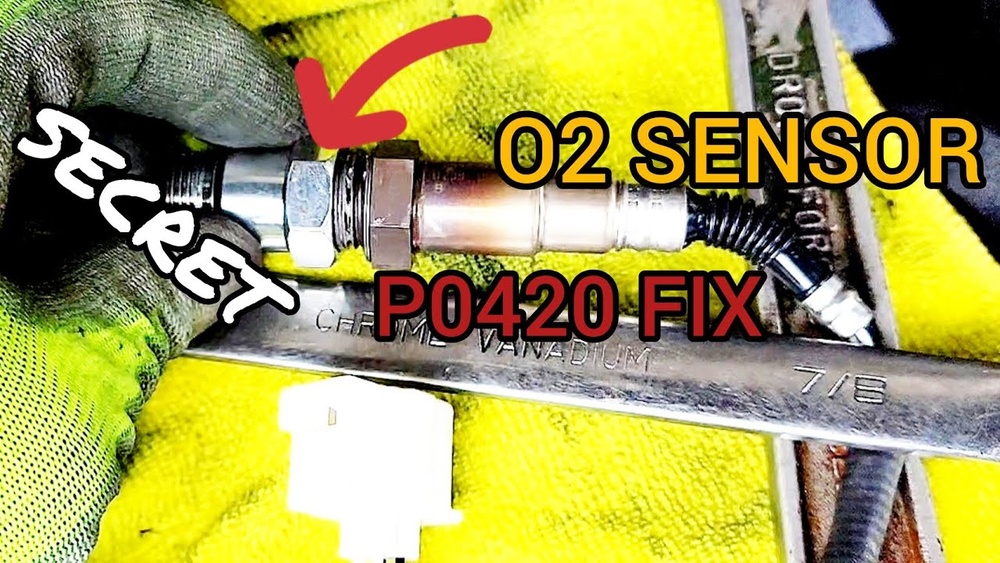
3. Faulty downstream oxygen sensor
The rear oxygen sensor can age, respond slowly, become contaminated, or develop a wiring fault. Because the PCM uses this sensor to evaluate catalyst performance, inaccurate data can contribute to P0420.
Check for:
- Damaged wiring near the exhaust
- Melted insulation
- Corroded connectors
- Poor electrical grounds
- Water intrusion
- Sensor contamination
- Additional oxygen-sensor or heater codes
A sensor should not be replaced solely because P0420 is present. Sensor data, wiring tests, and related codes should support that decision.
4. Faulty upstream oxygen or air-fuel sensor
The front sensor controls or reports the engine’s air-fuel mixture. If it responds incorrectly, the engine may run too rich or too lean, causing poor catalyst performance or misleading catalyst-monitor results.
A front sensor problem may also produce:
- Fuel-trim codes
- Rich or lean mixture codes
- Poor fuel economy
- Hard starting
- Surging
- Rough idle
5. Misfire or fuel-system problem
A misfire allows unburned fuel and oxygen to enter the exhaust. The catalytic converter can overheat rapidly under those conditions.
Possible contributors include:
- Worn spark plugs
- Failed ignition coils
- Fuel-injector problems
- Low fuel pressure
- Vacuum leaks
- Intake leaks
- Incorrect valve timing
- Low compression
- Crankshaft or camshaft sensor problems
If P0420 appears with P0300, P0301, P0302, or another misfire code, diagnose the misfire first. Installing a converter before correcting the misfire may damage the replacement converter.
6. Engine oil or coolant entering the exhaust
An engine that burns oil or coolant can contaminate the catalyst and oxygen sensors.
Investigate:
- Blue exhaust smoke, which may indicate oil burning
- White exhaust smoke with coolant loss, especially after warm-up
- Unexplained coolant consumption
- Low compression
- Failed head gasket
- Worn valve seals or piston rings
A catalytic converter is not a cure for an engine that is continuously contaminating the exhaust.
How to Diagnose Jeep P0420 Step by Step
The most effective approach is to confirm the code, identify related problems, inspect the exhaust, and then evaluate sensor and converter behavior.
Step 1: Scan for every diagnostic trouble code
Use an OBD-II scanner that can display:
- Stored codes
- Pending codes
- Freeze-frame data
- Live oxygen-sensor data
- Fuel trims
- Engine coolant temperature
- Misfire counters, if supported
- Catalyst-monitor status
Do not focus on P0420 alone. A fuel-trim, misfire, sensor-heater, or crankshaft-code may be the primary fault.
Record the freeze-frame information before clearing the code. It may show engine speed, load, coolant temperature, vehicle speed, and fuel-trim conditions when the PCM detected the problem.
Step 2: Confirm that the Jeep is fully warmed up
The catalyst monitor generally runs only under specific operating conditions. The engine must normally reach operating temperature, and the vehicle may need steady-speed driving after startup.
If the Jeep has a thermostat problem and runs too cool, the catalyst monitor may not operate correctly. Check whether the coolant temperature reaches a normal operating range and whether the temperature remains stable.
A scan tool reading is more useful than judging temperature from the dashboard gauge alone.
Step 3: Check for misfires and fuel-control problems
Review short-term and long-term fuel trims while the engine is warm.
Fuel trims that are substantially positive can suggest the PCM is adding fuel because the mixture appears lean. Negative fuel trims can suggest the PCM is removing fuel because the mixture appears rich. The exact interpretation depends on engine condition, measurement point, and manufacturer strategy, so fuel trims should be treated as diagnostic clues rather than automatic proof.
Check for:
- Misfire counters
- Rough idle
- Vacuum leaks
- Intake leaks after the mass-airflow sensor, where equipped
- Fuel-pressure problems
- Injector leakage
- Ignition faults
- Restricted air or fuel delivery
Correct these problems before condemning the converter.
Step 4: Inspect for exhaust leaks
With the engine cold, inspect the Bank 1 exhaust path from the cylinder head to and around the catalytic converter.
Look for:
- Black soot
- Cracks
- Loose fasteners
- Broken hangers
- Damaged gaskets
- Flex-pipe failure
- Holes around sensor bungs
A professional shop may use an exhaust smoke machine or a regulated low-pressure test. Do not pressurize the exhaust with unsafe compressed-air pressure.
Never place hands near a running hot exhaust to search for leaks. Exhaust components can cause severe burns, and carbon monoxide can accumulate in enclosed areas.
Step 5: Evaluate oxygen-sensor operation
A scan tool can help compare the upstream and downstream sensors when the engine is fully warm.
As a general pattern:
- The upstream sensor usually changes more rapidly as the PCM adjusts the mixture.
- The downstream sensor should generally change less dramatically when the converter is working properly.
- A downstream signal that closely follows the upstream signal may support a weak converter diagnosis.
This is a pattern, not a universal voltage rule. Some Jeeps use sensors and control strategies that make simple “voltage must be between X and Y” tests unreliable.
A technician may also use:
- A lab oscilloscope
- A propane-enrichment test
- A vacuum-leak response test
- Sensor heater and circuit tests
- Fuel-trim response
- Temperature measurements before and after the converter
Sensor signals should be interpreted alongside fuel trims, exhaust leaks, engine performance, and manufacturer specifications.
Step 6: Test the catalytic converter
Converter temperature comparisons can provide supporting evidence, but they are not conclusive by themselves.
A technician may measure exhaust temperature before and after the converter under specified conditions. A functioning converter can show a temperature increase as chemical reactions occur, but readings are affected by:
- Engine load
- Air-fuel ratio
- Exhaust flow
- Thermometer position
- Converter design
- Whether the engine has reached operating temperature
A converter with a melted or collapsed substrate may also create a restriction. Signs include poor high-rpm power, unusual vacuum behavior, and excessive backpressure. A backpressure test or suitable pressure measurement is more dependable than guessing from performance alone.
Step 7: Check technical service information
Jeep service information may contain model-specific diagnostic procedures, software updates, sensor tests, wiring diagrams, and revised parts.
Before replacing expensive emissions components, check for:
- Technical service bulletins
- PCM software updates
- Engine-specific diagnostic procedures
- Updated oxygen sensors
- Exhaust-manifold or catalyst design changes
- Warranty or emissions-warranty coverage
A technical service bulletin is not automatically a recall, and it does not guarantee that every vehicle has the listed condition.

Should You Replace the Catalytic Converter for P0420?
Replace the catalytic converter only after confirming that the converter is the most probable failed component and that the engine has no unresolved condition that could damage the replacement.
Converter replacement is more justified when:
- P0420 returns after proper drive cycles
- Exhaust leaks have been ruled out
- Misfires are absent or repaired
- Fuel trims and sensor behavior do not indicate an engine-control problem
- The downstream sensor pattern supports low catalyst efficiency
- The converter is rattling, melted, restricted, or visibly damaged
- Temperature or backpressure testing supports converter failure
Replacing the converter first is a poor strategy when:
- Misfire codes remain active
- The engine burns oil or coolant
- An exhaust leak is present
- The engine runs persistently rich or lean
- The oxygen-sensor wiring is damaged
- The Jeep has additional unresolved powertrain codes
OEM, aftermarket, and emissions-compliant converters
The replacement must be legal and compatible with the Jeep’s emissions configuration.
Consider:
- Exact year, model, engine, and drivetrain
- Federal versus California emissions equipment
- Direct-fit versus universal construction
- Required oxygen-sensor locations
- Exhaust-pipe dimensions
- Catalytic-converter certification
- Warranty terms
- Local inspection requirements
Under the federal Clean Air Act, removing, disabling, or improperly replacing emissions equipment can violate anti-tampering rules. A replacement converter should be certified for the vehicle’s emissions application. In states following California emissions requirements, such as California, parts may need specific California Air Resources Board approval.
A cheap universal converter may fit physically but fail to meet the Jeep’s emissions requirements or trigger P0420 again.
Can You Drive a Jeep With P0420?
Short-distance driving may be possible if the Jeep runs smoothly, the check-engine light is steady, and there are no signs of overheating, severe power loss, or exhaust restriction. However, continued driving should not be treated as a repair.
Stop driving and arrange diagnosis promptly if:
- The check-engine light is flashing
- The engine is misfiring
- The vehicle has severe power loss
- The exhaust or floor becomes unusually hot
- There is a strong fuel smell
- The converter glows red
- The engine stalls or runs dangerously poorly
A flashing check-engine light commonly indicates an active misfire that can quickly damage the catalytic converter and create a safety hazard. Avoid idling the Jeep in a garage or other enclosed space because exhaust contains carbon monoxide.
P0420 can also prevent emissions-test approval. The exact inspection consequences depend on the state and whether the monitor is complete.

How to Reset Jeep P0420
Clearing the code does not repair the fault. It only erases stored diagnostic information and resets emissions monitors.
After a repair:
- Use a scan tool to clear the code, or disconnect the battery only when appropriate for the vehicle and repair procedure.
- Confirm that no critical codes return immediately.
- Drive through the manufacturer’s required operating conditions.
- Recheck pending and stored codes.
- Verify that the catalyst monitor has completed.
- Confirm that the check-engine light remains off.
Disconnecting the battery may erase radio settings, adaptive fuel data, learned throttle information, and readiness monitors. It may also create new relearn requirements. A scan tool is generally the better method.
A monitor that has not completed is not the same as a monitor that has passed. Before a U.S. emissions inspection, check the state’s rules for the maximum number of incomplete monitors allowed.
Common Mistakes When Diagnosing Jeep P0420
Replacing the converter without checking misfires
An unresolved misfire can destroy a new converter. Diagnose ignition, fuel, compression, and valve-timing problems first.
Assuming the oxygen sensor is always the problem
The rear sensor reports catalyst performance, but P0420 does not automatically mean that the sensor has failed. Replace it only when testing supports the diagnosis.
Ignoring small exhaust leaks
A small leak can introduce oxygen into the exhaust and produce misleading sensor data. Inspect and repair leaks before evaluating converter efficiency.
Clearing the code before recording freeze-frame data
Freeze-frame information can show the conditions under which the monitor failed. Erasing it may remove useful diagnostic evidence.
Using the wrong replacement converter
A converter designed for a different engine, emissions package, or vehicle application may not work correctly or may not be legal for road use.
Treating a temporary code reset as a repair
If the underlying fault remains, the monitor may set P0420 again after the Jeep completes the required drive conditions.
Jeep P0420 Diagnostic Decision Table
| Finding | More likely explanation | Recommended next step |
|---|---|---|
| P0420 with active misfire code | Unburned fuel damaging the catalyst | Diagnose and repair the misfire first |
| P0420 with an exhaust leak | Outside air affecting sensor readings | Repair the leak, clear codes, and retest |
| P0420 with rich or lean fuel-trim codes | Air-fuel control problem | Test intake, fuel, ignition, and sensor systems |
| Downstream sensor closely follows upstream sensor | Low catalyst oxygen-storage performance | Confirm with additional testing before replacement |
| Converter rattles | Broken internal substrate | Test for restriction and replace if confirmed |
| High engine oil consumption | Catalyst contamination or engine fault | Diagnose oil-control problem before replacing converter |
| Coolant loss and white exhaust | Possible coolant contamination | Test the engine and cooling system |
| Code does not return after repair and drive cycle | Intermittent condition or monitor event | Continue monitoring and inspect freeze-frame history |
Frequently Asked Questions
Is Jeep P0420 serious?
P0420 is usually not an immediate drivability emergency when the engine runs normally and the check-engine light is steady. It is still important because it indicates an emissions-control problem and may involve a converter that can become restricted or further damaged.
Can bad spark plugs cause P0420?
Yes. Worn spark plugs can cause intermittent misfires, allowing unburned fuel into the catalytic converter. The misfire may be subtle, so scan-tool misfire data and ignition testing are useful even when the Jeep seems to run normally.
Can a vacuum leak cause P0420?
A vacuum leak can create a lean mixture and contribute indirectly to catalyst damage or inaccurate catalyst-monitor results. It is more likely to produce fuel-trim or lean codes as well, but it should be checked when fuel trims are abnormal.
Will an oxygen-sensor spacer fix Jeep P0420?
An oxygen-sensor spacer attempts to alter the sensor’s exposure to exhaust gas rather than repairing the emissions system. It may be illegal under U.S. emissions rules, can interfere with diagnostics, and should not be used as a substitute for correcting the underlying fault.
How long can a Jeep catalytic converter last?
There is no single replacement interval that applies to every Jeep. Service life depends on mileage, engine condition, fuel contamination, oil consumption, misfires, heat exposure, and the converter’s design. A converter that fails early should prompt an investigation into the cause rather than an immediate assumption that the replacement part was defective.
Can P0420 clear itself?
The check-engine light may turn off if the catalyst monitor passes during later driving cycles, but that does not prove the problem is permanently resolved. A pending code or incomplete monitor may remain. A proper diagnosis should verify why the original monitor failed.
Key Takeaways
- Jeep P0420 means Bank 1 catalyst efficiency is below the PCM’s expected threshold.
- The code does not prove that the catalytic converter itself is defective.
- Check misfires, fuel trims, exhaust leaks, oxygen-sensor circuits, and engine oil or coolant consumption first.
- Do not replace a converter while an active misfire or rich-running condition remains.
- Use an emissions-compliant converter matched to the Jeep’s exact engine and emissions configuration.
- A steady light with normal operation may permit limited driving, but a flashing light, severe misfire, overheating, or power loss requires prompt attention.
- Clear the code only after repairs and verify that the catalyst monitor completes.
Conclusion
The best repair for Jeep P0420 depends on the evidence gathered during diagnosis. Start with all stored and pending codes, freeze-frame data, engine operating temperature, misfire information, fuel trims, and an exhaust-leak inspection. Then evaluate oxygen-sensor behavior and catalytic-converter performance using model-specific specifications.
If the converter has genuinely lost efficiency, replace it with a compliant part and correct any underlying engine problem that caused the failure. If the code resulted from an exhaust leak, sensor fault, or fuel-control issue, repairing that condition may prevent an unnecessary and expensive catalytic-converter replacement.