How To Test Jeep Wrangler Auxiliary Battery: Multimeter
 Reading Time: 12 minutes
A Jeep Wrangler auxiliary battery can be checked with a digital multimeter in a few minutes. Set the meter to DC volts, measure the battery at rest, then compare the result with a voltage guide. A healthy, fully charged 12-volt AGM battery usually reads about 12.6 to 12.8 volts after the Jeep has been off long enough to enter sleep mode.
This guide applies mainly to U.S.-market 2018 and newer Jeep Wrangler JL models with the factory Engine Stop/Start (ESS) system. The Jeep Gladiator JT uses a similar setup. Older Wrangler JK models usually do not have a factory auxiliary battery unless one was added by an owner. The Jeep Wrangler 4xe uses a different electrical system, so do not treat it as a standard JL battery test.
A voltage test is a useful first check, but it does not prove that the battery can deliver power under load. A battery may show normal voltage and still fail when the engine starts or when the ESS system demands current.
What You Need Before Testing
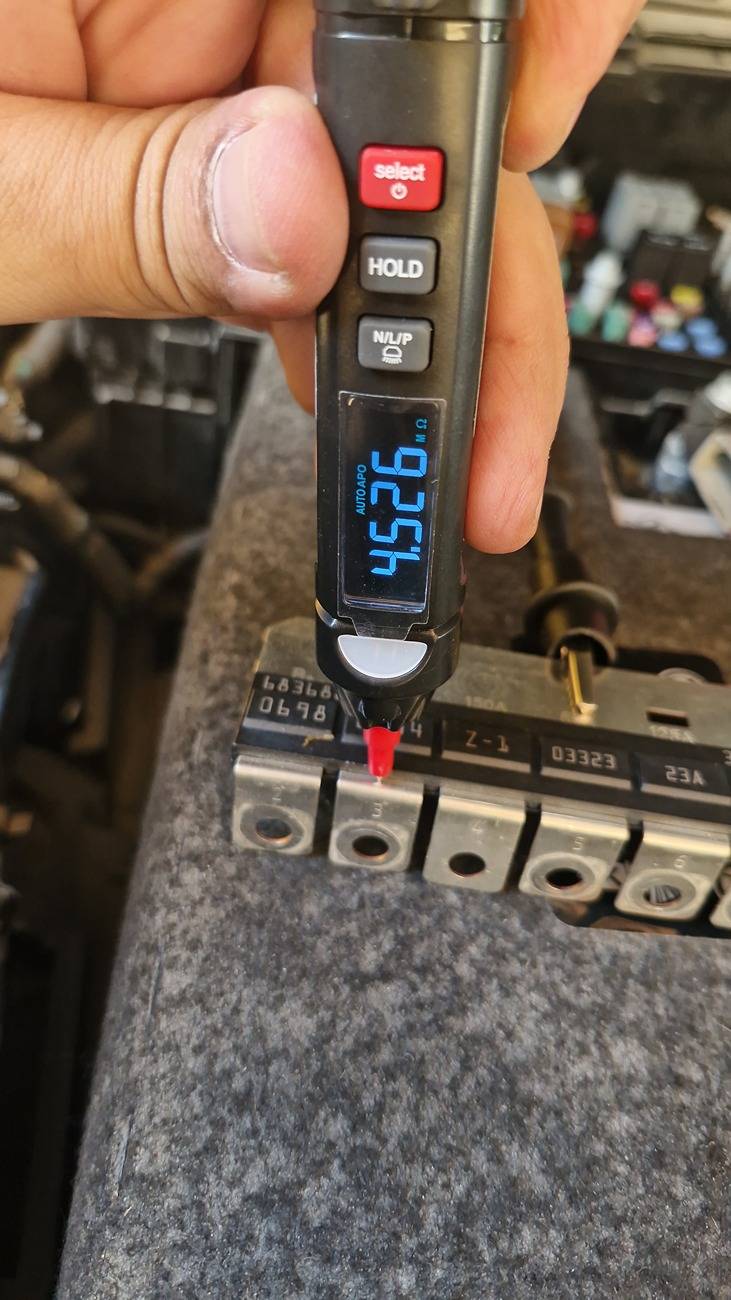
You need a digital multimeter, eye protection, and access to the auxiliary battery terminals or approved test points. Use a meter with a DC voltage range that can read at least 20 volts.
Before you begin:
- Park the Wrangler on a level surface.
- Set the transmission to Park or Neutral.
- Apply the parking brake.
- Turn off the ignition, lights, radio, climate controls, and accessories.
- Keep the key fob away from the Jeep if possible.
- Wait at least 10 to 15 minutes for the vehicle modules to go to sleep.
- Wear safety glasses and keep metal tools away from both battery terminals.
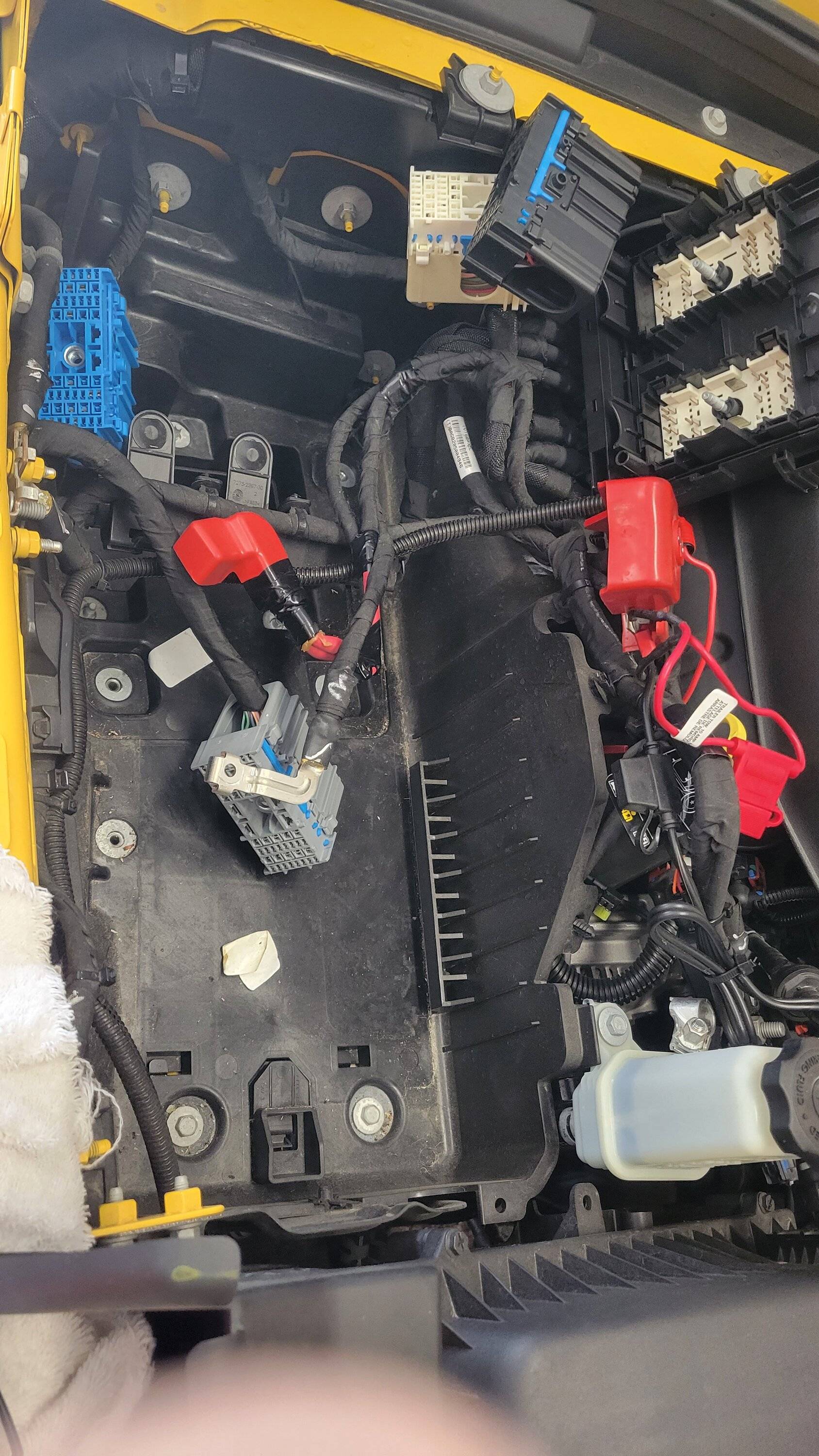
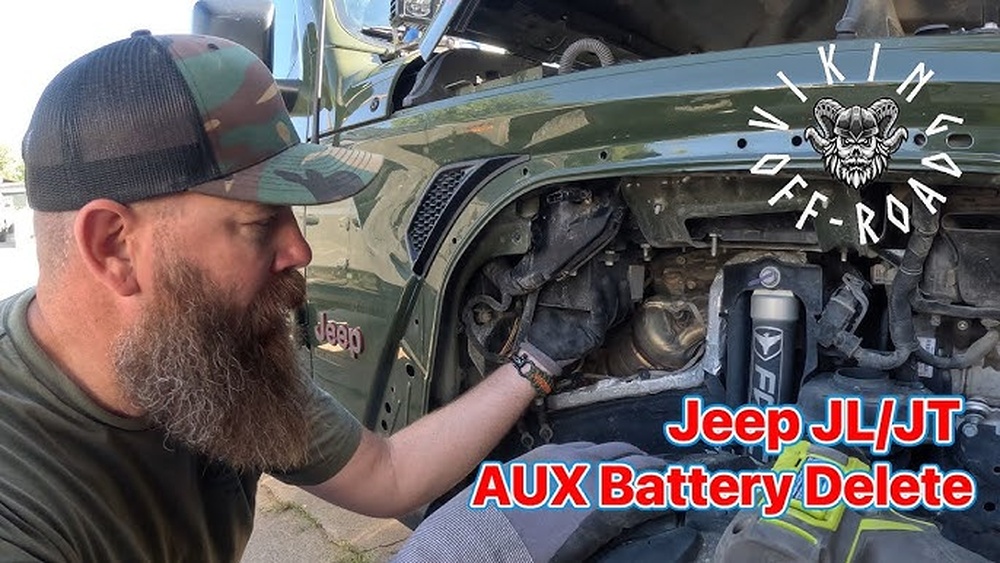
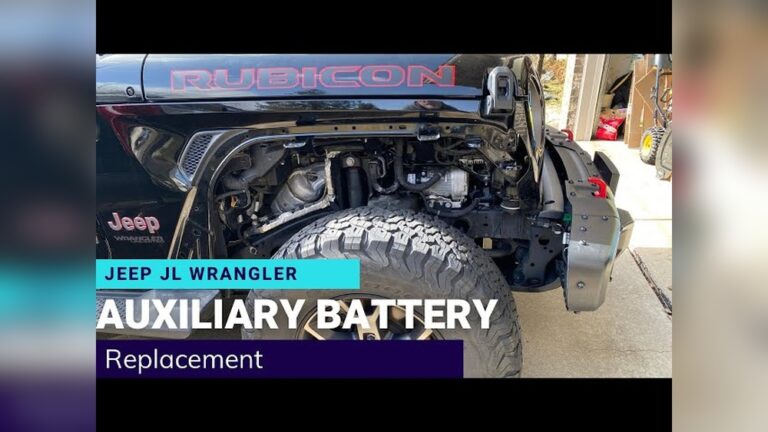
The factory auxiliary battery on many JL Wranglers sits beneath the main battery tray. Reaching it may require battery removal or partial disassembly. Do not force access or short the terminals. If the battery is buried under the tray, use the service information for your exact model rather than guessing which cable to remove.
Confirm Which Battery Your Wrangler Has
Check the model year and electrical system first.
| Wrangler version | Typical battery setup | Testing note |
|---|---|---|
| 2018 and newer JL with ESS | Main battery plus auxiliary 12-volt battery | The batteries may be connected by relays and can affect each other’s readings |
| Gladiator JT with ESS | Main battery plus auxiliary 12-volt battery | Use the same care as a JL, but confirm the vehicle-specific procedure |
| Wrangler JK | Usually one factory battery | An auxiliary battery may be aftermarket |
| Wrangler 4xe | High-voltage hybrid system plus 12-volt system | Do not use this guide to access high-voltage parts |
The most important issue is that the auxiliary battery may not be electrically isolated during a normal voltage check. A reading at the auxiliary battery can sometimes be influenced by the main battery, a relay, or vehicle charging circuits.
How to Test the Auxiliary Battery Voltage
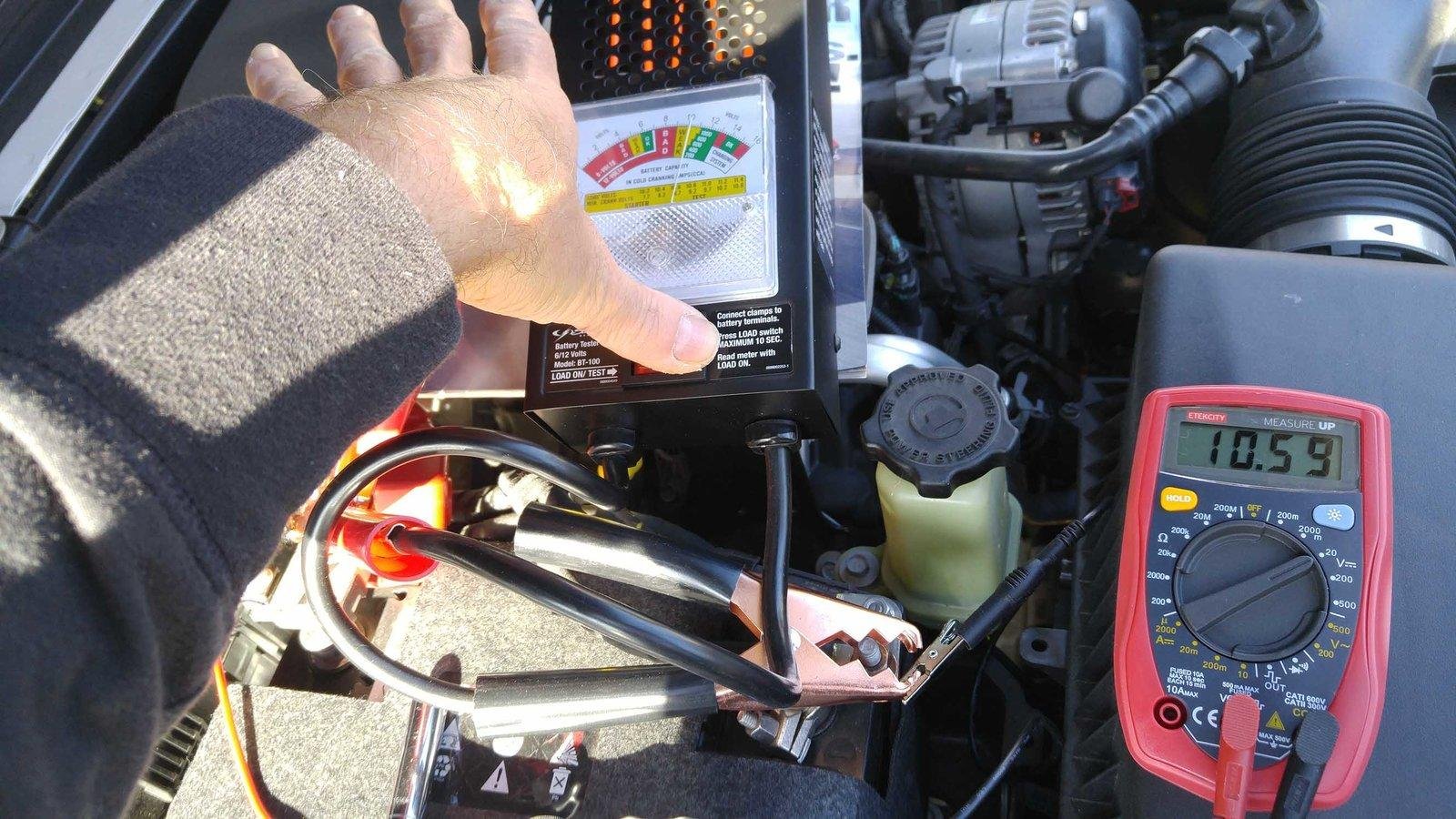
Use this sequence for a basic, non-invasive voltage check.
1. Set the multimeter correctly
Turn the multimeter dial to DC voltage, shown as V⎓, VDC, or a solid line over a dashed line.
Place:
- The black lead in the COM port.
- The red lead in the V or VΩ port.
Do not place the red lead in the amperage port. A meter set up for current testing can create a short circuit if placed across the battery.
If the meter is not auto-ranging, select the 20-volt DC range.
2. Touch the meter leads to the battery
Touch the red probe to the auxiliary battery positive terminal. Touch the black probe to the auxiliary battery negative terminal or the approved negative test point.
Keep the probe tips steady. Do not allow the red probe to touch the battery case, body metal, or another ground point.
For the most useful result, measure directly across the auxiliary battery. Measuring between the positive terminal and a random body bolt may produce a reading that does not represent the battery itself.
3. Record the resting voltage
Read the display and write down the result. A typical guide for a 12-volt AGM battery is:
| Resting voltage | Approximate condition | Meaning |
|---|---|---|
| 12.6–12.8 V | Fully charged | Normal if the battery has rested |
| 12.4–12.5 V | Partly charged | May need charging before further testing |
| 12.2–12.3 V | About half charged | Low; charge and retest |
| 12.0–12.1 V | Heavily discharged | May be too weak for reliable ESS operation |
| Below 12.0 V | Very low or possibly damaged | Charge, isolate, and test again |
These values are estimates, not a battery health certificate. Temperature, recent charging, surface charge, battery age, and electrical loads can change the reading.
A voltage near 12.7 volts is a good sign only if the battery has rested. A battery that was just charged may show a temporary “surface charge” and then fall quickly.
4. Check for surface charge
If the reading is higher than expected after charging, switch on the headlights for about 30 seconds. Turn them off, wait several minutes, and measure again.
This can remove some surface charge. Do not leave the lights on long enough to drain a weak battery.
A more accurate approach is to let the vehicle sit unused for several hours, preferably overnight, with all doors closed and the key fob away from the Jeep. Then measure the auxiliary battery again.
5. Compare the result with the main battery
Measure the main battery under the same conditions. The two readings should not be compared unless:
- Both batteries have rested for the same period.
- The probes are placed directly on the correct terminals.
- The batteries are not being charged.
- The battery isolation system is not joining them during the test.
If the auxiliary battery and main battery show nearly identical voltage, that does not always mean both batteries are healthy. The relay system may be allowing one battery to influence the other.

How to Test the Battery While the Jeep Is Running
A running-voltage test checks the charging system more than the battery itself.
Start the Wrangler and measure the voltage at the battery terminals. A functioning charging system may show a voltage above the resting reading, but the exact number can change because modern Jeep charging systems manage voltage based on battery state, temperature, engine load, and operating conditions.
A brief reading around the mid-13- to mid-14-volt range can be normal, but one fixed number does not apply in every condition. The alternator may reduce output after the battery is charged.
Use this test to look for broad problems:
- If voltage stays close to the resting voltage with the engine running, charging may be limited.
- If voltage rises well above the normal 12-volt range, the charging system or voltage control may need inspection.
- If voltage changes when large loads are switched on, that may be normal, but a major drop can indicate a weak battery, poor connection, or charging fault.
Do not judge the auxiliary battery’s health from running voltage alone. The alternator can make a weak battery appear normal while the engine is running.
How to Check Voltage During Engine Cranking
A cranking test can reveal a weak main battery or a poor connection, but it is not always a direct test of the auxiliary battery.
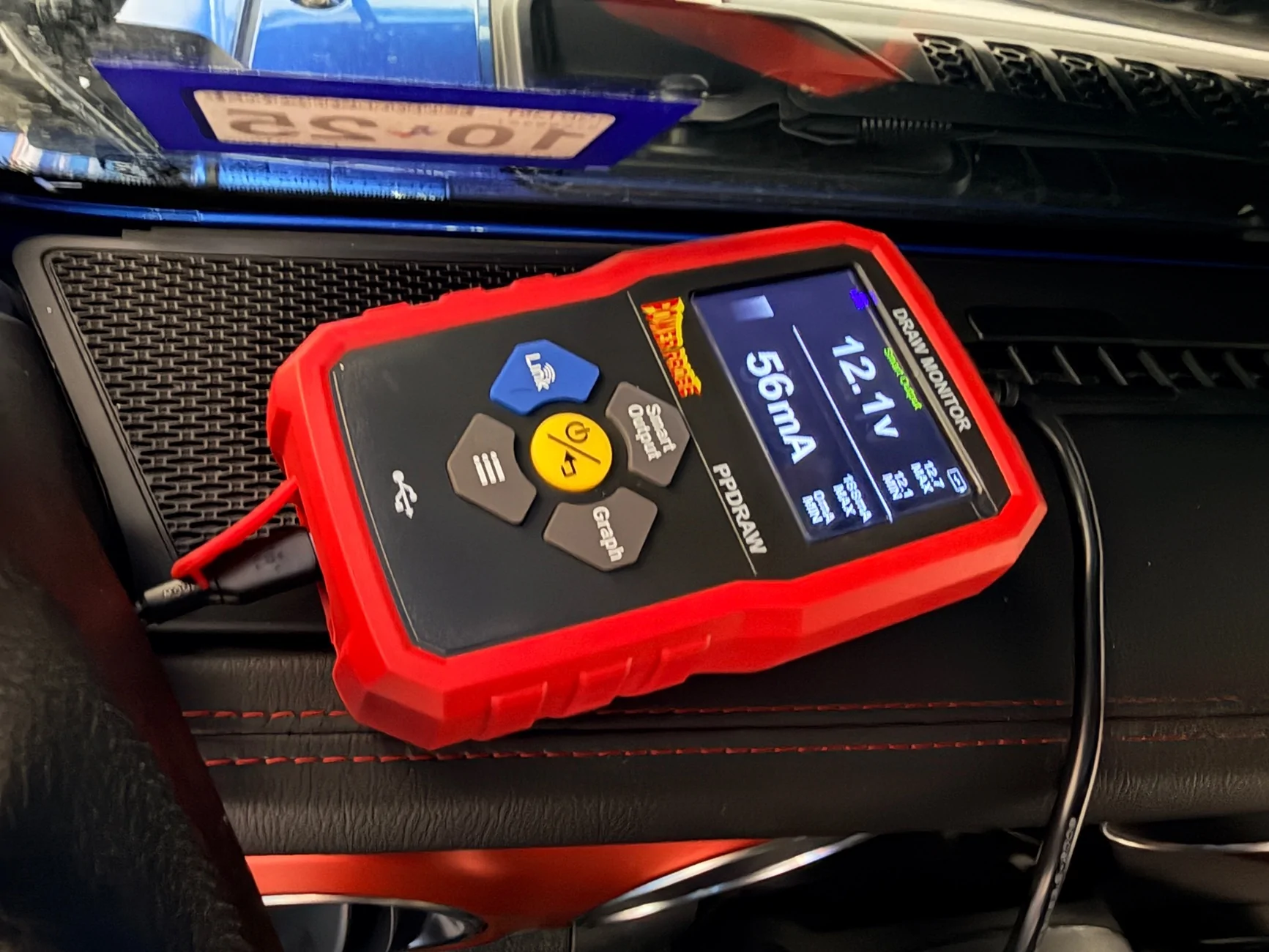
Place the meter probes on the battery terminals, then watch the display while another person starts the Jeep. Keep your hands, clothing, and meter leads away from belts, fans, and other moving parts.
A healthy starting system should not experience an extreme voltage collapse during a normal start. However, the exact minimum depends on temperature, engine size, battery state, cable condition, and the way the JL battery system switches the auxiliary battery.
Use the result as a comparison:
- A sharp drop followed by slow recovery can point to a weak battery.
- A normal voltage at rest but poor cranking performance suggests a load or connection problem.
- A strong main battery with continuing ESS warnings may point toward the auxiliary battery, its fuse, relay, wiring, or a stored fault code.
- A low voltage on both batteries usually requires testing the main battery and charging system first.
Do not repeatedly crank the engine just to watch the meter. Excessive cranking can discharge the batteries and can make diagnosis harder.
How to Test the Auxiliary Battery Separately
A separate test is more useful than a simple in-vehicle voltage reading, but it requires care because the JL battery system can connect the two batteries through relays.
The safest method is to follow the factory service procedure for the exact Wrangler model and engine. The procedure may require disabling the ESS system, isolating the auxiliary battery, or removing a designated cable or fuse. Do not disconnect random battery cables while the ignition is on.
If the auxiliary battery is isolated correctly, test it at rest:
- Turn off the Jeep and allow the modules to sleep.
- Isolate the auxiliary battery according to the service information.
- Wait several minutes after isolation.
- Measure directly across the auxiliary battery terminals.
- Charge the battery with a charger approved for the battery type.
- Let it rest and repeat the voltage test.
- Use a proper load or conductance test if the battery still appears questionable.
If the battery reads normal when isolated but low when connected, the cause may be:
- A relay that is stuck or not operating correctly.
- A poor ground or positive cable connection.
- A parasitic electrical load.
- A weak main battery pulling the system down.
- A charging-system problem.
- A stored ESS or body-control fault.
Because access to the factory auxiliary battery can be difficult, a professional battery tester may be safer and faster than removing the battery tray at home.
How to Interpret Common Test Results
Voltage gives you a starting point. The pattern matters more than one number.
| Test result | Likely meaning | Recommended next step |
|---|---|---|
| 12.6–12.8 V after resting | Battery is charged | Perform a load or conductance test if symptoms remain |
| Below 12.4 V after resting | Battery is undercharged or weak | Charge it fully, let it rest, and test again |
| Voltage falls quickly after charging | Battery may have low capacity or an internal fault | Obtain a professional battery test |
| Normal voltage, but ESS warning remains | The battery may fail under load, or the system may have a relay, wiring, or code issue | Scan for fault codes and test the system |
| Both batteries show low voltage | Main battery, charging system, or extended discharge may be involved | Test the main battery and alternator system |
| Auxiliary voltage differs greatly from main voltage | The batteries may be isolated, discharged differently, or affected by a connection fault | Confirm isolation and inspect cables and relays |
| Voltage changes when the key fob is near the Jeep | Vehicle modules may be awake | Move the key away and repeat the resting test |
A multimeter measures electrical potential. It does not measure battery capacity. Think of voltage as the battery’s water pressure and capacity as the size of the tank. A tank can show good pressure but still run empty very quickly.

Why a Good Voltage Reading Can Still Mean a Bad Battery
A weak auxiliary battery can pass a resting-voltage test. This happens when the battery has enough surface charge to show a normal number but lacks the internal capacity needed by the ESS system.
A conductance tester or approved load tester applies a more meaningful check. It evaluates how the battery responds when current demand rises.
Consider a professional test when:
- The ESS warning appears repeatedly.
- The Jeep starts normally but the stop/start feature is disabled.
- The battery voltage looks normal, yet the battery goes flat after a short period.
- The battery is several years old.
- The voltage drops quickly after charging.
- The Jeep has experienced repeated low-voltage or battery-related warning messages.
Do not replace the auxiliary battery based only on a single reading below 12.6 volts. First charge it correctly and test it again after it rests. On the other hand, do not dismiss repeated symptoms because the meter briefly shows 12.7 volts.

Common Mistakes to Avoid
Testing immediately after driving
Driving raises the battery voltage through alternator charging. The number may look healthy even when the battery is weak.
Better approach: Let the Jeep rest, then test it.
Measuring the wrong battery
On a JL Wrangler, the auxiliary battery can be hidden below the main battery tray. Testing the visible main battery does not test the auxiliary battery.
Better approach: Confirm the terminal location and battery identity before connecting the probes.
Using the wrong meter port
The red lead in the amperage port can cause a short circuit across the battery.
Better approach: Use the voltage port marked VΩ.
Assuming 12 volts means healthy
A battery at 12.0 volts is not fully charged. A battery at 12.7 volts may still fail under load.
Better approach: Combine a rested voltage test with a load or conductance test.
Disconnecting cables without a procedure
Modern Wranglers use multiple control modules and battery-management functions. An incorrect disconnection can create warning lights, loss of settings, or a short circuit.
Better approach: Follow the factory service information for the exact year, engine, and drivetrain.
Testing a 4xe like a standard JL
The Wrangler 4xe includes a high-voltage hybrid battery and additional safety systems.
Better approach: Limit home testing to the 12-volt battery and use qualified hybrid service for high-voltage components.

When to Stop and Get Professional Help
Stop the test if you see swelling, leakage, a cracked battery case, melted wiring, heavy corrosion, smoke, or a strong sulfur smell. Do not charge or jump-start a damaged battery.
Professional help is also appropriate when:
- You cannot safely reach the auxiliary battery.
- The battery must be isolated but you do not have the correct procedure.
- The meter shows conflicting results.
- The Jeep has multiple warning lights.
- The vehicle will not start after testing.
- The battery repeatedly discharges.
- A 4xe high-voltage component may be involved.
A shop can test both batteries, inspect the battery cables and grounds, scan the body and powertrain modules, and check whether the ESS relay system is operating correctly.
Frequently Asked Questions
Can I test the Jeep Wrangler auxiliary battery without removing the main battery?
Sometimes, but access varies by model and engine. On many JL Wranglers, the auxiliary battery is beneath the main battery tray. If the terminals cannot be reached safely, do not probe blindly or remove parts without the correct service procedure.
What voltage should a Jeep Wrangler auxiliary battery have?
After resting, a fully charged 12-volt AGM battery commonly measures about 12.6 to 12.8 volts. A lower reading may mean the battery is discharged, but it does not by itself prove the battery has failed.
Does a bad auxiliary battery prevent a Jeep Wrangler from starting?
It can contribute to low-voltage problems and ESS warnings, but the main starting battery, cables, relays, and charging system also matter. A Wrangler may start even when the auxiliary battery is weak.
Why does my auxiliary battery show the same voltage as the main battery?
The batteries may be connected through the Wrangler’s relay and battery-management system. A matched reading does not prove that both batteries are healthy or independently charged.
Can I use a regular multimeter to test battery capacity?
No. A multimeter checks voltage. It does not measure reserve capacity or starting performance. Use a battery load tester or conductance tester for a stronger health assessment.
Should I replace the main and auxiliary batteries together?
Not automatically. Test both batteries and inspect the charging system first. Replacing only the failed battery may be appropriate, but batteries with similar age and repeated discharge may require a broader diagnosis.
Final Takeaway
To test a Jeep Wrangler auxiliary battery with a multimeter, use the DC-voltage setting, allow the Jeep to sleep, measure directly across the auxiliary battery, and compare the reading with normal 12-volt AGM values. Charge and retest any battery below about 12.4 volts before making a replacement decision.
Remember that voltage is only a screening test. If the Wrangler has ESS warnings, repeated low-voltage symptoms, or a normal reading followed by poor performance, use a load or conductance test and check the relays, cables, grounds, charging system, and stored fault codes.