

How To Jump Jeep Compass: Safe Starting Guide
 Reading Time: 6 minutes
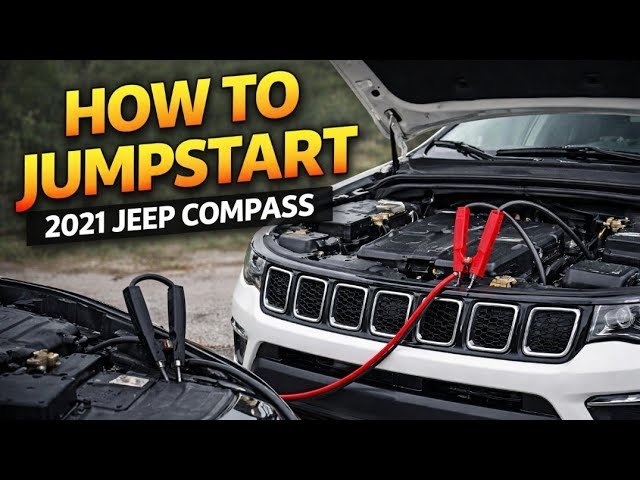
If your 2018 Jeep Compass has a dead 12-volt battery, you can jump-start it with a 12-volt booster vehicle or a compatible jump starter. Use the Compass’s designated positive jump terminal and engine ground point, and connect the cables in the order below. Do not connect the final negative clamp to the dead battery’s negative post.
This guide is for Jeep Compass owners in the United States. Before you begin, check the 2018 Jeep Compass Owner’s Manual for the under-hood diagram and instructions for your vehicle.
Before you start
Jump-start the Compass only if the battery and cables look safe to use. Do not try if the battery is cracked, leaking, swollen, or frozen, or if the cables are damaged. A damaged or frozen battery can be dangerous; call for roadside help instead.
You will need a 12-volt booster vehicle or a jump starter rated for a 12-volt vehicle, plus sound jumper cables if using another vehicle. Keep both vehicles from touching. Put each vehicle in Park, or Neutral if it has a manual transmission, and set the parking brakes. Turn off the ignition and electrical accessories before connecting the cables.
Wear eye protection if available. Keep sparks, flames, and lit cigarettes away from the battery. Remove loose jewelry, and keep cable ends from touching each other or moving engine parts.
The Compass may have an engine stop-start system and more than one battery. Use the designated jump-start points shown in the owner’s manual; do not guess which battery or terminal to use.

How to jump-start a 2018 Jeep Compass
Connect the cables in this order: dead Compass positive, booster positive, booster negative, then the Compass’s designated engine ground. This order helps keep sparks away from the discharged battery.
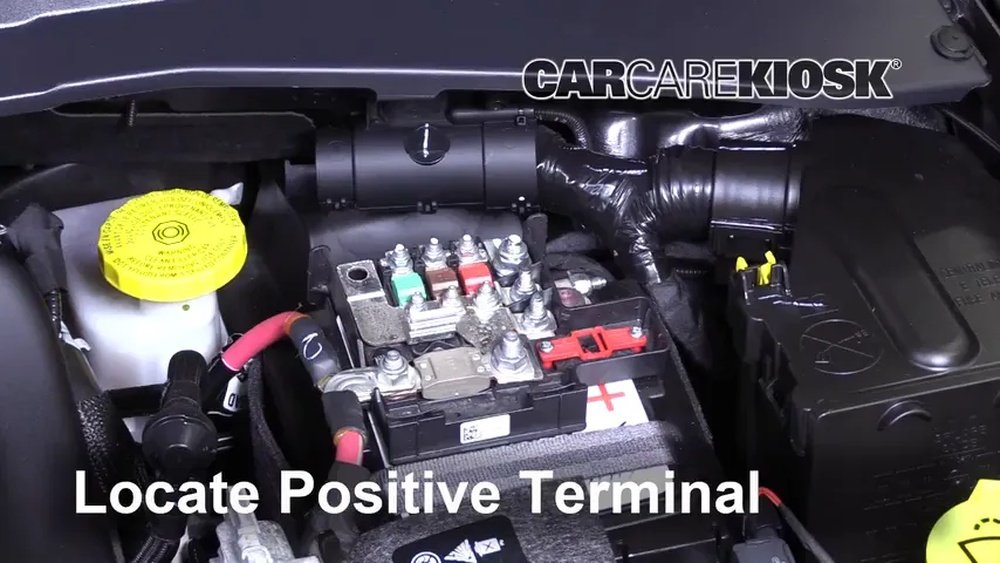
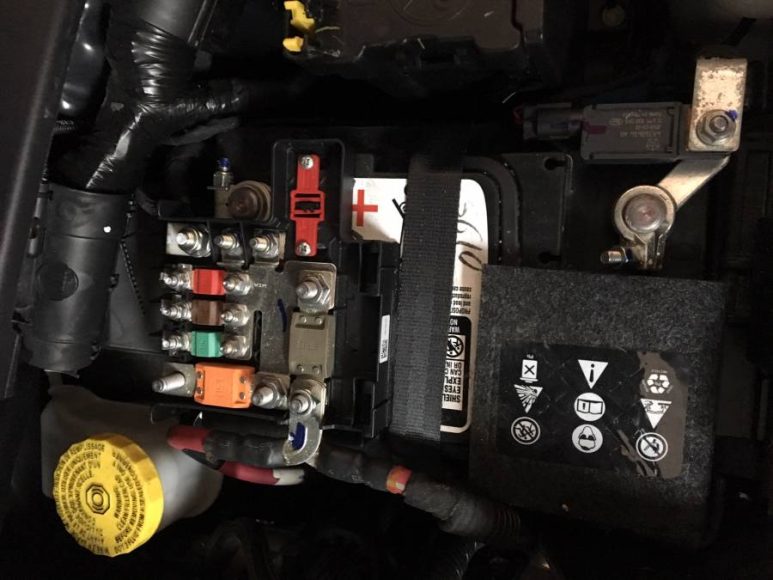
- Find the jump-start points. Open the hood and use the owner’s manual diagram to identify the positive jump terminal and the designated engine ground. The positive terminal may be under a protective cap. Do not use a random bolt or an unmarked battery post.
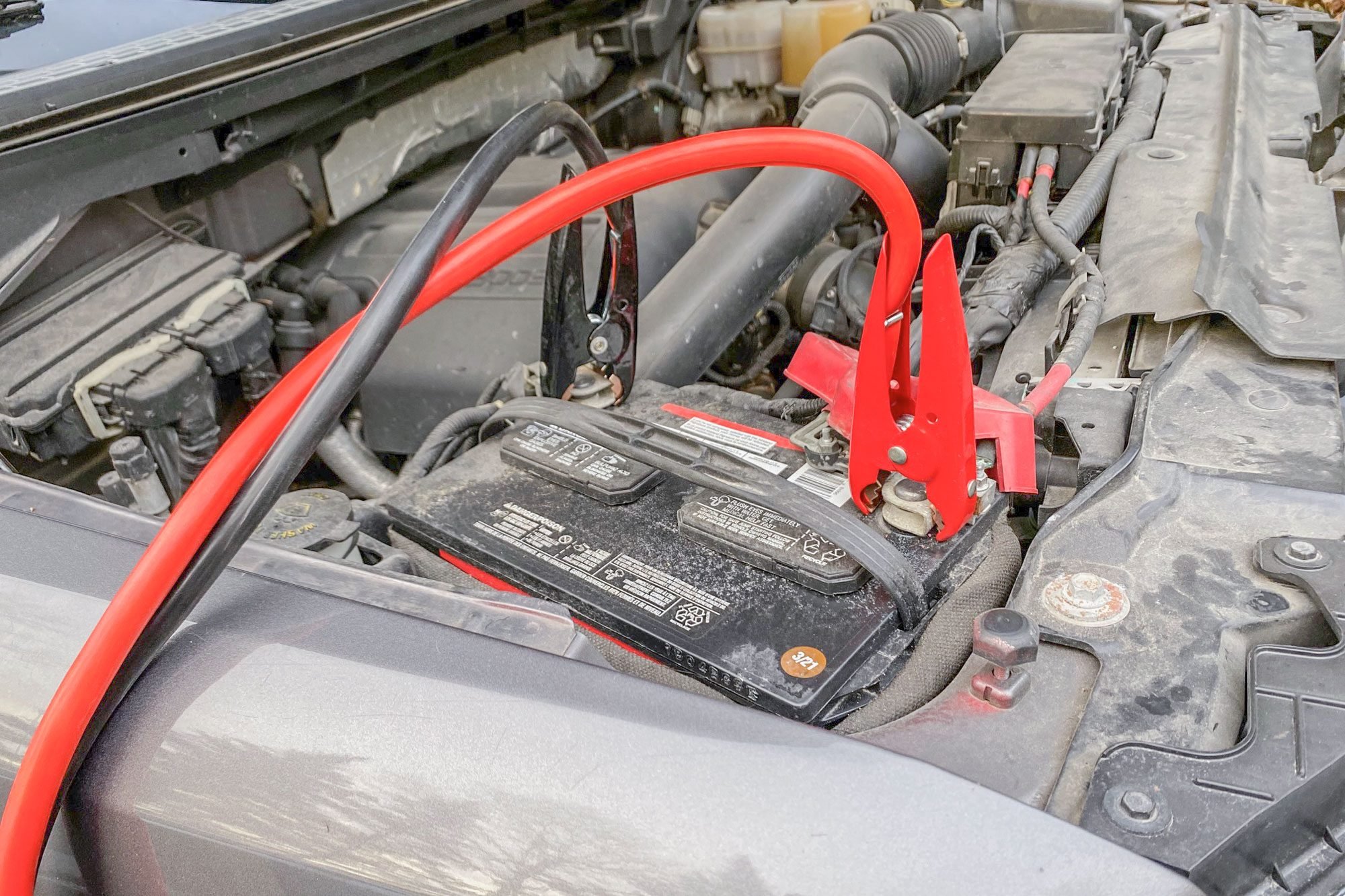
- Connect the first red clamp to the Compass’s positive jump terminal.
- Connect the other red clamp to the positive terminal of the booster vehicle or jump starter.
- Connect one black clamp to the booster vehicle’s negative battery terminal, if using another vehicle. For a portable jump starter, follow its instructions.
- Connect the last black clamp to the Compass’s designated engine ground point—not the negative post of the dead battery.
- Start the booster vehicle, if you are using one. Let it idle for a few minutes. If you are using a portable jump starter, turn it on as its instructions direct.
- Try to start the Compass. If it does not start, stop and check the connections. Do not keep turning the key or pressing the start button repeatedly.
- Remove the cables in reverse order after the Compass starts: black clamp from the Compass ground, black clamp from the booster, red clamp from the booster, then red clamp from the Compass.
Keep the clamps clear of belts, fans, and other moving parts. If the cable order or jump points do not match the diagram in your manual, stop and follow the manual.
If the Compass will not start
if the engine does not turn over, first switch off both vehicles and check that each clamp is secure on the correct point. A loose clamp or poor ground can stop the current from reaching the starter. Do not move clamps while the vehicles are running.
If you hear rapid clicking, see dim lights, or get no response, the battery may be very low, the connections may be poor, or there may be a fault in the battery or starting system. If the jumper cables become hot, you see smoke or sparks, or you smell burning, stop at once and move away from the vehicles.
If the engine turns over but will not start, the problem may not be the battery. A jump-start cannot fix issues such as a fuel, ignition, or engine fault. Stop trying and arrange roadside or mechanic help if the Compass still will not start after you have confirmed the connections.
What to do after the Jeep starts
Once the Compass starts, remove the cables in reverse order and keep the clamps apart. Do not leave the jumper cables connected while you drive.
A jump-start can get the vehicle running, but it does not prove the battery is healthy or fully charged. Have the battery and charging system checked if the Compass needs another jump, the battery warning light stays on, or the vehicle stalls or loses electrical power. If the battery is old or repeatedly goes flat, testing can help distinguish a worn battery from a charging or electrical drain issue.

Common jump-start mistakes to avoid
- Connecting the final black clamp to the dead battery’s negative post: Use the Compass’s designated engine ground instead.
- Using the wrong voltage: Use a 12-volt booster source, not a higher-voltage system.
- Guessing at the ground point: Follow the owner’s manual diagram; do not attach a clamp to a random part.
- Letting clamps touch: Keep positive and negative clamps apart, including while removing them.
- Trying to jump a damaged battery: A cracked, leaking, swollen, or frozen battery is a reason to stop and seek help.
- Assuming a successful start fixed the problem: A weak battery or charging fault may cause the same issue again.
Key takeaways
- Use the 2018 Compass manual to find its designated positive jump terminal and engine ground.
- Connect positive first, then booster negative, then the Compass ground; remove clamps in reverse order.
- Never connect the final negative clamp to the dead battery’s negative post.
- Stop if the battery is damaged or frozen, cables get hot, or the process does not work.
FAQs
Can I jump-start my 2018 Jeep Compass with a portable jump starter?
Yes, if the jump starter is designed for a 12-volt vehicle and is used as its maker directs. Connect it to the Compass’s designated jump points shown in the owner’s manual.
Why should I connect the negative cable to an engine ground?
The designated engine ground keeps the final connection away from the battery. Follow the Compass manual’s diagram rather than choosing a ground point by guesswork.
How long should I leave the cables connected?
If using another vehicle, let it idle for a few minutes after connecting the cables before trying to start the Compass. If the Compass still does not start, stop and check the connections instead of making repeated attempts.
Should I replace the battery if the Jeep starts after a jump?
Not automatically. A jump-start does not show whether the battery is worn out or whether another issue drained it. Have the battery and charging system tested if the problem returns.
Can I jump-start a Compass with the stop-start system?
Use the designated jump-start points in the owner’s manual. Do not try to connect directly to an auxiliary battery unless the manual specifically directs you to do so.
Conclusion
To jump-start a 2018 Jeep Compass, use the correct 12-volt source, follow the manual’s jump-point diagram, and connect the final negative clamp to the designated engine ground. If the battery looks damaged, the connection points are unclear, or the vehicle still will not start, stop and contact roadside assistance or a qualified mechanic.


