Is A Jeep Grand Cherokee L A Good Family Car: 3-Row Review
 Reading Time: 14 minutes
For many families in the United States, the Jeep Grand cherokee L is a good three-row family SUV—but it is not the best fit for every household. It offers a quiet cabin, useful cargo space, strong towing ability, available four-wheel drive, and a comfortable ride. Its main weaknesses are a tight third row, higher running costs than some rivals, and a safety record that buyers should check by model year and VIN.
The Grand Cherokee L makes the most sense for families who want a midsize SUV with more style and towing strength than a typical crossover. It is less convincing for families who need adult-size third-row seating, maximum fuel economy, or the lowest possible ownership cost.
This U.S.-market review covers space, safety, car-seat use, comfort, performance, fuel economy, reliability concerns, pricing factors, and the best alternatives.

Quick verdict: Is the Grand Cherokee L good for families?
Yes, the Jeep Grand Cherokee L can work well as a family car if you value comfort, towing, and available four-wheel drive more than maximum third-row space or fuel savings.
Best reasons to choose it
- Comfortable first- and second-row seats
- Available second-row captain’s chairs or a bench seat
- Seating for six or seven people, depending on configuration
- Strong towing capacity when properly equipped
- Available 4×4 systems for snow, mud, and light off-road use
- Good cargo room with the third row folded
- Upscale cabin options on higher trims
- Smooth V6 power and an eight-speed automatic transmission
Main drawbacks
- The third row is tighter than those in the Kia Telluride, Hyundai Palisade, and some full-size SUVs.
- Fuel economy is average or below average for a midsize three-row SUV.
- Some desirable features are limited to expensive trims or option packages.
- Jeep reliability can vary by vehicle, powertrain, electronics, and service history.
- A high seating position does not replace a careful review of crash-test results and child-seat fit.
- The Grand Cherokee L is not as easy to park as a two-row SUV or minivan.
Bottom line: The Grand Cherokee L is a good family SUV for buyers who need occasional third-row use, four-wheel-drive capability, and towing power. It is a weaker choice if the third row will carry adults every day.
What makes the Grand Cherokee L a family SUV?
The Jeep Grand Cherokee L is the long-wheelbase, three-row version of the Grand Cherokee. It is sold in the United States as a midsize SUV with two front seats and either a second-row bench or two second-row captain’s chairs.
The seating layout determines the passenger count:
| Second-row setup | Total seating | Best use |
|---|---|---|
| Captain’s chairs | 6 passengers | Easier access to the third row and a more open cabin |
| Bench seat | 7 passengers | One more seating position and better flexibility for larger families |
The “L” adds length behind the standard two-row Grand Cherokee. That extra body length creates the third row and increases cargo capacity. It also gives the vehicle a more substantial road feel, but it makes the SUV harder to maneuver in tight parking lots.
The Grand Cherokee L is not a minivan replacement in every respect. A minivan usually offers easier third-row access, more usable rear cargo space, sliding doors, and better child-loading convenience. The Jeep instead appeals to families who want an SUV shape, available 4×4 traction, or a higher towing limit.

Interior space and child-seat practicality
The Grand Cherokee L is most comfortable for families when the first two rows do most of the work. The third row is useful, but it is better for children and shorter passengers than for tall adults on long trips.
Jeep lists approximately:
- 17.2 cubic feet of cargo space behind the third row
- 46.9 cubic feet behind the second row
- 84.6 cubic feet with the rear seats folded
These figures are useful for comparison, but cargo shape matters as much as the published number. A stroller, cooler, sports bag, and grocery items may fill the space behind the third row quickly.
Car-seat considerations
The Grand Cherokee L can carry several child seats, but the exact setup depends on the seat brand, seat width, and whether the second row has captain’s chairs or a bench.
Before buying, test:
- A rear-facing infant seat in the second row.
- A forward-facing seat with its top tether attached.
- A booster seat next to another child seat.
- Access to the third row with the chosen seat installed.
- The front passenger legroom when a rear-facing seat is behind it.
- The ability to reach all buckle receivers without forcing them.
The second-row captain’s chairs make third-row entry easier because children can walk between the seats. However, they reduce the number of second-row seating positions. A second-row bench is more useful for a family with three children who must sit across the middle row, but it may make third-row access less convenient.
Third-row access
The Grand Cherokee L has a tilt-and-slide second-row function to help passengers reach the rear seats. Families should still check the opening in person. A child may manage the path easily, while an adult carrying a toddler may find it narrow or awkward.
For regular third-row use, compare the Jeep directly with:
- Kia Telluride
- Hyundai Palisade
- Honda Pilot
- Toyota Grand Highlander
- Volkswagen Atlas
- Toyota Sienna
- Honda Odyssey
The Toyota Grand Highlander, Toyota Sienna, and Honda Odyssey generally provide a stronger answer for families who need a truly roomy third row and large cargo area.

Safety and family protection
The Grand Cherokee L includes modern driver-assistance features, but safety depends on the exact model year, trim, equipment, software, and crash-test results. Buyers should not assume that every Grand Cherokee L has the same safety equipment.
Common available or standard features may include:
- Forward collision warning
- Automatic emergency braking
- Lane-departure warning or lane-keeping assistance
- Blind-spot monitoring
- Rear cross-traffic alert
- Adaptive cruise control
- Rear parking sensors
- A surround-view camera on selected trims or packages
The exact feature list can change by model year and trim. Check the original window sticker and owner’s manual for a specific vehicle.
Crash-test research
Use these sources before purchasing:
- National Highway Traffic Safety Administration vehicle ratings
- Insurance Institute for Highway Safety ratings
Look up the exact model year. A rating for one Grand Cherokee or one test year does not automatically apply to every Grand Cherokee L.
Also check open recalls through the NHTSA recall search tool. Enter the vehicle identification number for a used SUV. Recall status can change after a vehicle leaves the factory.
What safety features matter most for families?
For daily family use, automatic emergency braking, blind-spot monitoring, rear cross-traffic warning, and a clear rear camera can be more useful than luxury features. A 360-degree camera may help in parking lots, but it cannot replace direct observation around small children.
Parents should also confirm that:
- Each child seat is installed according to both manuals.
- The top tether is used when required.
- Children ride in the correct seat for their age, height, and weight.
- The third row has suitable head restraints and belts for the intended passenger.
- No child seat blocks an emergency exit or prevents proper seat-belt use.
For state-specific child-passenger rules, check the Governors Highway Safety Association and your state’s official transportation or public-safety website.

Ride, handling, and daily comfort
The Grand Cherokee L is comfortable on highways and suburban roads. Its longer body helps it feel settled at speed, while the suspension absorbs many ordinary bumps well. Higher trims may add adaptive suspension or air suspension, depending on model year and equipment.
The trade-off is size. This Jeep feels larger than a two-row crossover in a crowded garage or school pickup line. The available camera systems and parking sensors help, but drivers should allow extra room around the rear corners.
The front seats are a strong point. Higher trims can add leather upholstery, heated and ventilated seats, memory settings, and other comfort features. Families should be careful when comparing trims because a base model and a highly equipped Summit can feel like very different vehicles.
Wind and road noise are generally controlled well enough for family travel. The large cabin can also make it easier for children to talk, although tire noise may vary with wheel size and tire type. Smaller wheels often provide a softer ride and lower replacement-tire costs than large, low-profile wheels.
Infotainment and connectivity
The Uconnect system is one of the Jeep’s practical strengths. Depending on model year and trim, the Grand Cherokee L may offer:
- A central touchscreen
- Apple CarPlay
- Android Auto
- Multiple USB ports
- Rear-seat entertainment on selected versions
- Wireless device charging
- A premium audio system
Check whether smartphone integration is wired or wireless on the specific vehicle. Also test the number and location of USB ports. A family may need power for phones, tablets, headphones, and a rear-seat camera.

Engine, fuel economy, and towing
Most U.S.-market Grand Cherokee L models use a 3.6-liter Pentastar V6 paired with an eight-speed automatic transmission. Jeep lists output at about 293 horsepower and 260 pound-feet of torque, though specifications can vary by model year and calibration.
The V6 provides enough power for normal family driving and is well suited to highway trips. It can feel strained when the SUV is full of passengers and cargo, especially on steep grades, but the transmission usually has several gears available to manage the load.
EPA fuel-economy figures vary with drivetrain, wheel size, and model year. Many V6 versions are rated near the low-20s in combined fuel economy, with rear-wheel-drive models generally doing better than four-wheel-drive models. Use the EPA Fuel Economy website for the exact year and configuration.
Towing ability
Properly equipped Grand Cherokee L models can tow up to about 7,200 pounds. That figure applies only to a specific configuration with the required equipment and does not mean every Grand Cherokee L can tow that much.
Before towing, confirm:
- The vehicle’s exact tow rating
- The trailer’s loaded weight
- Tongue weight
- Hitch and wiring equipment
- Payload capacity
- Tire and brake requirements
- Local trailer laws
- Whether the trailer needs its own brakes
A simple capacity check is:
Available payload = vehicle payload rating − passengers − luggage − hitch load
For example, if a vehicle has a 1,400-pound payload rating and the occupants, bags, and accessories weigh 900 pounds, only about 500 pounds remain for trailer tongue weight. This is a hypothetical example; use the door-jamb label and owner’s manual for the real vehicle.
Towing near the maximum can reduce acceleration, increase braking distance, and raise fuel use. Families who tow a large camper often should compare the Grand Cherokee L with a full-size SUV or a vehicle designed for heavier loads.

Four-wheel drive and winter family use
Available Jeep 4×4 systems can be useful in snow, gravel, muddy roads, and steep driveways. They do not make the Grand Cherokee L immune to sliding or shorten braking distance on ice.
Tires remain critical. A vehicle with four-wheel drive and poor tires can perform worse on snow than a two-wheel-drive vehicle with high-quality winter tires. Drivers should also understand the difference between all-wheel drive and four-wheel drive, as the exact system and operating modes vary by trim.
The Grand Cherokee L is a sensible choice for families in parts of the United States that regularly face snow or rough roads, especially when they also need towing. For a family that mainly drives on dry suburban pavement, four-wheel drive may add purchase cost, weight, maintenance, and fuel use without much daily benefit.

Reliability, maintenance, and ownership cost
Reliability is the hardest part of the Grand Cherokee L recommendation because long-term results depend on model year, maintenance, software, mileage, and individual vehicle history. There is no sound basis for calling every Grand Cherokee L reliable or unreliable.
Potential ownership concerns include:
- Electronic glitches or infotainment problems
- Sensor or camera faults
- Transmission behavior that needs diagnosis
- Suspension repairs on versions with more complex equipment
- Higher tire costs with large wheels
- Greater fuel expense than a hybrid or minivan
- Repair delays if a needed part is not readily available
A used Grand Cherokee L deserves a careful inspection. Before purchase:
- Run the VIN through the NHTSA recall database.
- Obtain service records.
- Check for warning lights and stored fault codes.
- Test every screen, camera, seat, window, door, and USB port.
- Inspect tires for uneven wear.
- Look underneath for fluid leaks or impact damage.
- Confirm that all keys and remote functions work.
- Have an independent mechanic perform a pre-purchase inspection.
Maintenance costs vary by location and service provider. Ask for written estimates for routine service, tires, brakes, and any extended-warranty coverage. An expensive trim with air suspension, large wheels, and many electronic systems may cost more to repair than a simpler version.
Which Grand Cherokee L trim is best for a family?
The best trim depends on the family’s budget and needs. A lower trim can provide the core seating and powertrain, while higher trims add comfort and technology at a substantial price increase.
| Trim level | Family fit |
|---|---|
| Laredo | A practical starting point for buyers who want the basic three-row layout |
| Limited | Often a useful balance of comfort, features, and price |
| Overland | Better for buyers who want more luxury and available off-road equipment |
| Summit | Focuses on premium cabin materials, technology, and driver assistance |
| Summit Reserve | Adds the most upscale equipment, but usually at the highest cost |
Trim names and equipment can change by model year. Check the window sticker rather than relying on a dealer listing or a generic trim guide.
For most families, a mid-level trim may offer the best balance. Spending more for luxury features does not create more third-row room. If the main need is passenger space, a different SUV may be a better use of the budget.

Grand Cherokee L compared with family SUV alternatives
The Grand Cherokee L is competitive, but its strengths differ from those of other three-row vehicles.
| Alternative | Usually stronger than the Jeep in | Jeep advantage |
|---|---|---|
| Kia Telluride | Third-row comfort and family-focused value | Available Jeep 4×4 character and towing appeal |
| Hyundai Palisade | Interior usability and warranty coverage | Jeep design and off-road-oriented equipment |
| Honda Pilot | Easy family ownership and practical packaging | Jeep cabin feel and available 4×4 systems |
| Toyota Grand Highlander | Third-row and cargo room, plus hybrid options | Jeep towing and traditional SUV character |
| Volkswagen Atlas | Adult-friendly third row and cargo space | Jeep off-road image and available 4×4 systems |
| Toyota Sienna | Fuel economy, sliding doors, and family access | Jeep ground clearance and SUV design |
| Honda Odyssey | Child-loading ease and interior flexibility | Jeep towing and available all-weather traction |
The Grand Cherokee L is worth a close look when you want a traditional SUV rather than a minivan or efficiency-focused crossover. It is less compelling when your top priorities are maximum interior space, easy child access, and low fuel cost.

Common mistakes when shopping for a Grand Cherokee L
Assuming every version seats seven
Captain’s chairs create a six-passenger layout. Confirm the second-row configuration before signing a deal.
Judging the third row while it is empty
Bring the people who will use it. Check knee room, headroom, belt position, and entry space.
Treating the maximum tow rating as a normal tow rating
The highest figure applies only to the right equipment and load conditions. Read the door label and owner’s manual.
Comparing only the monthly payment
Include fuel, insurance, tires, service, registration, and financing cost. A lower payment can hide a longer loan or a higher total price.
Buying a used SUV without a VIN check
Run recalls and inspect the full service history. A clean-looking vehicle can still have open campaigns or expensive electronic faults.
Assuming 4×4 solves winter safety
Four-wheel drive helps with traction when accelerating. It does not replace winter tires, safe speed, or longer stopping distance on ice.

Frequently asked questions
Is the Jeep Grand Cherokee L good for a family of five?
Yes. A family of five can use the second row for daily travel and keep the third row folded for cargo. This is one of the Jeep’s best use cases because it avoids relying on the tightest seating area every day.
Can three car seats fit in the Grand Cherokee L?
They may fit, especially with a second-row bench, but compatibility depends on the seat models and installation positions. Test the exact seats in the exact vehicle before buying.
Is the third row comfortable for adults?
It is better for children and shorter adults than for tall adults on long drives. Families who regularly carry adults should compare it with the Volkswagen Atlas, Toyota Grand Highlander, or a full-size SUV.
Does the Grand Cherokee L have good cargo space?
It has useful cargo space with the third row folded, but the area behind the third row is limited for bulky family gear. Measure your stroller, sports equipment, or dog crate before purchase.
Is the Grand Cherokee L expensive to maintain?
It can cost more to own than a simpler two-row crossover, especially with large wheels, advanced suspension, premium equipment, or repairs outside warranty. Maintenance cost depends on mileage, trim, location, and service history.
Should I buy a Grand Cherokee L or a minivan?
Choose the Jeep if you prefer an SUV shape, available 4×4 capability, and stronger towing appeal. Choose a minivan if easy child loading, maximum interior flexibility, sliding doors, and third-row comfort matter most.

Final recommendation
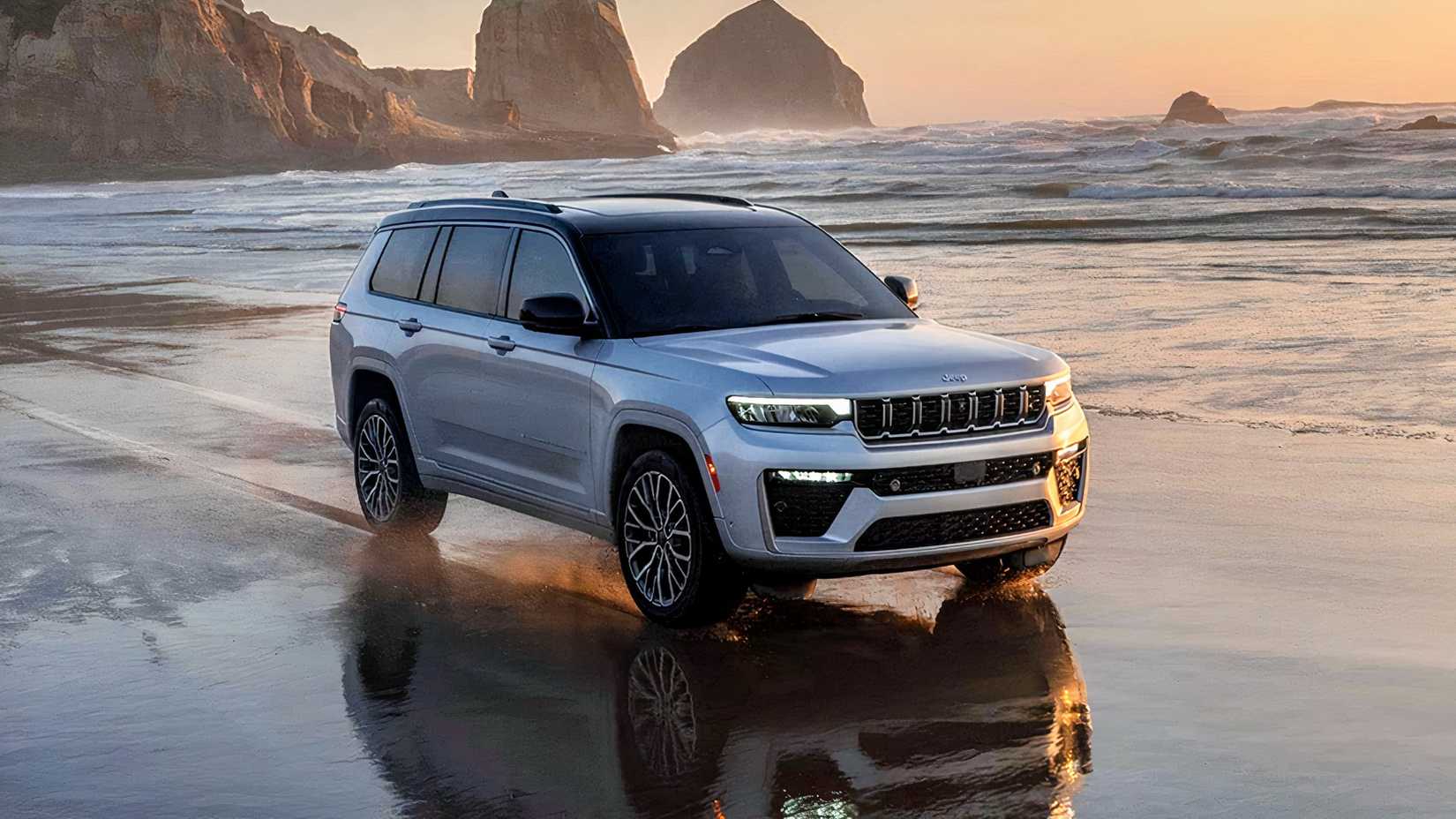
The Jeep Grand Cherokee L is a good U.S. family SUV for households that need a usable third row but do not need it to carry adults every day. It stands out for its comfortable front cabin, available four-wheel drive, strong towing potential, and more rugged character than many family crossovers.
Its limitations are just as clear. The third row is not class-leading, fuel economy is modest, and higher trims can become costly. Reliability and safety should be judged by the exact model year and vehicle identification number, not by the Jeep name alone.
Buy the Grand Cherokee L if you want a midsize SUV for family trips, school runs, snow, and moderate towing.
Look elsewhere if you need the roomiest third row, the lowest operating cost, or the easiest child-seat access.
The best next step is to test-drive the exact trim with your children, car seats, stroller, and normal cargo. Then verify the VIN, crash-test results, recall status, payload rating, and total ownership cost before you buy.