How To Polish Scratched Plastic Soft Top Windows: Jeep Fix
 Reading Time: 13 minutes
Light scratches and cloudy marks on a Jeep Wrangler soft top window may improve with careful cleaning and a polish made for clear vinyl or plastic. Deep cuts, cracks, peeling layers, and severe distortion usually cannot be polished away. In those cases, replacing the window is safer and gives a clearer result.
For Jeep owners in the United States, the first step is to identify the window material. Most Wrangler soft top windows use flexible clear vinyl, not hard acrylic or glass. That difference matters because strong solvents, dry rubbing, heat, and aggressive abrasives can permanently damage the window.
This guide explains how to clean, polish, and protect a scratched Jeep Wrangler soft top window without making the damage worse.

What You Need Before You Start
Gather clean water, a mild automotive soap, several soft microfiber towels, a soft sponge, masking tape, and a product labeled for clear vinyl or convertible-top windows.
You may also use a plastic polish only when its label clearly states that it is safe for flexible vinyl or soft-top windows. Many products made for hard plastic, acrylic, or polycarbonate are too abrasive for thin vinyl windows.
Recommended supplies
- Clean water
- Mild car-wash soap
- Two or more clean microfiber towels
- Soft, clean sponge
- Hose with gentle water flow
- Masking tape
- Clear-vinyl cleaner or polish
- Vinyl protectant with UV protection
- Nitrile gloves, if the product label recommends them
Use a clean work area out of direct sunlight. The window should be cool to the touch. Heat can soften vinyl and make it easier to stretch, smear, or distort.
Do not use:
- Paper towels
- Dry rags
- Household glass cleaner
- Ammonia-based cleaner
- Acetone or paint thinner
- Brake cleaner
- Rubbing compound made for automotive paint
- Buffing wheels or high-speed polishers
- Razor blades
- Steel wool or abrasive pads
- A heat gun or hair dryer
Jeep and soft-top manufacturers commonly recommend mild soap, water, and gentle cleaning methods for soft-top materials. Always compare this guide with the owner’s manual for your Wrangler model year and the care instructions for the top manufacturer.

First, Check Whether the Scratch Can Be Polished
A polish can reduce the look of light scuffs and fine surface marks. It cannot restore material that has been cut away.
Use this simple inspection:
| What you see | Likely condition | Best action |
|---|---|---|
| Light haze or fine web-like marks | Surface scuffing | Clean and try a mild vinyl polish |
| A mark that catches slightly on a fingernail | Moderate scratch | Test a small area; replacement may be better |
| A deep groove or cut | Material loss | Do not sand aggressively; plan for replacement |
| White stress lines near a scratch | Stretched or damaged vinyl | Polish will have limited benefit |
| Cracks, splits, or holes | Structural damage | Replace the window or window panel |
| Cloudiness inside layered material | Internal damage or aging | Polishing the outside will not fix it |
| Wavy vision after rubbing | Heat or pressure damage | Stop polishing and assess replacement |
A useful test is to wet the window with clean water. If the mark nearly disappears while wet, it may be a surface defect. If the scratch remains sharp and visible, it is likely deeper.
Do not press hard with a fingernail. The test is only meant to identify whether the mark reaches below the surface. Repeated pressure can create a new crease.
If the window is cracked, split, badly yellowed, or unsafe to see through, replacement is the correct repair. Clear vision is more important than saving the original panel.
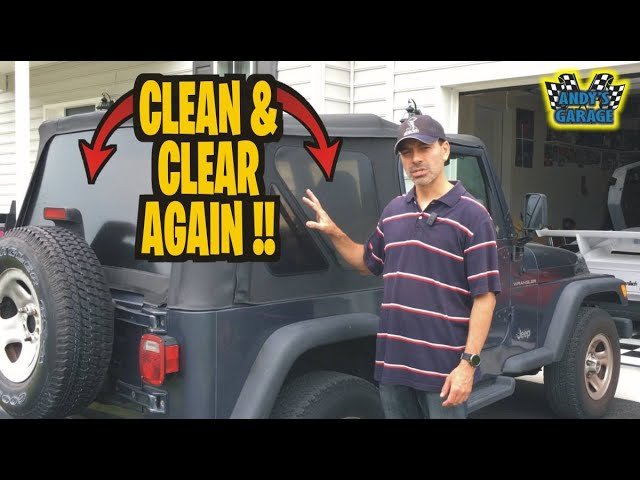
How to Polish a Scratched Jeep Wrangler Soft Top Window
Work slowly. The goal is to remove dirt and reduce fine marks, not to remove a layer of vinyl.
1. Remove loose dirt before touching the window
Rinse the outside of the window with clean water. Use a gentle stream rather than a pressure washer.
Let the water carry away dust and grit. Rubbing dry dirt across the window is one of the fastest ways to create more scratches.
If the Jeep has removable window panels, follow the soft-top manufacturer’s removal instructions. Do not force zippers, retainers, or plastic clips.
2. Wash the window with mild soap
Mix a small amount of mild car-wash soap with clean water. Apply the solution with a soft sponge or clean microfiber towel.
Use straight, light passes. Avoid tight circular scrubbing because it can spread fine marks across the entire panel.
Clean both sides of the window. Dirt on the inside can look like a scratch when viewed from outside.
3. Rinse away all soap
Rinse until no soap film remains. Soap residue can make the window look cloudy and can interfere with the polish.
Do not allow dirty wash water to dry on the clear vinyl. If the window begins to dry, rinse it again.
4. Dry by blotting
Use a clean microfiber towel to blot the window dry. You may also allow it to air-dry in a shaded area.
Do not drag a dry towel across the surface. Even a soft towel can hold grit from the wash process.
5. Mask nearby fabric and trim
Place masking tape along the edge of the window where it meets the soft-top fabric or trim. This helps prevent polish from soaking into the fabric or leaving a white residue.
Use low-tack tape. Remove it soon after the work is complete.
6. Test the product on a hidden area
Apply a small amount of the vinyl-safe polish to a corner or lower edge. Use a clean microfiber towel and light pressure.
Wait several minutes, then inspect the test area from different angles. Stop if you see:
- Haze
- Whitening
- A greasy film
- Color transfer
- New distortion
- A change in the texture of the vinyl
A product that works on hard plastic or headlight lenses may not be suitable for flexible soft-top vinyl. The label and the test spot matter more than the product’s general marketing claims.
7. Apply a small amount of polish
Put a small amount of polish on the towel, not directly across the entire window. Work in an area about 6 to 12 inches wide.
Use light pressure and short, straight strokes. Keep the towel flat. Do not bear down on one scratch in an attempt to level it quickly.
For flexible vinyl, one or two gentle passes are safer than repeated aggressive passes. Wipe the area clean and inspect it before deciding whether another pass is worthwhile.
8. Wipe off the residue
Use a separate clean microfiber towel to remove the remaining product. Turn the towel often so that you do not spread residue back over the window.
Inspect the panel from inside and outside. Look at it in shade and in normal daylight. A window can appear clear from one angle but show haze or distortion from another.
9. Apply a compatible protectant
After polishing, use a protectant made for clear vinyl or convertible-top windows. A UV protectant may help slow drying and fading, but it will not repair deep scratches.
Apply only the amount directed on the label. Excess product can leave glare, dust, or a greasy film that makes night driving harder.
Keep protectant away from tire tread, pedals, steering-wheel surfaces, and brake components. Overspray can create a slip hazard.

How to Handle Different Types of Damage
The best repair depends on the type of mark. A surface scuff needs a different approach from a crease or split.
Fine scratches and light scuffs
Fine marks may improve after washing and one gentle application of a clear-vinyl polish. Stop when the window looks clearer. More rubbing does not always produce a better result.
A slight improvement is a realistic goal. A soft window may still show marks when viewed in bright sun.
Deep scratches
A deep scratch removes or displaces vinyl. Polishing cannot put that material back.
Aggressive sanding may make the area thinner and create a wide, cloudy patch. It can also make the window wavy. For a deep scratch in the driver’s field of view, replacement is usually the better choice.
Creases and white stress marks
A crease often means the vinyl was folded, trapped, or pulled. White lines can indicate stress in the material.
Do not use a heat gun to flatten the window. Heat can permanently stretch the panel and change its shape. If the crease remains after the window is installed correctly and relaxed, replacement may be needed.
Cloudiness or yellowing
Cloudiness can come from dirt, residue, UV aging, chemical damage, or internal deterioration. Cleaning may remove residue, but it cannot reverse aged or chemically damaged vinyl.
If the whole panel has become brittle, yellow, or cloudy, polishing is unlikely to provide a lasting repair.
Scratches on the inside surface
Inside scratches are easy to create when cargo, seat hardware, zippers, or window storage bags touch the panel.
Clean the inside with the same care as the outside. Check that the panel is stored flat or rolled only as directed by the top manufacturer. Tight or incorrect storage can create permanent creases.

Common Mistakes That Make Soft Top Windows Worse
Most failed polishing jobs involve too much friction, the wrong chemical, or too much heat.
Using glass cleaner
Household glass cleaner may contain ammonia, alcohol, or other ingredients that are not suitable for flexible clear vinyl. It can leave haze, dry the material, or damage a protective surface.
Use a product made for clear vinyl or follow the top manufacturer’s cleaning instructions.
Using toothpaste or baking soda
These household remedies are not controlled automotive finishing products. Their abrasive action varies, and they may create a cloudy patch or leave residue.
A product made for the material is easier to test and use consistently.
Polishing with a machine
A rotary or dual-action polisher can generate heat and pressure quickly. Clear vinyl is thin and flexible, so it can distort before the operator sees the damage.
Hand polishing is slower but gives much better control. Avoid machine polishing unless the window manufacturer specifically approves the method and product.
Cleaning in direct sun
Sunlight heats the panel and dries soap or polish too fast. Work in shade with the window cool.
Rubbing a dry window
Dry rubbing moves grit over the surface. Always rinse first and keep the panel wet during the wash stage.
Removing windows incorrectly
Pulling on a soft-top window or forcing a zipper can create stress marks. Use the removal and installation method in the Jeep or top manufacturer’s instructions.
Expecting polish to repair a cut
Polish can improve appearance. It cannot restore missing vinyl, seal a split, or return structural strength to a damaged window.

When Should You Replace the Window Instead?
Replace the soft-top window when the damage affects safe visibility or the panel no longer seals correctly.
Replacement is usually the better choice when:
- A scratch remains sharp after gentle cleaning
- The panel has a crack, split, or hole
- The window is badly yellow or brittle
- The panel has permanent waves or folds
- The damage is in the main driving view
- The zipper, retainer, or attachment area is damaged
- Water enters through a damaged seam or edge
- Polishing creates more haze than it removes
A replacement can be a complete soft-top window panel or, depending on the top design, a larger window section. Confirm the Jeep Wrangler generation, body style, top brand, and window configuration before ordering.
For example, a two-door Wrangler window may not fit a four-door Wrangler. A factory soft top may use different retainers from an aftermarket Bestop, Rampage, or other top. Model year alone may not identify the correct panel.
When comparing replacement options, check:
| Item | Why it matters |
|---|---|
| Jeep body style | Two-door and four-door panels differ |
| Wrangler generation | Mounting systems can change |
| Soft-top brand | Aftermarket panels may not interchange |
| Window side | Left and right panels are not always identical |
| Zipper or retainer style | Incorrect hardware can damage the top |
| Tint and thickness | A mismatch can affect appearance and vision |
| Installation method | Forced installation can create new stress marks |
If you are unsure whether the damage is cosmetic or structural, a Jeep soft-top installer or upholstery shop can inspect it. Ask for an assessment before approving sanding or heat treatment.

How to Keep Jeep Wrangler Soft Top Windows Clear
Good storage and washing habits prevent more damage than aggressive polishing can remove.
- Rinse off dust before wiping the window.
- Wash the panel in the shade.
- Use clean microfiber towels.
- Keep zippers, buckles, and cargo away from the clear vinyl.
- Store removable windows as directed by the top manufacturer.
- Do not place heavy objects on stored panels.
- Avoid folding or rolling the window when it is cold unless the instructions allow it.
- Use a compatible UV protectant.
- Clean bird droppings, tree sap, and road film soon after they appear.
- Check the window before a long trip, especially at night or in rain.
Never use a pressure washer close to a soft-top window or its seams. High pressure can force water past seals and can stress the window attachment points.
A soft-top window is more like a clear fabric panel than a windshield. Treating it gently helps preserve both clarity and flexibility.

Key Takeaways
- Most Jeep Wrangler soft-top windows are flexible clear vinyl.
- Wash away grit before touching the surface.
- Use only a cleaner or polish labeled for clear vinyl or soft-top windows.
- Test every product in a small hidden area first.
- Polish by hand with light pressure.
- Avoid glass cleaner, solvents, abrasives, heat, and machine polishers.
- Deep scratches, cracks, severe haze, and distorted vision usually require replacement.
- Replace any panel that affects safe driving visibility or no longer seals properly.
Frequently Asked Questions
Can I use plastic polish on a Jeep Wrangler soft top window?
Only if the product label says it is safe for flexible clear vinyl or convertible-top windows. A polish designed for rigid plastic may be too abrasive or chemically harsh. Test it on a hidden section before treating the full panel.
Will toothpaste remove scratches from clear vinyl?
Toothpaste may act as a mild abrasive, but it is not a controlled repair product for Jeep soft-top windows. It can create uneven haze and leave residue. A material-compatible vinyl polish is the safer option.
Can I use a headlight restoration kit?
Most headlight kits are designed for hard polycarbonate lenses. They may involve sanding, stronger compounds, or machine polishing. Do not use one on a Wrangler soft-top window unless the window manufacturer specifically approves the kit and process.
How often should I polish a soft-top window?
Polish only when light surface marks reduce clarity. Frequent polishing removes or changes the surface and can shorten the life of flexible vinyl. Regular gentle washing and compatible UV protection are better for routine care.
Can scratches be polished out of a Wrangler window while it is still installed?
Yes, light marks can often be treated while the panel is installed. The panel must be supported and relaxed, and nearby fabric should be protected. If the window is loose, folded, or under tension, remove or position it according to the manufacturer’s instructions before polishing.
Is a cloudy soft-top window safe to drive with?
If the cloudiness blocks or distorts your view, especially at night or in rain, replace the window or have it assessed. Cosmetic haze outside the main sight line may be tolerable, but visibility should guide the decision.
Final Recommendation
Start with a careful rinse and wash. If the marks are light, use a clear-vinyl-safe polish by hand with very little pressure. Stop after a small improvement rather than chasing complete perfection.
If the scratch catches on a fingernail, the vinyl is cracked, or the window looks wavy or cloudy after cleaning, replacement is usually the safer and more durable repair. Check the Jeep owner’s manual and the soft-top manufacturer’s care instructions before using any chemical or abrasive product.
Research and source basis
This guidance follows the general care principles published in Jeep/Mopar owner information and soft-top manufacturer instructions: use mild cleaning methods, avoid harsh chemicals and abrasive tools, and protect clear window material from scratches and heat. Product compatibility can vary by model, window material, and manufacturer, so the current instructions for the specific Wrangler and soft top should control.
Useful references include: