
How To Keep Jeep Ducks From Sliding Off Dashboard: Fixes
 Reading Time: 10 minutes
The best way to keep Jeep ducks from sliding off a dashboard is to place them on a clean, textured, non-slip surface away from the windshield, airbag area, and driver’s line of sight. A small silicone dashboard mat or removable rubber liner usually works better than glue because it adds grip without permanently altering the Jeep’s interior.
Why Jeep Ducks Slide Off the Dashboard
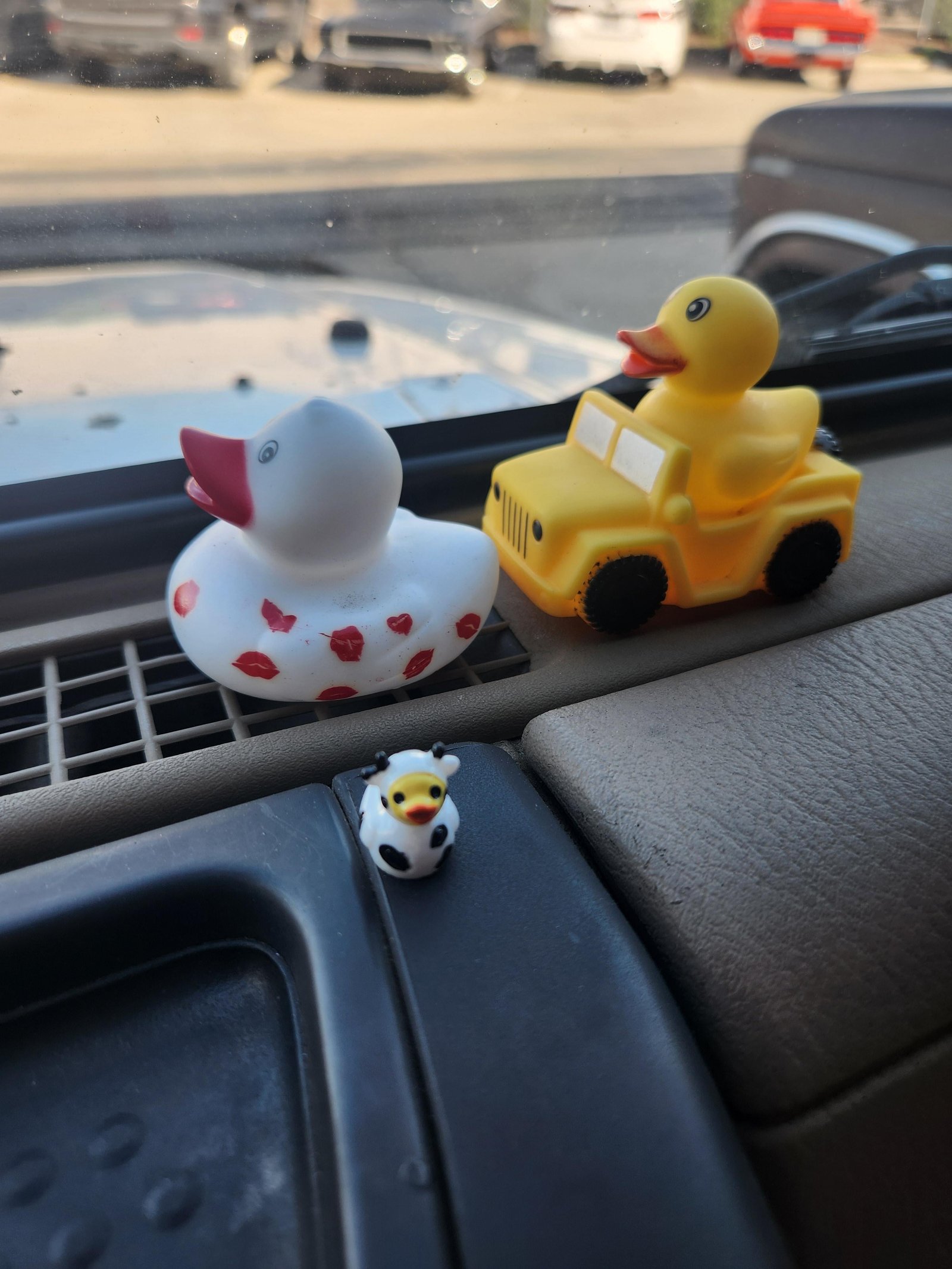
Jeep ducks slide because the dashboard is often smooth, angled, dusty, and exposed to vibration. Braking, turning, rough roads, and off-road driving can turn a small duck into a loose object that moves across the dash.
Heat also matters. A parked vehicle can become very hot, which may soften some adhesives and make rubber or plastic surfaces feel slick. Dust, cleaning sprays, and dashboard protectants can reduce friction even further.
The safest solution is not the strongest glue. It is a stable, removable setup that keeps the duck secure without damaging the dashboard or creating a hazard.
Safety Comes Before Decoration
Keep Jeep ducks away from the windshield, instrument cluster, controls, and airbag deployment zones. A duck that blocks your view or becomes a loose projectile during a crash is not safely placed.
The passenger-side dashboard is a key area to avoid. Many Jeep models have a passenger airbag in or near the dashboard. The exact location differs by model and year, so check the owner’s manual before placing anything in front of the passenger seat.
Also avoid these locations:
- Directly in front of the steering wheel
- On top of the instrument cluster
- Near windshield defroster vents
- Over warning lights or gauges
- Near touchscreen, radio, or climate controls
- Along the edge of the dashboard where a duck can fall into a vent
- In any place that blocks the driver’s view
- Near grab handles or other areas needed for safe entry and exit
A small duck may seem harmless, but any unsecured object can move during sudden braking or a collision. NHTSA advises drivers to keep the vehicle interior clear of objects that may interfere with safe operation.
The Best Ways to Stop Jeep Ducks From Sliding
Choose the method based on how permanent you want the setup to be and how much movement your Jeep sees.
1. Use a Silicone or Rubber Non-Slip Mat
A thin silicone mat is usually the best all-purpose option. It creates friction between the duck and the dashboard. It also makes the duck easy to remove when you need to clean the vehicle or use the dashboard for something else.
Look for a mat that is:
- Thin enough not to obstruct the windshield
- Cut to fit the chosen dashboard area
- Heat-tolerant for normal vehicle use
- Easy to wash
- Free from loose edges that can curl
- Made for vehicle interiors or household grip use
A clear mat is less noticeable. A black mat often blends better with Jeep dashboards. A textured mat may grip better than a smooth sheet.
2. Use a Small Rubber Shelf Liner
A piece of rubberized shelf liner can work in the same way as a silicone mat. Cut it slightly larger than the duck’s base, then place it on a flat part of the dash.
Do not use a large piece that covers vents, speakers, gauges, or dashboard seams. Keep the liner flat so it does not become another loose object.
3. Use Removable Mounting Putty With Care
Removable mounting putty can hold a lightweight duck in place. Use only a small amount under the duck, and press it onto a clean, dry surface.
Test it first in a hidden spot. Some putties can leave an oily mark, collect dust, or react with soft-touch coatings. Remove the duck periodically so the putty does not remain pressed against the dashboard for long periods.
Do not use this method if the duck is heavy or if you drive on rough trails where the mount may fail.
4. Choose a Duck With a Wide, Flat Base
A wide base gives the duck more contact with the dashboard. It also lowers the chance that the duck will tip when the Jeep turns or stops.
A duck with a small rounded base has less grip. A top-heavy duck, duck with a large hat, or duck with an attached accessory may slide or fall more easily.
You can improve stability by placing the duck upright on a thin non-slip pad. Avoid cutting or melting the duck to create a flat base, since this can damage the item and create sharp edges.
5. Use a Recessed Dashboard Tray
Some Jeep owners use a small tray or organizer designed for a specific Jeep dashboard. A tray can keep several ducks together and prevent them from reaching the edge of the dash.
Check that the tray:
- Fits your exact Jeep model and dashboard layout
- Does not cover an airbag panel
- Does not block vents or gauges
- Does not reflect light into the windshield
- Does not rattle while driving
- Can be removed without leaving adhesive behind
A tray is useful for display, but it does not remove the need to follow airbag and visibility rules.
How to Secure Jeep Ducks Step by Step
Follow this process before adding adhesive or buying a new holder.
Step 1: Pick a Safe Location
Sit in the driver’s seat and check the view from your normal driving position. The duck should not block the road, mirrors, gauges, warning lights, or navigation screen.
Then consult the Jeep owner’s manual for airbag locations. If you cannot confirm that a dashboard area is clear, choose a lower-risk location such as a center console tray or another secure storage area.
Step 2: Clean the Surface
Wipe the area with a clean, slightly damp microfiber cloth. Remove dust, sand, oil, and dashboard dressing.
If the surface has a greasy protectant, use a cleaner that the Jeep manufacturer allows for that trim. Do not use harsh solvents, abrasive pads, or strong degreasers unless the owner’s manual says they are safe.
Allow the surface to dry fully.
Step 3: Add the Non-Slip Layer
Place a small silicone mat or rubber liner on the selected spot. Keep it flat and make sure its edges do not lift.
The mat should not sit over a seam, vent, speaker grille, or removable access panel. If it shifts by hand, it may shift even more while driving.
Step 4: Place the Duck in the Center
Set the duck near the middle of the mat. Do not place it close to the windshield or dashboard edge.
For more than one duck, leave space between them. Crowding can make the ducks push against one another during turns.
Step 5: Test the Setup
With the Jeep parked, gently push the duck from different directions. It should resist light movement.
Next, drive slowly in a safe area. Test a gentle stop and turn. Check the duck again before using the setup on a long trip or rough road.
Step 6: Recheck It Often
Inspect the setup after:
- A hot day
- A cold day
- Interior cleaning
- Heavy rain or high humidity
- Rough roads
- Off-road driving
- A sudden stop
- Removing and replacing the duck
A setup that works in a garage may not work on a washboard trail.
What to Do if the Duck Still Slides
If the duck moves after adding a mat, check the cause instead of immediately adding stronger adhesive.
| Symptom | Likely cause | Practical fix |
|---|---|---|
| The duck moves only during turns | The base is narrow or the mat is too smooth | Use a wider-base duck or a textured silicone mat |
| The mat moves with the duck | The dashboard is dusty or oily | Clean the surface and replace the mat |
| The duck tips forward | The dash is angled or the duck is top-heavy | Move it to a flatter location |
| The duck sticks at first, then slides | Heat or dashboard dressing reduced grip | Remove the dressing and use a washable liner |
| The duck rattles | The duck or tray has too much clearance | Add a thin non-slip layer or use a smaller tray |
| The duck falls into a vent or gap | It is too close to an opening | Move it to a wider, enclosed surface |
| Adhesive leaves residue | The adhesive is not suited to the dashboard finish | Stop using it and clean only with an approved interior cleaner |
Do not keep increasing adhesive strength until the duck is difficult to remove. Permanent tape, glue, or epoxy may damage the dashboard and can make future repairs harder.
Should You Glue a Jeep Duck to the Dashboard?
Permanent glue is usually a poor choice. It may discolor the dashboard, damage soft-touch trim, leave residue, or make the duck difficult to remove. It can also fail when the vehicle interior becomes hot.
If you want a more permanent display, use a purpose-built holder that attaches to a safe, approved mounting point. Even then, check the holder after installation and make sure it does not interfere with airbags, visibility, controls, or vehicle wiring.
Avoid attaching objects to airbag covers. Do not drill into the dashboard unless a qualified installer confirms that the location is safe and the modification will not affect vehicle systems.
Alternatives to Dashboard Placement
The dashboard is not the only place to display Jeep ducks. A safer location may be better if you drive on rough roads or carry passengers.
Consider:
- A center-console organizer
- A cup-holder insert
- A secured door-pocket organizer
- A rear cargo display tray
- A removable duck carrier
- A small storage bin with a non-slip liner
- A display shelf used only while the Jeep is parked
Any item inside the cabin should remain secure. Do not place ducks where they can interfere with pedals, seat belts, doors, emergency equipment, or passenger movement.
For a Jeep used on trails, store the ducks in a closed bin during driving. You can display them again when parked at a meet, trailhead, or event.
Common Mistakes to Avoid
Using Dashboard Shine Products
Many dashboard dressings leave a slick film. That shine may look clean, but it can reduce friction and make a duck slide faster.
Clean the area with a product approved for the dashboard material. Avoid applying protectant where you plan to place a duck.
Ignoring the Dashboard Angle
A duck may stay still on a level driveway but slide once the Jeep is parked on a hill. Test the setup on level ground and consider how it will behave on slopes.
Relying on Suction Cups
Suction cups need a smooth, clean surface and may lose grip as temperature and pressure change. They are not a reliable choice for every textured Jeep dashboard.
Using Double-Sided Tape Without Testing
Tape can bond strongly to some trim materials. It may pull up coatings or leave residue when removed. If you use removable tape, test it in a hidden area and follow the tape maker’s instructions.
Placing Ducks Near the Windshield
A duck near the glass may reflect in the windshield, block part of the road, or distract the driver. Keep decorations low and outside the driver’s normal sight path.
Key Takeaways
- Use a small silicone mat or rubber liner to add grip.
- Clean away dust, oil, and dashboard protectant first.
- Choose a duck with a wide, flat base.
- Keep decorations away from airbags, vents, gauges, controls, and the windshield.
- Test the setup with gentle stops and turns before driving far.
- Avoid permanent glue unless a qualified installer confirms the location is safe.
- Store ducks in a secure bin during rough off-road driving.
Frequently Asked Questions
What is the best non-slip mat for Jeep ducks?
A thin silicone or rubber mat made for vehicle interiors is a practical choice. Select one that stays flat, can be cleaned, and does not cover vents, dashboard seams, gauges, or airbag areas.
Can I use Velcro to hold a Jeep duck in place?
You can use removable hook-and-loop fastener on a suitable, non-critical surface, but test it first. The adhesive may leave residue or damage some dashboard finishes. Keep the duck away from airbag panels and visibility zones.
Why does my Jeep duck slide even on a rubber mat?
The dashboard or mat may have dust, oil, or interior protectant on it. The duck may also be too top-heavy, or the dashboard may be too steep. Clean both surfaces, try a wider-base duck, and move the setup to a flatter area.
Is it safe to put Jeep ducks on the passenger dashboard?
Not unless the owner’s manual confirms that the location is clear of airbag deployment areas and the duck cannot become a hazard. In many vehicles, the passenger dashboard contains or covers an airbag system, so a different location is safer.
How do I keep Jeep ducks from sliding during off-road driving?
Use a secured tray or closed storage bin rather than relying on a dashboard mat. Rough trails create stronger movement than normal street driving, and a loose duck can become a distraction or projectile.
Final Recommendation
Start with a clean, flat dashboard area that is outside the airbag and driver-visibility zones. Add a thin silicone or rubber mat, place a lightweight duck with a broad base on top, and test it with slow turns and stops.
If the duck still moves, relocate it instead of adding stronger glue. For trail use, the safest option is usually to store Jeep ducks in a closed, padded container until the vehicle is parked.