

Where Is The Jeep Compass Main And Aux Battery: Quick Guide
 Reading Time: 9 minutes
For most 2017–2023 Jeep Compass models sold in the United States, the main 12-volt battery is under the hood, below the air-cleaner housing. The auxiliary battery sits beneath or beside the main battery tray, so it is not easy to see from above.
The exact setup depends on the model year, engine, and whether the Compass has Engine Stop/Start (ESS). Many older U.S.-market Compass models have only one battery and no separate auxiliary battery.

Jeep Compass battery location at a glance
The battery layout is usually as follows:
| Jeep Compass version | Main battery location | Auxiliary battery |
|---|---|---|
| 2007–2016 Compass | Under the hood, in the engine bay | Usually not fitted as a separate battery |
| 2017–2023 Compass with ESS | Under the air-cleaner housing | Mounted below or near the main battery tray |
| 2017–2023 Compass without ESS | Under the air-cleaner housing | Usually no separate ESS battery |
| Newer or special powertrains | May use a different layout | Check the VIN-specific manual |
The most important point is this: the main battery may be hidden by the air box, and the auxiliary battery is usually lower than the main battery.
Do not rely on the vehicle’s year alone. Check for an ESS system, battery labels, and the correct owner’s manual for your VIN.
How to tell whether your Jeep Compass has an auxiliary battery
A Jeep Compass may have an auxiliary battery if it has an Engine Stop/Start system. This system shuts the engine off when the vehicle stops, such as at a traffic light, then restarts it when the driver releases the brake or presses the accelerator.
Look for these signs:
- An A OFF or Stop/Start button on the dashboard.
- A message such as “Stop/Start Not Ready.”
- A message that says “Stop/Start Unavailable.”
- A battery warning after the engine stops and restarts.
- A second battery listed in the parts catalog or service information.
- Two battery cables or battery cases in the battery compartment.
An ESS-equipped Compass can use a main battery and a smaller auxiliary battery. The two batteries support the vehicle’s electrical systems during frequent engine restarts.
However, a dashboard message does not prove that the auxiliary battery is the only fault. A weak main battery, poor ground, loose terminal, charging problem, or battery sensor fault can cause similar symptoms.
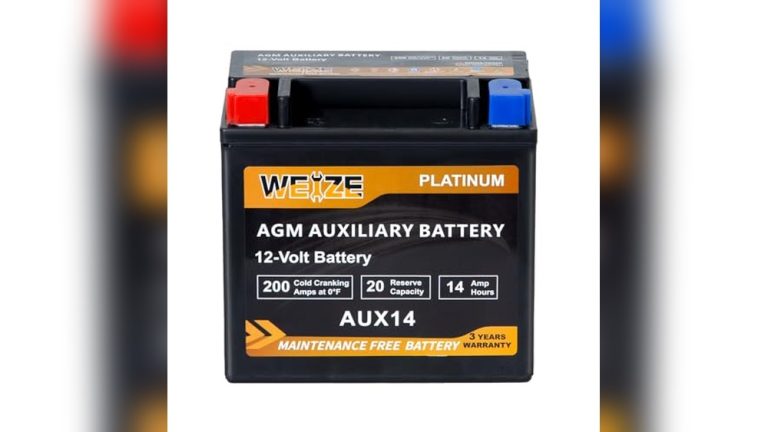
Where to find the main battery under the hood
Open the hood and stand in front of the vehicle. On many 2017–2023 Jeep Compass models, the main battery is on the side of the engine compartment near the air-cleaner assembly.
The air cleaner is the plastic housing that holds the engine air filter. It connects to the intake duct leading toward the engine. Depending on the year, part of this housing or the intake duct may cover the battery.
The battery may not look like a normal, fully exposed under-hood battery. You may need to remove or move parts of the air-intake system before you can see:
- The battery case.
- The negative terminal.
- The positive terminal.
- The battery hold-down.
- The battery vent connection, if fitted.
Do not remove the air filter housing just to inspect the battery unless you are prepared to reinstall it correctly. A loose intake seal can allow unfiltered air into the engine.
Main battery location on older Compass models
Many 2007–2016 Jeep Compass models use a more accessible under-hood battery. These vehicles commonly have one main battery rather than a separate ESS auxiliary battery.
Some late vehicles and certain trims can differ. Before buying a battery, confirm the following:
- Model year.
- Engine size.
- Four-wheel-drive or front-wheel-drive configuration.
- Presence of Engine Stop/Start.
- Battery group size and cold-cranking rating.
- Positive-terminal and negative-terminal position.
A battery that fits the tray may still have the wrong terminal layout or electrical rating.
Where the auxiliary battery is located
On many U.S.-market 2017–2023 Jeep Compass models with Engine Stop/Start, the auxiliary battery is located below the main battery or below the main battery tray.
This creates a common source of confusion. A driver may find the main battery but assume there is no auxiliary battery because the smaller unit cannot be seen. In many cases, the main battery, battery tray, and nearby intake parts must be removed before the auxiliary battery can be reached.
The auxiliary battery is usually smaller than the main battery. It may have its own hold-down and cable connections. Its position can vary by engine and production date, so compare the vehicle with the factory service information before removing parts.
Do not connect a charger or jump pack to an unknown terminal. Use the positive and negative points identified in the owner’s manual or service guide.
How to access the main and auxiliary batteries
Battery access is a repair task, not just an inspection task. Follow the steps below only if you have the correct tools and the vehicle-specific instructions.
What you may need
Prepare:
- Safety glasses.
- Work gloves.
- A 10 mm wrench or socket, if appropriate for the terminal hardware.
- Ratchet and extensions.
- Battery hold-down tools.
- A memory-saving device only if approved for the vehicle and used correctly.
- The vehicle owner’s manual.
- A replacement battery that matches the required specification.
Disconnect the ignition. Remove the key or keep the key fob away from the vehicle. Set the parking brake and allow hot engine parts to cool.
General access procedure
- Park on level ground. Turn off the engine and all electrical accessories.
- Open the hood. Secure it with the hood support if the vehicle uses one.
- Identify the air-cleaner housing. Do not confuse it with the fuse box or engine cover.
- Remove only the intake parts that block access. Keep track of clips, bolts, ducts, and electrical connectors.
- Disconnect the negative cable first. This reduces the chance of a short if a tool touches metal.
- Disconnect the positive cable. Protect the loose cable so it cannot touch the terminal.
- Remove the battery hold-down. A battery can be heavy, so lift it with both hands.
- Remove the battery tray only when required. This may reveal the auxiliary battery.
- Photograph the cable layout. A clear photo can prevent an incorrect reconnection.
- Replace or test the auxiliary battery as directed. Do not assume the small battery is interchangeable with the main battery.
- Reinstall the tray, batteries, intake parts, and connectors.
- Connect the positive cable first and the negative cable last.
The procedure above is a general guide. Jeep changed components and procedures across model years. The service manual remains the controlling source for torque values, battery registration, and sensor procedures.
Main battery versus auxiliary battery
The two batteries do different jobs, although their functions overlap.
| Battery | Main purpose | Common location | Typical symptom when weak |
|---|---|---|---|
| Main battery | Starts the engine and supplies most vehicle power | Under the hood, below the air box | Slow crank, clicking, no start |
| Auxiliary battery | Supports the ESS electrical system and restart function | Below or near the main battery | Stop/Start disabled, warning messages |
| Both batteries | Work with the charging and power-management system | Engine compartment | Multiple warnings or unstable electrical behavior |
A failed auxiliary battery may not always prevent the engine from starting. The vehicle may disable the Stop/Start function and display a warning. A failed main battery is more likely to cause slow cranking or a no-start condition.
These symptoms can overlap. A proper battery test should check the main battery, auxiliary battery, charging voltage, cable connections, and battery monitoring system.
How to diagnose a Jeep Compass battery problem
Start with simple and safe checks.
1. Check the battery terminals
Look for:
- Loose terminal clamps.
- White or green corrosion.
- Damaged cable ends.
- A loose ground connection.
- A cracked battery case.
- Swelling or fluid leakage.
Do not touch leaking battery fluid. Battery acid can burn skin and damage clothing. Wear eye protection and seek professional help if the battery is swollen, cracked, or hot.
2. Check the starting symptom
A slow crank often points to a weak main battery, poor cable connection, or charging problem. A normal crank with a Stop/Start warning may point to the auxiliary battery or the ESS system.
A completely dead vehicle can have several causes, including:
- A discharged main battery.
- A failed auxiliary battery.
- Interior lights left on.
- A parasitic electrical drain.
- A bad alternator.
- A poor ground.
- A blown fuse or control-module fault.
3. Test both batteries
A voltage reading alone does not show the full condition of a battery. A battery can show acceptable resting voltage but fail under load.
Ask for a test of:
- Main battery state of charge.
- Main battery starting capacity.
- Auxiliary battery condition.
- Charging-system output.
- Cable voltage drop.
- Battery sensor operation.
Use the battery type and rating specified by Jeep. Some vehicles require a battery-monitoring system reset or battery replacement procedure after installation.
Can you jump-start the main or auxiliary battery?
Use the jump-start points specified in the owner’s manual. Do not guess based on which terminal is easier to reach.
General safety rules:
- Confirm the vehicle voltage before connecting a jump pack.
- Turn off both vehicles before making connections unless the manual says otherwise.
- Connect positive to positive.
- Connect the negative lead to the approved ground point when instructed.
- Keep cables away from belts, fans, and hot exhaust parts.
- Remove the cables in the reverse order.
- Never allow the positive clamp to touch body metal.
A jump-start may get the Compass running, but it does not repair a weak battery. If the vehicle needs repeated jumps, have both batteries and the charging system tested.
Never jump a battery that is frozen, cracked, leaking, or visibly swollen.
Common mistakes when looking for the Jeep Compass batteries
Mistake 1: Assuming every Compass has two batteries
Many Compass models do not have a separate auxiliary battery. The presence of Stop/Start is a key clue, but the exact equipment must still be confirmed.
Mistake 2: Looking only above the air box
The main battery can be hidden under the air-cleaner housing. The auxiliary battery may sit below the main battery tray.
Mistake 3: Buying a battery by size alone
Battery group size, terminal position, technology, and starting rating all matter. A physically similar battery may be unsuitable.
Mistake 4: Disconnecting the positive terminal first
Disconnecting the negative terminal first lowers the risk of an accidental short to the vehicle body.
Mistake 5: Replacing only the auxiliary battery
A weak main battery can cause the same Stop/Start warning as an auxiliary battery fault. Test both before replacing either one.
Mistake 6: Leaving intake parts loose
A loose air duct or air-filter housing can cause an intake leak and may allow dirt into the engine.
When to use a repair shop
Use a qualified technician when:
- The battery is below the intake system and access is unclear.
- The vehicle has repeated battery failures.
- The battery is swollen, leaking, or hot.
- Several warning lights appear after replacement.
- The vehicle will not start after a correct jump-start.
- You need battery registration or module programming.
- You are unsure which battery is the main unit or auxiliary unit.
A professional can test the complete electrical system instead of replacing parts by guesswork.
Jeep Compass battery location FAQs
Does every Jeep Compass have an auxiliary battery?
No. Many older Compass models use one main battery. A separate auxiliary battery is more common on models equipped with Engine Stop/Start.
Where is the auxiliary battery on a 2018 Jeep Compass?
On many U.S.-market 2018 Compass models with Stop/Start, it is below or near the main battery tray, under the air-cleaner area. Access may require removal of the main battery and tray.
Can a bad auxiliary battery stop the Jeep Compass from starting?
It can contribute to starting and electrical problems, but a no-start condition may also come from the main battery, cables, starter, alternator, or a control-system fault.
Can I replace the main battery without replacing the auxiliary battery?
Sometimes, yes. The batteries should be tested separately. Replace the battery that fails the test, unless the manufacturer’s service procedure calls for replacing both as a matched system.
How do I know which battery to buy?
Use the vehicle’s model year, engine, VIN, battery label, and owner’s manual. Confirm the battery group, type, terminal position, and required starting rating before purchasing.
Final answer
On most 2017–2023 Jeep Compass models with Engine Stop/Start, the main battery is under the hood and partly hidden beneath the air-cleaner housing. The auxiliary battery is generally mounted below or near the main battery tray.
Older Compass models often have only one main battery. Because the layout changes by year and powertrain, confirm the vehicle’s VIN-specific instructions before removing the air box, battery tray, or either battery.
