

Where Is The Fuse Box Located On A Jeep Gladiator JT: Map
 Reading Time: 8 minutes
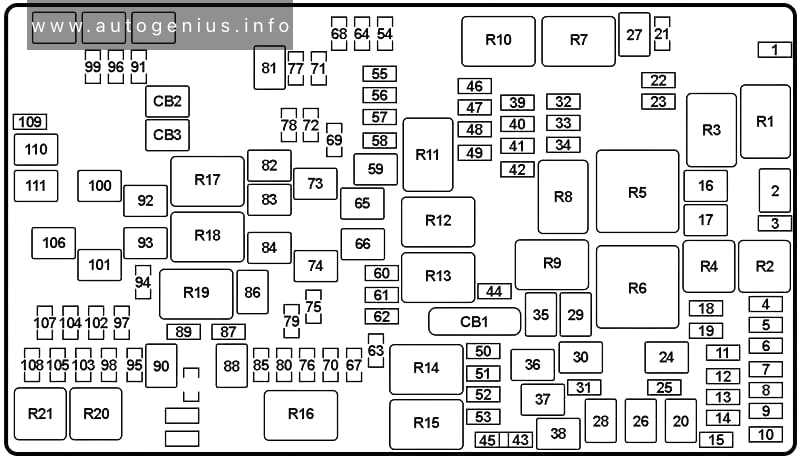
On a US-market Jeep Gladiator JT, the main fuse box is under the hood in the engine compartment. Jeep calls it the Power Distribution Center (PDC). It sits near the vehicle’s battery and is covered by a black plastic lid.
The PDC contains many fuses and relays for systems such as the lights, power outlets, engine controls, fuel pump, horn, and other electrical circuits. Its exact fuse layout can vary by model year, engine, trim, and factory-installed options.

How to Find the Jeep Gladiator JT Fuse Box
The fuse box is easy to reach after you open the hood.
- Park the Gladiator on a level surface.
- Turn the ignition completely off.
- Switch off all electrical accessories.
- Open the hood and secure it with the hood prop if needed.
- Look in the engine compartment for the 12-volt battery.
- Find the nearby black plastic electrical box.
- Check the lid for the Power Distribution Center label or fuse symbols.
- Release the cover clips and lift the lid straight up.
The fuse box is not normally located under the dashboard in the passenger compartment on the Jeep Gladiator JT. The primary fuse and relay center is under the hood near the battery.
The Gladiator JT began production for the 2019 model year. Because fuse locations and assignments may differ between model years and equipment packages, use the fuse diagram printed under the PDC cover or in the correct owner’s manual.

What the Power Distribution Center Does
The Power Distribution Center protects the Gladiator’s electrical circuits. A fuse is designed to fail when too much current flows through a circuit. This helps protect wiring and electrical components from excessive heat and damage.
The PDC may contain:
- Blade-type fuses
- Larger cartridge fuses
- Relays
- High-amperage fuses
- Spare fuses
- A fuse puller
A relay is an electrically controlled switch. It allows a low-current control circuit to operate a higher-current device, such as a cooling fan or fuel pump. A relay may look similar to another relay, but that does not mean the two parts are interchangeable.
The diagram inside the cover identifies each fuse by number, rating, and circuit. The owner’s manual provides the most complete reference for your specific Gladiator.
How to Check or Replace a Fuse
Check the fuse only after confirming that the affected electrical system is turned off.
Step-by-step fuse replacement
- Turn off the ignition and remove the key or switch the ignition fully off.
- Turn off the affected electrical device.
- Open the PDC cover.
- Use the fuse diagram to identify the correct fuse.
- Remove the fuse with the fuse puller, if one is provided.
- Inspect the small metal link inside the fuse.
- Replace the fuse only with another fuse of the same amperage rating.
- Press the replacement fuse firmly into the same slot.
- Refit the PDC cover.
- Test the affected system.
A good fuse usually has an unbroken metal link. A blown fuse often has a melted or broken link. Some damage may be hard to see, so a multimeter can help confirm whether the fuse has continuity.
Fuse rating guide
| Fuse marking | Meaning |
|---|---|
| 5A, 7.5A, 10A, or 15A | Low-current circuit protection |
| 20A or 25A | Medium-current circuit protection |
| 30A or higher | Higher-current circuit protection |
| Cartridge or large fuse | High-current circuit protection |
The exact ratings and circuit assignments depend on the Gladiator’s model year and configuration. The color or physical size alone is not enough to identify the correct replacement.

What to Do if the New Fuse Blows Again
A replacement fuse that blows at once usually indicates an electrical fault. The problem may be a short circuit, damaged wiring, a failed component, water intrusion, or an accessory that draws too much current.
Use this safe check order:
- Replace the fuse with the correct rating only once.
- Test the system without adding accessories or loads.
- Inspect visible wiring near the related component.
- Check for crushed, rubbed, melted, or wet wiring.
- Disconnect recently installed accessories, such as lights, winches, radios, or power inverters.
- Stop if the replacement fuse blows again.
Do not install a larger fuse to keep the circuit working. A higher-rated fuse can allow the wiring to overheat before the fuse opens. Do not bridge the fuse with wire, foil, or another metal object.
If the fuse repeatedly fails, have the circuit tested by a qualified automotive technician. Repeated fuse failure is a fault warning, not a reason to keep replacing fuses.
Common Reasons a Gladiator Fuse Blows
The fuse box location is the same basic service point, but the cause of a blown fuse can differ.
| Symptom | Possible cause |
|---|---|
| One light does not work | Blown fuse, failed bulb, connector issue, or wiring fault |
| Power outlet stops working | Blown outlet fuse or a device that draws too much current |
| Several systems stop working | Main fuse, relay, battery, or power supply problem |
| Fuse blows after rain or washing | Moisture in a connector or damaged wiring |
| Fuse fails after an accessory install | Incorrect wiring or excessive circuit load |
| Vehicle will not crank | Battery, starter circuit, ignition circuit, or related fuse/relay issue |
A blown fuse is only the visible result. The fuse protects the circuit; it does not explain why the circuit overloaded.
Accessories are a common source of electrical problems. A device plugged into a power outlet may cause a fuse to fail if it is damaged or if several devices share the outlet. Aftermarket lights, winches, air compressors, and audio equipment should use properly sized wiring and circuit protection.
Does the Fuse Box Location Change by Gladiator Model Year?
The main PDC remains under the hood near the battery across Jeep Gladiator JT models, but the internal layout can change.
Check the correct reference for:
- Model year
- Engine type
- Trim level
- Factory tow equipment
- Auxiliary switch package
- Export or US-market configuration
- Optional electrical equipment
Do not rely on a fuse chart from a different year without checking the fuse number and circuit description. Two Gladiators may have the same fuse-box location but different fuse assignments.
The most reliable sources are:
- The diagram on the PDC cover
- The owner’s manual for the vehicle’s exact model year
- A Jeep service manual matched to the vehicle identification number, or VIN
The VIN is usually visible through the lower windshield on the driver’s side and may also appear on vehicle documents.
Safety Tips Before Working Near the Fuse Box
Follow these precautions when inspecting the Gladiator’s fuse panel:
- Keep the ignition off.
- Keep metal tools away from battery terminals.
- Do not work on the system with wet hands.
- Never replace a fuse with a higher-rated fuse.
- Do not use a fuse that is damaged or has the wrong physical type.
- Do not remove large high-current fuses unless the service procedure calls for it.
- Do not probe connectors or wiring without knowing the correct test method.
- Keep the PDC cover properly installed to help protect the fuses from moisture and dirt.
- Have electrical faults diagnosed if a fuse blows repeatedly.
If you smell burning plastic, see melted wiring, notice smoke, or find heat damage near the fuse box, stop work and disconnect the battery only if it is safe to do so. Professional service may be needed.
Jeep Gladiator JT Fuse Box FAQs
Is the Jeep Gladiator fuse box under the hood?
Yes. The main Gladiator JT fuse box is under the hood in the engine compartment, near the battery. Jeep refers to it as the Power Distribution Center.
Is there a fuse panel inside the Gladiator cabin?
The primary fuse and relay center is under the hood. Some electrical components and control modules may be inside the cabin, but the main user-serviceable fuse panel is the under-hood PDC. Always check the manual for the exact model year.
How do I know which fuse controls the cigarette lighter or power outlet?
Use the fuse chart under the PDC lid or the fuse section of the owner’s manual. The circuit may be listed as a power outlet, auxiliary power outlet, USB power supply, or similar term.
Can I replace a blown fuse with a higher amp fuse?
No. Install only the same amperage and fuse type specified for that slot. A larger fuse can permit excessive current and damage the wiring or create a fire risk.
Why does my new Gladiator fuse keep blowing?
A recurring failure usually points to a short circuit, damaged wiring, a failed electrical component, moisture, or an overloaded aftermarket accessory. Stop replacing the fuse and arrange a circuit diagnosis.
Official Reference for the Fuse Layout
For the correct fuse assignment, use the owner’s manual for your Gladiator’s model year. Jeep’s official owner information portal provides manuals and vehicle documents for supported US-market vehicles:
The fuse-box location is usually consistent, but the fuse number, circuit, and rating may not be. Match the manual to the vehicle before removing or replacing a fuse.
Conclusion
The Jeep Gladiator JT fuse box is under the hood, near the battery. Lift the black Power Distribution Center cover to access the fuses and relays. Use the fuse diagram on the cover or the correct model-year owner’s manual to identify a circuit.
Replace a blown fuse only with the same type and amperage. If the new fuse fails again, do not install a larger fuse or bypass the circuit. Treat repeated failure as an electrical fault that needs proper diagnosis.


