

P0520 Jeep Code: Oil Pressure Sensor Circuit Fix
 Reading Time: 12 minutes
Introduction
If your Jeep shows the P0520 engine code, the engine computer has found a fault in the engine oil pressure sensor or switch circuit. The best fix is not to replace the sensor at once. First, check the oil level and warning signs, then test the wiring and confirm real oil pressure with a mechanical gauge.
A P0520 code may come from a bad oil pressure sensor, damaged wiring, a poor ground, a blown fuse, low oil, or a real engine lubrication problem. Driving with low oil pressure can cause severe engine damage within minutes.
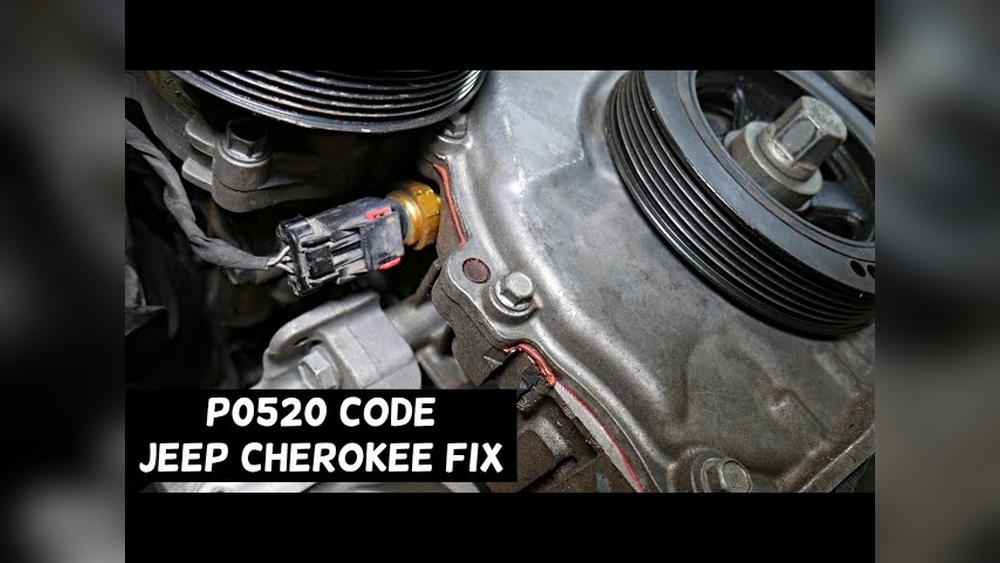
What Does the P0520 Jeep Code Mean?
The P0520 Jeep code means the powertrain control module, or PCM, has detected a problem in the oil pressure sensor or switch circuit.
The code is often written as PO520, but the correct format is P0520. The first character is the letter P, which means powertrain.
The oil pressure sensor sends a signal to the PCM and, in many Jeeps, to the instrument cluster. The system uses this signal to:
- Monitor engine oil pressure.
- Control the oil pressure warning light.
- Display oil pressure data, when equipped.
- Store a diagnostic trouble code when the signal is missing or outside its expected range.
P0520 does not prove that the oil pressure sensor itself is bad. It only says that the computer found a fault in the sensor circuit or its signal.
Related Jeep oil pressure codes
| Code | General meaning |
|---|---|
| P0520 | Oil pressure sensor or switch circuit malfunction |
| P0521 | Oil pressure sensor signal out of range or performance problem |
| P0522 | Oil pressure sensor signal too low |
| P0523 | Oil pressure sensor signal too high |
| P0524 | Engine oil pressure too low |
The exact code description can vary by Jeep model, engine, and model year. Use the factory service information for the specific vehicle before testing terminal voltage or replacing parts.

First Check: Is the Engine Really Losing Oil Pressure?
Before diagnosing the electrical circuit, decide whether the engine has safe oil pressure. A red oil pressure warning light, ticking noise, knocking, or a sudden loss of pressure requires immediate action.
Stop driving if you see these signs
- The oil pressure warning light stays on while the engine runs.
- The oil pressure gauge reads zero or near zero.
- The engine makes a deep knocking sound.
- The engine has loud ticking that rises with engine speed.
- The oil level is very low.
- Oil is leaking heavily near the sensor, filter housing, or oil pan.
- The engine stalls after the warning appears.
Turn off the engine as soon as it is safe. Check the oil level on level ground after allowing a few minutes for the oil to drain into the pan. Add the correct oil only if the level is low, but do not assume adding oil solves the problem.
A correct oil level does not guarantee safe oil pressure. A worn oil pump, blocked pickup, damaged bearing, or internal engine fault can still cause low pressure.
Confirm pressure with a mechanical gauge
The most useful test is to remove the oil pressure sensor and install a mechanical oil pressure gauge using the correct adapter. Then compare the reading with the pressure specification for that exact Jeep engine.
Test pressure under the conditions listed by the manufacturer, such as:
- Cold idle.
- Warm idle.
- A specified engine speed.
- The correct oil grade and level.
Do not use a generic pressure number as a pass or fail limit. Oil pressure varies by engine design, temperature, oil viscosity, and engine wear. If mechanical pressure is below the factory limit, repair the lubrication problem before replacing the sensor.

Common Causes of P0520 on a Jeep
The most common causes are electrical or sensor-related, but mechanical problems must be ruled out first.
1. Failed oil pressure sensor or switch
The sensor can fail internally and send a fixed, erratic, or incorrect signal. Oil may also leak through the sensor body or into its connector.
Some Jeep engines use a pressure switch that mainly changes state. Others use a variable-pressure sensor that sends a changing voltage. The test method depends on which type is installed.
2. Damaged wiring
The signal wire may be:
- Shorted to ground.
- Shorted to battery voltage.
- Broken inside the insulation.
- Melted against the exhaust.
- Pinched near a bracket.
- Rubbed through against the engine.
- Contaminated by oil or water.
A damaged wire can create the same code as a failed sensor.
3. Loose or contaminated connector
Oil, water, corrosion, or a loose terminal can interrupt the sensor signal. A connector may look clean from the outside while a terminal inside has poor tension.
Do not spread terminals with a test probe. A loose terminal may pass a quick voltage check but fail when the engine vibrates.
4. Low oil level or incorrect oil
Low oil can cause true low pressure and may also create unstable sensor readings. Incorrect oil viscosity can affect pressure, especially when the engine is hot.
Use the oil grade listed on the oil-fill cap or in the owner’s manual. Do not select oil based only on the code.
5. Fuse, power, or ground problem
Some sensors receive a regulated reference voltage from the PCM. A fuse, shared power circuit, or sensor ground problem can affect the signal.
Check the wiring diagram for the exact Jeep. Do not assume every wire is a ground or apply battery power to a sensor terminal unless the service procedure says to do so.
6. Oil filter housing or oil leak problem
On some Jeep engines, the oil pressure sensor sits near the oil filter housing or in a difficult-to-reach area. A leaking housing, adapter, or seal can contaminate the connector and damage the circuit.
The location and part design vary by engine. Confirm the application by VIN or engine code.
7. PCM or instrument cluster fault
A PCM failure is possible but less common than a sensor, connector, or wiring problem. Do not replace the PCM until the power, ground, signal, wiring, and mechanical oil pressure tests pass.

How to Diagnose and Fix the P0520 Jeep Code
Use this sequence to avoid replacing good parts.
Tools and supplies
You may need:
- OBD-II scan tool.
- Digital multimeter.
- Mechanical oil pressure test gauge.
- Correct sensor socket.
- Wiring diagram for the Jeep.
- Back-probe pins.
- Flashlight.
- Basic hand tools.
- Correct engine oil and filter, if service is due.
- Safety glasses and gloves.
Disconnect the battery only when the service information permits it. Some Jeeps require a power-down period before connector or module work.
Step 1: Scan all stored codes
Connect the scan tool and record:
- Stored codes.
- Pending codes.
- Freeze-frame data.
- Engine temperature.
- Engine speed.
- Oil pressure data, if available.
- Battery voltage.
Do not erase the code before recording this information. Other codes may point to a shared power, ground, or communication problem.
Step 2: Check the oil level and condition
Inspect the level and look for:
- Low oil.
- Fuel dilution.
- Coolant contamination.
- Heavy sludge.
- Metal flakes.
- A damaged oil filter.
- Fresh leaks.
If the oil is badly contaminated or the engine has metal in the oil, stop electrical diagnosis and investigate the engine first.
Step 3: Inspect the sensor and connector
Locate the oil pressure sensor using the service manual. With the ignition off, inspect the sensor, connector, and nearby harness.
Look for:
- Oil inside the connector.
- Green corrosion.
- Bent pins.
- Broken locks.
- Loose terminals.
- Melted insulation.
- Harness contact with hot exhaust parts.
- A sensor body that is cracked or leaking.
Repair damaged wiring with the correct automotive-grade method. A twisted wire covered with household tape is not a lasting repair.
Step 4: Check the reference, signal, and ground circuits
The number and purpose of the wires vary. Many pressure sensors have:
- A reference-voltage circuit.
- A sensor ground.
- A signal circuit.
Some switches have a different design. Use the Jeep wiring diagram and pinout.
With the connector attached or disconnected as directed by the test procedure, check the circuit with a multimeter. Compare the readings with factory specifications. A reading that looks reasonable at the connector does not prove the circuit can carry a stable signal under vibration.
Step 5: Test the signal while moving the harness
If the signal is intermittent, gently move the harness near the sensor, brackets, and engine harness junctions while watching the scan-tool data or meter.
If the reading changes, suspect:
- A broken wire inside the insulation.
- A loose terminal.
- A poor connector lock.
- A harness rubbing point.
Do not pull hard on the wires or allow the engine to run with loose clothing near belts and pulleys.
Step 6: Test actual oil pressure
If the electrical tests do not clearly identify the fault, install a mechanical gauge and test actual pressure. This step separates a sensor-circuit problem from a real lubrication problem.
- Normal mechanical pressure with an incorrect electrical signal points toward the sensor, connector, wiring, or PCM input.
- Low mechanical pressure points toward the oil system or engine.
- A pressure reading that changes sharply with engine temperature may require further oil pump, bearing, or viscosity diagnosis.
Step 7: Replace the sensor only after testing
If the circuit is good and mechanical pressure is within specification, replace the sensor or switch with the correct part for the Jeep’s engine.
Before installation:
- Compare the new part with the old one.
- Confirm the connector and thread size.
- Replace any required seal or O-ring.
- Keep dirt out of the oil passage.
- Tighten the sensor to the factory torque.
- Reconnect the plug until the lock clicks.
- Clean any spilled oil.
Do not use excessive thread sealant. Some sensors ground through their threads, and sealant can affect the electrical connection. Follow the factory instructions for sealant and torque.
Step 8: Clear the code and verify the repair
After the repair:
- Clear the stored code.
- Start the engine and check for leaks.
- Confirm that the oil warning light turns off as expected.
- Watch live oil pressure data if available.
- Perform a road test at different engine speeds.
- Rescan for stored and pending codes.
- Recheck the sensor area for oil leaks.
A successful repair should remove the warning, restore stable data, and prevent P0520 from returning under similar conditions.

P0520 Jeep Diagnosis: Quick Decision Table
Use this table as a guide, not as a replacement for the factory test plan.
| Test result | Most likely direction |
|---|---|
| Oil is low and mechanical pressure is low | Correct the oil level, then diagnose the oil system |
| Mechanical pressure is normal, sensor signal is wrong | Sensor or sensor circuit |
| No reference voltage at the sensor | Power supply, fuse, wiring, or PCM circuit |
| Reference voltage is present, but ground is poor | Ground wire, terminal, or PCM ground circuit |
| Signal changes when the harness moves | Broken wire, loose terminal, or damaged connector |
| Oil is inside the connector | Leaking sensor or nearby oil leak |
| Code returns immediately after clearing | Hard circuit fault, wrong sensor, or incorrect wiring |
| Code returns only when hot | Heat-related wiring fault, sensor failure, or low hot oil pressure |
| P0524 appears with P0520 | Treat possible low oil pressure as urgent |
The key decision is whether the engine has real oil pressure. A scan tool cannot replace a mechanical gauge when a serious pressure loss is possible.
Sensor Replacement Versus Wiring Repair
Replace the sensor when the sensor fails its specified test, leaks, or produces an incorrect signal while the wiring and mechanical pressure are good.
Repair the wiring when the harness has an open circuit, short, corrosion, damaged insulation, or loose terminal. Replacing the sensor will not correct a broken signal wire.
Investigate the engine or oil system when mechanical pressure is low. Possible causes include:
- Restricted oil pickup.
- Weak or damaged oil pump.
- Excessive bearing clearance.
- Stuck pressure relief valve.
- Sludge blockage.
- Wrong oil viscosity.
- Internal engine wear.
Do not keep driving to “see if the code goes away” when the oil pressure warning light is on. The cost of a tow is much lower than the cost of an engine.

Common Mistakes When Fixing P0520
Replacing the sensor without checking oil pressure
This is the most serious mistake. A new sensor cannot fix low oil pressure caused by an oil pump or worn engine.
Using the wrong sensor
Jeep engines may use different sensors across model years and engine families. Match the part by VIN, engine, and build information.
Testing the wrong terminal
Sensor pin layouts are not universal. Use the wiring diagram for that Jeep instead of applying a generic three-wire sensor test.
Ignoring oil in the connector
Oil contamination can return after a sensor replacement if the connector is not cleaned or the leak source is not repaired.
Using a generic pressure specification
Pressure readings depend on engine temperature and speed. Use the factory specification for the exact engine.
Clearing the code without a road test
A code may stay cleared while the vehicle is parked and return only during hot operation, vibration, or a specific engine speed. Verify the repair under normal driving conditions.

When to Use a Professional Repair Shop
A professional diagnosis is the safer choice when:
- The oil warning light remains on.
- The engine makes knocking or heavy ticking sounds.
- Mechanical oil pressure is below specification.
- The sensor is difficult to access.
- The wiring enters a main engine harness.
- The code returns after a sensor replacement.
- Multiple powertrain codes are present.
- You do not have a safe way to test oil pressure.
Ask the shop to document the mechanical oil pressure reading, the sensor circuit tests, and the reason for the recommended repair. This helps prevent unnecessary sensor or PCM replacement.

Frequently Asked Questions
Can I drive my Jeep with the P0520 code?
Only with caution, and only after confirming that actual oil pressure is safe. If the oil warning light is on, the gauge reads low, or the engine makes noise, shut the engine off and tow the Jeep.
Is P0520 always caused by a bad oil pressure sensor?
No. The code can result from damaged wiring, a bad connector, low oil, a circuit power problem, or real low oil pressure. Testing should come before replacement.
Where is the oil pressure sensor on a Jeep?
The location depends on the engine and model year. It may be near the oil filter housing, engine block, or rear of the engine. Use the correct service manual or parts diagram for the vehicle identification number.
Will an oil change fix P0520?
An oil change may help if the oil level, grade, or condition caused the problem. It will not repair a damaged sensor circuit, failed sensor, worn oil pump, or internal engine fault.
Can a bad oil pressure sensor cause an oil leak?
Yes. A sensor can leak through its housing or seal. Oil may also enter the electrical connector. A leak near the sensor does not prove the sensor is the only problem, so inspect the surrounding area.

Conclusion
The correct P0520 Jeep code fix starts with safety: check the oil level, look for warning signs, and confirm real oil pressure when needed. If pressure is normal, inspect the sensor, connector, power, ground, signal wire, and harness before installing a new sensor.
Use the factory specifications for the exact Jeep engine. Clear the code only after the repair, then verify the result with a road test and a second scan. If pressure is low or the engine is noisy, stop driving and have the oil system diagnosed before further operation.