Jeep Wrangler JK/JL Washer Nozzles: Easy Fix
 Reading Time: 12 minutes
Introduction
If your Jeep Wrangler JK or JL windshield washer nozzles are not spraying, start with the washer fluid level, then check the nozzle openings, hose, pump, fuse, and electrical power. Most no-spray problems come from an empty reservoir, blocked nozzle, split hose, frozen fluid, or a failed washer pump.
This guide applies to Jeep Wranglers sold in the United States, including the 2007–2018 Wrangler JK and the 2018-and-newer Wrangler JL. The exact nozzle, hose, fuse, and pump design may vary by model year and trim. Always confirm parts and fuse locations with the owner’s manual for your U.S.-market Jeep.

How the Jeep Wrangler washer system works
The windshield washer system uses a small electric pump inside the washer-fluid reservoir. When you pull the wiper control toward you, the vehicle sends power to the pump. The pump pushes fluid through a hose and out of one or more nozzles near the hood or windshield cowl.
A failure at any point can stop the spray:
- The reservoir may be empty or filled with frozen fluid.
- The pump may not receive power.
- The pump may run but fail to move fluid.
- The hose may be loose, split, pinched, or blocked.
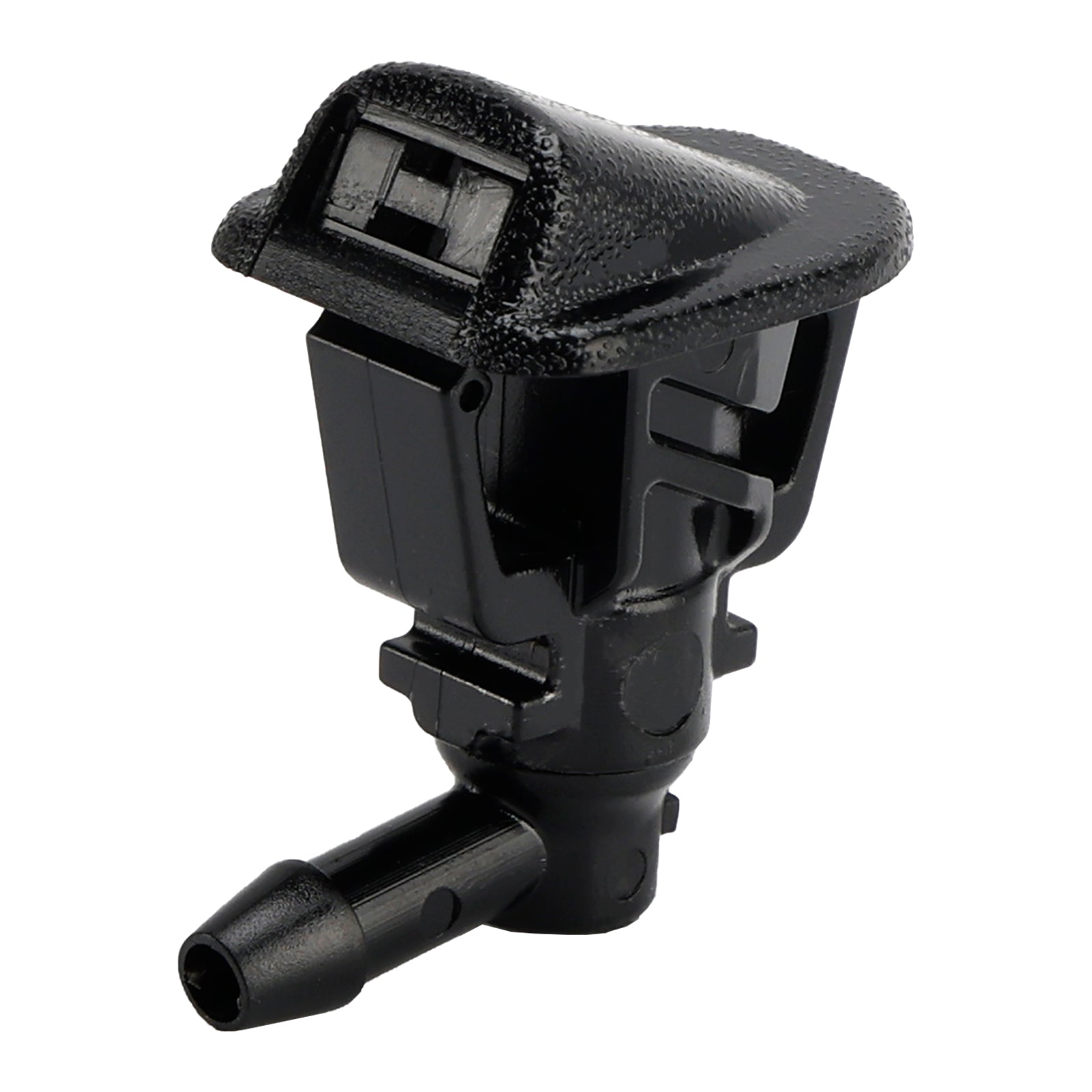
- The nozzle may be clogged with dirt or dried washer fluid.
- A fuse, wiring connection, or control switch may have failed.
The sound of the pump is the most useful first clue. If you hear the pump but see no fluid, look for a clog, leak, or disconnected hose. If you hear no pump at all, test the fuse, power supply, ground, and pump.

Tools and supplies you may need
Gather these items before you begin:
- U.S.-specification automotive windshield washer fluid
- Flashlight
- Clean water and a small container
- Soft nylon brush
- Compressed air with a low-pressure setting
- Trim tool or small screwdriver
- Multimeter or 12-volt test light
- Safety glasses
- Clean shop towels
- Replacement fuse of the same rating
- Replacement washer hose, if needed
- Replacement washer pump, if testing confirms failure
Do not use a metal needle as your first cleaning tool. It can damage the small nozzle opening or change the spray pattern. Do not replace a blown fuse with a larger fuse. The fuse protects the wiring from an overload.
Step-by-step: fix Jeep Wrangler JK and JL washer nozzles that do not spray
Follow these checks in order. This sequence starts with simple causes and moves toward electrical testing.
1. Check the washer-fluid reservoir
Park the Jeep on level ground and open the hood. Check the washer-fluid reservoir. It is usually a translucent plastic tank with a windshield symbol on the cap.
Add windshield washer fluid if the level is low. Use fluid rated for the temperature in your area. In cold parts of the United States, summer fluid or plain water can freeze in the reservoir, hose, pump, or nozzle.
Avoid using engine coolant, dish soap, or household glass cleaner. These products may damage paint, rubber parts, the pump, or the washer system.
Try the washers again after filling the tank. If the system sprays normally, the problem was simply low fluid.
2. Listen for the washer pump
turn the ignition to the required operating position without starting the engine, if your model allows washer operation that way. Pull the windshield washer control toward you for two or three seconds.
Listen near the washer-fluid reservoir:
- A humming or buzzing sound usually means the pump is running.
- A clicking sound or silence may indicate an electrical problem or a failed pump.
- A loud pump with no spray can indicate an empty pump inlet, blocked hose, or damaged pump.
Do not hold the washer switch continuously. Short tests reduce the chance of overheating a weak pump.
3. Inspect the nozzle openings
Look at the washer nozzles near the rear section of the hood or the windshield cowl area. Dirt, wax, dried washer fluid, ice, and small pieces of debris can block the openings.
Clean the area with a damp cloth. Use a soft nylon brush if dirt has built up around the nozzle. Then test the system again.
If the nozzle is frozen, move the Jeep into a warm garage or allow the vehicle to thaw. Do not pour boiling water over the nozzle or windshield. A sudden temperature change can damage glass or painted parts.
4. Check for fluid under the hood
Ask another person to operate the washer while you watch the hose and fittings. Keep your hands, clothing, and tools away from moving wiper arms.
Look for fluid:
- Around the nozzle connection
- Along the underside of the hood
- Near the hood hinge
- At hose junctions
- Around the washer-fluid reservoir
- Under the front of the Jeep
Fluid leaking from the hood often means the pump works but the hose is loose, split, or disconnected. Reconnect a loose hose. Replace brittle or damaged hose with washer hose of the correct inside diameter.
If fluid pours from the reservoir or pump area, inspect the pump grommet and reservoir for cracks.
5. Flush or clear a clogged hose
If the pump runs and there is no visible leak, disconnect the hose near the nozzle. Use a towel to catch fluid.
Briefly activate the washer system. If fluid reaches the disconnected hose, the nozzle is likely blocked. If no fluid reaches the hose, the blockage may be farther back in the line or the pump may be weak.
You can use low-pressure compressed air to clear a disconnected hose or nozzle. Use short bursts and keep pressure modest. High pressure can force the hose off a fitting or damage the nozzle.
Do not blow compressed air into a connected system while someone is holding the washer switch. Disconnect the part first.
6. Remove and clean the nozzle if needed
The exact removal method varies between JK and JL model years. Some nozzles use retaining clips, while others may require access from the underside of the hood or cowl.
Before removing a nozzle:
- Take a photo of the hose routing.
- Protect the paint with a towel.
- Release the retaining clip carefully.
- Pull the nozzle out without bending the hood panel.
- Disconnect the hose.
- Rinse the nozzle with clean water.
- Blow through it gently from the hose side.
- Reinstall it and test the spray pattern.
Do not force a trim clip. A broken clip can allow the nozzle to move or leak.
7. Test the washer pump
If the pump does not run, check the fuse listed for the washer system in the owner’s manual. Fuse assignments can differ by year, engine, and trim, so do not rely on a fuse chart from a different Wrangler.
Replace only with the same amperage rating. If the new fuse fails immediately, stop testing. A short circuit or failed component needs further diagnosis.
If the fuse is good, inspect the pump connector for corrosion, loose terminals, or water damage. A multimeter can check for voltage at the pump connector while the washer switch is activated.
- Voltage is present but the pump is silent: the pump is likely defective.
- No voltage is present: the fault may be in the fuse, wiring, ground, washer switch, body control system, or related circuit.
- Voltage appears only briefly: the vehicle may be operating the pump normally, or the control circuit may have a fault. Follow the wiring diagram for that model year.
Only perform electrical tests if you understand automotive 12-volt circuits. Keep the meter leads away from moving parts and avoid shorting the connector terminals.
8. Replace the failed washer pump
If testing shows that the pump receives proper power and ground but does not operate, replace the pump with a part that matches the Jeep’s model year and reservoir design.
The pump is commonly installed in or beside the washer-fluid reservoir. Replacement may require:
- Disconnecting the battery when required by the service procedure.
- Removing an inner fender liner or nearby cover.
- Draining the washer fluid.
- Disconnecting the pump wiring plug.
- Removing the fluid hose.
- Pulling the pump from its rubber grommet.
- Installing the new pump and grommet.
- Refilling the reservoir.
- Testing for leaks and a steady spray.
Use a new grommet if the old one is hard, cracked, or leaking. A pump can work correctly but still leak if the grommet no longer seals.

Symptom and cause guide
Use this table to narrow down the fault before buying parts.
| Symptom | Most likely cause | Best next check |
|---|---|---|
| No spray and no pump sound | Blown fuse, bad pump, wiring fault, or control fault | Check the correct fuse and test voltage at the pump |
| Pump hums but no fluid appears | Empty reservoir, frozen fluid, blocked hose, or failed pump impeller | Check fluid level, hose flow, and leaks |
| Fluid sprays under the hood | Loose, split, or disconnected hose | Follow the hose from the pump to the nozzle |
| One nozzle sprays and the other does not | Blocked nozzle or restricted hose | Remove and clean the weak nozzle |
| Spray is weak on both sides | Low fluid, partial blockage, weak pump, or incorrect fluid | Check the fluid, hose, and pump output |
| Spray works only in warm weather | Frozen fluid or ice in the nozzles | Replace with cold-weather washer fluid |
| Fuse blows again after replacement | Shorted wiring, seized pump, or damaged component | Stop replacing fuses and diagnose the circuit |
| Wipers move but washer fluid does not spray | Washer circuit, pump, hose, or nozzle problem | Listen for the pump and check the fluid path |
The table is a starting point, not a substitute for a wiring diagram. A Wrangler’s control system can vary by production year and equipment package.

Jeep Wrangler JK vs. JL washer nozzle differences
The Wrangler JK and JL use the same basic washer-system idea, but their parts and service access are not interchangeable in every case.
Wrangler JK
The JK covers the 2007–2018 model range. Parts can vary between early and late JK vehicles. The washer nozzles and hoses are typically accessible around the hood and windshield area, but the clips and hose routing may differ.
Confirm the VIN, model year, and body style before ordering a JK nozzle, hose, pump, or reservoir.
Wrangler JL
The JL began with the 2018 model year. It uses different body parts, wiring, and washer-system components from the JK. A 2018 Wrangler may be especially important to verify because it is a changeover year.
Do not assume that a JK washer nozzle or pump fits a JL because both vehicles are called Wranglers. Check the official parts catalog, the owner’s manual, or a Jeep dealer using the VIN.
Why part numbers matter
Aftermarket listings may combine JK and JL applications or list several engines and trims together. The correct part must match:
- Model generation
- Model year
- Two-door or four-door body
- Hood and cowl design
- Electrical connector
- Hose fitting
- Reservoir and pump style
A part that physically fits may still have the wrong connector or spray pattern.

When a Jeep dealer or repair shop should diagnose it
A simple clog or loose hose is usually a reasonable home repair. Seek professional help when:
- The replacement fuse blows again.
- The pump connector has melted plastic or burned terminals.
- The washer system has no power and the wiring is difficult to trace.
- The fault may involve a body control module or steering-column switch.
- The hose is hidden behind trim that you cannot remove safely.
- The hood, cowl, or windshield area needs disassembly.
- You are not comfortable testing live 12-volt circuits.
- The washer system works intermittently with no clear leak.
A repair shop can test voltage drop, ground quality, circuit continuity, and control signals. This is often faster and safer than replacing the pump, switch, and fuse one at a time.
Common mistakes to avoid
Using a pin to enlarge the nozzle
A pin may clear a small obstruction, but it can damage the opening or create an uneven spray. Use cleaning, flushing, and low-pressure air first.
Installing a larger fuse
A larger fuse can allow excessive current through wiring that was not designed for it. This can create heat and damage. Always use the rating specified for your exact Jeep.
Replacing the pump before checking the hose
A running pump and a disconnected hose can produce the same symptom as a bad pump. Check for fluid flow and leaks before buying a pump.
Using plain water in freezing weather
Water can freeze in the reservoir and narrow passages. Ice can also split a hose or damage the pump. Use washer fluid with a freeze rating suitable for the local weather.
Testing with the hood closed and no one watching
Fluid may spray into the engine bay instead of onto the windshield. Open the hood when checking the hose, and keep clear of wiper movement.
Mixing incompatible washer fluids
Most automotive washer fluids can be used in the same system, but mixing products can reduce cold-weather performance or leave deposits. If the old fluid is contaminated or gelled, drain and flush the reservoir before refilling.
Key takeaways
- Start with the fluid level and temperature.
- Listen for the pump before removing parts.
- A humming pump with no spray usually points to a clog, leak, frozen fluid, or weak pump.
- A silent pump requires fuse, wiring, power, ground, and pump checks.
- Use the correct fuse rating and model-specific replacement parts.
- JK and JL washer components are not automatically interchangeable.
- Stop electrical testing if a fuse blows again or wiring shows heat damage.
FAQs
Why do my Jeep Wrangler washer nozzles stop spraying in winter?
Frozen washer fluid is a common cause. Water or warm-weather fluid can freeze in the reservoir, pump, hose, or nozzle. Move the Jeep to a warm area and use washer fluid rated for the temperatures in your region. Do not use boiling water on the windshield or nozzle.
Why can I hear the washer pump but get no spray?
The hose may be disconnected, split, blocked, or frozen. The nozzle may also be clogged. Check for fluid leaks under the hood, then disconnect the hose near the nozzle to see whether fluid reaches that point.
Why does only one Wrangler washer nozzle spray?
The weak side likely has a clogged nozzle, restricted hose, or loose connection. Clean the nozzle and inspect the hose. If the problem remains, compare flow from both hose connections.
Can I use a universal Jeep washer nozzle?
Only if the nozzle matches the hood opening, retaining clip, hose connection, and spray direction. A universal nozzle may fit physically but spray too high, too low, or unevenly. A VIN-matched part is usually the safer choice.
How do I know whether the washer pump or fuse is bad?
If the pump is silent, check the correct fuse first. If the fuse is good, test for power and ground at the pump while activating the washer switch. Power and ground with no pump operation usually indicate a failed pump. No power points to a circuit or control problem.
Conclusion
To fix Jeep Wrangler JK and JL windshield washer nozzles that are not spraying, begin with the reservoir, washer fluid, pump sound, and nozzle openings. Then inspect the hose for leaks and blockages before testing the fuse and pump circuit.
The key decision is whether the pump runs. A running pump directs your attention to fluid flow, hoses, and nozzles. A silent pump requires electrical diagnosis. Use the correct model-year parts, never install a larger fuse, and stop if the repair involves damaged wiring or a recurring electrical fault.