How To Change Jeep JL Air Filter: 3.6 & 2.0T Guide
 Reading Time: 11 minutes
Changing the engine air filter on a USA-market Jeep Wrangler JL is a simple maintenance job that most owners can complete at home. The 3.6L Pentastar V6 and 2.0L turbocharged four-cylinder use different filter shapes and airbox layouts, but both jobs usually take about 10 to 20 minutes.
You will open the airbox, remove the old filter, clean the housing, install the correct new filter, and check that the cover seals tightly. Always match the replacement filter to your Wrangler’s engine, model year, and VIN.

Before You Start: Confirm Your Wrangler JL Engine
The Jeep Wrangler JL was sold in the United States with several engines. This guide covers the two common gas engines named in the search:
- 3.6L Pentastar V6
- 2.0L turbocharged four-cylinder, often called the 2.0T
The engine air filter is not the same for every JL. A filter for the 3.6L may not fit the 2.0T airbox, even if the vehicle looks similar from the outside.
You can identify the engine by checking:
- The vehicle build information or owner’s manual.
- The engine label under the hood.
- The VIN-based parts catalog.
- The engine appearance and air-intake layout.
Buy a filter listed specifically for the Jeep Wrangler JL and your exact engine. Do not rely only on the vehicle year.
Tools and Supplies
Most Wrangler JL air-filter changes need only basic supplies:
- Correct replacement engine air filter
- Clean, dry cloth
- Small vacuum or soft brush
- Flashlight
- Work gloves
- A suitable screwdriver or Torx driver, if your airbox uses fasteners
- Clean engine oil only if the airbox instructions require it; most paper filters are installed dry
Work with the engine off and cool. Keep dirt away from the open intake. A small leaf or grain of sand downstream of the filter can cause more trouble than the old filter itself.

How to Change the Engine Air Filter on a 3.6L Jeep Wrangler JL
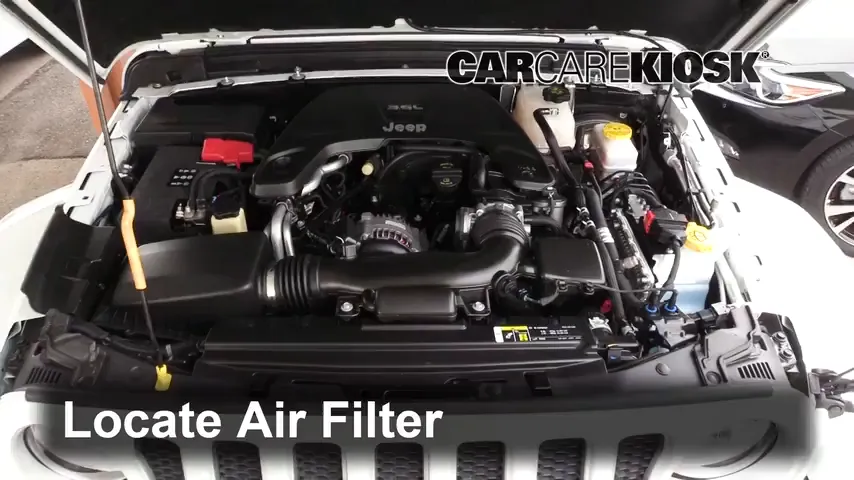
The 3.6L air filter sits inside the engine air-cleaner housing near the front of the engine bay. The airbox has a top cover secured by retaining clips and, depending on the exact build, fasteners or intake connections that must be released before the cover can lift.
1. Park safely and open the hood
Park the Wrangler on level ground. Turn off the ignition and let the engine cool.
Remove loose items from around the engine airbox. Avoid working in strong wind because dust and leaves can enter the intake while the housing is open.
2. Find the airbox
Follow the large plastic intake tube from the front of the engine toward the air-cleaner housing. The filter sits between the intake opening and the throttle body.
The airbox is a black plastic housing with a removable upper section. Do not confuse it with the cabin air filter, which is located inside the passenger compartment behind the glove box area.
3. Release the airbox cover
Release the metal or plastic retaining clips around the airbox. If your Wrangler has screws or Torx fasteners holding the cover, loosen them without forcing the cover.
If the intake tube or a sensor harness limits movement, disconnect only the part needed to lift the cover. Do not pull on wiring. Hold electrical connectors by their locking tabs.
Some JL airbox covers remain connected to the intake duct even after the clips are released. Lift the cover carefully instead of twisting it.
4. Remove the old filter
Lift the airbox cover enough to access the filter. Note how the filter is seated before removing it.
Pull the old filter straight out. Keep the dirty side facing upward as you remove it so dust does not fall into the clean side of the housing.
Inspect the filter:
- A light coating of dust is normal.
- Heavy dust, sand, leaves, or insect debris indicates restricted airflow.
- Oil on a standard paper filter may indicate an intake or engine-breather issue.
- A crushed or torn filter should be replaced at once.
- Water marks or damp pleats require further inspection before driving through more water.
5. Clean the airbox
Use a dry cloth, soft brush, or vacuum to remove dirt from the empty housing. Clean the sealing surface where the filter rests.
Do not spray water, brake cleaner, compressed air, or household cleaner into the open airbox. If you use compressed air around the housing, keep the air stream away from the intake opening and sensor components.
6. Install the new 3.6L filter
Place the new filter in the same position as the old one. The rubber or foam sealing edge must sit flat around the complete opening.
Check the following:
- The filter is not upside down.
- The pleats are not folded or crushed.
- The seal is fully inside its groove.
- No part of the filter edge is pinched outside the housing.
A filter that looks installed but is not sealed can allow unfiltered air into the engine.
7. Refit the airbox cover
Lower the cover straight down. Make sure no wiring, hose, or filter edge is trapped between the cover and the lower housing.
Reconnect any intake hose or electrical connector that you released. Fasten the clips or screws in a balanced pattern. Do not overtighten plastic fasteners.
Start the engine and let it idle for a minute. Listen for a hissing sound, rough idle, or a loose intake connection. If the engine runs normally and the cover is secure, the 3.6L filter replacement is complete.

How to Change the Engine Air Filter on a 2.0L Turbo Jeep Wrangler JL
The 2.0L turbo engine uses a compact air-cleaner housing connected to the turbocharger intake system. The process is similar to the 3.6L procedure, but the filter shape, cover hardware, and nearby hoses or connectors can differ.
1. Turn off the engine and let it cool
Park on level ground, set the parking brake, and remove the key or switch off the ignition. The turbocharger area can become very hot after driving, so allow enough cool-down time before touching nearby parts.
2. Locate the 2.0T air-cleaner housing
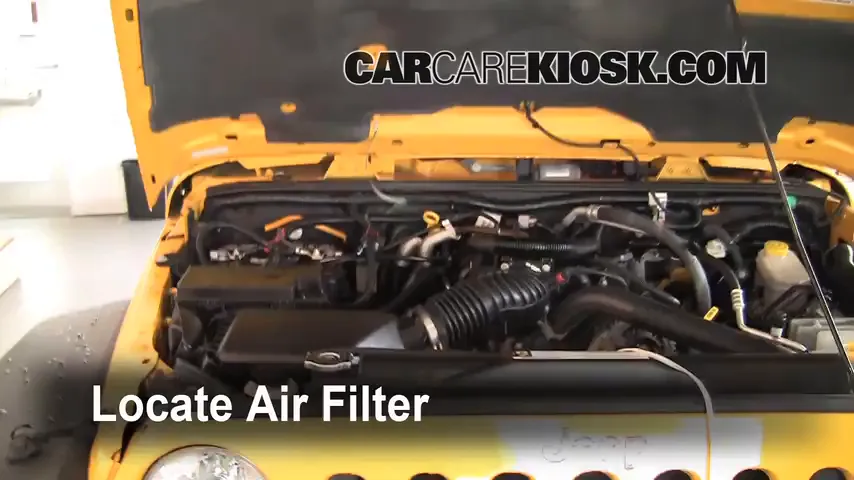
Find the plastic airbox connected to the intake duct. The filter housing is usually near the front or side of the engine compartment.
Trace the intake path rather than removing random engine covers. The airbox is the section with a removable lid and a large intake tube.
3. Release the cover
Open the cover by releasing its clips, screws, or Torx fasteners. The exact fastener arrangement can vary by model year and production configuration.
If a hose, wiring connector, or breather line prevents the lid from opening, release the connector or clamp carefully. Never yank a hose from its fitting.
Before lifting the lid completely, check whether the cover remains attached to the intake duct. Keep the cover supported so it does not hang from a sensor wire.
4. Remove the old 2.0T filter
Lift the filter out of the housing. Keep dirt from falling into the clean side of the intake.
Look for:
- Clogged pleats
- Sand or mud
- Torn filter media
- A damaged rubber seal
- Signs of water entry
- Oil or fuel-like residue
A turbocharged engine depends on clean intake air. A damaged filter can allow abrasive particles to reach the turbocharger compressor and engine.
5. Clean the housing
Wipe the lower airbox and its sealing rim with a clean, dry cloth. Use a vacuum for loose debris if available.
Do not wash a disposable paper filter. Do not oil it unless the filter manufacturer specifically identifies it as a reusable oiled filter and provides a proper cleaning procedure. Installing oil on a standard paper filter can contaminate airflow sensors.
6. Install the new 2.0T filter
Set the replacement filter into the housing. Follow the same orientation as the original filter and press evenly around the sealing edge.
The filter should sit flat without rocking. If it does not fit easily, stop and check the part number, engine application, and filter orientation. Never force an incorrect filter into the airbox.
7. Close and secure the housing
Lower the cover without disturbing the filter. Reconnect every hose, clip, and electrical connector you released.
Tighten screws only until secure. Plastic airbox parts can crack if fasteners are over-tightened.
Start the engine and check for:
- Smooth idle
- No intake hiss
- No warning lights
- No loose hose
- No airbox vibration
If the engine runs poorly after the service, shut it off and inspect the filter seal, intake duct, and electrical connectors.
3.6L Versus 2.0T Air-Filter Change
The basic maintenance idea is the same, but the parts are not interchangeable.
| Item | 3.6L Pentastar V6 | 2.0L Turbo |
|---|---|---|
| Filter application | Specific to the 3.6L JL | Specific to the 2.0L JL |
| Main concern | Correct seating and clean airbox | Correct seating plus secure intake connections |
| Nearby heat | Normal engine heat | Extra heat near the turbocharger |
| Replacement check | Confirm V6 application | Confirm 2.0T application |
| After-service check | Listen for intake leaks | Check hoses, connectors, and idle quality |
The most common mistake is ordering a filter by Wrangler year alone. Engine size, production date, and parts revisions can affect fit. Use a VIN lookup or compare the old filter with the catalog listing before opening the airbox.
When Should You Replace the Wrangler JL Engine Air Filter?
Replace the engine air filter according to the maintenance schedule for your model year and engine. Many owners inspect the filter during routine service and replace it sooner when the vehicle operates in dusty conditions.
Inspect the filter more often if you:
- Drive on dirt or gravel roads
- Follow vehicles that create dust
- Use the Wrangler on trails
- Live in a dry, sandy area
- Drive through construction zones
- Notice reduced airflow or unusual intake noise
- Have recently driven through deep water or mud
Do not judge a filter only by color. A gray filter is not automatically bad, and a filter that looks fairly clean may still have damage or a poor seal.
A filter can often be inspected with a flashlight. If the pleats are packed with dirt, the filter is wet, torn, collapsed, or difficult to identify, replacement is the safer choice.

Signs of a Dirty or Incorrectly Installed Air Filter
A dirty filter can restrict airflow, while a poorly installed filter can allow unfiltered air into the engine. Possible signs include:
- Sluggish acceleration
- Lower fuel economy
- Rough idle
- Unusual intake noise
- A check-engine light
- Visible dust inside the clean side of the airbox
- A filter cover that will not close evenly
These symptoms do not prove that the air filter is the cause. A check-engine light may also result from a loose sensor connector, intake leak, ignition problem, or another engine fault.
If the engine runs poorly after replacement, check the simple items first:
- Turn off the engine.
- Confirm the filter is the correct model.
- Make sure the filter seal sits flat.
- Check that the airbox cover is fully closed.
- Reconnect any sensor or breather hose.
- Inspect the intake tube for a loose clamp or split.
- Scan for diagnostic trouble codes if the warning light remains on.
Do not continue driving if the engine is ingesting water, the intake is badly damaged, or the engine has severe misfire symptoms.

Common Mistakes to Avoid
Installing the wrong filter
A filter can look close to the correct size and still fail to seal. Verify the engine application and compare the new filter with the old one before installation.
Leaving a gap in the seal
The filter must sit flat around the full airbox opening. A small gap can bypass the filter.
Dropping dirt into the intake
Cover the open intake with a clean cloth while cleaning the housing, but remove the cloth before closing the airbox. Never leave any material inside the intake path.
Over-tightening the airbox screws
Plastic housings can crack. Tighten fasteners firmly but gently, using the vehicle’s service information when a torque value is specified.
Using oil on a paper filter
Most replacement filters for the Wrangler JL are designed to be installed dry. Oil is for certain reusable filter types only.
Ignoring disconnected sensors
If you unplug an intake sensor, reconnect it before starting the engine. A forgotten connector can trigger a warning light or cause poor engine operation.
How to Know the Job Was Done Correctly
The replacement is successful when:
- The new filter fits without force.
- The sealing edge sits flat.
- The airbox cover closes evenly.
- All clips and fasteners are secure.
- Every hose and connector is reattached.
- The engine idles normally.
- No intake hiss is present.
- No warning light appears after startup.
A short visual inspection is worth the extra minute. The airbox should not move excessively, and the intake tube should not be loose at either end.
Frequently Asked Questions
Is the Jeep Wrangler JL 3.6 air filter the same as the 2.0T filter?
No. The 3.6L V6 and 2.0L turbo use different engine applications and may use different filter shapes. Confirm the correct part by engine and VIN.
Do I need special tools to change the Wrangler JL air filter?
Many JL models need only basic hand tools, and some airbox covers use quick-release clips. Your exact model may use Torx or other fasteners, so inspect the cover before beginning.
Can I clean and reuse the original paper air filter?
No. Disposable paper filters should be replaced, not washed. You can gently remove loose dust from the airbox, but do not damage the filter media by beating or blasting it with high-pressure air.
Should I replace the air filter after off-road driving?
Not automatically, but inspect it after dusty, sandy, muddy, or water-heavy trips. Replace it if the filter is clogged, wet, torn, or contaminated.
Why does my Wrangler run rough after the filter change?
The airbox cover may not be sealed, the filter may be installed incorrectly, or a hose, sensor, or breather connector may be loose. If those checks pass and the problem remains, scan for codes and have the vehicle diagnosed.
Key Takeaways
- The 3.6L and 2.0T Wrangler JL require engine-specific air filters.
- Work with the engine off and cool.
- Keep dirt out of the open intake.
- Make sure the filter seal sits flat all the way around.
- Reconnect every hose and sensor before starting the engine.
- Inspect the filter more often in dusty or off-road conditions.
- Use the owner’s manual and VIN-based parts information when fitment is uncertain.
Conclusion
Changing the engine air filter on a Jeep Wrangler JL 3.6 or 2.0T is a practical home maintenance task. The key steps are simple: open the correct airbox, remove the old filter, clean the housing, install the right replacement, and check every seal and connection.
The 2.0T deserves extra care around its turbocharger-related intake hardware, while both engines require a clean, properly seated filter. If the filter does not fit, the cover will not close, or the engine runs poorly afterward, stop and verify the part and airbox connections before driving.