
PO 700 Jeep Code: Transmission Malfunction Fix
 Reading Time: 11 minutes
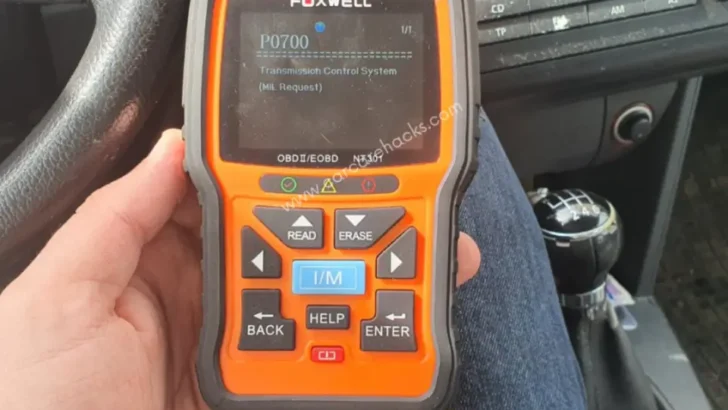
If your Jeep shows P0700, the transmission control system has reported a fault. In the United States, this code is often seen on Jeep vehicles with automatic transmissions, including the Wrangler, Grand Cherokee, Cherokee, Compass, Patriot, and Liberty. P0700 is not the complete diagnosis. It is a request from the transmission control module (TCM) to turn on the check engine light.
The real fault is usually stored under one or more additional transmission codes. A proper fix starts with scanning the TCM, checking fluid and wiring, and then repairing the specific cause. Replacing the transmission based on P0700 alone is often premature.
What Does P0700 Mean on a Jeep?
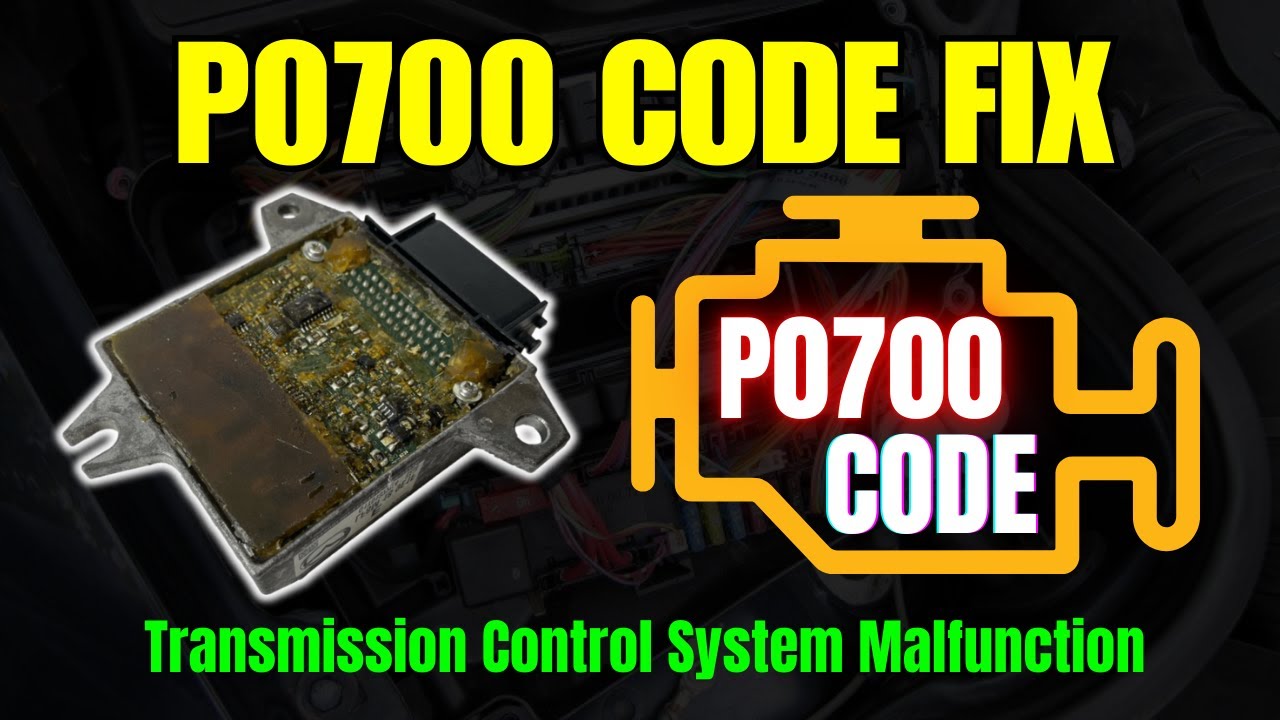
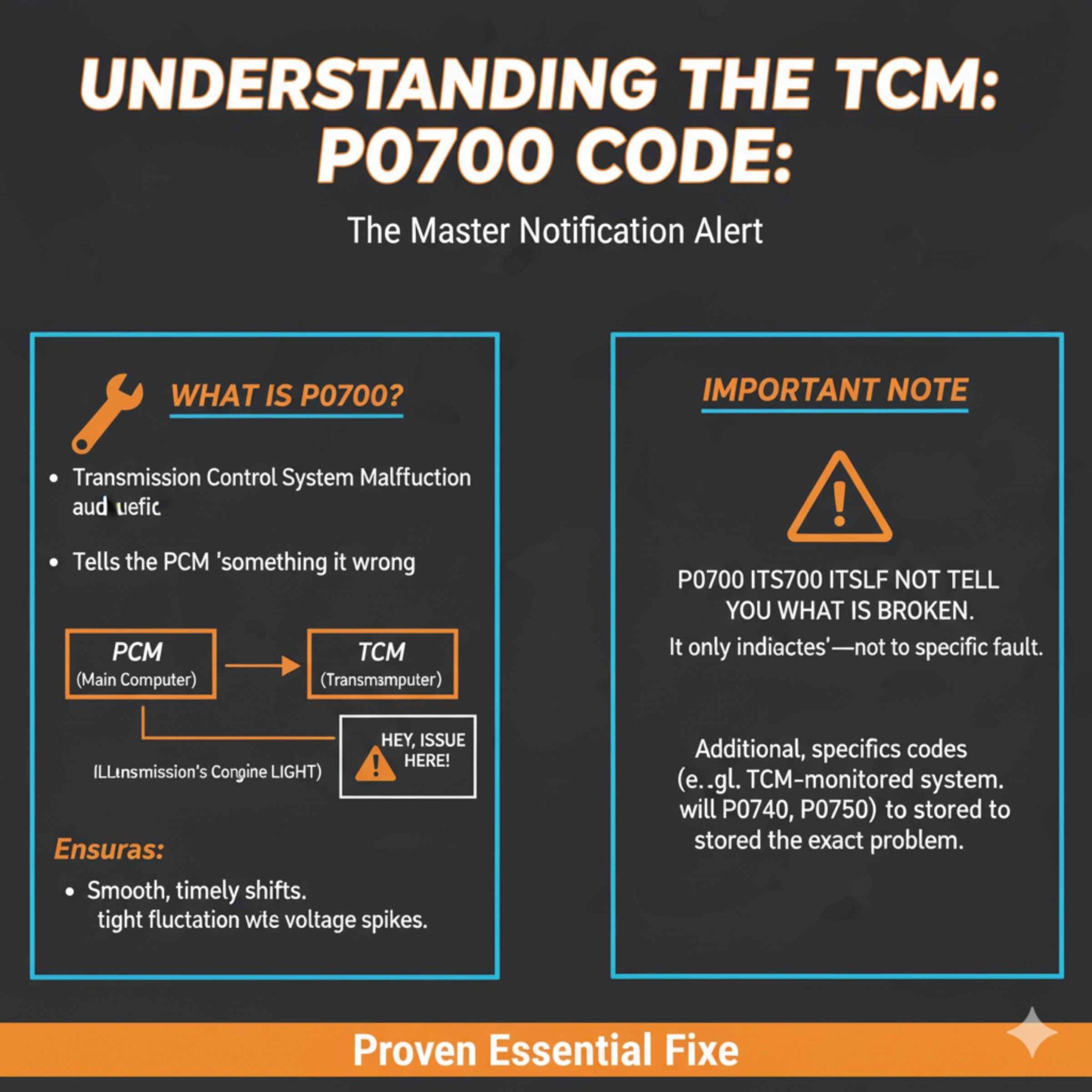
P0700 means “Transmission Control System Malfunction.” The powertrain control module (PCM) received a fault message from the TCM and stored the generic diagnostic trouble code.
The code does not tell you which part failed. It only confirms that the TCM detected a problem serious enough to report to the engine computer.
The TCM may store more specific codes, such as:
- P0715: Input or turbine speed sensor fault
- P0720: Output speed sensor fault
- P0730: Incorrect gear ratio
- P0740: Torque converter clutch circuit fault
- P0750–P0770: Shift solenoid faults
- P0841: Transmission fluid pressure sensor or switch fault
- P0868: Transmission fluid pressure too low
- U0101: Lost communication with the TCM
- P0882: TCM power input signal low
- P0934: Hydraulic pressure sensor circuit low
The exact code list depends on the Jeep model, model year, engine, transmission, and software version.
P0700 vs. “PO 700”
Many drivers search for “PO 700 Jeep code.” The correct format is usually P0700, with the letter “P” followed by four numbers. The code is part of the standardized OBD-II system used on vehicles sold in the United States.
A basic code reader may show only P0700. A scan tool that can access the Jeep TCM may reveal the important companion code.
Is P0700 a serious code?
It can be serious because transmission faults may cause:
- Harsh or delayed shifting
- Failure to shift into a higher gear
- Limp mode
- One-gear operation
- Gear slipping
- Reduced acceleration
- Transmission overheating
- A flashing or steady check engine light
If the Jeep will not move, shifts violently, smells like burnt fluid, or shows a “Transmission Over Temp” warning, stop driving when it is safe. Continuing to drive can increase damage.
The Most Important First Fix: Scan the TCM
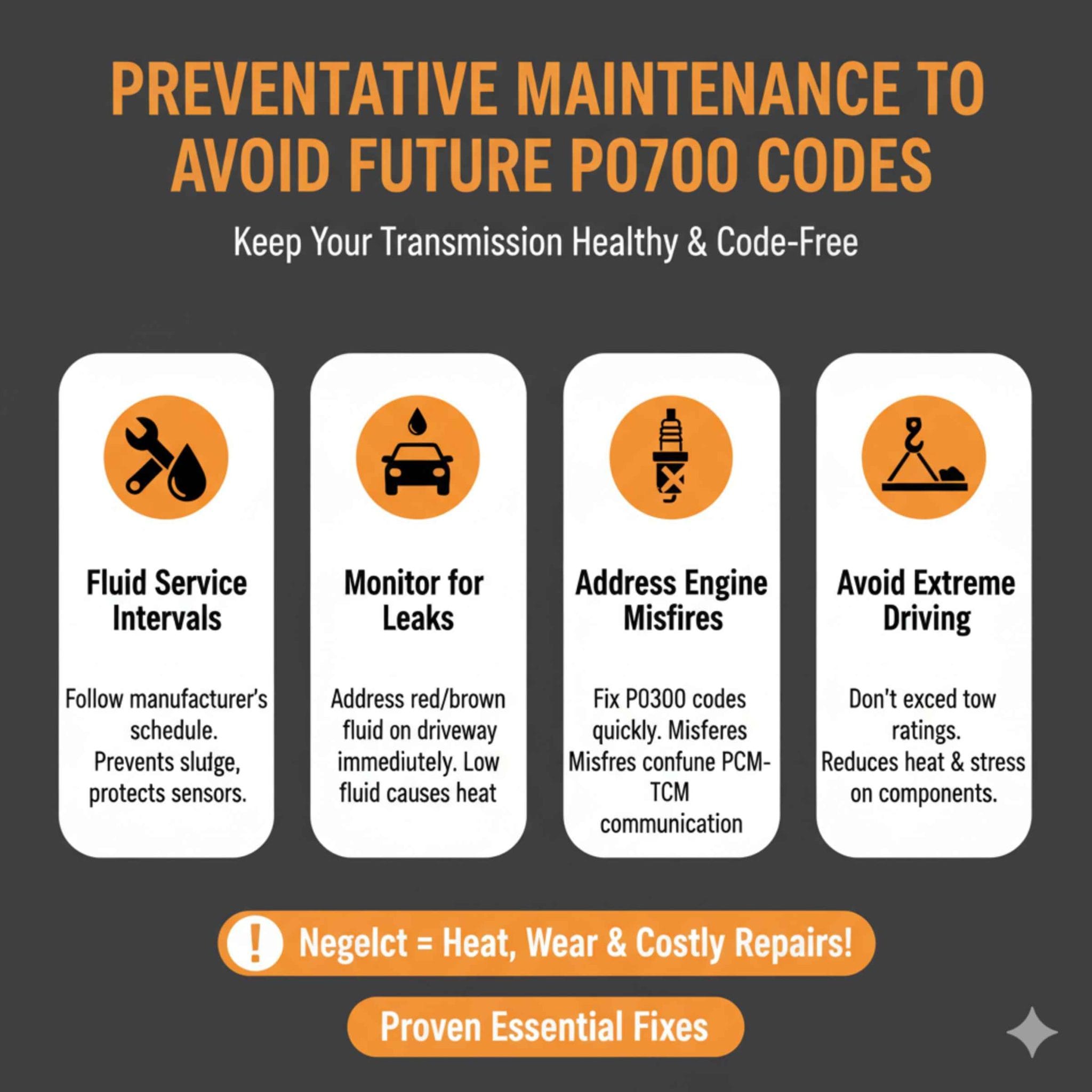
The first repair step is to retrieve all transmission codes, not just P0700.
Many inexpensive OBD-II readers can access the engine computer but cannot read the TCM. A professional scan tool or Jeep-capable diagnostic tool may be required. Ask the repair shop specifically:
“Can you scan the transmission control module and print all stored, pending, and manufacturer-specific codes?”
Record the following information:
- Every code in the PCM.
- Every code in the TCM.
- Freeze-frame data.
- Vehicle speed and transmission temperature when the fault occurred.
- Whether the codes are current, stored, or pending.
- Whether the code returns after clearing.
The additional TCM codes guide the repair. Without them, parts replacement becomes guesswork.
Why a basic code reader may miss the real fault
P0700 is often a communication or reporting code in the PCM. The TCM can contain the detailed fault, but a simple reader may not support that module.
For example:
- P0700 alone suggests that the TCM requested a warning.
- P0700 plus P0868 points toward a pressure or hydraulic problem.
- P0700 plus U0101 points toward communication, power, ground, or network wiring.
- P0700 plus P0730 suggests a gear-ratio problem that may involve slipping, low pressure, or an internal fault.
The code combination matters more than P0700 by itself.

Jeep P0700 Diagnostic and Repair Steps
Use this sequence to find the cause without replacing expensive parts too early.
1. Check the Jeep battery and charging voltage
Low voltage can cause false or multiple transmission codes.
Inspect:
- Battery terminals
- Battery state of charge
- Ground cables
- Alternator output
- Main power connections
- Fuses that supply the PCM and TCM
A weak battery may cause communication faults during starting. A failing alternator can create unstable voltage while driving.
Do not use a voltage reading as the only battery test. A battery may show normal voltage at rest but fail under load. Have it load-tested if the Jeep cranks slowly or has several unrelated warning lights.
2. Inspect transmission wiring and connectors
Look for damage near:
- The transmission case
- The transmission range sensor
- The valve body connector
- The input and output speed sensors
- The TCM
- The PCM
- Areas near the exhaust
- Places where wiring can rub against brackets
Check for:
- Broken wires
- Chafing
- Corrosion
- Water intrusion
- Bent terminals
- Loose connector locks
- Oil inside electrical connectors
Do not pull hard on a wire to test it. A damaged terminal may look connected but lose contact under vibration.
Unplug connectors only with the ignition off and after following the vehicle service procedure. Some connectors have locks that can break if forced.
3. Check the transmission fluid correctly
Transmission fluid checks vary by Jeep. Some models have a dipstick. Others use a sealed or service-fill system that requires a specific temperature and level procedure.
Use the correct procedure for the exact Jeep model and transmission. An incorrect fluid level can cause:
- Delayed engagement
- Gear slipping
- Harsh shifts
- Low hydraulic pressure
- Overheating
- Incorrect gear-ratio codes
Inspect the fluid for:
- Very low level
- Burnt odor
- Dark or unusual color
- Metal particles
- Water or coolant contamination
- Foamy appearance
Fluid color alone does not prove that a transmission has failed. However, a burnt smell, slipping, and metal debris together are strong reasons to stop driving and seek professional diagnosis.
Never add generic automatic transmission fluid unless the Jeep service information lists it as correct. Chrysler, Jeep, and Fiat transmissions may require different fluids, and the wrong fluid can affect clutch operation and shift control.
4. Check for leaks
A low fluid level may result from a leak rather than normal use.
Common leak areas include:
- Transmission pan
- Cooler lines
- Axle seals
- Input seal
- Output seals
- Electrical connector seals
- Transfer case area on four-wheel-drive models
Clean the area, drive only as needed, and inspect again to locate the source. Do not rely on stop-leak additives as a repair for a damaged seal, line, pan, or cooler.
5. Compare the scan data with the symptoms
The scan tool may show useful live data, including:
- Transmission fluid temperature
- Input speed
- Output speed
- Selected gear
- Commanded gear
- Actual gear
- Line pressure data
- Shift solenoid status
- Torque converter clutch status
The values must be compared with the Jeep service information for that transmission. A sensor reading that appears reasonable at one speed may be incorrect under load.
For example, if input speed changes but output speed stays near zero while the Jeep should be moving, the system may have a sensor, wiring, or mechanical problem. That observation does not prove which part failed, but it narrows the test.
6. Test the specific circuit or component
After identifying a companion code, test the related circuit before replacing the part.
Possible tests include:
- Continuity testing
- Short-to-ground testing
- Voltage supply testing
- Reference-voltage testing
- Ground voltage-drop testing
- Solenoid resistance testing
- Sensor signal testing
- Network communication testing
Use the wiring diagram for the exact Jeep. Pin locations and resistance values differ by year and transmission.
Do not apply battery voltage to a sensor or solenoid unless the service procedure allows it. Some components can be damaged by an incorrect test.
7. Check for software updates and technical service information
Jeep vehicles may receive software updates for the PCM or TCM. A software update can help when the manufacturer has documented a calibration issue, false code, shift concern, or communication problem.
An update is not a substitute for diagnosis. If the transmission has low fluid, damaged wiring, or internal wear, programming alone will not repair it.
A Jeep dealer or qualified transmission shop can check for:
- Technical service bulletins
- Software updates
- Required relearn procedures
- Adaptive shift reset instructions
- Model-specific diagnostic tests
8. Repair the confirmed cause, then clear and retest
Once the fault is confirmed:
- Repair the wiring or connector.
- Replace the failed sensor or solenoid.
- Correct the fluid level.
- Repair the leak.
- Replace damaged fuses or power feeds.
- Perform the required valve body or transmission repair.
- Complete any required software update or relearn.
Then clear the codes with a suitable scan tool. Drive the Jeep through the conditions that caused the original fault. Rescan it afterward.
A successful repair usually means:
- P0700 does not return.
- The related TCM code stays cleared.
- The Jeep shifts normally.
- No warning message returns.
- Fluid temperature remains in the expected range.
- No new communication or voltage codes appear.
Common Causes of P0700 on Jeep Vehicles
The cause varies by Jeep and transmission. These are common categories, not a diagnosis by themselves.
| Possible cause | Typical clues | Best next check |
|---|---|---|
| Low or incorrect fluid level | Delayed engagement, slipping, whining | Check level using the correct temperature procedure |
| Fluid leak | Wet pan, cooler line, or seal area | Clean and inspect for the leak source |
| Failed speed sensor | Wrong shift timing or speed-related code | Test sensor signal and wiring |
| Shift solenoid fault | Harsh shift or missing gear | Read solenoid codes and test the circuit |
| Valve body problem | Pressure fault, harsh shifts, multiple solenoid codes | Perform pressure and valve body tests |
| Low system voltage | Several warning lights or U-codes | Test battery, alternator, grounds, and fuses |
| Damaged wiring | Intermittent fault, fault after rain or vibration | Inspect and test the harness |
| TCM communication problem | U0101 or other network codes | Test power, ground, CAN wiring, and connectors |
| Internal transmission wear | Slipping, metal debris, persistent ratio codes | Perform pressure and mechanical tests |
| Software or calibration issue | Known shift pattern or repeat fault without mechanical signs | Check current manufacturer service information |
The same P0700 code can result from a simple power problem or a major internal failure. The companion codes and physical evidence separate those possibilities.
Can You Drive a Jeep With P0700?
Drive only as far as needed for safety or diagnosis if the Jeep shifts normally and no severe symptoms are present. Avoid towing, hard acceleration, steep grades, and long trips until the cause is known.
Stop driving and arrange professional help if you notice:
- Slipping between gears
- A strong burnt-fluid smell
- Loud transmission noise
- No reverse or no forward movement
- Severe banging into gear
- A transmission-temperature warning
- A flashing check engine light
- The Jeep stuck in one gear
- Fluid leaking rapidly
Limp mode is designed to reduce risk, not to make the vehicle safe for unlimited driving. It may protect the transmission in some situations, but it cannot correct a low-fluid condition or mechanical failure.
Should You Clear P0700?
Clearing P0700 can turn off the warning temporarily, but it does not repair the fault.
Clearing codes may erase helpful freeze-frame information. If you plan to have the Jeep diagnosed, record the codes first.
After a repair, clearing the code can be appropriate. The vehicle may then need a drive cycle before the monitors run again. Some transmission repairs also require an adaptive reset or relearn procedure.
Do not disconnect the battery as the main diagnostic method. It may erase memory and reset some modules without revealing the cause. It can also create new issues, such as lost radio settings or required throttle and transmission relearns.
P0700 Repair Cost Factors
There is no single repair price for P0700 because the code does not identify the failed part.
The final cost depends on:
- Jeep model and year
- Transmission type
- Diagnostic time
- Fluid and filter needs
- Wiring access
- Sensor or solenoid location
- Valve body condition
- Software requirements
- Internal transmission damage
- Labor rates in your area
A battery terminal repair or wiring fix may cost far less than a valve body or transmission rebuild. A shop should explain the confirmed fault and test results before recommending a major repair.
Ask for a written estimate that separates:
- Diagnostic work.
- Parts.
- Labor.
- Fluid and supplies.
- Programming or relearn work.
- Any additional repair found during inspection.
A transmission replacement should not be the first recommendation based only on P0700.
Mistakes to Avoid When Fixing Jeep P0700
Replacing the transmission immediately
P0700 does not prove internal transmission failure. Scan the TCM and inspect the electrical system first.
Using the wrong fluid
The correct fluid depends on the transmission. A fluid that works in one Jeep transmission may not be suitable for another.
Checking fluid level with the wrong method
Some Jeep transmissions require a specific temperature range and fill procedure. A cold or inaccurate check can produce a false level reading.
Replacing a sensor without testing the wiring
A damaged wire or corroded connector can create the same code as a failed sensor.
Ignoring low battery voltage
Low voltage can trigger communication faults and make a good transmission appear faulty.
Clearing the code before recording it
The original freeze-frame data may help show when and how the fault occurred.
Assuming a successful reset means the repair worked
The code may stay away until the Jeep reaches the same temperature, speed, load, or shift condition. Always complete a suitable road test and rescan.
Frequently Asked Questions
What is the most common fix for P0700 on a Jeep?
There is no universal fix. Common repairs include correcting low fluid, repairing wiring, replacing a speed sensor, fixing a solenoid circuit, resolving low voltage, or repairing a valve body. The specific TCM codes determine the correct path.
Can a bad battery cause P0700?
Yes. Low battery voltage, poor grounds, or charging problems can interrupt TCM operation or communication. Test the battery and charging system before replacing transmission parts.
Does P0700 mean the transmission is bad?
No. P0700 only means that the TCM reported a malfunction. The transmission may have an electrical, hydraulic, software, communication, or mechanical problem.
Will changing the transmission fluid fix P0700?
It may help if the fluid is low, contaminated, incorrect, or badly degraded. A fluid change will not fix damaged wiring, a failed sensor, a defective solenoid, or internal mechanical damage.
Can I diagnose P0700 with a cheap code reader?
A basic reader may identify P0700 but often cannot access the TCM’s detailed codes. For a reliable diagnosis, use a scan tool that supports the specific Jeep transmission and manufacturer data.
Final Recommendation
The correct Jeep P0700 transmission control system malfunction fix is to find and repair the companion TCM fault. Start with a complete scan, then check battery voltage, fuses, grounds, wiring, connectors, fluid level, and leaks. Test the suspected sensor, solenoid, pressure circuit, communication line, or mechanical system before replacing major parts.
If the Jeep slips, overheats, loses a gear, or will not move, stop driving and have it inspected by a qualified Jeep or transmission technician. P0700 is a warning sign, not a complete diagnosis, and the fastest safe repair is the one based on the underlying code and test results.