P0171 And P0174 Jeep Codes: Lean Fix
 Reading Time: 10 minutes
Introduction
If a Jeep sold in the United States shows P0171 and P0174, the engine computer has detected a lean air-fuel mixture on both engine banks. P0171 means System Too Lean, Bank 1. P0174 means System Too Lean, Bank 2.
The best first repair is usually not replacing both oxygen sensors. When both codes appear together, inspect for a shared problem, such as an intake vacuum leak, damaged air duct, dirty mass airflow sensor, low fuel pressure, or a fuel vapor leak. The correct fix depends on test results from your specific Jeep engine and model year.
Note: Many people type these codes as PO 171 and PO 174. The correct OBD-II format is P0171 and P0174.

What P0171 and P0174 Mean on a Jeep
The Jeep powertrain control module, or PCM, compares the oxygen content in the exhaust with the amount of fuel being delivered. If the exhaust contains too much oxygen, the PCM adds fuel.
The PCM records P0171 when Bank 1 needs more fuel than its programmed correction range allows. It records P0174 when the same condition occurs on Bank 2.
A lean condition can result from:
- Too much unmetered air entering the engine
- Too little fuel reaching the injectors
- Incorrect airflow data from the MAF sensor
- An exhaust leak near an upstream oxygen sensor
- A fuel vapor purge problem
- Faulty oxygen or air-fuel sensors
The codes do not identify one failed part. They describe the result of the PCM’s fuel-trim correction.
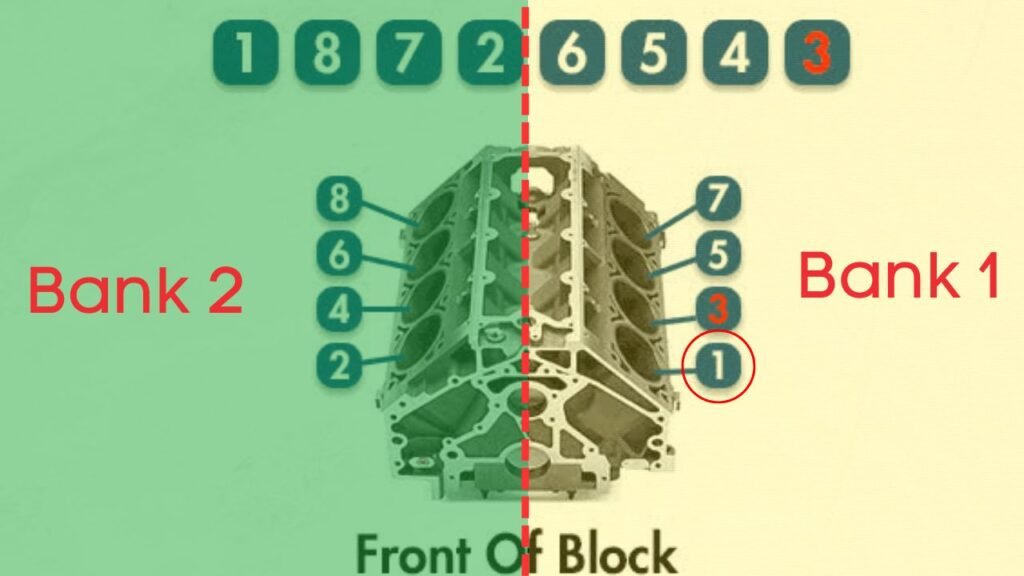
Bank 1 versus Bank 2
Bank 1 contains the cylinder with number one. Bank 2 is the opposite side of a V6 or V8 engine. Bank locations vary by engine design, so use the Jeep service manual rather than guessing from the driver or passenger side.
A four-cylinder Jeep has only one cylinder bank. It normally cannot set a true Bank 2 code.
Why both codes matter
Both codes appearing together are a useful clue. A problem that affects both banks is more likely to be located before the intake runners or in a shared fuel system.
For example:
- A cracked intake tube can affect both banks.
- Low fuel pressure can affect every cylinder.
- A leak at a shared intake gasket can affect both banks.
- A single injector usually affects one cylinder or one bank.
- One oxygen sensor usually affects only its own bank.
This is a diagnostic pattern, not a rule. A V-engine can have more than one fault at the same time.
Common Causes of P0171 and P0174 on Jeep Vehicles
The most likely causes depend on the Jeep engine, mileage, service history, and recent repairs. Start with faults that can affect both banks.
1. Vacuum or intake air leak
An air leak after the mass airflow sensor lets air enter without being measured. The PCM then delivers too little fuel for the actual amount of air entering the engine.
Inspect these areas:
- Intake manifold gaskets
- Throttle body gasket
- PCV hoses and elbows
- Brake-booster vacuum hose
- EVAP purge hose
- Vacuum caps
- Intake duct between the MAF sensor and throttle body
- Small vacuum lines
- Cracked plastic fittings
- Air cleaner housing seals
a leak often causes high positive fuel trims at idle. The trims may improve when engine speed rises because the leak becomes smaller compared with the total airflow.
2. Cracked intake tube or loose clamp
A split in the rubber intake boot can pull in unmetered air. Look closely at the underside of the duct, since cracks often hide in the folds.
Check for:
- Loose clamps
- A disconnected breather hose
- A damaged resonator
- A warped air box
- A gap around the MAF sensor housing
Do not assume the duct is good because it looks fine from above. Flex it by hand with the engine off.
3. Dirty or inaccurate MAF sensor
The MAF sensor measures air entering the engine. Dirt, oil film, or an air filter problem can cause the sensor to under-report airflow.
If the Jeep uses a MAF sensor:
- Turn the ignition off.
- Remove the sensor only if the service procedure allows it.
- Use cleaner made for MAF sensors.
- Do not touch the sensing wire or film.
- Let the sensor dry fully.
- Reinstall it and check for proper sealing.
Do not use throttle-body cleaner, brake cleaner, or compressed air unless the sensor manufacturer specifically permits it.
4. Low fuel pressure or weak fuel delivery
A lean code can occur when the engine cannot receive enough fuel. Possible causes include:
- Weak fuel pump
- Restricted fuel filter, where separately serviceable
- Faulty fuel-pressure regulator
- Low pump voltage
- Damaged fuel line
- Poor electrical connection at the pump
- Restricted or dirty injectors
Fuel pressure must be measured with the correct gauge and compared with the specification for the exact Jeep engine. A universal pressure number is unsafe because specifications differ by model and year.
5. Exhaust leak before an upstream oxygen sensor
An exhaust leak near the exhaust manifold or upstream oxygen sensor can draw outside air into the exhaust stream. The sensor may then report a false lean condition.
Look for:
- Ticking during a cold start
- Black soot near a flange or manifold
- Broken manifold bolts
- Cracks around the manifold
- A damaged exhaust gasket
An exhaust leak farther downstream of the upstream oxygen sensor usually does not explain both lean codes.
6. EVAP purge valve stuck open
A purge valve that remains open can feed fuel vapors and unmetered air into the intake at the wrong time. It may cause rough idle, hard starting after refueling, or lean fuel trims.
The test method varies by Jeep. Do not apply battery power to a valve unless the service manual states that it is safe.
7. Intake manifold gasket leak
Some Jeep V6 and V8 engines can develop intake manifold gasket leaks with age or repeated heat cycles. A smoke test is often more reliable than spraying a flammable liquid around the intake.
On a specific Jeep engine, the gasket locations and repair steps must come from the factory service information.
8. Failed oxygen or air-fuel sensor
A sensor can fail, but it should not be the first assumption. A sensor may be reporting a real lean condition caused by an air or fuel problem.
Replace a sensor only after checking:
- Sensor wiring
- Heater power and ground
- Exhaust leaks
- Fuel trims
- MAF data
- Fuel pressure
- Sensor response on a scan tool
How to Diagnose P0171 and P0174 Step by Step
Use this order because it begins with low-cost visual checks and moves toward measured tests.
Step 1: Confirm the codes and record freeze-frame data
Use an OBD-II scan tool. Record:
- Stored and pending codes
- Engine coolant temperature
- Engine speed
- Vehicle speed
- Short-term fuel trim
- Long-term fuel trim
- MAF airflow
- Oxygen sensor data
- Fuel pressure data, if available
Freeze-frame data shows the conditions present when the code set. A code that appears only at idle points toward a vacuum leak. A code that appears under load points more toward fuel delivery or restricted airflow.
Step 2: Check for related codes
Look for codes involving:
- MAF performance
- MAP sensor performance
- EVAP purge flow
- Misfires
- Fuel pressure
- Oxygen sensor heater or circuit faults
- Throttle position
- Intake air temperature
A related code may provide a better starting point than P0171 or P0174.
Step 3: Inspect the intake system
With the engine off, inspect the complete air path from the air filter to the throttle body.
Check that:
- The MAF sensor is installed in the correct direction.
- The intake tube has no cracks.
- All clamps are tight.
- Vacuum hoses are connected.
- The PCV system is intact.
- The throttle body and intake manifold have no obvious gaps.
- No recent service left a hose disconnected.
This step often finds the cause after air-filter, throttle-body, or engine work.
Step 4: Compare fuel trims at idle and at about 2,500 rpm
Fuel trims show how much correction the PCM is making.
- High positive trims at idle that improve at 2,500 rpm: suspect a vacuum or intake leak.
- High positive trims at idle and at 2,500 rpm: suspect low fuel pressure, inaccurate MAF data, or a large air leak.
- Normal trims at idle but lean under load: suspect fuel delivery, a restricted filter, weak pump, or injector flow.
- Only one bank is abnormal: suspect a bank-specific intake leak, injector issue, exhaust leak, or sensor problem.
The exact acceptable trim range varies with operating conditions. Treat fuel trim as a pattern, not a single pass-or-fail number.
Step 5: Perform a smoke test
A professional smoke test can find leaks that are invisible during a visual inspection. Smoke may appear around:
- Intake manifold gaskets
- Throttle body gasket
- PCV connections
- Brake-booster hose
- EVAP lines
- Intake duct cracks
Use the proper low-pressure procedure. Do not pressurize the intake system beyond the equipment or vehicle manufacturer’s limits.
Step 6: Test fuel pressure
Use the Jeep service manual for the test location, pressure specification, and safety steps.
Check pressure:
- With the key on
- At idle
- During acceleration, if required
- After shutdown for pressure retention
Low pressure supports a fuel-delivery fault. Normal pressure does not prove the injectors are flowing correctly, but it helps rule out a major pump or regulator problem.
Step 7: Test the MAF and oxygen sensors
Use live data and service information. Look for:
- MAF readings that do not change with engine speed
- Sensor signals stuck lean or rich
- Slow sensor response
- Damaged wires
- Poor grounds
- Water or oil contamination
- A sensor reading that conflicts with fuel-trim behavior
A scan tool reading alone does not prove that a sensor is bad. Confirm power, ground, wiring, and the mechanical condition of the engine.
Step 8: Check for mechanical problems
If air and fuel tests do not explain the codes, inspect for:
- Low compression
- Valve timing problems
- Camshaft or crankshaft timing faults
- Exhaust valve leakage
- Vacuum readings that point to a valve or timing issue
Mechanical faults are less common than an intake leak, but they can create a persistent lean condition.
Jeep Lean-Code Repair Guide
The correct repair is the one that removes the measured cause.
| Test result | Likely cause | Typical repair |
|---|---|---|
| Smoke escapes from intake hose | Cracked duct or loose clamp | Replace duct or tighten clamp |
| Smoke escapes from intake gasket | Intake or throttle-body leak | Replace the failed gasket |
| Fuel pressure below specification | Pump, regulator, filter, wiring, or voltage fault | Test the circuit and repair the failed part |
| MAF data is inaccurate | Dirty, damaged, or contaminated MAF | Clean correctly or replace after testing |
| Exhaust soot near upstream sensor | Exhaust manifold or flange leak | Repair the leak |
| Purge valve flows when closed | Stuck-open EVAP purge valve | Replace or repair the valve and hose |
| One bank remains lean | Bank-specific injector, gasket, exhaust, or sensor fault | Test that bank instead of replacing shared parts |
| Both banks lean under load | Fuel supply or injector flow issue | Test pressure, volume, and injector operation |
After the repair, clear the codes with the scan tool. Then drive through the required conditions so the Jeep can run its fuel-system monitor again.
A successful repair should produce:
- Normal idle quality
- No new vacuum or exhaust leaks
- Fuel trims that return closer to normal
- No return of P0171 or P0174
- No related misfire or fuel-system codes
Do not clear the codes and call the repair complete. The vehicle must be retested.
What Not to Replace First
Avoid replacing parts by code name alone.
Do not automatically replace:
- Both oxygen sensors
- The MAF sensor
- All fuel injectors
- The fuel pump
- The PCM
P0171 and P0174 identify a lean condition, not a confirmed failed sensor. Random parts replacement can hide the real fault and make later diagnosis harder.
Do not use a flammable spray as your main leak test. Vapors can ignite, damage components, or create a false change in engine speed. A smoke machine is safer and more useful when used correctly.
Do not drive for long periods with a flashing check-engine light, severe misfire, stalling, or loss of power. These symptoms can create more damage or leave you stranded. A steady light with normal operation still needs timely diagnosis because a lean condition can raise engine temperature and affect emissions performance.
Can You Drive a Jeep With P0171 and P0174?
A Jeep may still drive with a steady check-engine light, but continued driving is not a complete solution. The risk depends on the cause and symptoms.
Drive only far enough for diagnosis if the Jeep has:
- A steady warning light
- No severe misfire
- No stalling
- Normal coolant temperature
- Normal power
- No fuel smell
Stop driving and arrange professional help if the light flashes or the Jeep has severe shaking, backfiring, overheating, stalling, or major power loss.
Frequently Asked Questions
Are PO 171 and PO 174 the same as P0171 and P0174?
Yes. “PO” is a common typing mistake. The standard code format is P0171 and P0174.
Can a bad oxygen sensor cause both codes?
It is possible, but less likely than a shared intake or fuel problem. Test the sensors and their wiring after checking for vacuum leaks, exhaust leaks, MAF errors, and low fuel pressure.
Will a vacuum leak always make a hissing noise?
No. Small leaks may be silent. Some leaks occur only when the engine is hot or when a hose moves. A smoke test can find leaks that cannot be heard.
Can cleaning the MAF sensor fix the codes?
It can if contamination caused the sensor to under-report airflow. Use only MAF-safe cleaner and do not touch the sensing element. If the sensor has an electrical or internal fault, cleaning will not fix it.
Why did the codes return after I cleared them?
Clearing a code does not repair the cause. The PCM runs its tests again during later drive cycles. If the lean condition remains, P0171, P0174, or related codes will return.
Conclusion
The most effective fix for Jeep P0171 and P0174 is a measured diagnosis, not a parts swap. Start with the intake duct, vacuum hoses, PCV system, and recent repair work. Then compare fuel trims, perform a smoke test, verify fuel pressure, and test the MAF, purge system, exhaust, and oxygen sensors as needed.
Because both banks are lean, begin with faults that can affect the whole engine. Use the service manual for the exact fuel-pressure values, wiring tests, bank identification, and repair procedure for your Jeep’s engine.