Jeep Wagoneer Pros And Cons Family SUV Review: Honest Guide
 Reading Time: 13 minutes
The Jeep Wagoneer is a large American SUV with three rows, strong towing power, a roomy cabin, and available four-wheel drive. It works well for large families that need space for people, luggage, and trailers. Its main drawbacks are its high purchase price, large size, costly fuel use, and mixed long-term ownership record.
For many U.S. families, the Wagoneer is best viewed as a full-size alternative to the Chevrolet Tahoe, Ford Expedition, GMC Yukon, and Toyota Sequoia. It offers more room than a midsize SUV, but it also brings the parking, fuel, and maintenance demands of a large truck-based vehicle.
Quick verdict: The Jeep Wagoneer is a strong family SUV for buyers who value space, towing, comfort, and available 4×4 traction. It is a weaker choice for shoppers who want low fuel costs, easy city driving, or a low-risk ownership experience.
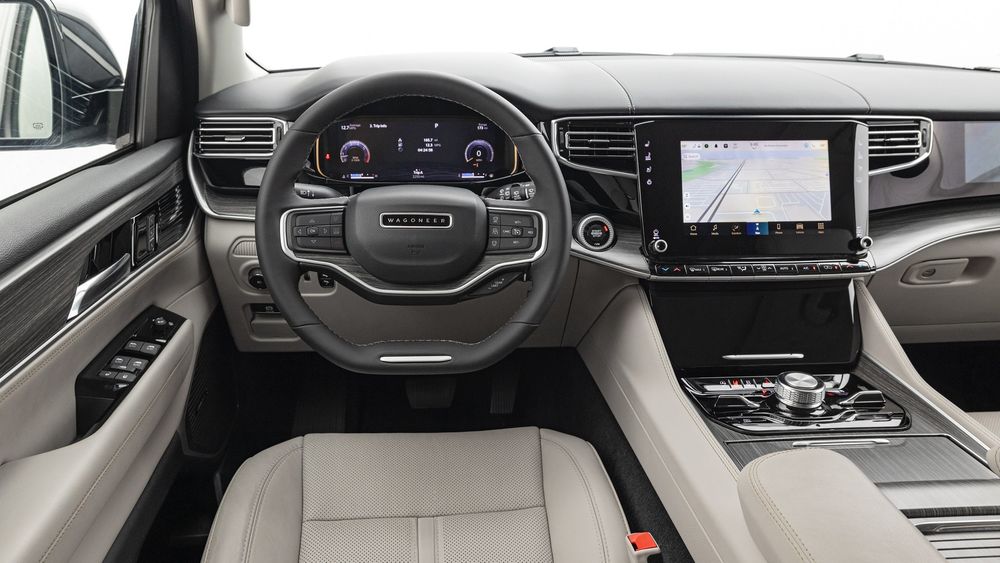
Jeep Wagoneer at a Glance
The Jeep Wagoneer is a full-size, body-on-frame SUV sold in the United States by Jeep. “Body-on-frame” means the vehicle uses a separate frame beneath the body. This layout helps with towing and off-road strength, but it can reduce ride comfort and fuel economy compared with a car-based crossover.
The Wagoneer is related to the Ram 1500 pickup truck. It shares some platform and engineering links with the Wagoneer, Grand Wagoneer, and Wagoneer L. Exact engines, features, prices, and ratings vary by model year and trim.
| Category | Jeep Wagoneer overview |
|---|---|
| Vehicle type | Full-size, three-row SUV |
| Seating | Usually seven or eight, depending on configuration |
| Drive layout | Rear-wheel drive or four-wheel drive, depending on trim |
| Construction | Body-on-frame |
| Main strengths | Cabin space, towing, ride comfort, available 4×4 |
| Main weaknesses | Fuel use, size, price, complex electronics |
| Main rivals | Chevrolet Tahoe, Ford Expedition, GMC Yukon, Toyota Sequoia |
| Best use | Large-family travel, towing, road trips, snow and rough roads |
The Wagoneer is not the same vehicle as the Grand Wagoneer. The Grand Wagoneer is positioned as the more luxurious model. It typically adds more upscale materials, more power, and a much higher price. A buyer comparing both should look at total cost, not only the monthly payment.
Jeep Wagoneer Pros
The Jeep Wagoneer’s strongest advantages are its size, useful cargo room, towing ability, and calm highway ride. These traits matter most to families with three rows of passengers or a large trailer.
1. A very roomy family cabin
The Wagoneer has enough interior space for adults in all three rows in many configurations. That is a major benefit over smaller three-row SUVs, where the last row may fit children but feel tight for adults.
The wide body also helps with shoulder room. Children can climb into the second and third rows with less trouble, and adults have more room to buckle seat belts or help with car seats.
The second row may use a bench seat or captain’s chairs, depending on the trim and options. Captain’s chairs improve access to the third row but reduce seating capacity. A bench seat may be better for families who need to carry eight people.
2. Useful cargo space behind the third row
Many three-row SUVs have little room behind the last row. The Wagoneer provides more useful space than several midsize rivals. That can make a real difference when carrying:
- Groceries
- Strollers
- Sports bags
- School equipment
- Carry-on luggage
- Camping supplies
The longer Wagoneer L provides more cargo length than the standard Wagoneer. It may suit a family that often travels with all seats in use. Its extra length also makes parking and tight garage spaces harder.
3. Strong towing ability
A properly equipped Wagoneer can tow up to about 10,000 pounds, depending on the engine, drivetrain, package, and model year. This is one of its clearest advantages over many crossover SUVs.
That rating does not mean every Wagoneer can safely tow 10,000 pounds. Buyers must confirm:
- The exact vehicle’s tow rating
- Trailer weight
- Tongue weight
- Payload rating
- Hitch equipment
- Brake requirements
- State laws
- Weight-distribution needs
Passengers, luggage, and accessories count against the vehicle’s payload limit. A heavy trailer can leave less capacity for people and cargo inside the SUV.
4. Comfortable highway travel
The Wagoneer feels suited to long U.S. road trips. Its large cabin, wide seats, quiet ride, and strong engine options help it cover long distances with less strain.
The trade-off is size. A vehicle that feels stable on the interstate can feel bulky in a parking garage. Its turning circle, hood length, and wide body may take time to learn.
5. Available four-wheel drive
Available 4×4 systems can help on snow-covered roads, loose gravel, muddy campsites, and boat ramps. They can also improve traction when towing on slippery surfaces.
Four-wheel drive does not replace winter tires, safe speed, or good judgment. It may help a vehicle move forward, but it does not shorten every stop. Families in areas with severe winters should consider tire choice as carefully as drivetrain choice.
6. Modern family technology
Depending on trim and model year, the Wagoneer can offer features such as:
- Multiple USB ports
- Rear-seat entertainment options
- Smartphone connectivity
- Navigation
- A large infotainment display
- Wireless phone charging
- Camera systems
- Driver-assistance features
- Power-folding seats
The exact feature list changes by year and trim. Buyers should test the screen, controls, cameras, and second-row access before buying. A feature listed on a high trim may not be standard on a lower trim.

Jeep Wagoneer Cons
The Jeep Wagoneer has real costs beyond its sticker price. Its large size, fuel use, complex equipment, and expensive upper trims may make it a poor fit for some families.
1. Fuel economy is a major weakness
The Wagoneer is heavy and tall. Large gasoline engines must move a lot of mass, so fuel use is usually higher than in a midsize crossover.
EPA fuel-economy figures vary by engine, drivetrain, wheel size, and model year. Check the official EPA label for the exact vehicle. Do not rely on a general online figure when comparing annual fuel cost.
A simple estimate can show the impact:
Annual fuel cost = miles driven ÷ miles per gallon × fuel price
For a hypothetical example, a driver who travels 15,000 miles per year in an SUV that averages 17 mpg would use about 882 gallons. At $3.50 per gallon, fuel would cost about $3,088 per year.
Actual costs depend on local fuel prices and real driving. Towing, idling, winter weather, short trips, and heavy cargo can reduce fuel economy further.
2. The Wagoneer is difficult to maneuver in cities
The Wagoneer is wide, long, and tall. That creates problems in:
- Narrow parking spaces
- Older garages
- Drive-through lanes
- Tight urban streets
- Small car washes
- Crowded school pickup areas
Cameras and parking sensors help, but they do not change the vehicle’s dimensions. Measure your garage before purchase. Include room for mirrors, doors, liftgate movement, and walking space around the vehicle.
3. Purchase prices can rise quickly
The base Wagoneer may appear more affordable than a Grand Wagoneer, but options and upper trims can raise the price sharply. Four-wheel drive, larger wheels, luxury packages, entertainment systems, and towing equipment all affect the final cost.
A family should compare the full out-the-door price, not only the advertised starting price. Include:
- Destination charges
- Dealer fees
- Taxes
- Registration
- Financing cost
- Insurance
- Maintenance
- Fuel
- Tires
- Extended warranty cost, if considered
The Wagoneer may offer more room than a midsize SUV, but that extra space comes with a higher ownership budget.
4. Reliability data deserves careful review
The Wagoneer uses complex systems, including modern electronics, driver-assistance hardware, air suspension on some versions, power seats, cameras, and connected services. More equipment can improve comfort, but it also creates more parts that may need diagnosis or repair.
Reliability information can vary by model year. Early production vehicles may have different issues from later updates. Owners should check:
- NHTSA recall records
- Technical service bulletins
- Warranty terms
- Repair costs in their area
- Dealer service capacity
- Consumer reliability data from a reputable source
A recall does not automatically mean a vehicle is unreliable. It does mean buyers should confirm that required repairs were completed.
5. Some controls may distract from the driving task
Large screens offer useful information, but menus and touch controls can take attention away from the road. Families should set up navigation, climate preferences, phone connections, and driver profiles before driving.
The best test drive includes more than a short trip around a dealership. Try the following while parked:
- Adjust the climate system.
- Pair a phone.
- Fold the second- and third-row seats.
- Open the liftgate.
- Check the camera views.
- Install a child seat if needed.
- Test the seat position for every regular driver.
6. Ride comfort depends on configuration
The Wagoneer can provide a smooth ride, but large wheels and low-profile tires may reduce comfort on rough pavement. Tire pressure, wheel size, suspension equipment, and load also affect ride quality.
A test drive on local roads is more useful than a short trip on smooth dealership pavement. Drive over patched pavement, speed bumps, and uneven roads if the dealer allows it.

Is the Jeep Wagoneer Good for Families?
The Jeep Wagoneer is good for families that need a large three-row cabin, regular highway comfort, or strong towing capacity. It is less suitable for families that mainly drive short city trips or want low operating costs.
Where it works well
The Wagoneer makes sense for a family that:
- Carries six or more people often
- Needs adult-friendly third-row space
- Takes long road trips
- Tows a camper, boat, or utility trailer
- Drives in snow or on unpaved roads
- Needs space for sports and camping gear
- Can manage full-size SUV fuel and service costs
Where another SUV may be better
A smaller SUV may be a better choice when:
- The third row is used only a few times per year
- Most driving occurs in the city
- Parking space is limited
- Fuel cost is a major concern
- The family does not tow
- A lower purchase price matters more than maximum room
A minivan may also offer easier child access, lower step-in height, and more practical sliding doors. The Wagoneer may appeal more to buyers who want towing strength, four-wheel drive, or a truck-based design.
Jeep Wagoneer vs. Main Competitors
The best alternative depends on what the family values most. There is no single winner for every use.
| SUV | Main advantage | Main trade-off |
|---|---|---|
| Jeep Wagoneer | Large cabin, towing, available 4×4 | Fuel use, price, size |
| Chevrolet Tahoe | Broad dealer network and strong towing options | Third-row and cargo space can vary by layout |
| Ford Expedition | Strong power and family space | High trims can become costly |
| GMC Yukon | Upscale cabin and full-size capability | Expensive options and large dimensions |
| Toyota Sequoia | Hybrid powertrain and Toyota brand appeal | Cargo layout and third-row practicality need close inspection |
| Honda Pilot | Easier daily use and family-friendly design | Less towing and less full-size room |
| Kia Telluride | Strong value and easy driving | Not a full-size tow vehicle |
| Chrysler Pacifica | Excellent family access and flexible seating | Minivan design may not suit every buyer |
The Wagoneer is most competitive when the buyer needs full-size room and towing. A Honda Pilot, Kia Telluride, or Toyota Grand Highlander may be easier to live with if the family does not need the Wagoneer’s size.
Safety and Child-Seat Practicality
Families should judge the Wagoneer by its exact model year and equipment. Crash-test results, recalls, and driver-assistance features can change over time.
Check the following before buying:
- NHTSA crash-test results for the exact model year
- IIHS testing for the exact model year
- Open recalls
- LATCH anchor locations
- Top-tether access
- Third-row seat-belt fit
- Blind-spot coverage
- Rear cross-traffic alerts
- Automatic emergency braking
- Adaptive cruise control
Child-seat installation should be tested with the actual seats your family uses. A seat may fit in the second row but make third-row access difficult. Three child seats across may also depend on seat width and buckle placement.
The third row may be suitable for children, but parents should check head room, leg room, seat-belt fit, and access. Children should use a seat belt only when it fits correctly across the shoulder and lap. Follow the child-seat maker’s instructions and state law.
Ownership Costs and Maintenance
The Wagoneer’s ownership cost depends on mileage, fuel prices, insurance rates, tires, service prices, and repair history. Large SUVs often require more expensive tires and brakes than smaller vehicles.
Before purchase, ask the dealer for the maintenance schedule for the exact engine and model year. Confirm the recommended intervals for:
- Engine oil and filter
- Tire rotation
- Brake inspection
- Air filters
- Spark plugs
- Four-wheel-drive service
- Transmission service
- Cooling-system checks
Do not assume every service is covered by a free maintenance plan. Get coverage details in writing.
Insurance may also cost more because the Wagoneer is expensive to replace and repair. Request an insurance quote using the exact trim and vehicle identification number before signing a purchase contract.
For a used Wagoneer, arrange an independent inspection. The inspection should include the suspension, drivetrain, cooling system, electronics, tires, brakes, underbody, and signs of accident or water damage.
Which Jeep Wagoneer Trim Is Best?
The best trim is the one that provides the needed seats, drivetrain, towing equipment, and safety features without adding expensive items you will not use.
Choose a lower trim if value matters most
A lower trim may be enough for families that mainly want:
- Three rows
- A large cargo area
- Basic driver assistance
- Comfortable road-trip seating
- Available all-wheel or four-wheel drive
Check whether the lower trim includes the specific seat layout and safety features you need.
Choose a mid-level trim for balance
A mid-level trim often provides a useful mix of comfort and technology. It may add better seating materials, improved cameras, upgraded audio, power features, and more convenience equipment.
This is often the most sensible place to shop, but compare the actual equipment list. A package may bundle desirable features with options that add cost without much family value.
Choose a high trim for luxury
A high trim may add premium materials, stronger audio, advanced cameras, larger screens, and more comfort features. It can make the Wagoneer feel more upscale, but it also narrows the price gap with luxury SUVs.
Buyers should ask whether the extra equipment improves daily use enough to justify higher payments, insurance, fuel, and repair costs.
Buying Checklist for a Jeep Wagoneer
Use this checklist during research and the test drive:
- Confirm the model year. Engine and feature details change.
- Check seating capacity. Decide between a second-row bench and captain’s chairs.
- Measure your garage. Include mirrors and the open liftgate.
- Inspect third-row access. Try it with a child seat installed.
- Test cargo space. Bring a stroller, sports bag, or luggage if possible.
- Verify towing equipment. Confirm the tow package and vehicle-specific rating.
- Check the EPA fuel label. Use the exact vehicle’s figures.
- Review recalls. Search the VIN and confirm completed work.
- Get insurance and fuel estimates. Add them to the monthly budget.
- Compare total price. Include fees, interest, taxes, and dealer-installed options.
- Drive on rough roads. Check noise, ride quality, steering, and braking.
- Get an independent inspection for a used vehicle.
A test drive should answer practical questions, not only whether the vehicle feels powerful. The most important question is whether the Wagoneer fits your family’s daily routine.
Common Jeep Wagoneer Buying Mistakes
The most common mistake is buying the largest SUV without checking how often the family will use its extra capacity. A large vehicle can be helpful on road trips but frustrating every day if it barely fits the garage.
Another mistake is focusing on monthly payment alone. A longer loan term can make a costly SUV appear affordable while increasing total interest. Calculate the complete monthly cost, including fuel, insurance, maintenance, and expected tire replacement.
Some buyers also assume four-wheel drive makes the vehicle safe in all winter conditions. It does not. Good tires, lower speed, longer following distance, and careful braking remain essential.
Finally, do not treat a dealer’s listed tow rating as a universal rating for every trim. Verify the exact configuration and calculate payload before towing.
Frequently Asked Questions
Is the Jeep Wagoneer a reliable family SUV?
Reliability depends on the model year, mileage, maintenance, and repair history. The Wagoneer has complex electronics and available systems that can increase repair risk and cost. Check VIN-specific recalls, service records, warranty coverage, and independent inspection results before buying.
Is the Jeep Wagoneer bigger than a Grand Cherokee?
Yes. The Wagoneer is a full-size, three-row SUV. The Grand Cherokee is generally smaller, although some versions offer three rows. The Wagoneer provides more passenger and cargo space but is harder to park and usually costs more to fuel.
Can the Jeep Wagoneer tow 10,000 pounds?
Some properly equipped Wagoneer versions can tow up to about 10,000 pounds. The exact limit depends on the model year, engine, drivetrain, tow package, payload, and trailer setup. Confirm the rating on the vehicle’s documentation before towing.
Is the Wagoneer better than a minivan for a family?
It depends on the family’s needs. A minivan usually offers easier entry, sliding doors, and flexible child-seat access. The Wagoneer offers more ground clearance, available 4×4 capability, and a truck-based towing design.
Does the Jeep Wagoneer have enough room for adults in the third row?
It generally offers more third-row room than many midsize SUVs, but comfort depends on seat position and passenger height. Test the actual adults who will use the third row. Also check how much cargo remains behind the seats.
Should I buy a new or used Jeep Wagoneer?
A new model provides the latest equipment and full factory coverage. A used Wagoneer may reduce the purchase price but requires closer inspection of recalls, software issues, suspension systems, tires, and service records. A pre-purchase inspection is strongly recommended.
Final Verdict: Jeep Wagoneer Pros and Cons
The Jeep Wagoneer is a capable family SUV with genuine strengths. It offers a spacious three-row cabin, useful cargo room, strong towing ability, available four-wheel drive, and comfortable highway manners.
Its disadvantages are just as clear. It is large, expensive to operate, thirsty compared with smaller SUVs, and packed with systems that may raise long-term repair costs. Its size can be a daily burden for urban families.
Buy the Jeep Wagoneer if you need full-size space, towing power, and available 4×4 traction. Choose a smaller SUV or minivan if easy parking, lower fuel use, simple family access, and lower ownership costs matter more.
Before buying, compare the exact model year, inspect the seating and cargo layout, verify the tow rating, check recalls, and calculate the full cost of ownership.