Best And Worst Years For Jeep Commander XK: Buyer’s Guide
 Reading Time: 12 minutes
For U.S. buyers, the 2009 and 2010 Jeep Commander XK are reasonable years to shop first, while the 2006 and 2007 models deserve the most caution. The 2008 model sits between those groups. This is a practical shopping order—not a proven ranking of failure rates.
Jeep sold the Commander XK in the United States for the 2006 through 2010 model years. All are now older used SUVs, so service history, rust, engine health, and recall completion can matter more than the year on the title. A well-kept 2007 can be a better buy than a neglected 2010.
The guide below separates documented recall concerns from buying judgments. It also explains what to check before you spend money on an inspection or commit to a purchase.

Jeep Commander Years Ranked: Where to Start Your Search
Start with a clean, well-documented 2009 or 2010 Commander, but judge each vehicle on its own condition. Earlier models are not automatic rejects, and later models are not trouble-free.
This table provides a screening order for U.S.-market vehicles. It does not represent measured defect rates.
| Model year | Shopping position | Main reason | What could change the recommendation |
|---|---|---|---|
| 2006 | Approach with caution | First model year; included in the ignition-switch recall population | Strong records, completed recalls, little rust, and a thorough inspection |
| 2007 | Approach with caution | Also included in the ignition-switch recall population | Documented repairs and better condition than later alternatives |
| 2008 | Consider selectively | Falls outside the model years covered by the cited ignition-switch campaign | Engine condition, maintenance, drivetrain operation, and price |
| 2009 | Preferred starting point | Later production and outside the cited early-year ignition-switch campaign | Neglect, corrosion, overheating history, or drivetrain faults |
| 2010 | Preferred starting point | Final U.S. model year and outside the cited early-year ignition-switch campaign | The same age-related and mechanical risks as other Commanders |
The strongest documented distinction here is the early-model ignition-switch recall. A later build date alone does not establish that a Commander has fewer engine or transmission failures.
Evidence limit: Live complaint databases and competing articles were not inspected for this guide. The recommendations are therefore a cautious buying framework, not a statistical reliability verdict. Official sources linked below let you check recall details and the specific vehicle’s status.

Essential Context: What Is the Jeep Commander XK?
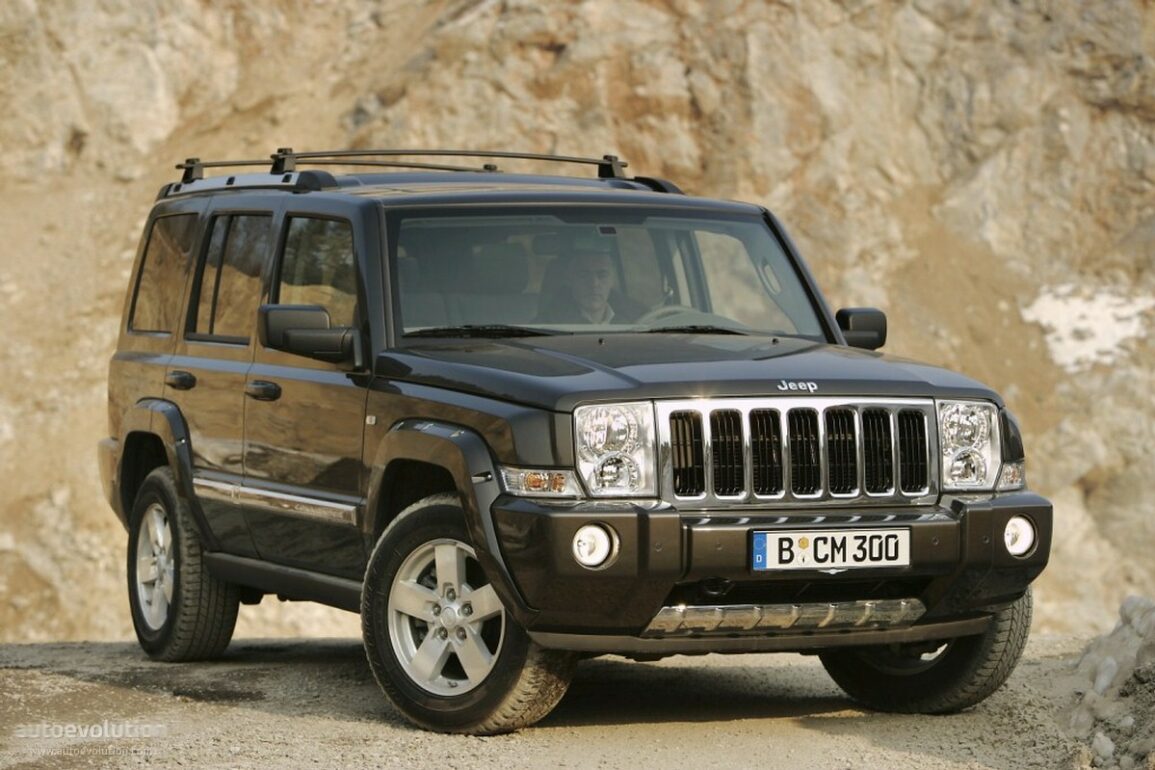
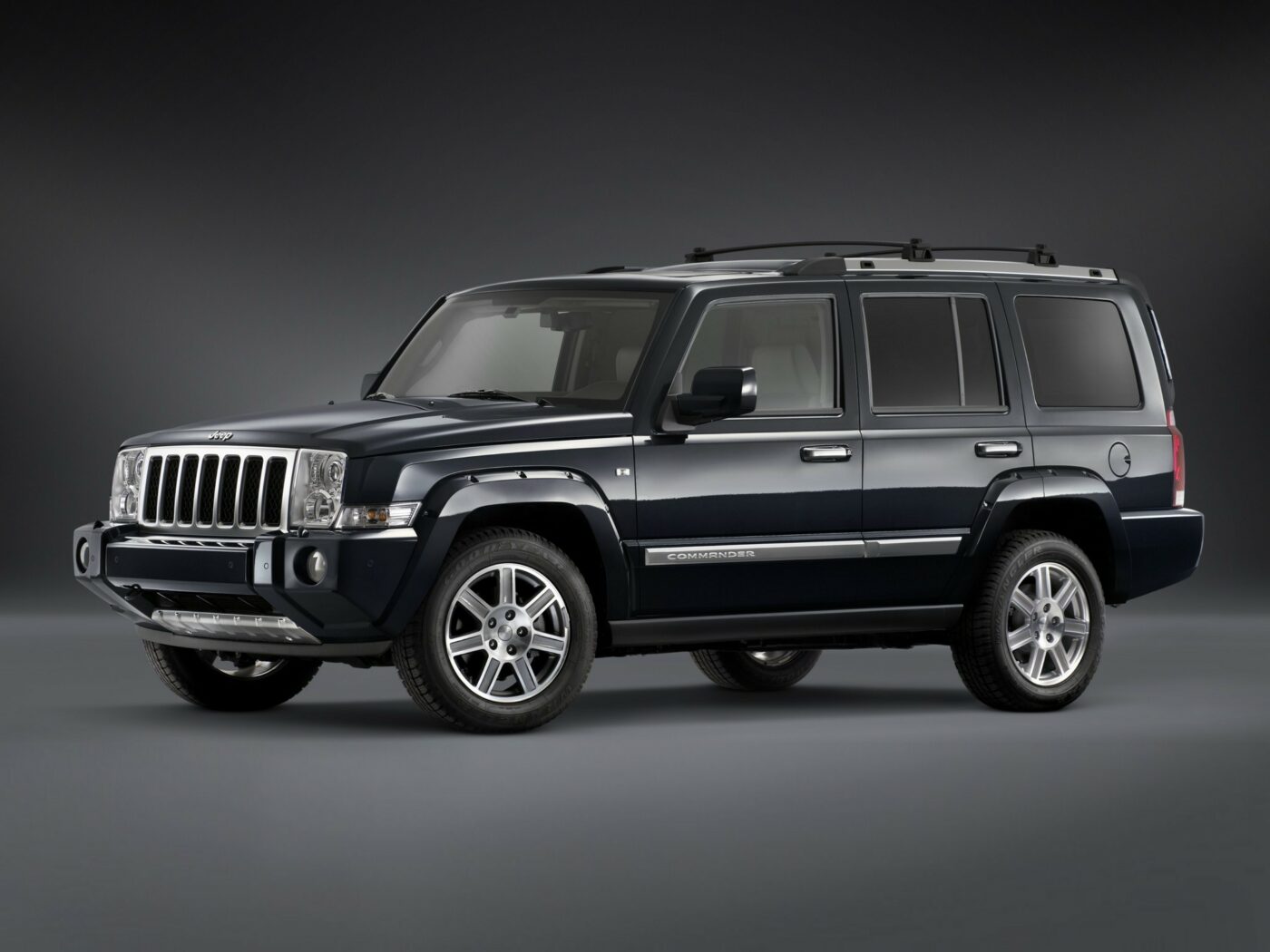
The XK is the original Commander sold in the United States for model years 2006–2010. Do not confuse it with newer vehicles that use the Commander name in other markets.
The U.S. Commander is a three-row, unibody SUV related to the WK-generation Jeep Grand Cherokee. “Unibody” means the body and main structure form one assembly rather than a separate body mounted on a full frame.
U.S. models offered a 3.7-liter V6, a 4.7-liter V8, or a 5.7-liter HEMI V8, depending on year and configuration. Rear-wheel-drive and four-wheel-drive versions were available. The engine, transfer case, and equipment can change both repair exposure and towing suitability.
Why the Exact Configuration Matters
A model year is only one part of the vehicle’s identity. Two Commanders from the same year can have different engines, four-wheel-drive systems, and equipment.
Before comparing listings, confirm:
- The model year and VIN.
- The installed engine.
- Whether it has rear-wheel drive or four-wheel drive.
- The specific four-wheel-drive system, if fitted.
- Factory towing equipment, if towing is part of your plan.
Use the appropriate Jeep owner’s manual through Mopar to check operating steps and fluid specifications. Do not assume instructions from a different engine or drivetrain apply.

Best Jeep Commander Years: Why Shop 2009 and 2010 First?
The 2009 and 2010 models are sensible starting points because they are later-production examples and are outside the cited 2006–2007 ignition-switch recall population. That is a useful distinction, but it is not proof of superior overall reliability.
2009 Jeep Commander: A Conditional Shortlist Choice
A 2009 Commander deserves a look when it has clear maintenance records, a sound cooling system, and no serious corrosion. It also avoids the specific early-year ignition-switch campaign discussed below.
Do not pay a premium based on the model year alone. An unexplained coolant loss, delayed transmission engagement, or persistent warning light outweighs the appeal of a later build.
If considering a 5.7-liter HEMI, have a technician investigate abnormal ticking or misfires. A ticking sound can have more than one cause; sound alone does not establish an internal engine failure.
2010 Jeep Commander: A Good Place to Begin, Not a Guarantee
The 2010 Commander is the final U.S. model year. It is a practical first filter when searching listings, especially when prices and condition are close.
Yet a 2010 model can still have worn suspension parts, fluid leaks, electrical faults, or neglected drivetrain service. It may also fall within a recall population that applies to certain four-wheel-drive Commanders.
Between comparable 2009 and 2010 examples, choose the vehicle with better records and inspection results. The one-year difference should not outweigh clear evidence of care.

Worst Jeep Commander Years: Why Treat 2006 and 2007 With Caution?
The 2006 and 2007 Commander deserve extra scrutiny because certain vehicles were included in a safety recall for unintended ignition-switch movement. Calling them the “worst years” is shorthand for a more cautious shopping position—not proof that every example is unreliable.
The Documented Ignition-Switch Concern
NHTSA campaign 14V438000 covers certain 2006–2007 Jeep Commanders, along with certain Jeep Grand Cherokees. The defect involves the ignition switch moving out of the “ON” position.
That movement can shut off the engine. Depending on the switch position, it can also affect power assistance and airbag operation. This is a safety issue, not just a starting inconvenience.
The official NHTSA campaign record for 14V438000 explains the affected population and defect. Confirm applicability and repair status using the individual VIN.
Is Every 2006 or 2007 Commander a Bad Buy?
No. A completed recall addresses the specified defect, though it does not prove the rest of the SUV is sound.
A clean early Commander with service invoices may be a better purchase than a later one with rust, overheating history, or unexplained warning lights. The early model should earn your confidence through records and inspection rather than a low asking price.
For a 2006 or 2007, prioritize:
- Verified ignition-switch recall status.
- A true cold start and a fully warmed road test.
- A scan of the vehicle’s accessible control modules.
- Evidence of regular oil and cooling-system service.
- Inspection for leaks, corrosion, and water intrusion.
If the seller reports stalling or loss of power, do not assume the ignition recall explains it. Several faults can cause similar symptoms, and the vehicle needs diagnosis before purchase.
Is the 2008 Jeep Commander a Good Year?
The 2008 Commander is a middle-ground choice that should be judged on condition and price. It falls outside the cited 2006–2007 ignition-switch campaign, but that does not establish it as a low-risk year.
Avoid treating all pre-2009 Commanders as mechanically identical. Engine specifications and equipment changed during the model’s run, so repair advice must match the actual vehicle.
A 2008 model becomes worth considering when:
- The seller provides consistent service records.
- The engine starts cleanly and maintains a stable temperature.
- The transmission works properly both cold and warm.
- The four-wheel-drive system operates as specified.
- An independent inspection finds no major rust or costly unresolved faults.
A well-kept 2008 can be a better value than a neglected 2009 or 2010. The deciding factor is evidence of condition, not its place in the middle of the production run.
Recalls That Can Change Your Buying Decision
Check every Commander by VIN, including 2009 and 2010 models. Choosing a later year does not eliminate recall concerns.
Enter the 17-character VIN in the NHTSA recall lookup, then ask a Jeep dealer to confirm campaign applicability and completion history. NHTSA’s VIN results have coverage limits, particularly for older recalls, so a blank result is not a complete maintenance or repair history.
Transfer-Case Recall: Certain 2006–2010 Models
NHTSA campaign 13V175000 includes certain 2006–2010 Jeep Commanders equipped with the affected transfer case. The defect can allow an unintended shift into neutral, creating a rollaway risk.
The official NHTSA campaign record for 13V175000 provides the scope. It does not mean every Commander has the affected equipment.
The key distinction is simple:
- Model-year inclusion means some vehicles from that year may be affected.
- VIN applicability establishes whether the campaign applies to a particular vehicle.
- Completion records establish whether the specified remedy was performed.
Use the parking brake as directed in the owner’s manual. If a vehicle rolls unexpectedly, shows a drivetrain warning, or has uncertain transfer-case operation, have it assessed before driving it further.

Which Commander Engine Should You Choose?
Choose the engine based on your actual needs and the vehicle’s documented condition—not an unsupported claim that one engine is always best. None should be bought without checking cooling-system health, oil service, and running condition.
| Engine | Buyer fit | Main inspection focus |
|---|---|---|
| 3.7-liter V6 | Buyers whose use does not require V8 capability | Cooling-system condition, smooth running, leaks, and suitability for the expected load |
| 4.7-liter V8 | Buyers considering a particular well-kept V8 example | Overheating history, oil condition, coolant loss, and engine noise |
| 5.7-liter HEMI V8 | Buyers who need its capability and accept the operating costs | Abnormal ticking, misfires, oil-service records, cooling health, and load-related drivability |
These checks are not claims that each engine will develop a particular failure. They target faults that can make an older SUV expensive to own.
Match Towing Plans to the Exact Vehicle
Do not use a model-wide maximum tow rating as permission to tow that amount. The allowed load depends on the engine, drivetrain, equipment, and other limits.
Check the applicable owner’s manual, vehicle labels, and equipment records. Passengers, cargo, and trailer tongue weight also count against payload limits.
If the seller cannot establish the configuration, do not assume it has the needed tow equipment.

How to Inspect a Used Jeep Commander Before Buying
Pay for an independent pre-purchase inspection after the vehicle passes your basic screening. Use a shop familiar with Jeep four-wheel-drive systems, and ask for a written list of findings.
1. Review the Records Before Traveling
Request the VIN, service invoices, recall documentation, and any history of overheating or major repairs. A vehicle-history report can add context, but it cannot establish mechanical health.
Be cautious if the seller refuses to provide the VIN or cannot explain recent engine or transmission work.
2. Arrange a True Cold Start
Ask the seller not to warm the vehicle before you arrive. Check the oil and coolant only when safe, and never open a hot cooling system.
Watch for hard starting, rough idle, warning lights, smoke, or unusual noise. A cold-start symptom is a reason to investigate, not enough evidence to name the failed part.
3. Scan More Than the Engine Computer
A basic code reader may miss faults in the transmission, airbag, ABS, or four-wheel-drive systems. Ask the inspection shop to scan the relevant modules.
Check emissions readiness monitors as well. Several incomplete monitors can follow a battery disconnect or code clearing, so ask what happened and when.
4. Inspect the Underside and Cabin
Check structural areas, brake lines, suspension mounts, and drivetrain components for corrosion or damage. This matters most for vehicles used on salted roads.
Inside, look for damp carpets, stained headliners, musty odors, and wet storage areas. Water intrusion needs a traced cause; “the drain was cleaned” is not proof that the leak is gone.
5. Test It Cold and Fully Warm
The transmission should engage and shift without slipping, flaring, or harsh impacts. Check braking, steering, temperature stability, and acceleration.
Operate four-wheel-drive modes only as the owner’s manual directs and on a suitable surface. Do not force a low-range test on dry pavement.
6. Turn Findings Into a Decision
A useful inspection ends with more than “looks good.” Ask the shop to separate safety defects, urgent repairs, routine wear, and items that need further diagnosis.
Walk away—or make the sale conditional on a verified repair—if the vehicle has structural corrosion, unexplained overheating, transmission slip, or unresolved safety-system faults.

Compare Total Cost, Not Just the Asking Price
The cheaper Commander is not always the cheaper vehicle to own. Compare purchase price with documented near-term repairs and overdue service.
Use this simple planning formula:
Purchase price + immediate repairs + overdue maintenance = initial ownership outlay
For example, a hypothetical $5,500 Commander needing $2,500 in confirmed work requires an initial outlay of $8,000. A $7,000 example needing $500 in work totals $7,500 before taxes, fees, insurance, and future repairs.
That example is not a market-price estimate. It shows why written repair quotes can matter more than the gap between two asking prices.
Keep a separate repair reserve. An inspection reduces uncertainty, but it cannot predict every failure in an older SUV.
Evidence Limits and Next-Question Gap Map
The unresolved research need is a trustworthy, exposure-adjusted comparison of failures by model year and configuration. Raw complaint totals cannot supply that answer on their own.
Complaint counts can reflect sales volume, vehicle age, mileage, reporting behavior, and duplicate or unresolved reports. A recall documents a specific safety defect; it is not a complete reliability score.
No competing pages were inspected live for this guide. The questions below are inferred from the buying task, not presented as observed search demand or verified competitor omissions.
| Next question | Reader stage and basis | Competitor coverage | Reader benefit and answer evidence | Priority and placement |
|---|---|---|---|---|
| Does choosing 2010 avoid the relevant recalls? | Shortlisting; inferred from the year comparison | Not checked | Prevents false reassurance; NHTSA campaign scope and VIN checks | High; recall section |
| Can an early model be the better buy? | Comparing vehicles; inferred from age and condition differences | Not checked | Avoids rejecting a sound vehicle on year alone; records and independent inspection | High; early-year and cost sections |
| Does the advertised tow rating apply to this SUV? | Before purchase; inferred from configuration differences | Not checked | Reduces overload risk; exact vehicle specifications and owner’s manual | High; engine section |
The practical improvement is to separate year-based screening, recall status, and individual condition. Each answers a different question, and none should replace the others.

FAQs
Is the Jeep Commander XK the Same as the XH?
Not exactly. XK identifies the U.S.-market Commander discussed here; XH is associated with export-market versions. Market-specific engines, equipment, and service information can differ, so use documents that match the vehicle.
How Many Miles Can a Jeep Commander Last?
There is no dependable mileage guarantee. Service history, corrosion, overheating, load, and prior repairs all affect useful life. A high-mileage vehicle with records may be easier to assess than a lower-mileage one with a large gap in its history.
Does the Commander’s Discontinuation Prove It Was Unreliable?
No. Ending production does not establish a mechanical failure rate. Reliability judgments need evidence about defects, repairs, and use—not the production end date alone.
Did U.S. Commanders Come With a Factory Diesel?
The U.S.-market Commander lineup discussed here used gasoline engines. Diesel information found online may refer to export versions and should not be applied to a U.S. gasoline model.
Conclusion
Shop 2009 and 2010 first, consider a well-kept 2008, and apply extra scrutiny to 2006 and 2007 models. Treat that order as a starting filter, not a guarantee of reliability.
Before buying, verify the VIN, confirm recall history with Jeep, review service records, and commission an independent inspection. When the evidence conflicts with the year-based ranking, choose the better-maintained vehicle—or keep looking.