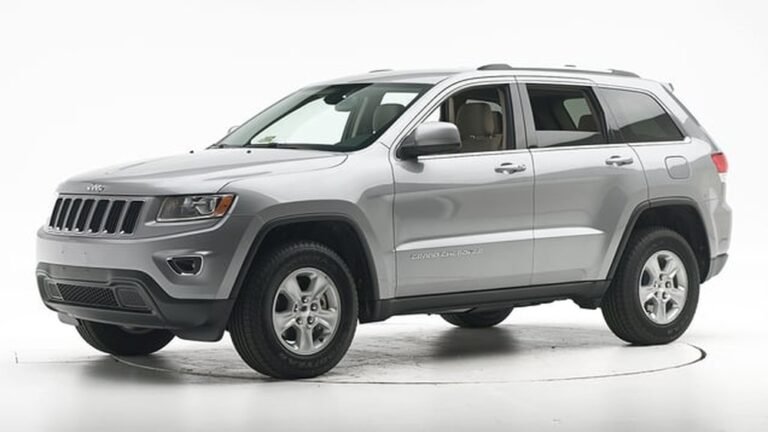
Best And Worst Years For Jeep Liberty KJ And KK: Buy Smart
 Reading Time: 10 minutes
For U.S. used-car buyers, the 2007 Jeep Liberty KJ and the 2011–2012 Liberty KK are sensible years to shortlist, provided they pass a thorough inspection. Approach the 2002–2003 KJ, 2006 KJ, and 2008 KK with more caution because of early-model concerns, reported repair patterns, or first-year redesign risks.
These are conditional buying recommendations—not a proven ranking of failure rates. A rust-free Liberty with sound maintenance records can be a better buy than a neglected example from a preferred year. Your best choice depends on the engine, roof, recall history, and condition of the exact vehicle.
Best and Worst Jeep Liberty Years at a Glance
Start with later examples of each generation, but buy on condition rather than model year alone. The table below provides a screening guide for U.S.-market vehicles.
| Model year | Generation | Buying assessment | Main reason or condition |
|---|---|---|---|
| 2002 | KJ | Higher caution | First U.S. model year; inspect suspension, corrosion, and recall history closely |
| 2003 | KJ | Higher caution | Early-production example with age-related risks and important recall checks |
| 2004 | KJ | Worth considering | Condition can make it a good alternative to a later KJ |
| 2005 | KJ | Worth considering with care | Separate gasoline models from the more demanding CRD diesel |
| 2006 | KJ | Higher caution | Reported window-regulator problems; diesel versions add maintenance complexity |
| 2007 | KJ | Preferred KJ starting point | Final KJ model year, but still subject to condition and recall checks |
| 2008 | KK | Higher caution | First year of the redesign; inspect the roof and electrical equipment closely |
| 2009 | KK | Worth considering | A sound example may offer better value than a neglected later model |
| 2010 | KK | Worth considering | Maintenance, roof condition, and drivetrain health are decisive |
| 2011 | KK | Preferred KK starting point | Later-production choice; not proof of a lower failure rate |
| 2012 | KK | Preferred KK starting point | Final U.S. model year and among the youngest Libertys available |
“Higher caution” does not mean every vehicle from that year is defective. It means the purchase needs stronger evidence: repair records, a clean inspection, and a price that reflects any unresolved work.
Likewise, “preferred” does not mean trouble-free. No Liberty model year is exempt from cooling-system faults, rust, worn suspension parts, or neglected service.
Jeep Liberty KJ vs. KK: What U.S. Buyers Need to Know
The KJ covers U.S. model years 2002–2007, while the KK covers 2008–2012. Both use an independent front suspension and a solid rear axle, but the KK is a substantial redesign.
| Feature | Liberty KJ | Liberty KK |
|---|---|---|
| U.S. model years | 2002–2007 | 2008–2012 |
| Common U.S. engine | 3.7-liter gasoline V6 | 3.7-liter gasoline V6 |
| U.S. diesel option | 2.8-liter CRD for 2005–2006 | No U.S.-market diesel option |
| Roof concern to identify | Conventional roof or available sunroof | Conventional roof, sunroof, or available Sky Slider |
| Key buying distinction | Age, rust, suspension, and engine choice | Roof configuration, electrical functions, and overall condition |
Do not use overseas specifications to judge a U.S. listing. Some international-market vehicles were sold under the Cherokee name and had different engine options.
Also, not every Liberty has four-wheel drive. Check the actual vehicle, its controls, and its build information rather than trusting a seller’s description.
Best Jeep Liberty KJ Year: Why Start With 2007?
The 2007 Liberty is a reasonable first choice within the KJ generation because it is the final model year—not because it has been proven the most reliable. It suits buyers who want the original Liberty design without choosing an earlier example solely to save on purchase price.
A gasoline-powered 2007 also avoids the diesel-specific service needs of the 2005–2006 CRD. That can simplify ownership for buyers who do not have a nearby diesel specialist.
However, the 2007 still needs careful checks for:
- Structural and suspension-mount corrosion.
- Cooling-system leaks or evidence of overheating.
- Window and door-lock operation.
- Transmission behavior when cold and fully warm.
- Completed recalls and any outstanding campaigns.
Are 2004 and 2005 KJ models good alternatives?
Yes—a well-kept gasoline 2004 or 2005 can be a better purchase than a poor 2007. There is no sound reason to reject a clean, documented vehicle just because it falls outside a short “best years” list.
The engine matters on a 2005. A gasoline V6 and a CRD diesel may share the same body, but they do not have the same maintenance demands.
For all KJ years, rust can outweigh mileage. A low-mileage vehicle with weakened suspension mounting points is not a bargain.
Best Jeep Liberty KK Years: Why Shortlist 2011 and 2012?
The 2011 and 2012 Liberty are sensible KK starting points because they are later-production examples and among the youngest Libertys sold in the United States. Their age advantage can help, but it does not establish better durability.
The most useful buying distinction may be roof type rather than year. A conventional-roof KK removes the specific fabric-roof, track, seal, and drive-system risks associated with the optional Sky Slider.
Is a conventional roof better than a Sky Slider?
A conventional roof is the lower-complexity choice for a buyer focused on repair risk. The Sky Slider is a large retractable fabric roof, not a standard glass sunroof.
If a vehicle has a Sky Slider, check:
- Full opening and closing operation.
- Uneven movement, binding, or abnormal noise.
- Fabric damage and poor sealing.
- Water stains on the headliner.
- Damp carpet or a musty cabin.
- Local access to a shop that will diagnose and repair it.
Confirm repair options before buying a faulty roof. A low purchase price may not cover the cost or difficulty of restoring it.
A standard-roof 2009 or 2010 with strong records can therefore be a better choice than a 2012 with leaks and an inoperative Sky Slider.
Jeep Liberty Years to Approach With More Caution
The strongest reasons for caution are specific faults and configurations—not a blanket claim that every vehicle from a certain year is bad.
2002–2003 KJ: Early models with significant age-related exposure
The first two U.S. model years deserve a close suspension and corrosion inspection. NHTSA recall records include front lower ball-joint concerns affecting certain early KJ vehicles, with applicability determined by the exact campaign and VIN.
A ball joint connects suspension components while allowing steering movement. Separation can compromise vehicle control, so looseness or serious wear is not a minor bargaining point.
These vehicles are also old enough that rubber parts, brake lines, cooling components, and prior repairs may matter more than their original design.
2006 KJ: Check window regulators and identify the engine
Owner-complaint sources flag window-regulator failures as a recurring concern on the 2006 Liberty. A regulator is the mechanism that raises and supports the door glass.
Test every window through its full travel. A working driver’s window does not establish that the other three are sound.
The 2006 also requires an engine-specific decision. A CRD diesel needs a different inspection and maintenance review than the gasoline V6. Complaint counts alone do not establish that every 2006 is less dependable than every adjacent year.
2008 KK: First-year redesign and equipment checks
The 2008 introduced the KK generation. That supports a cautious inspection approach, but first-year status alone is not proof of poor reliability.
Pay close attention to roof operation, water intrusion, dashboard warnings, locks, windows, and other electrical functions. If it has a Sky Slider, inspect that system as a separate purchase risk.
A dry, well-serviced 2008 with a conventional roof may still be a sound buy. Do not reject it solely because an online list calls it a year to avoid.
Problems That Matter More Than the Model-Year Ranking
Overheating history, structural rust, and neglected maintenance can reverse any year-based recommendation. These checks should carry more weight than trim level or cosmetic condition.
Engine overheating and cooling-system faults
Have a mechanic investigate coolant loss, unstable operating temperature, persistent misfires, or signs of past overheating. Serious overheating can damage an engine, including its cylinder heads and head gaskets.
Check the vehicle from a cold start, then inspect it again at operating temperature. A cooling-system pressure test or further engine testing may be warranted if symptoms appear.
Never open a hot cooling system. If the temperature warning comes on during the test drive, stop safely rather than driving on to see whether it clears.
Rust and suspension condition
Inspect the underbody on a lift, especially on vehicles exposed to road salt. Surface rust and metal weakened by corrosion are not the same thing.
Ask the shop to examine:
- Suspension mounting points and control arms.
- Unibody structural areas.
- Brake and fuel lines.
- Rocker panels and underbody seams.
- Areas hidden by fresh coatings or patch repairs.
Some KJ vehicles were included in corrosion-related rear suspension recalls. Verify applicability through the VIN rather than assuming every vehicle in a model year is covered.
Transmission and four-wheel-drive operation
Test the transmission both cold and warm. Delayed engagement, slipping, harsh shifts, or warning lights require diagnosis before purchase.
If the Liberty has four-wheel drive, test it according to the correct owner’s manual. Do not engage a part-time four-wheel-drive mode on dry pavement unless the manual permits that use.
Check tire size and wear as well. Mismatched tires can be a concern on a four-wheel-drive vehicle.
The 2005–2006 CRD diesel exception
The CRD is best treated as a specialist purchase. It adds diesel-specific fuel-system, turbocharger, emissions-system, and timing-belt service requirements.
Before buying one, require evidence of scheduled maintenance and obtain an inspection from a shop familiar with this engine. A generic inspection may not address its most costly risks.
Low mileage is not a substitute for service records. Nor does it prove that age-sensitive parts remain fit for use.
How to Inspect a Used Jeep Liberty Before Buying
Arrange an independent pre-purchase inspection before committing to the vehicle. The inspection should include a lift, a diagnostic scan, and a cold-to-warm road test.
- Confirm the identity. Match the VIN on the vehicle to the title and listing. Verify the engine, drivetrain, and roof type.
- Check recalls. Use the official NHTSA VIN recall lookup. Ask for repair records where available.
- Request a cold start. A pre-warmed engine can make some noises or starting faults harder to detect.
- Review service records. Focus on cooling-system work, fluid service, suspension repairs, and diesel timing-belt history where applicable.
- Inspect underneath. Have a technician assess rust, leaks, suspension wear, and repair quality.
- Test every feature. Operate all windows, locks, lights, climate controls, and roof functions.
- Drive until fully warm. Check shifting, braking, steering, temperature, and warning lights.
- Get written estimates. Price necessary repairs before negotiating.
A successful inspection leaves you with a clear list of defects, likely near-term work, and unresolved questions. “It drives fine” is not enough.
If the seller refuses an independent inspection, cannot explain overheating symptoms, or dismisses structural corrosion, move on.
Recall Records: What They Do—and Do Not—Tell You
A recall identifies a documented safety defect within a defined vehicle population; it does not rank overall reliability.
One important KJ campaign is NHTSA recall 13V252, covering certain 2002–2007 Liberty vehicles. It addressed fuel-system integrity concerns in certain rear impacts. The remedy involved inspection and, where applicable, installation of a trailer hitch assembly.
That remedy should not be described as making a vehicle safe in every rear collision. Nor should an aftermarket hitch be assumed to prove that the recall was completed.
Use the NHTSA recalls page to check the VIN and search year-specific records. Keep in mind that the VIN tool has limits, including limits involving older recalls; a clear result is not a complete repair history. A Jeep dealer can help investigate campaign records.
Sources, Ranking Method, and Evidence Limits
This guide offers a cautious buying shortlist, not a statistically validated best-to-worst reliability ranking. Live browsing was unavailable for this article, so current complaint totals, parts availability, individual recall status, and competing pages were not verified.
The most useful sources for checking a specific purchase are:
- NHTSA recalls and vehicle safety records for campaign scope and VIN checks.
- Mopar vehicle resources for model-specific manuals and operating instructions.
- CarComplaints’ Jeep Liberty pages for reported owner experiences—not population-wide failure rates.
- An independent inspection for the actual vehicle’s condition.
Complaint sites can reveal symptoms worth checking. They cannot, by themselves, establish the chance that a vehicle will fail. Sales volume, age, mileage, and reporting behavior affect the totals.
Next-question gap map
These are inferred buyer needs, not verified search-demand findings. Competitor coverage was not checked.
| Question | Reader stage and basis | Coverage checked | Reader benefit and evidence | Priority and placement |
|---|---|---|---|---|
| Does roof type change the recommendation? | Shopping; inferred from optional equipment | Not checked | Avoids overlooking a separate repair risk; equipment inspection and service diagnosis | High; KK section |
| Is a CRD assessed like a gasoline Liberty? | Comparing listings; inferred from engine differences | Not checked | Prevents an incomplete maintenance review; exact owner’s manual and specialist inspection | High; problem checks |
| Does a clear recall lookup prove the vehicle is sorted? | Before purchase; inferred from lookup limits | Not checked | Prevents false confidence; NHTSA guidance and repair records | High; recall section |
| Can condition outweigh the preferred year? | Final selection; inferred from vehicle age | Not checked | Supports a better purchase decision; inspection and documented history | High; inspection section |
FAQs
How many miles can a Jeep Liberty last?
There is no dependable mileage promise for an individual Liberty. Service history, corrosion, overheating, driving conditions, and repair quality all affect its useful life.
Treat a high-mileage claim as background, not a guarantee. Inspect the vehicle and budget for wear-related repairs.
Is the Jeep Liberty 3.7 V6 timing belt or timing chain driven?
The 3.7-liter gasoline V6 uses timing chains. The 2.8-liter CRD diesel uses a timing belt, so do not apply the gasoline engine’s service assumptions to the diesel.
Is a lower-mileage Liberty always the better buy?
No. Long storage, short trips, rust, and neglected maintenance can offset a low odometer reading. Compare condition and records before paying a mileage premium.
Should I buy a Liberty with an unresolved recall?
Ask an authorized dealer to confirm the remedy and whether it can be completed before the sale. Follow any official safety instructions for the campaign. An open recall is not always a reason to reject a vehicle, but it must not be ignored.
What if two Libertys pass inspection equally well?
Compare documented upcoming service, tire condition, roof complexity, and access to qualified repair shops. Then compare the total purchase cost—not just the asking price.
Conclusion
Shortlist the 2007 KJ and 2011–2012 KK, but let the inspection decide. Use extra caution with 2002–2003 KJs, 2006 KJs, and 2008 KKs without treating those years as automatic rejections.
For a straightforward purchase, favor a well-documented gasoline model with a conventional roof. Before paying, check the VIN, obtain a cold-start inspection, and get the vehicle on a lift. The best Jeep Liberty is the one with sound structure, a healthy drivetrain, and no costly surprises hidden behind its model year.