P0443 Jeep: Causes, Fixes, And Costs
 Reading Time: 11 minutes
 A P0443 Jeep code means the powertrain control module (PCM) detected a problem in the evaporative emissions system purge-control valve circuit. On a Jeep sold in the United States, this diagnostic trouble code can trigger the check-engine light and may prevent the vehicle from passing a state emissions inspection until the fault is repaired and the required readiness monitors run again.
P0443 usually points to an electrical or control problem involving the EVAP purge solenoid, its wiring, connector, fuse, or PCM control circuit. It does not automatically mean there is an EVAP leak, and replacing the gas cap alone generally will not fix this particular code.

What Does P0443 Mean on a Jeep?
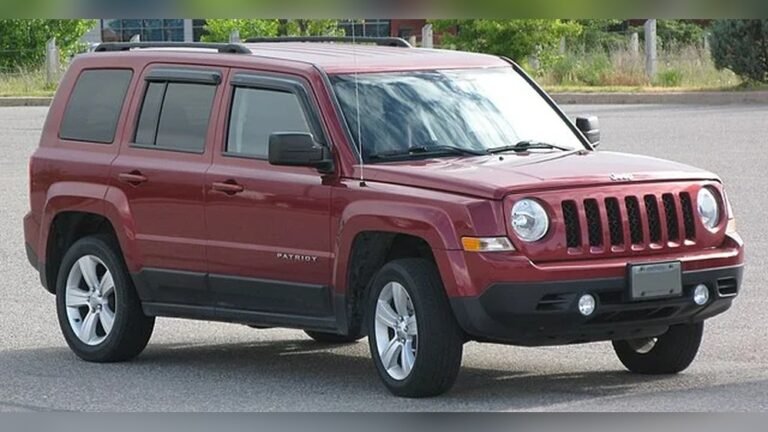
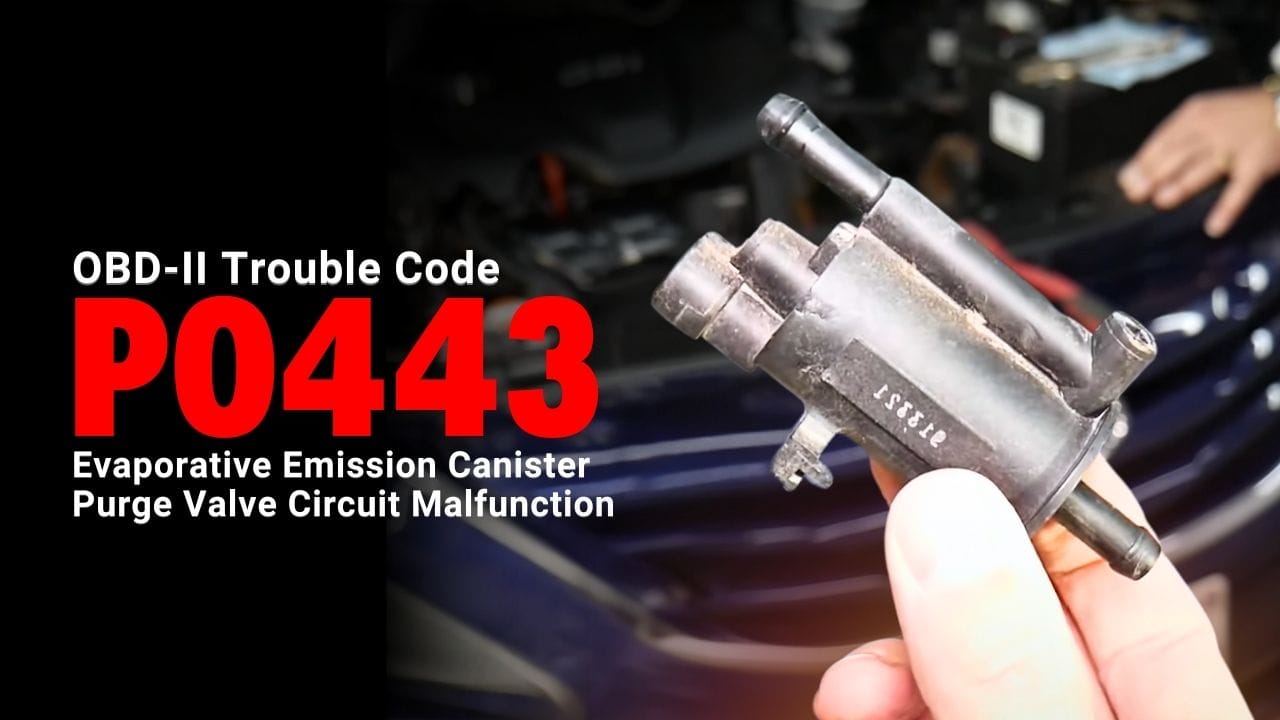
P0443 is a generic OBD-II fault code defined as “Evaporative Emission System Purge Control Valve Circuit.” The code applies across many Jeep models, including the Wrangler, Grand Cherokee, Cherokee, Compass, Patriot, Renegade, Liberty, and other Chrysler, Dodge, and Ram vehicles equipped with OBD-II emissions systems.
The EVAP system captures gasoline vapors from the fuel tank instead of allowing them to escape into the atmosphere. Under appropriate operating conditions, the PCM opens the purge valve and draws those vapors into the engine to be burned.
A typical EVAP system includes:
- Fuel tank
- Fuel filler cap or capless filler assembly
- Charcoal vapor canister
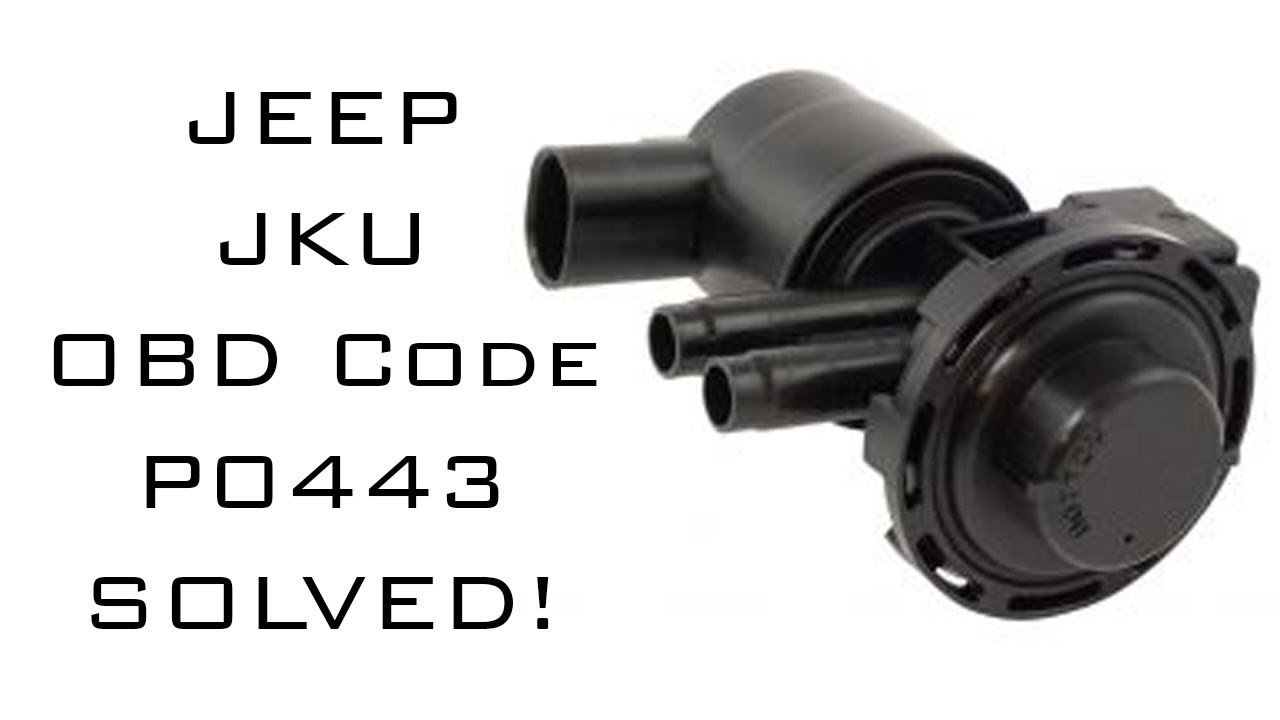
- EVAP purge control valve
- EVAP vent valve
- Vapor lines
- Fuel-tank pressure sensor
- Electrical wiring and PCM control circuits
The purge valve is normally closed when the engine is off or when purging is not appropriate. The PCM energizes the valve at the correct time. If the PCM detects an open circuit, short circuit, incorrect voltage, or an electrical response that does not match the commanded state, it may store P0443.
P0443 versus other EVAP codes
P0443 is different from several codes that are often confused with it:
| Code | General meaning | Main area of concern |
|---|---|---|
| P0440 | EVAP system malfunction | General EVAP operation |
| P0441 | Incorrect purge flow | Valve flow or system operation |
| P0442 | Small EVAP leak | Hoses, cap, tank, or valves |
| P0455 | Large EVAP leak | Major leak or disconnected line |
| P0456 | Very small EVAP leak | Small leak or sealing issue |
| P0443 | Purge-control valve circuit fault | Electrical circuit or purge solenoid |
A Jeep can store more than one EVAP code at the same time. If P0443 appears with a leak code, diagnose the electrical purge circuit first or follow the testing sequence in the factory service information.

Common Symptoms of a Jeep P0443 Code
The most common symptom is an illuminated check-engine light. Many Jeeps with P0443 continue to drive normally because the fault affects emissions control more directly than basic engine operation.
Possible symptoms include:
- Check-engine light
- Difficulty starting after refueling
- Rough idle
- Engine stalling after filling the fuel tank
- Slightly reduced fuel economy
- Failed or incomplete emissions readiness status
- A fuel-vapor smell
- Hard starting when the purge valve is stuck open
Not every Jeep will show all of these symptoms. A purge circuit fault may simply disable or limit EVAP operation while the engine otherwise performs normally.
When P0443 becomes a drivability problem
A defective purge valve can create drivability symptoms if it is electrically commanded incorrectly or mechanically stuck open. An always-open valve can allow excessive fuel vapor or air into the intake, especially during idle or startup. That may cause:
- Lean or unstable idle
- Extended cranking
- Stalling after refueling
- A fuel-trim-related code such as P0171
However, P0443 itself identifies a circuit fault. Do not assume that a rough idle proves the purge valve is mechanically stuck. The wiring and electrical command must also be checked.
Most Likely Causes of P0443 on a Jeep
The most likely cause is a failed EVAP purge control solenoid, but several other faults can produce the same code.
1. Failed EVAP purge solenoid
The solenoid may have:
- An internally open coil
- A shorted coil
- A valve stuck open
- A valve stuck closed
- Internal contamination or mechanical damage
A purge valve can pass a basic resistance test and still fail mechanically. Electrical resistance is only one part of the diagnosis.
2. Damaged wiring or connector
The purge valve is often located in the engine compartment, where wiring can be exposed to heat, oil, vibration, and moisture. Inspect for:
- Broken wires near the connector
- Chafing against brackets or engine components
- Corrosion inside terminals
- Loose terminal tension
- Water intrusion
- Melted insulation
- Poor previous repairs
3. Blown fuse or lost power supply
Depending on the Jeep model and engine, the purge solenoid may share an ignition-fed power circuit with other components. A blown fuse can interrupt the valve circuit, although the underlying reason for the fuse failure still needs to be found.
Replace a fuse only with the same amperage rating. If the replacement fuse blows again, stop testing and locate the short.
4. Short to ground or voltage
A wire may be shorted to ground, another circuit, or battery voltage. This can cause the PCM to detect an electrical condition outside the expected range.
5. Poor PCM control circuit
Many Chrysler and Jeep systems supply power to the solenoid and use the PCM to control the ground side. Other circuit designs can vary by engine and model year. A damaged control wire or PCM driver can therefore set P0443.
PCM failure is possible but should be considered only after the solenoid, power supply, wiring, connector, and control signal have been verified.
6. Incorrect replacement part
An aftermarket valve that looks similar may have the wrong connector, flow characteristics, electrical resistance, or mounting configuration. Use the correct part for the exact Jeep engine and model year.
How to Diagnose P0443 on a Jeep
A proper diagnosis should start with the electrical circuit rather than immediately replacing the gas cap. The following sequence applies broadly, but exact wire colors, connector pinouts, test values, and test procedures vary by Jeep model and engine.
1. Confirm the stored code
Use an OBD-II scan tool to confirm P0443 and record any additional codes. Check whether the code is:
- Stored or pending
- Associated with freeze-frame data
- Accompanied by fuel-trim, misfire, or other EVAP codes
Freeze-frame data can show engine temperature, vehicle speed, fuel level, and operating conditions when the PCM detected the fault.
Do not clear the code before recording this information unless necessary.
2. Locate the EVAP purge valve
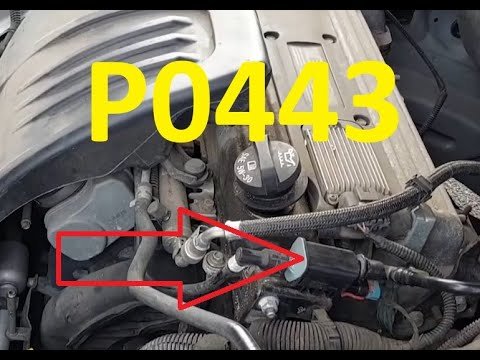
The purge solenoid is commonly installed in the engine compartment between the intake system and the EVAP vapor canister, although its location varies by Jeep model and engine.
Identify the valve using the vehicle-specific service manual or a reliable repair database. Do not confuse it with the EVAP vent valve, which is usually located closer to the fuel tank or vapor canister.
3. Inspect the valve and connector
With the ignition switched off, inspect the purge valve and harness. Look for damage caused by heat, rodents, road debris, or previous repairs.
Check that:
- The connector is fully seated
- Terminals are not pushed backward
- No terminal is green, wet, or corroded
- The vapor hoses are connected correctly
- The wiring is not stretched or rubbing
- The valve is mounted securely
Repairing a loose terminal or broken wire may resolve P0443 without replacing the valve.
4. Check the fuse and power supply
Use the Jeep owner’s manual or service information to identify the relevant fuse. With the ignition in the required position, verify whether the purge valve receives the correct power supply.
A test light or digital multimeter can help, but the correct test points depend on the circuit design. Do not probe sealed connectors carelessly or create a short between terminals.
If power is missing, trace the circuit backward through the fuse, relay, splice, and ignition supply rather than condemning the purge solenoid.
5. Test purge-solenoid resistance
Disconnect the purge valve and measure resistance across its terminals only if the manufacturer provides a specification and test method.
Interpretation should follow the Jeep’s service information:
- Infinite resistance can indicate an open coil.
- Very low resistance can indicate a shorted coil.
- A reading within specification does not prove that the valve works correctly.
Resistance changes with temperature and meter accuracy, so a generic internet value should not replace the specification for the exact Jeep engine.
6. Test the control circuit
If the valve and power supply appear normal, test the PCM-controlled side of the circuit. This may require:
- A wiring diagram
- Back-probing or breakout leads
- A digital multimeter
- A scan tool capable of commanding the purge valve
- A test light suitable for the circuit
A professional scan tool may allow an actuator test. When the valve is commanded on, the circuit should respond as specified by the service manual. The engine may also show a change in purge flow, but the exact result depends on engine speed and test conditions.
Do not apply battery voltage directly to a valve unless the manufacturer specifically authorizes that test. Some components can be damaged by incorrect voltage or polarity.
7. Check for mechanical purge-valve failure
If the electrical tests pass, evaluate whether the valve is mechanically stuck.
A valve that should be closed generally should not allow unrestricted airflow under the manufacturer’s specified test conditions. A valve that is stuck open may contribute to hard starting, rough idle, or stalling after refueling.
The correct airflow test varies by valve design. Avoid using a generalized “blow through it” test as the only basis for replacement.
8. Clear the code and verify the repair
After repairing the cause:
- Clear the diagnostic code.
- Start the engine and check for immediate reappearance.
- Use a scan tool to confirm the purge circuit responds correctly.
- Complete the manufacturer-appropriate drive cycle.
- Recheck for stored or pending codes.
- Confirm the EVAP readiness monitor has run before an emissions inspection.
Disconnecting the battery may erase learned information and may not be appropriate for every diagnostic situation. A scan tool is usually the better way to clear the code.

Jeep P0443 Repair Options and Typical Cost Factors
The repair depends on what the circuit test finds. Common repairs include:
- Replacing the EVAP purge solenoid
- Repairing a broken power or control wire
- Cleaning or replacing a corroded connector
- Replacing a blown fuse after correcting the short
- Repairing a damaged vapor hose
- Replacing an incorrect or damaged component
- Diagnosing a PCM driver only after all external circuit tests pass
The total cost varies with the Jeep model, engine, part quality, labor rate, component accessibility, and whether wiring repair is needed. A purge valve is often less expensive to replace than a wiring harness repair, but a low-cost part is not automatically the correct part.
A technician may charge more for diagnosis than for the valve itself because the code identifies a circuit problem—not a guaranteed failed component.
Can you drive with P0443?
Usually, a Jeep with P0443 can be driven short-term if it runs normally and there is no strong fuel smell, fuel leakage, severe stalling, or fire risk. However, continued driving can:
- Keep the check-engine light on
- Prevent emissions-test readiness
- Allow a drivability problem to worsen
- Hide a new engine or emissions fault
Stop driving and seek professional help if you smell raw fuel, see liquid fuel, experience repeated stalling, or notice overheating or other serious symptoms.

Common Mistakes When Fixing P0443
Several shortcuts lead to unnecessary parts replacement.
Replacing the gas cap first
A loose or defective gas cap commonly contributes to EVAP leak codes such as P0455, P0456, or P0442. It is not the primary suspect for a purge-valve circuit code.
Inspect the cap if other leak codes are present, but do not treat it as the standard repair for P0443.
Replacing the purge valve without testing the wiring
A new valve will not fix an open control wire, missing power supply, corroded connector, or blown fuse. Inspect and test the circuit before installing parts.
Using a smoke machine for an electrical code
Smoke testing is useful for locating vapor leaks. It generally will not identify an open circuit, shorted wire, or failed solenoid coil. For P0443, electrical testing should come first unless additional leak codes point to a separate problem.
Clearing the code and assuming the repair worked
A code can remain absent until the PCM runs the relevant monitor again. Conversely, a pending code may return before the check-engine light comes back on.
Verify the repair with scan-tool data and a completed drive cycle.
Installing the wrong purge valve
Jeep components can differ by engine, year, emissions configuration, and connector design. Match the replacement part using the vehicle identification number (VIN) or exact engine application.

When to Use a Professional Jeep Technician
Professional diagnosis is advisable when:
- The code returns after replacing the purge valve
- The fuse repeatedly blows
- Multiple electrical codes are present
- Wiring damage is difficult to access
- The Jeep stalls or is hard to start after refueling
- A PCM control fault is suspected
- The vehicle must pass an emissions inspection soon
- You do not have a wiring diagram or suitable test equipment
EVAP components handle gasoline vapors. Work in a well-ventilated area away from cigarettes, flames, heaters, and sparks. Allow hot exhaust components to cool before inspecting hoses or valves. Never create an ignition source near an open fuel system.

Key Takeaways
- P0443 Jeep means the PCM detected a purge-control valve circuit problem.
- The fault may involve the purge solenoid, fuse, wiring, connector, or PCM control circuit.
- P0443 is not the same as an EVAP leak code.
- Start with a scan, visual inspection, power-supply check, and circuit testing.
- Do not replace the gas cap or purge valve without confirming the fault.
- Verify the repair by clearing the code, checking for pending faults, and completing the EVAP readiness monitor.
Frequently Asked Questions
Is P0443 serious on a Jeep?
P0443 is usually not an immediate engine-damage emergency, but it should not be ignored. It can cause an emissions-test failure and may contribute to hard starting, rough idle, or stalling if the purge valve is stuck open.
Can a bad gas cap cause P0443?
A bad gas cap is not the usual cause of P0443 because P0443 identifies the purge-control circuit. A damaged or loose cap is more commonly associated with EVAP leak codes. If multiple codes are present, the cap may still need inspection.
Can I replace a Jeep purge valve myself?
A mechanically inclined owner can often replace an accessible purge valve using basic tools. The more difficult part is determining whether the valve itself failed or whether the wiring and power supply caused the code. Disconnect the battery only when the service procedure requires it, and keep the work area free of ignition sources.
How long can I drive with P0443?
If the Jeep runs normally and there is no fuel smell or leakage, limited driving is often possible. Schedule diagnosis soon, particularly if the vehicle must pass an emissions inspection. Stop driving if the Jeep stalls, struggles to start, or shows signs of a fuel-system leak.
Will P0443 clear itself?
The check-engine light may turn off if the PCM no longer detects the fault during later drive cycles, but the stored code and readiness status may remain for a period of time. A repair should be verified with a scan tool rather than assuming the problem is resolved because the light went out.
Does P0443 affect fuel economy?
It can, but the effect varies. A circuit fault that prevents normal purging may have little noticeable effect. A purge valve stuck open can create an incorrect air-fuel mixture, leading to rough running, hard starting, or reduced fuel economy.
Conclusion
A P0443 Jeep code most directly identifies an electrical problem in the EVAP purge-control valve circuit. The best repair process is to confirm the code, inspect the purge valve and connector, check the fuse and power supply, test the valve and control wire, and verify operation after the repair.
Because Jeep wiring and purge-valve specifications vary by model year and engine, use vehicle-specific service information for connector pinouts and electrical values. If the Jeep has a fuel odor, visible fuel leak, repeated stalling, or a fuse that keeps blowing, stop driving and have the vehicle diagnosed safely by a qualified technician.