Jeep Door And Top Storage: Maximize Space and Protect Your Gear
 Reading Time: 8 minutes
 Taking off your Jeep’s doors and top is part of the fun of owning one. Feeling the wind and sun makes every drive unique. But once you remove these parts, you face a challenge: Jeep door and top storage. Without proper storage, your doors and top can get scratched, damaged, or lost. Many Jeep owners, especially beginners, find themselves struggling to store these large, awkward pieces safely.
Storing Jeep doors and tops isn’t just about saving space. It’s about keeping your investment in good condition and making installation easy when you want to put them back on. In this guide, you’ll learn how to store your Jeep’s doors and top correctly, compare different storage solutions, and discover tips that most beginners miss.
Why Proper Storage Matters
Many Jeep owners don’t realize how easy it is to damage their doors or top during storage. Scratches, dents, and even small cracks can happen if you lean doors against a wall or leave the top on the ground. A small scratch can lead to rust, especially if you have a metal door.
Replacing or repairing these parts is expensive.
Proper storage keeps your doors and top:
- Safe from physical damage
- Protected from weather (rain, sun, humidity)
- Organized for quick reinstalling
Resale value also stays higher if your Jeep parts look good and work well.
Types Of Jeep Doors And Tops
Before choosing storage, know what you have. Not all Jeep doors and tops are the same.
Common Jeep Doors
- Full metal doors – Standard on most models; heavy and need careful handling.
- Half doors – Lighter, easier to move, but still need safe storage.
- Tube doors – Usually left on, but if you remove them, they are smaller.
Jeep Tops
- Hardtops – Made of fiberglass or plastic; heavy and large.
- Soft tops – Fabric with metal frames; lighter but need folding and careful storage.
Data: Average Jeep Door And Top Weights
Here’s a quick look at how much these parts weigh:
| Part | Average Weight (lbs) | Storage Difficulty |
|---|---|---|
| Full Metal Door (each) | 45-70 | High |
| Half Door (each) | 25-40 | Medium |
| Hardtop (2-door) | 80-100 | Very High |
| Hardtop (4-door) | 140-150 | Very High |
| Soft Top | 20-30 | Low |
As you can see, hardtops and full doors need special care and often a helper to move.

Credit: www.bestop.com
Popular Jeep Door And Top Storage Solutions
There are many ways to store Jeep doors and tops. Each method has pros and cons.
1. Wall Mount Storage
Wall mounts are brackets or hooks you attach to your garage wall. You hang the door or top on them.
Pros:
- Saves floor space
- Keeps parts off the ground
Cons:
- Needs strong walls
- Installation required
Tip: Always use padded hooks or covers to protect the paint.
2. Door Storage Carts And Racks
A door storage cart is a rolling frame. You slide your doors into the frame, and roll them where you want.
Pros:
- Easy to move
- Holds several doors
- Often padded for safety
Cons:
- Takes up floor space
- Not always cheap
Example: A popular cart can hold four doors and fits in a standard garage corner.
3. Hardtop Hoists
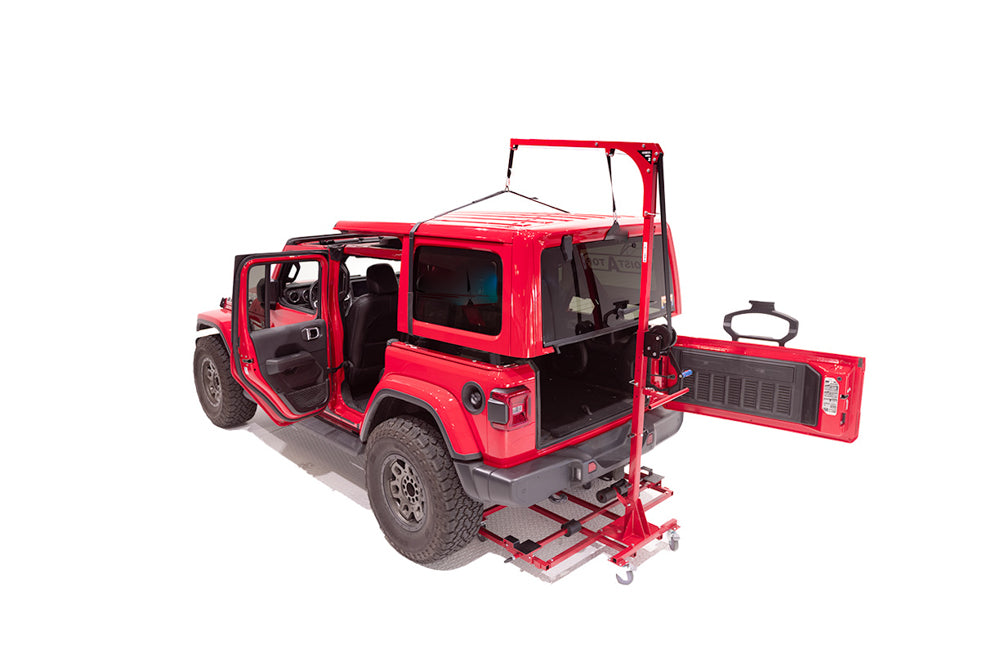
For hardtops, hoists are the best way. They use pulleys and straps to lift the top up to the ceiling.
Pros:
- Saves space
- One person can operate
Cons:
- Needs ceiling installation
- Hoist must be rated for the weight
Non-obvious insight: Always check your garage ceiling’s strength. Some ceilings can’t hold a heavy hardtop.
4. Soft Top Bags
Soft tops can be folded and stored in special bags. These bags protect the fabric and keep hardware together.
Pros:
- Portable
- Weather protection
Cons:
- Not for hardtops or metal doors
- Needs careful folding
5. Diy Storage Solutions
Some Jeep owners build their own storage racks from wood or metal pipes. This can be cheaper, but needs tools and skill.
Pros:
- Custom fit
- Lower cost
Cons:
- Not always as safe
- Takes time to build
Example: A simple wooden frame with carpet can hold two doors upright.
Comparing Storage Solutions
Here’s a quick comparison of popular storage options by cost, safety, and difficulty:
| Solution | Cost | Ease of Use | Best For |
|---|---|---|---|
| Wall Mounts | $$ | Medium | Most garages |
| Storage Carts | $$$ | Easy | Multiple doors |
| Hoists | $$$ | Medium | Hardtops |
| Soft Top Bags | $ | Easy | Soft tops |
| DIY Racks | $ | Hard | Custom needs |
Dollar signs ($) show relative cost. More $ means more expensive.
Step-by-step: Storing Jeep Doors Safely
Many beginners damage their doors by not following a few simple steps. Here’s how to do it right:
1. Clean The Doors First
Dirt or sand can scratch the paint. Wipe the doors with a soft cloth.
2. Use The Right Tools
A ratchet set and sometimes a Torx bit are needed to remove Jeep doors.
3. Remove The Wiring
Unplug any wiring (power windows, locks) before lifting the door.
4. Lift Carefully
Metal doors are heavy. Use two hands and support the bottom.
5. Store Upright
Always store doors vertically, not flat. This prevents bending and scratching.
6. Use Padding
Place foam or towels between doors or on the rack.
7. Label The Doors
Mark each door (front left, rear right) with tape. This helps when reinstalling.
Step-by-step: Storing Jeep Tops
Hardtop Storage
- Clean the top with water and mild soap.
- Check for cracks and repair small chips.
- Use a hoist or cart to lift the top. Never drag it on the ground.
- Cover the top with a tarp or fitted cover to keep dust and sunlight away.
- Store flat or on a padded rack, never on its edge.
Soft Top Storage
- Remove all hardware and keep screws in a labeled bag.
- Fold the top as the manual says to prevent creasing.
- Put in a storage bag and zip it up.
- Store in a dry place to avoid mold or mildew.
Non-obvious insight: Never store a soft top when wet. It can quickly grow mold that is hard to clean.
Mistakes Beginners Make
Even careful Jeep owners make storage mistakes. Avoid these problems:
- Leaning doors against a wall – They can fall and dent easily.
- Stacking hardtops – Weight can crack the bottom one.
- Leaving in the sun – UV rays fade paint and fabric.
- Forgetting small parts – Store bolts and wiring in labeled bags.
- Not checking for pests – Garages attract mice, which can chew on soft tops.
Storage For Different Jeep Models
Not all Jeeps are the same. Here’s a quick overview for popular models:
- Jeep Wrangler (JK/JL): Doors and hardtops are heavy; most owners use hoists and carts.
- Jeep Gladiator: Similar door design, but the bed can sometimes be used for storage.
- Jeep CJ/YJ/TJ: Older models have lighter doors; DIY racks often work well.
If you have a special edition or aftermarket parts, always check the product manual for storage advice.
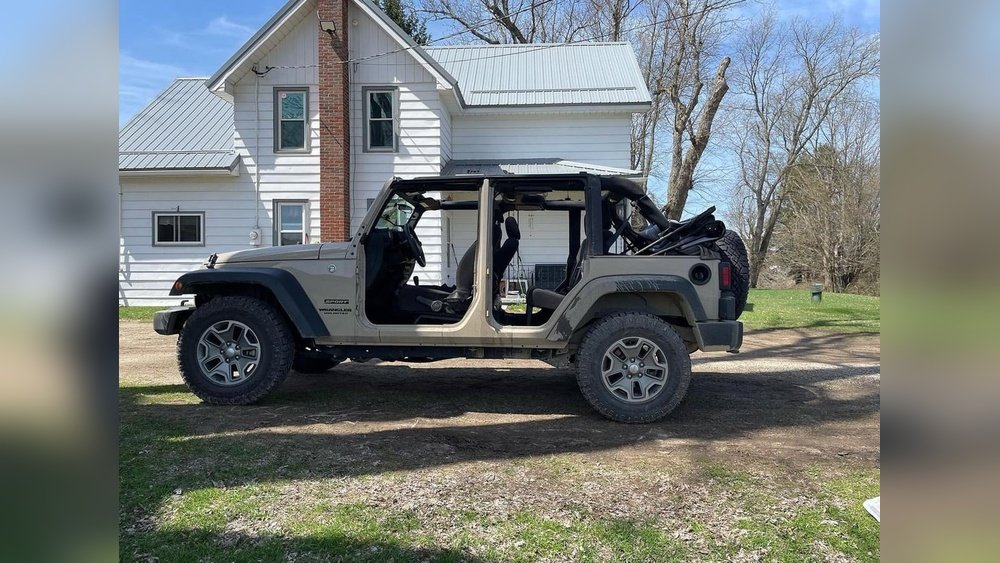
Credit: langeoriginals.com
Jeep Storage In Small Spaces
Many Jeep owners don’t have a big garage. Here’s how to store parts in tight areas:
- Use wall-mounted hooks high up, above car roof height.
- Choose a folding storage cart that tucks into a corner.
- Install a ceiling hoist for the hardtop to free up floor space.
- For soft tops, a vacuum storage bag can shrink the size.
Tip: Measure your space before buying any storage solution. Some racks are bigger than they look online.
Weatherproofing Your Stored Parts
If you store doors or tops outside or in a damp garage:
- Use weatherproof covers for all parts.
- Add silica gel packs inside soft top bags to absorb moisture.
- Check monthly for rust, mold, or pests.
Example: One Jeep owner found rust on his hinges after a wet summer. A small cover and a dry garage solved the problem.

Credit: www.amazon.com
How To Choose The Right Storage Solution
When picking a Jeep door and top storage method, ask yourself:
- How much space do I have?
- How heavy are my Jeep parts?
- Do I need to move them often?
- What is my budget?
- Is my garage wall or ceiling strong enough?
If you’re unsure, visit a Jeep forum or ask at your local dealer. You can also find helpful advice at JLWranglerForums.
Real-world Example: A Beginner’s Storage Setup
Sarah bought her first Jeep Wrangler and wanted to enjoy summer with the doors and top off. She had a small garage and a limited budget. Here’s what she did:
- Bought a wall mount kit for the two doors; it took less than an hour to install.
- Used a simple ceiling hoist for the hardtop, freeing up floor space.
- Placed all bolts and hardware in a labeled plastic box.
- Covered everything with old sheets to keep dust away.
Months later, she put the parts back on without damage or missing pieces. She learned: planning storage is as important as removing the doors and top.
Frequently Asked Questions
How Do I Safely Remove Jeep Doors?
Make sure you have the right tools, unplug any wiring, and support the door’s weight as you lift. Store bolts and small parts in a labeled bag.
Can I Store Jeep Doors Outside?
It’s best to store them indoors. If you must store outside, use weatherproof covers and place doors on a padded, raised surface.
Do I Need A Special Rack For My Jeep Hardtop?
A special hardtop rack or hoist is safest, especially for heavy, large tops. Avoid placing a hardtop directly on the ground or stacking.
How Do I Prevent Scratches During Storage?
Use padding (foam or towels) between doors or under the hardtop. Never slide parts on concrete or rough surfaces.
What If I Lose The Bolts Or Hardware?
Keep all bolts, wiring, and small parts in a labeled bag or box. Store this with your Jeep doors and top, so nothing gets lost.
Taking a few minutes to plan your Jeep door and top storage will keep your parts safe and ready for next adventure. With the right tools and methods, you’ll avoid costly damage and enjoy your Jeep all year round.