
How To Jump Jeep Compass: Safe Jump-Start Guide
 Reading Time: 7 minutes
 Introduction
If your Jeep Compass will not start in a U.S. driveway, parking lot, or roadside spot, a jump-start may help—if the battery is the problem and the vehicle has no signs of battery damage. Use the jump-start points and steps in the owner’s manual for your Compass model year. Battery layouts and instructions can vary, so do not guess where to connect a cable.
This guide explains how to prepare, connect jumper cables, start the Compass, and remove the cables. It also covers what to do if the jump does not work and when to call for roadside help.
Before you jump-start a Jeep Compass
Check the owner’s manual for your Compass model year before connecting a booster vehicle or jump pack. You can find manuals through the Jeep Owner’s Site or the Mopar Owner’s Manual page. Follow the manual if its instructions differ from this general guide.
You will need one of the following:
- A second vehicle with a compatible 12-volt battery and jumper cables
- A 12-volt jump pack used according to its own instructions
Before you begin, make sure:
- Both vehicles are in Park, with the parking brakes set.
- The vehicles are close enough for the cables to reach, but do not let them touch.
- The ignition and electrical accessories are off.
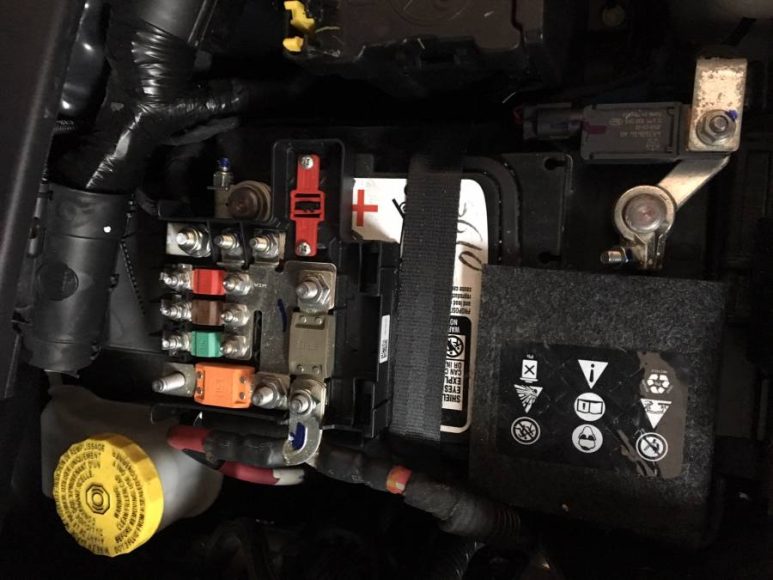
- You can identify the Compass’s designated positive jump point and ground point.
- The battery and cables have no visible damage.
Wear eye protection if available. Keep flames, sparks, and lit cigarettes away from the battery. Do not lean over it while connecting cables. A damaged, leaking, swollen, or frozen battery is not safe to jump-start; call for professional help instead.
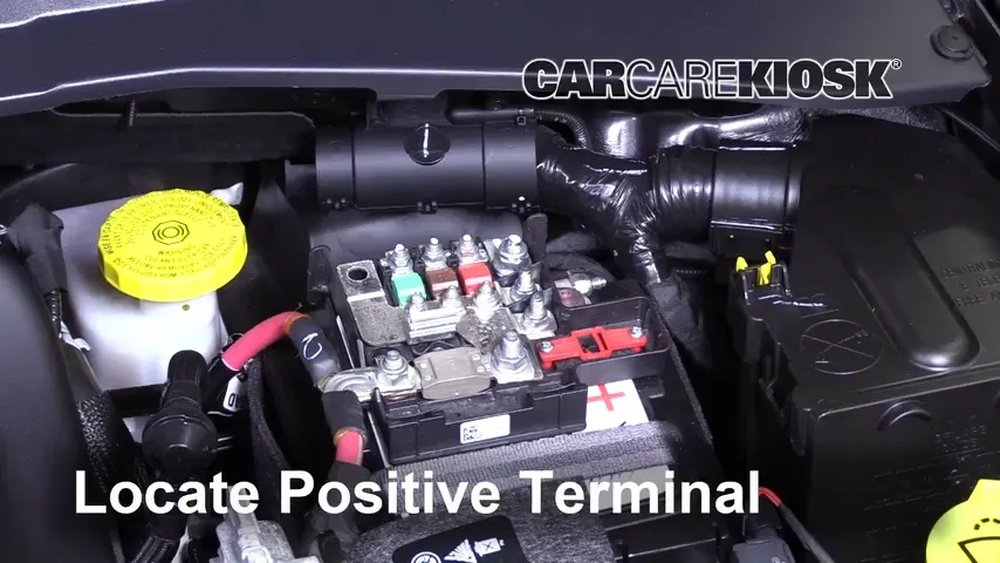
Do not connect to a battery post or metal part unless the owner’s manual identifies it as a jump point or ground. Some Compass versions use remote jump-start points, and the battery may not be easy to reach.
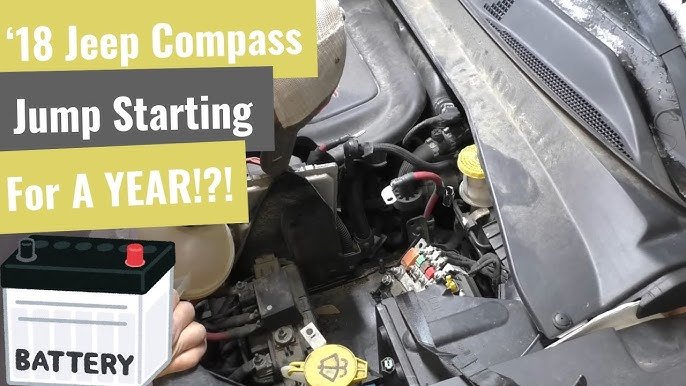
How to jump-start a Jeep Compass with jumper cables
Use this connection order only if it matches your Compass owner’s manual. Keep the metal clamps from touching each other or any part of the vehicle while the cables are connected.
- Position the vehicles. Put both vehicles in Park, set both parking brakes, and turn off their ignitions and accessories. Keep the vehicles from touching.
- Connect the first red clamp. Attach it to the Compass’s designated positive jump point.
- Connect the other red clamp. Attach it to the positive terminal of the booster vehicle’s battery.
- Connect the first black clamp. Attach it to the booster vehicle’s negative battery terminal.
- Connect the final black clamp. Attach it to the Compass’s designated ground point, away from the battery and moving or hot parts. Use the point named in the manual, not a random bolt.
- Start the booster vehicle. Follow its owner’s manual. If it is safe to do so, let it run at idle while you try to start the Compass.
- Start the Compass. Use a brief attempt. If it does not start, pause and check the connections and the owner’s manual before trying again. Do not keep cranking the engine.
- Remove the cables in reverse order. First remove the black clamp from the Compass ground point, then the black clamp from the booster vehicle. Remove the red clamp from the booster battery, then the red clamp from the Compass.
A successful start means the Compass engine runs without the booster connection. Keep the cables clear of belts, fans, and other moving parts while removing them. If you are using a jump pack, follow its instructions for connection, start-up, and removal; its sequence may differ.
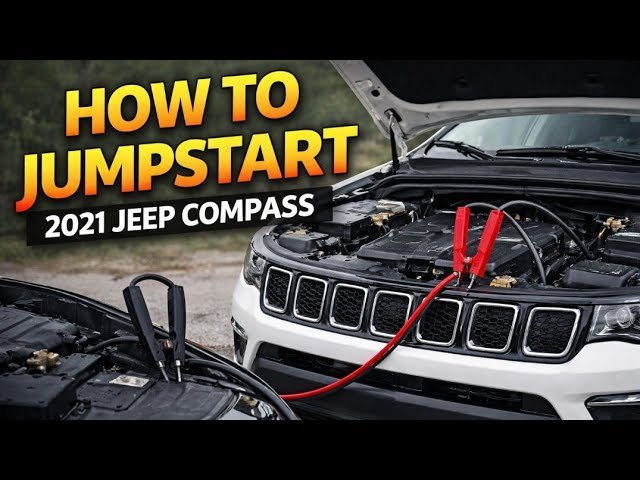
If the Jeep Compass will not start
A jump-start may not fix the problem if the battery is deeply discharged, damaged, or not the cause of the no-start. Stop if you see smoke, sparks, leaking fluid, unusual heat, or a burning smell. Do not continue trying to start the vehicle.
Use these checks to decide what to do next:
| What happens | What to check or do |
|---|---|
| The Compass starts | Remove the cables in the required order. Have the battery and charging system checked if the problem returns. |
| The starter clicks or the lights stay dim | Check that the clamps are secure and on the correct points. If the connection is correct and it still will not start, call for service. |
| There is no change at all | Confirm the jump pack or booster vehicle is working and that you followed the manual. A poor connection or another electrical fault may be the cause. |
| The engine cranks but does not start | The battery may not be the only problem. Stop repeated attempts and arrange diagnosis. |
| The battery looks damaged or may be frozen | Do not jump it. Keep away and contact roadside assistance or a repair professional. |
A discharged battery can also point to another issue, such as an old battery, a charging-system fault, or an accessory left on. A jump-start may get the Compass running, but it does not identify or repair the cause.

Safety limits and mistakes to avoid
Never jump-start a battery that is cracked, swollen, leaking, or frozen. Do not use a 24-volt source or connect cables by color alone; confirm the marked positive point and approved ground in the manual.
Avoid these common mistakes:
- Connecting the final negative clamp to the wrong part of the Compass
- Letting clamps touch or allowing a cable to reach a fan or belt
- Reversing the positive and negative connections
- Trying to jump-start a vehicle with visible battery damage
- Repeatedly cranking the engine after failed attempts
- Assuming every Compass model year has the same battery location or jump-start layout
If you are unsure about a connection, stop. A wrong connection can damage vehicle electronics or cause injury. Use roadside assistance or a qualified repair professional instead.
After the Compass starts
Once the engine is running, remove the cables in reverse order and keep them away from moving parts. Do not assume the battery is fully charged just because the engine started.
If the battery warning light stays on, the engine stops, or the Compass will not restart after you turn it off, arrange professional service. If the vehicle runs normally, follow the owner’s manual for next steps and have the battery and charging system checked if the no-start happens again.
FAQs
Can I jump-start a Jeep Compass with a portable jump pack?
Yes, if the jump pack provides a compatible 12-volt output and its instructions allow use with your vehicle. Connect it only to the Compass’s approved jump points, and follow the pack’s instructions for attaching and removing its clamps.
How long should I leave the jumper cables connected?
There is no one timing rule that fits every Compass model and booster vehicle. Follow both vehicles’ owner’s manuals and the jump pack instructions, if used. If the Compass does not start after brief attempts, check the connections and seek help rather than continuing to crank it.
Can I jump-start a Jeep Compass in the rain?
Do not jump-start the vehicle if water or wet conditions make it hard to keep the cables, clamps, and connections under control. Stop if there is standing water, flooding, damaged equipment, or any risk of contact with live electrical parts. If uncertain, call for roadside assistance.
Why does my Compass click after a jump-start?
A click can happen when the battery is still too weak to start the engine or when a connection is poor. Check the manual’s connection points and the clamp positions. If the connections are correct and the Compass still clicks, stop and arrange service.
Should I replace the battery after a jump-start?
Not always. A jump-start can help a discharged battery, but it cannot show whether the battery is worn out or whether the charging system has a fault. If the Compass needs another jump soon, have the battery and charging system tested.
Conclusion
To jump-start a Jeep Compass, use the correct 12-volt source, connect only to the approved jump points, and follow the cable order in the owner’s manual for your model year. Stop if the battery is damaged or the connections are unclear. If a safe jump does not work—or the problem comes back—contact roadside assistance or a repair professional.