
Why Does My Jeep Shake: Common Causes And Fixes
 Reading Time: 12 minutes
 If your Jeep shakes on a U.S. interstate, while braking on a local road, or while idling in your driveway, the cause usually falls into one of four categories: tires and wheels, steering and suspension, brakes, or the engine and drivetrain. When the shaking happens is the most useful clue.
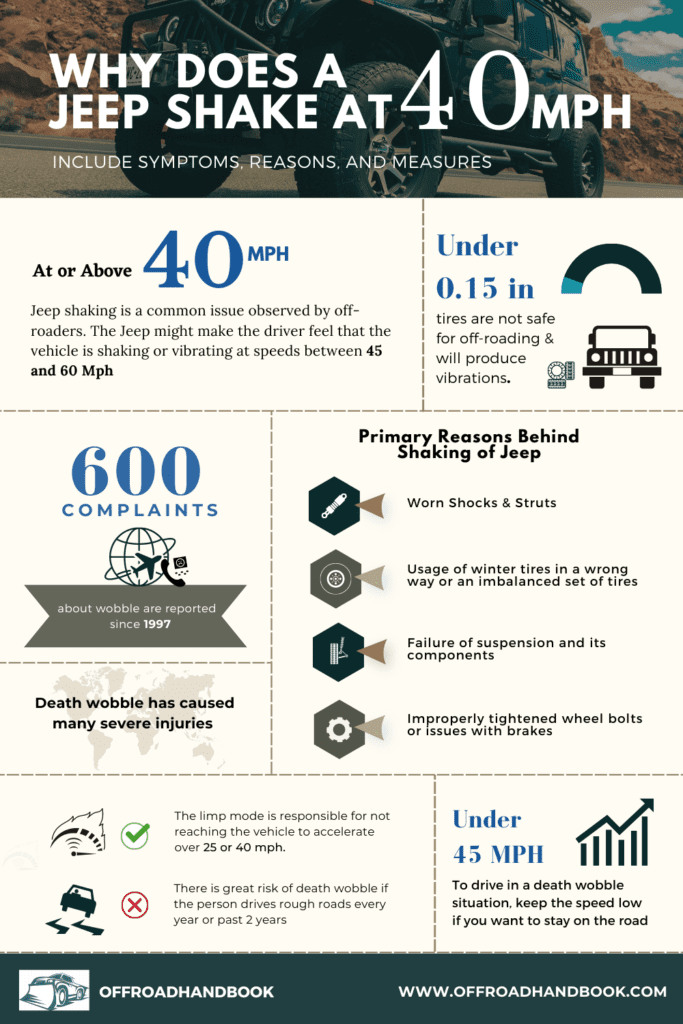
A vibration at highway speed often points to a tire or wheel problem. Shaking during braking suggests a brake-related issue. Roughness while stopped points more toward the engine or its mounts. A violent steering-wheel oscillation after a bump—sometimes called Jeep death wobble—requires prompt professional inspection, especially on a solid-front-axle Wrangler or Gladiator.
For U.S. owners, start with the tire-pressure label on the driver’s door opening, the owner’s manual for your exact model year, and a VIN check through the National Highway Traffic Safety Administration (NHTSA). Do not assume every Jeep shake is death wobble, and do not keep driving through severe shaking to see whether it disappears.
Match the Shaking to the Driving Condition
Identify when the vibration starts before choosing a repair. The same sensation can come from different components, so symptoms narrow the inspection but do not establish a diagnosis.
Use this table to decide where to begin:
| When your Jeep shakes | Possible causes | Useful first check |
|---|---|---|
| At highway speed, even without braking | Tire imbalance, irregular wear, tire damage, bent wheel | Inspect tires and wheels; request balancing and runout checks |
| Immediately after hitting a bump | Steering or suspension looseness; severe front-axle oscillation | Stop if severe; arrange a steering and suspension inspection |
| Only while braking | Brake rotor thickness variation or runout, caliper problems, suspension looseness | Have the brakes and relevant suspension components inspected |
| While stopped at idle | Engine misfire, air or fuel delivery problem, worn engine mounts | Check warning lights and have diagnostic codes evaluated |
| Mainly under acceleration | Engine fault, CV joint, driveshaft, U-joint, or driveline-angle problem | Determine whether vibration follows engine load or road speed |
| During tight turns | CV joint fault, tire rubbing, or inappropriate four-wheel-drive mode | Verify the selected drive mode against the owner’s manual |
| Immediately after tire or suspension work | Wheel installation issue, incorrect pressure, imbalance, loose hardware, geometry changes | Contact the installer; avoid driving if looseness is suspected |
Steering-wheel vibration often directs attention toward the front tires, brakes, or steering system. Vibration felt through the seat or floor can point toward rear wheels or the driveline. These are clues, not reliable ways to identify one failed part.

When Is a Shaking Jeep Unsafe to Drive?
Stop driving when shaking affects control, suggests tire or wheel failure, or occurs with a serious warning sign. A mild vibration deserves inspection, but violent shaking is not a normal Jeep characteristic.
Pull over safely and arrange roadside assistance or towing if you notice:
- Violent steering-wheel movement or difficulty holding your lane.
- A tire bulge, exposed cords, obvious tread separation, or rapid pressure loss.
- Missing wheel fasteners or suspected wheel looseness.
- Grinding, smoke, a strong burning smell, or reduced braking ability.
- A flashing check-engine light accompanied by rough running.
- New, severe vibration after hitting a pothole, curb, or other obstacle.
If severe shaking begins while moving, keep a firm grip on the steering wheel, ease off the accelerator, and reduce speed smoothly as conditions allow. Avoid abrupt steering or braking. Reach a safe stopping location rather than continuing at the speed that triggers the problem.
A flashing check-engine light can indicate a misfire severe enough to damage the catalytic converter on a gasoline vehicle. Follow your model’s manual and seek prompt assistance; do not attempt to “clear it out” with hard acceleration.

Why Does My Jeep Shake at Highway Speed?
Tire and wheel problems are a useful starting point when vibration follows road speed. A tire rotates faster as the vehicle speeds up, allowing imbalance, deformation, or wheel damage to produce a noticeable vibration.
Tire or wheel imbalance
An imbalanced assembly has uneven mass around its circumference. As it rotates, that imbalance creates a repeating force that can reach the steering wheel or body.
Clues include:
- Vibration concentrated within a particular speed range.
- Shaking that remains present without braking.
- Symptoms beginning after tire installation, rotation, or loss of a wheel weight.
Balancing corrects uneven mass distribution. It does not repair a damaged tire, bent wheel, loose bearing, or worn steering component.
Tire damage and irregular wear
A tire can vibrate even when it holds pressure and balances successfully. Possible problems include internal damage, out-of-roundness, flat spotting, and irregular tread wear.
Inspect visible tread and sidewalls for bulges, cuts, unusual wear, and deformation. Do not crawl under an unsupported vehicle or attempt to assess internal tire damage yourself.
Some temporary flat spotting can improve after a parked tire warms during driving. Persistent vibration still requires inspection; warming up does not rule out a damaged tire.
Bent wheels, mud, ice, and debris
A pothole can bend a wheel. Mud or ice packed inside a wheel can also alter its balance—particularly after off-road driving or winter travel.
Safely remove accessible buildup, then have the wheel inspected if shaking remains. A shop can measure runout, meaning how far the rotating wheel or tire deviates from its intended path.
Alignment versus balancing
Alignment and balancing solve different problems. Alignment adjusts wheel angles. Balancing corrects uneven mass in the rotating tire-and-wheel assembly.
Poor alignment can contribute to pulling and uneven tire wear. It does not directly correct an imbalance. If alignment-related wear has already damaged the tread pattern, correcting alignment may not eliminate the vibration.
For persistent highway-speed shaking, ask the shop to evaluate tire condition, balance, and runout before assuming an alignment alone will fix it.
Is the Shaking Jeep Death Wobble?
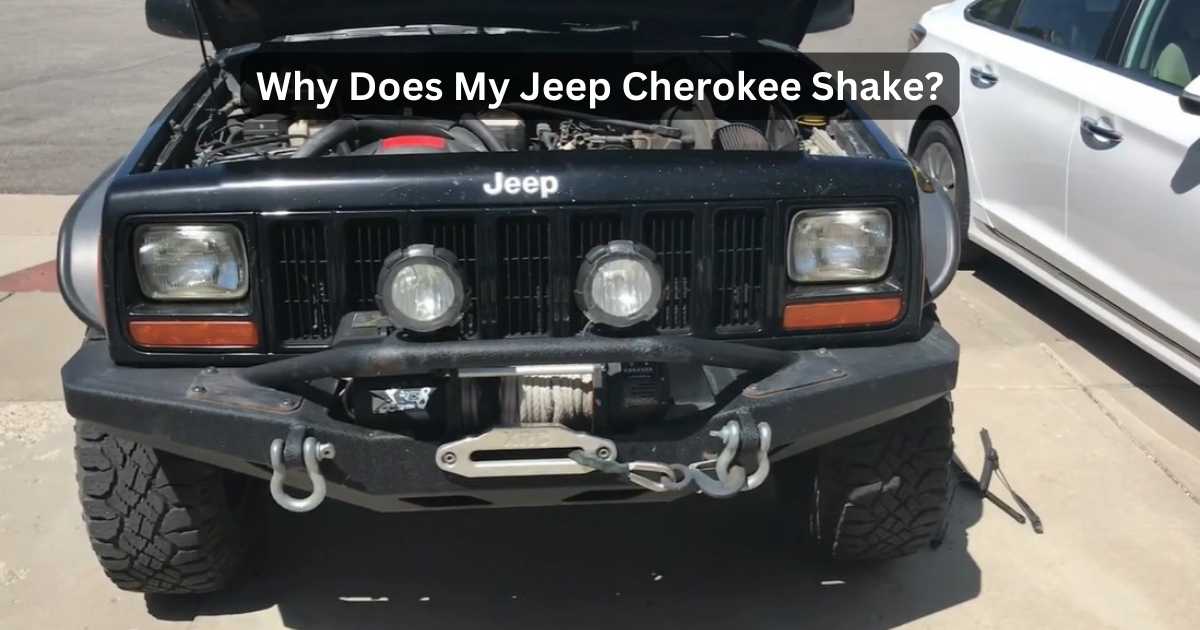
Death wobble describes a severe, sustained steering oscillation—not every vibration in a Jeep. Owners commonly use the term for violent front-end shaking that starts after a bump and continues until speed drops substantially.
On a solid-front-axle Jeep, the axle, tires, steering linkage, and suspension interact. A road impact can excite an oscillation when that system cannot adequately control movement.
This pattern is particularly relevant to Wrangler and Gladiator models with solid front axles. Other Jeep models use different suspension layouts, so their diagnosis must reflect the actual design.
What should a technician inspect?
Depending on the model and symptoms, the inspection may include:
- Track bar bushings, joints, mounting brackets, and attachment hardware.
- Tie-rod ends and drag-link joints.
- Ball joints and wheel bearings.
- Control-arm bushings and mounting points.
- Tire pressure, condition, balance, and wheel runout.
- Alignment settings, including caster where applicable.
- Steering damper condition.
- Lift-kit installation and related geometry changes.
The track bar controls side-to-side movement of the axle relative to the body. Movement at its joints or mounts can interfere with stable axle positioning.
A proper inspection should evaluate the system rather than replace parts solely because they appear on a common-cause list. Some looseness is easier to detect with components loaded in a model-appropriate way.
Will a steering stabilizer fix death wobble?
A steering stabilizer, also called a steering damper, resists rapid steering movement. A faulty damper may contribute to poor control, and some vehicle-specific repairs may involve it.
However, a new stabilizer does not prove that the underlying problem is fixed. It cannot restore a worn joint, repair a loose mounting bracket, or correct a damaged tire.
Ask the shop to document its findings and explain whether the damper is defective, whether other faults are present, and how the repair will be verified. Do not reproduce violent shaking yourself as a test.

Why Does My Jeep Shake When Braking?
Shaking that appears mainly when the brake pedal is applied calls for a brake inspection. Brake-related vibration can come from rotor thickness variation, lateral runout, uneven friction deposits, or caliper problems.
People often describe this as “warped rotors,” but that phrase can oversimplify the diagnosis:
- Thickness variation means the rotor is not equally thick around its circumference.
- Lateral runout means the rotating rotor moves side to side relative to its intended plane.
- Uneven friction deposits can create inconsistent braking force.
A technician should measure the relevant conditions rather than automatically replace rotors.
The inspection may also need to address hub mounting surfaces, caliper slides, wheel bearings, and suspension looseness. Otherwise, new brake parts may not solve the original cause.
Steering-wheel shake during braking often directs attention toward the front brakes. A pedal pulse or body vibration may be less specific. Brief pedal pulsation during an antilock braking system event can be normal; recurring shaking during ordinary braking is a different concern.
If braking feels weak, the Jeep pulls sharply, or you notice smoke or a burning smell, stop driving and arrange assistance.
Why Does My Jeep Shake at Idle or Under Acceleration?
A Jeep that shakes while stationary is unlikely to have a tire-balance problem. With the wheels stopped, focus on the engine, mounts, and operating conditions.
Rough idle and engine misfires
A misfire occurs when a cylinder does not produce its expected combustion contribution. On a gasoline engine, possible causes include:
- Worn spark plugs or ignition-coil faults.
- Fuel-delivery or injector problems.
- Unmetered air entering the intake.
- Sensor or electrical faults.
- Mechanical compression problems.
Diesel engines require a different diagnostic approach; gasoline ignition-coil and spark-plug advice does not apply.
Diagnostic trouble codes help identify a direction, but a code is not proof that a named component needs replacement. For example, a cylinder-specific misfire can have ignition, fuel, or mechanical causes.
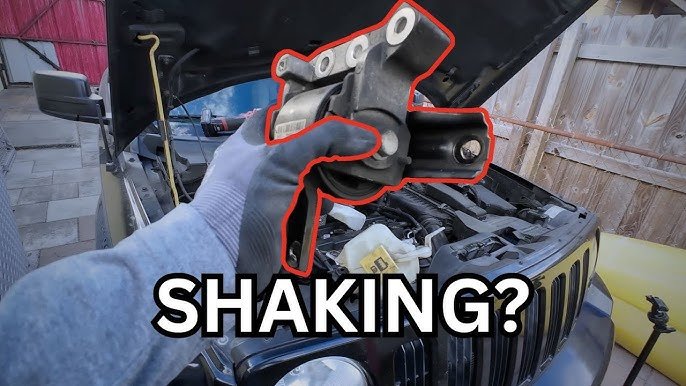
Worn engine or transmission mounts
Mounts support the powertrain and limit vibration transferred to the body. A worn mount may allow excessive movement or transmit more vibration even if the engine runs smoothly.
A technician can distinguish rough engine operation from excessive vibration transmission. Do not perform improvised engine-loading tests while someone stands in front of the vehicle.
Shaking under acceleration
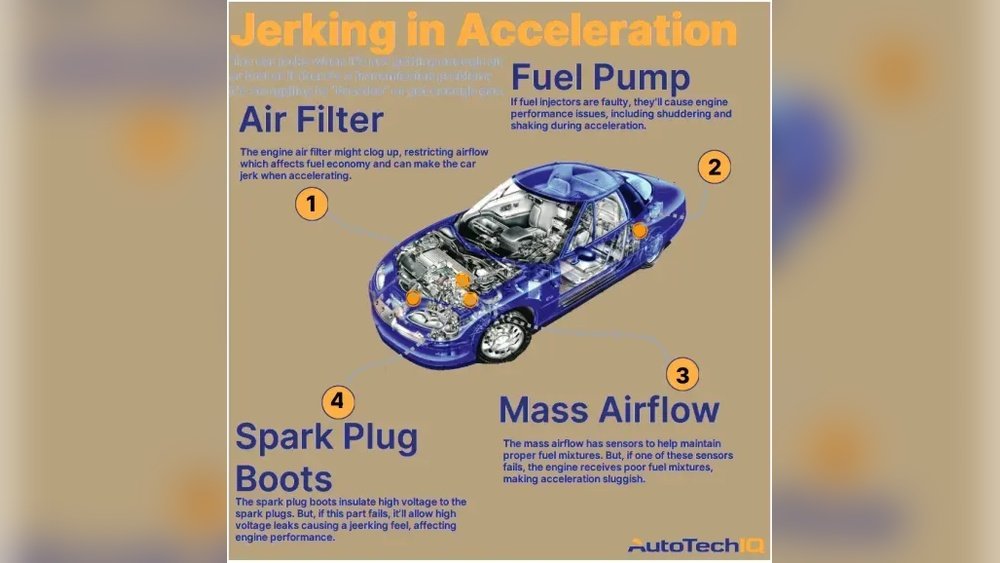
Acceleration changes engine load and driveline forces. Depending on the Jeep’s design, possible causes include:
- A misfire that becomes more noticeable under load.
- Worn CV joints.
- Driveshaft imbalance or damage.
- Worn or binding U-joints.
- Incorrect driveline angles following suspension changes.
- Engine or transmission mount problems.
Tell the shop whether the shaking follows vehicle speed, engine RPM, or throttle load. That distinction helps separate rotating-wheel issues from engine and driveline faults without requiring unsafe road experiments.

Can a Lift Kit, Larger Tires, or Four-Wheel Drive Cause Shaking?
Modifications and drive-mode selection can change the diagnosis, but neither should be blamed without inspection.
A lift kit can change caster, axle position, steering geometry, and driveshaft operating angles. Larger tires can make an existing imbalance or looseness more noticeable. That does not mean every modified Jeep will shake.
If the problem began after a lift or tire change, ask the installer to verify:
- Correct installation and model-specific hardware tightening.
- Tire pressure appropriate to the documented setup.
- Tire balance and wheel condition.
- Alignment settings suitable for the suspension configuration.
- Driveshaft angles and joint operation.
- Tire clearance throughout steering and suspension travel.
Do not accept persistent shaking as “just how lifted Jeeps drive.”
Four-wheel-drive mode also matters. On a Jeep equipped with part-time four-wheel drive, using a locked mode on dry, high-traction pavement can cause driveline binding, particularly during turns. Symptoms can include hopping, resistance, and shuddering.
Other Jeep systems offer automatic or full-time modes intended for different conditions. Labels such as 4H, 4H Auto, and 4L are not interchangeable across models. Use the instructions for your exact transfer case rather than advice written for another Jeep.
How to Troubleshoot a Shaking Jeep Safely
Start with observations and basic visual checks, then use targeted professional diagnosis. Avoid replacing parts before establishing which system produces the vibration.
1. Record the pattern
Write down:
- Model, model year, mileage, and relevant modifications.
- Approximate speed when shaking starts.
- Whether braking, acceleration, turns, or bumps trigger it.
- Whether you feel it in the steering wheel, seat, floor, or whole body.
- Warning lights or unusual sounds.
- Recent tire work, suspension repairs, impacts, or off-road use.
Record observations after stopping, not while handling a phone behind the wheel.
2. Check cold tire pressure
For a stock tire setup, use the pressure listed on the vehicle’s tire-information label—not the maximum pressure molded into the tire sidewall.
If tire size or vehicle configuration has changed, have a qualified tire professional determine appropriate pressures using tire load information and the actual vehicle setup. A modified Jeep does not justify guessing.
3. Perform a safe visual inspection
With the Jeep parked securely, look for damaged tires, visibly bent wheels, packed debris, and missing wheel fasteners.
A visual check cannot confirm correct wheel-fastener torque. If wheel looseness is suspected, do not drive to the shop.
4. Follow the symptom to the appropriate inspection
- Road-speed vibration: tire, wheel, balance, runout, and bearing checks.
- Bump-triggered oscillation: steering and suspension inspection.
- Braking vibration: brake measurements and related component checks.
- Idle vibration: engine diagnosis and mount inspection.
- Load-dependent vibration: engine and drivetrain evaluation.
Never work beneath a Jeep supported only by a jack. Steering and suspension work requires appropriate equipment, model-specific procedures, and correct torque specifications.
5. Verify the repair
A successful repair should remove the original symptom under the relevant conditions—not merely make it less noticeable.
For severe steering oscillation, a qualified technician should perform any necessary controlled verification. If shaking returns, revisit the diagnosis. Multiple faults can coexist, such as an imbalanced tire and a worn steering joint.
Check Recalls, Manuals, and Repair Coverage
Use your Jeep’s VIN to check applicable recalls, then consult model-specific service information. These records can change the repair path, but they do not diagnose every vibration.
U.S. owners can use:
- NHTSA’s VIN recall lookup to check unrepaired safety recalls.
- NHTSA’s vehicle research tool for available recalls, complaints, investigations, and manufacturer communications.
- Mopar owner resources for model-specific manuals.
A technical service bulletin provides service guidance for a defined condition. It is not automatically a recall or a promise of free repair. Eligibility can depend on the VIN, build date, warranty, and applicable campaign.
Likewise, an owner complaint documents a reported experience; it does not establish that your Jeep has the same defect. No open recall does not mean the vehicle has no mechanical problem.

Frequently Asked Questions
Why did my Jeep start shaking after a tire rotation?
Rotation can move a problematic tire to a position where its vibration is more noticeable. The timing also warrants checking pressure, balance, wheel seating, and fastener installation. Contact the installer promptly; severe shaking or suspected wheel looseness requires towing rather than another road test.
Can low tire pressure cause shaking?
Incorrect pressure can affect tire behavior and contribute to wear, but it is not a complete explanation for every vibration. Correct the pressure using the appropriate specification and investigate persistent shaking. A tire that repeatedly loses pressure needs leak inspection.
Will rotating the tires fix the problem?
Rotation may change where you feel a vibration without correcting its cause. It does not repair tire damage, wheel imbalance, or worn suspension parts. It can be useful within a diagnostic process, but it is not proof of a repair.
How much does it cost to fix a shaking Jeep?
The cost depends on the confirmed cause. Balancing tires is a different job from replacing damaged tires, rebuilding steering components, or repairing a drivetrain fault. Request a written estimate that separates diagnosis, necessary repairs, and optional maintenance.
Why does the shaking return after a repair?
The original diagnosis may have been incomplete, another component may also be faulty, or the replacement part may not address the mechanism producing the shake. Ask for the original findings, measurements where relevant, and post-repair verification before authorizing more parts.
Conclusion
Your Jeep’s shaking pattern is the starting point: road-speed vibration suggests tire and wheel checks, braking vibration calls for brake diagnosis, and stationary shaking points toward the engine or mounts. Violent, bump-triggered steering oscillation requires a thorough steering and suspension inspection—not an assumption that every Jeep needs the same part.
Document when the shaking happens, check safe basics, and have the relevant system inspected. If control, braking, tire integrity, or wheel security is in doubt, stop driving and arrange assistance.
Evidence and Research Limits
This guide uses general diagnostic principles and directs U.S. readers to primary resources for tire safety, recall status, and vehicle-specific operating instructions:
- NHTSA tire safety guidance: tire pressure, inspection, and maintenance.
- NHTSA recall resources: VIN-specific safety recall checks.
- Mopar owner’s manuals: model-specific warnings, drive modes, and operating procedures.
Live browsing and hands-on testing were unavailable for this article. These resources were not opened or rechecked during drafting, competing pages were not inspected, and no current model-specific campaign, repair price, or universal component diagnosis is asserted.
The following follow-up needs are inferred from the troubleshooting task, not verified search-demand findings:
| Next question | Reader stage and basis | Competitor coverage | Reader benefit and evidence needed | Priority and placement |
|---|---|---|---|---|
| Is it safe to keep driving? | Before diagnosis; inferred from the consequences of loss of control | Not checked | Establish stop-driving boundaries using tire-safety guidance and the exact owner’s manual | High; safety section |
| Why did shaking begin after modifications? | During diagnosis; inferred from changes to suspension and tires | Not checked | Direct inspection toward installation, geometry, and fitment; requires setup-specific measurements | High; modifications section |
| Why did the repair not last? | After repair; inferred from the possibility of multiple faults | Not checked | Avoid repeat parts replacement; requires documented findings and repair verification | High; troubleshooting and FAQs |