
P0300 Jeep Code: Random Misfire Causes And Fix
 Reading Time: 12 minutes
For Jeep vehicles sold and driven in the United States, the P0300 trouble code means the engine computer has detected random or multiple-cylinder misfires. A misfire occurs when one or more cylinders fail to burn the air-fuel mixture correctly.
The most common causes include worn spark plugs, weak ignition coils, vacuum leaks, low fuel pressure, dirty fuel injectors, and engine timing or compression problems. Start with a scan-tool check, inspect the ignition system, and avoid replacing expensive parts before testing the cause.
Note: Many scan tools display this code as P0300, not “PO 300.” The first character is the letter P, which means powertrain.
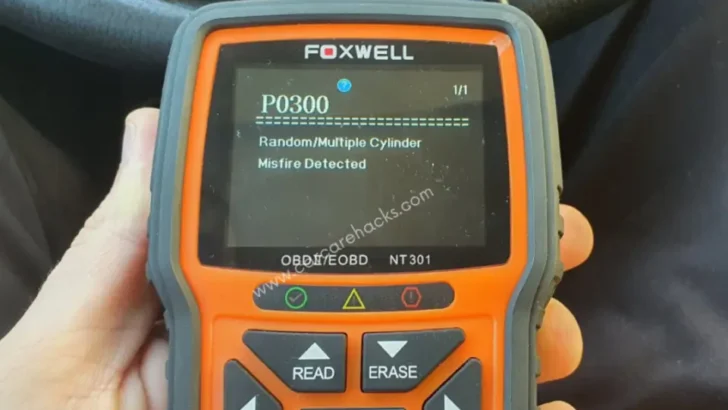
What Does the P0300 Code Mean on a Jeep?
The P0300 code means the Jeep’s powertrain control module, or PCM, sees misfires on more than one cylinder or cannot identify one fixed cylinder as the main cause.
A cylinder misfires when it does not burn the fuel charge as expected. The result may be rough running, hesitation, loss of power, or an illuminated check engine light.
The PCM detects misfires by watching small changes in crankshaft speed. When combustion is weak, the crankshaft slows slightly. The PCM records these changes and may set P0300 when the pattern moves between cylinders.
P0300 compared with cylinder-specific codes
| Code | Meaning |
|---|---|
| P0300 | Random or multiple-cylinder misfire |
| P0301 | Misfire on cylinder 1 |
| P0302 | Misfire on cylinder 2 |
| P0303 | Misfire on cylinder 3 |
| P0304 | Misfire on cylinder 4 |
| P0305 | Misfire on cylinder 5 |
| P0306 | Misfire on cylinder 6 |
A Jeep may store P0300 along with another code. For example, P0300 and P0302 together suggest random misfires with a stronger pattern on cylinder 2. Check all stored, pending, and history codes before clearing anything.
Symptoms of a Jeep P0300 code
Common symptoms include:
- Rough idle
- Engine shaking
- Slow acceleration
- Bucking under load
- Hard starting
- Poor fuel economy
- Flashing or steady check engine light
- Fuel odor from the exhaust
- Reduced engine power
- Stalling
A steady check engine light needs attention soon. A flashing check engine light is more urgent because active misfires can overheat and damage the catalytic converter.
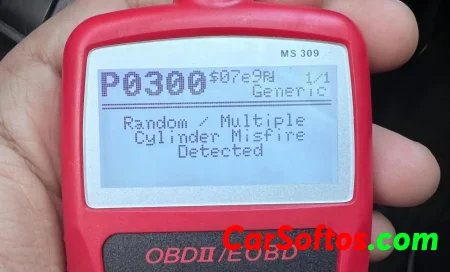
Most Common Causes of a Random Misfire on a Jeep
The usual cause depends on the Jeep model, engine, mileage, service history, and recent repairs. Ignition faults are often the fastest checks, but fuel, air, and mechanical faults can also set P0300.
1. Worn or damaged spark plugs
Old spark plugs may have worn electrodes, cracked ceramic, heavy carbon deposits, or an incorrect gap. A worn plug may work at idle but fail under acceleration when cylinder pressure rises.
Check the factory service schedule for the exact engine. Do not assume that all Jeep engines use the same plug type or gap. A plug that looks similar may still have the wrong heat range or design.
2. Weak or failed ignition coils
Many modern Jeep engines use one coil per cylinder. A weak coil can cause a misfire under load. Heat, moisture, oil contamination, and age can damage the coil or its internal driver.
On some Jeep engines, a coil fault creates a cylinder-specific code. On others, several weak coils may contribute to P0300 without one clear cylinder code.
3. Vacuum or intake air leaks
A cracked vacuum hose, loose intake tube, failed intake gasket, or damaged PCV connection can add air that the PCM did not measure.
A vacuum leak often causes:
- A high or unstable idle
- Lean fuel-trim readings
- Hissing near the intake
- Worse symptoms at idle than at higher engine speed
Small leaks can be hard to find by sight. A smoke test is often safer and more accurate than spraying flammable chemicals around a running engine.
4. Low fuel pressure or poor fuel delivery
A weak fuel pump, restricted filter, faulty pressure regulator, damaged wiring, or low fuel level can reduce fuel supply.
A fuel problem may affect several cylinders at once. It may become worse during:
- Hard acceleration
- Uphill driving
- High engine speed
- Cold starts
- Extended driving
Use the pressure specification for the exact Jeep engine. Do not apply a pressure number from a different engine or model year.
5. Dirty, clogged, or leaking fuel injectors
A restricted injector can make one cylinder run lean. A leaking injector can add too much fuel and cause a rich misfire.
Injector problems may show as:
- A cylinder-specific misfire
- A fuel smell
- Difficult starting after the Jeep sits
- Poor fuel economy
- A spark plug that looks unusually wet or dark
Injector cleaning may help with light deposits, but it will not repair a failed injector coil, damaged pintle, or wiring fault.
6. Crankshaft or camshaft sensor faults
The PCM uses crankshaft and camshaft signals to control fuel injection and ignition timing. A damaged sensor, poor connector, or wiring fault can cause unstable timing information.
These faults may also set codes such as:
- P0335
- P0336
- P0340
- P0344
A sensor should not be replaced based on P0300 alone. Test the signal and inspect the wiring first.
7. Low engine compression
A burned valve, worn piston ring, damaged piston, blown head gasket, or valve-train fault can cause a persistent misfire.
Mechanical problems become more likely when:
- One cylinder repeatedly misfires
- The same cylinder fails after plug and coil checks
- Compression is much lower than the other cylinders
- The engine consumes coolant or oil
- There is abnormal noise from the valve train
8. Incorrect valve timing
A stretched timing chain, damaged tensioner, failed cam phaser, or timing installation error can cause several-cylinder misfires.
Timing faults may also cause:
- Poor starting
- Rattling at start-up
- Low power across the engine
- Camshaft correlation codes
- Rough running at all speeds
9. Exhaust gas recirculation or purge-system faults
A purge valve stuck open can allow too much fuel vapor into the intake. On engines equipped with exhaust gas recirculation, a valve that opens at the wrong time can upset combustion.
These problems are less common than worn plugs or coils, but they can mimic a vacuum leak.
10. Water, oil, or corrosion in electrical connectors
Oil in a spark plug well, water near a coil connector, loose terminals, and corroded grounds can interrupt ignition.
Inspect connectors after engine washing, heavy rain, off-road water crossings, or recent repair work.

How to Diagnose P0300 on a Jeep
A good diagnosis moves from simple checks to measured tests. Do not clear the code and assume the repair worked. Confirm that the misfire is gone under the same conditions that caused it.
Step 1: Record all codes and freeze-frame data
Use an OBD-II scan tool to record:
- Stored codes
- Pending codes
- Misfire counters
- Engine temperature
- Engine speed
- Vehicle speed
- Fuel trims
- Load at the time of the fault
Freeze-frame data can show whether the misfire occurred during a cold start, idle, cruise, or acceleration.
Step 2: Check whether the light is flashing
Stop driving and shut off the engine if the check engine light flashes continuously, the engine shakes badly, or power drops sharply.
A short drive to a repair shop may be reasonable only when the light is steady and the Jeep runs smoothly. Avoid towing, hard acceleration, and long trips until the cause is known.
Step 3: Inspect the basics
With the engine off, check:
- Battery voltage and terminal condition
- Engine ground connections
- Air intake hoses
- Vacuum lines
- Coil connectors
- Spark plug wells
- Loose or damaged wiring
- Signs of oil or coolant leaks
A low battery or poor ground can create misleading electrical symptoms.
Step 4: Review the misfire counters
A capable scan tool may show misfire counts by cylinder. This can turn a random code into a more focused test.
For example:
- One cylinder has high counts: inspect that plug, coil, injector, and compression.
- Several cylinders on one bank misfire: inspect intake leaks, fuel delivery, valve timing, or bank-specific wiring.
- Misfires occur only under load: focus on ignition strength and fuel supply.
- Misfires occur mainly at idle: check vacuum leaks, purge flow, and compression.
Step 5: Test the ignition system
If one cylinder shows more misfires, swap its ignition coil with a matching coil on another cylinder. Clear the codes only after recording them, then run the engine again.
If the misfire moves with the coil, the coil is a strong suspect. If it stays on the original cylinder, inspect the spark plug, injector, wiring, and compression.
Do not swap coils if the connector or coil design differs. Follow the Jeep service information for the engine.
Step 6: Inspect and test the spark plugs
Remove the plugs and compare them.
Useful clues include:
- Wet fuel: the cylinder may not be igniting the mixture.
- Heavy black deposits: the cylinder may be running rich.
- White deposits: the cylinder may be running lean or hot.
- Oil fouling: oil may be entering the combustion chamber.
- Cracked ceramic: the plug can misfire even if the gap looks normal.
Replace plugs as a set when they are worn or when the service interval calls for replacement. Use the correct part number and torque.
Step 7: Check fuel trims and air leaks
Positive long-term fuel trim can suggest a lean condition. A large positive value at idle that improves at higher engine speed often points toward a vacuum leak.
Fuel-trim readings are clues, not final proof. An exhaust leak before the oxygen sensor, weak fuel pump, dirty injector, or inaccurate sensor can also affect the readings.
A professional smoke test can locate many intake leaks without exposing the engine bay to flammable spray.
Step 8: Test fuel pressure and injector operation
Measure fuel pressure with the correct gauge and procedure. Compare the result with the factory specification for the exact Jeep.
If pressure is low, test the pump, wiring, fuel module, regulator, and filter system as applicable. If pressure is normal, check injector balance, injector pulse, and injector wiring.
Step 9: Perform compression and leak-down tests
Compression testing compares the cylinders. A leak-down test helps identify where pressure escapes.
Air heard at the:
- Intake: possible intake valve leak
- Tailpipe: possible exhaust valve leak
- Crankcase: possible piston ring or piston problem
- Coolant reservoir: possible head gasket or cylinder-head problem
Use the Jeep service manual for test conditions. Battery charge, throttle position, engine temperature, and test equipment can affect readings.
How to Fix the P0300 Jeep Code
The correct fix depends on the failed part or condition. Clearing P0300 without correcting the misfire only hides the warning for a short time.
If spark plugs are worn
Install the specified plugs. Set the gap only when the manufacturer permits adjustment. Many modern plugs should not be forced or bent because the electrode can be damaged.
Tighten plugs to the specified torque. Too little torque can cause poor heat transfer or loosening. Too much can damage the cylinder head.
If an ignition coil is weak
Replace the failed coil with a correct-quality part. Inspect the boot, spring, connector, and nearby wiring at the same time.
If oil or water caused the failure, repair the leak or sealing problem. A new coil may fail again if the original cause remains.
If the engine has an intake leak
Replace cracked hoses, damaged gaskets, or faulty PCV parts. Tighten clamps and confirm that the intake tube is fully seated.
After the repair, check fuel trims and run the Jeep through a complete drive cycle. A short idle test may not reveal a leak that appears only during movement or heat soak.
If fuel pressure is low
Test the complete fuel-delivery system before installing a pump. Check the pump power supply, ground, fuse, relay, wiring, pressure control, and filter components.
Replacing the pump without testing can waste money if the fault is electrical.
If an injector is blocked or faulty
A shop can test injector flow, resistance, balance, and leak-down performance. Replace the injector when cleaning does not correct the fault or when electrical testing shows failure.
Use new seals where required and check for fuel leaks after installation.
If compression is low
Low compression requires mechanical repair, not a new sensor. The repair may involve cylinder-head work, valve repair, timing repair, piston work, or an engine replacement, depending on the test results.
Get a written diagnosis before approving major engine work.
If timing or sensor signals are incorrect
Repair wiring and connectors when possible. Replace a sensor only after confirming that the sensor or its circuit is faulty.
Timing-chain or cam-phaser repairs require the correct locking tools and timing procedure. Incorrect timing can cause severe engine damage on some Jeep engines.
Can You Drive a Jeep With P0300?
A Jeep with a steady check engine light and mild symptoms may drive a short distance for diagnosis, but continued use is not wise.
Do not keep driving when:
- The check engine light flashes
- The engine shakes hard
- The Jeep loses power
- The exhaust smells strongly of raw fuel
- The engine overheats
- The oil pressure warning appears
- You hear knocking, banging, or severe valve noise
An active misfire can send unburned fuel into the catalytic converter. The converter may overheat and fail. Severe misfires can also damage cylinder walls, valves, or pistons.
If the Jeep must be moved, drive slowly and avoid heavy throttle. Towing is safer when the engine runs poorly or the warning light flashes.
Common Mistakes When Fixing P0300
Replacing all ignition coils first
A coil may be the cause, but P0300 can also result from fuel, air, timing, or compression problems. Test before replacing several expensive parts.
Clearing the code before recording data
Clearing the code erases useful freeze-frame information and may reset fuel-trim data. Record the scan-tool results first.
Using the wrong spark plug
Different Jeep engines use different plug designs and specifications. Confirm the part number through reliable Jeep service information or the vehicle-specific parts catalog.
Ignoring other codes
P0300 may be a secondary result of a camshaft, crankshaft, fuel-pressure, or lean-condition fault. Diagnose the related code as well.
Using flammable spray to find leaks
Spraying starting fluid or fuel around a hot, running engine creates a fire risk. Use a smoke machine or another safe test method.
Assuming fuel additives will fix the problem
An additive may help with light deposits in some cases. It will not repair a failed coil, broken wire, low compression, bad timing chain, or damaged injector.
Jeep P0300 Repair Cost Factors
Repair cost varies widely by Jeep model, engine, location, labor rate, and failed part. A spark plug or vacuum hose repair is usually far less costly than injector, timing, cylinder-head, or catalytic-converter work.
The main cost factors are:
- Number of cylinders affected
- Access to the plugs and coils
- Diagnostic labor
- Fuel-system testing
- Compression or leak-down testing
- Parts quality
- Related damage from continued driving
- Whether the catalytic converter has overheated
A shop should explain the test result, failed component, repair plan, and confirmation test. Be cautious of a diagnosis based only on the presence of P0300.
How to Confirm the Repair
After the repair:
- Clear the codes only after recording them.
- Start the Jeep and check for a rough idle.
- Watch misfire counters if the scan tool supports them.
- Check for fuel, vacuum, coolant, and oil leaks.
- Drive under the conditions shown in the freeze-frame data.
- Rescan for stored and pending codes.
- Confirm that the check engine light stays off.
Some emissions monitors need several drive cycles before they show complete. The exact process varies by Jeep model and operating conditions.
Frequently Asked Questions
Is P0300 the same as a bad spark plug?
No. A bad spark plug can cause P0300, but the code does not identify the failed part. Coils, injectors, air leaks, fuel pressure, sensors, valve timing, and compression can cause the same code.
Why does my Jeep have P0300 but no rough idle?
A light misfire may occur only under load, during cold starts, or at a certain engine speed. Use freeze-frame data and misfire counters. A brief misfire may not be obvious from the driver’s seat.
Can bad gas cause P0300 on a Jeep?
Yes. Contaminated, stale, or water-filled fuel can cause multiple-cylinder misfires. If symptoms began soon after refueling, save the receipt and ask a repair shop to test the fuel before replacing parts.
Can a low battery cause a Jeep P0300 code?
Low system voltage can disrupt ignition and control-module operation, especially during starting. Test the battery, charging system, terminals, and grounds, but do not assume low voltage is the cause without checking for active misfires.
Should I replace all spark plugs when one cylinder misfires?
If the plugs are near the service interval or show general wear, replacing the full set is often sensible. If the plugs are recent, test the affected plug and related systems before replacing all of them.
Final Answer: The Best Way to Fix Jeep P0300
The best repair for a Jeep P0300 code is a measured diagnosis, not a parts gamble. First check all codes, misfire data, battery condition, wiring, plugs, coils, and intake leaks. Then test fuel pressure, injectors, compression, and valve timing when the basic checks do not find the fault.
A flashing check engine light, severe shaking, fuel odor, or major power loss requires prompt attention. Repairing the misfire early can help prevent catalytic-converter damage and a much larger repair bill.