
How to Take Hardtop off Jeep Wrangler: Step-by-Step Guide
 Reading Time: 8 minutes
 Removing the hardtop from your Jeep Wrangler is a popular way to enjoy the open air and sunshine. Many Jeep owners love the feeling of driving with no roof, but the process can look difficult to beginners. The good news: with the right tools, a little planning, and some safety steps, you can take the hardtop off your Wrangler in less than an hour. This guide will walk you through each part of the process, including tips to avoid damage, save time, and store your roof safely.
Why Take The Hardtop Off?
Jeep Wranglers are designed for outdoor fun. The hardtop gives you protection in winter, but when summer comes, most Jeep owners want to feel the wind and enjoy the sky. Here are some reasons people remove the hardtop:
- Open-air driving: Experience the outdoors like no other vehicle.
- Better visibility: No roof means a clear view in all directions.
- Easy cleaning: More access for vacuuming and wiping down the interior.
- Customization: Swap the hardtop for a soft top or go completely open.
If you’re new to Jeep life, removing the hardtop might sound scary, but it’s a standard task for most Wrangler owners.
Tools And Preparation
Before you begin, gather these items to make the process smoother:
- Torx wrench set (sizes T40 and T50, most important)
- Socket wrench (with extension, optional)
- Protective blankets or padding (to avoid scratches)
- Storage bag or cart (for hardware and the roof)
- Helper/friend (the top is heavy—two people are safer)
Check your Jeep’s manual for the exact tools needed. Most Wranglers (JK, JL, Gladiator) use similar bolt sizes.
Example: Bolt Sizes By Model
Here’s a quick look at typical bolt sizes for popular Wrangler models:
| Model Year | Torx Size | Number of Bolts |
|---|---|---|
| 2007-2018 (JK) | T40, T50 | 8 (rear), 6 (freedom panels) |
| 2018-present (JL/JLU) | T40, T50 | 8 (rear), 6 (freedom panels) |
| 2020-present (Gladiator) | T40, T50 | 8 (rear), 6 (freedom panels) |
Steps To Remove Jeep Wrangler Hardtop
Taking the top off is a step-by-step job. Follow these stages for best results.
1. Park And Prepare
- Park your Jeep on a flat, stable surface.
- Set the parking brake.
- Turn off the engine and remove the key.
- Make sure there’s enough space around the Jeep to move the top.
2. Remove The Freedom Panels
The Freedom Panels are the small front roof sections above the driver and passenger.
- Unclip the sun visors and fold them down.
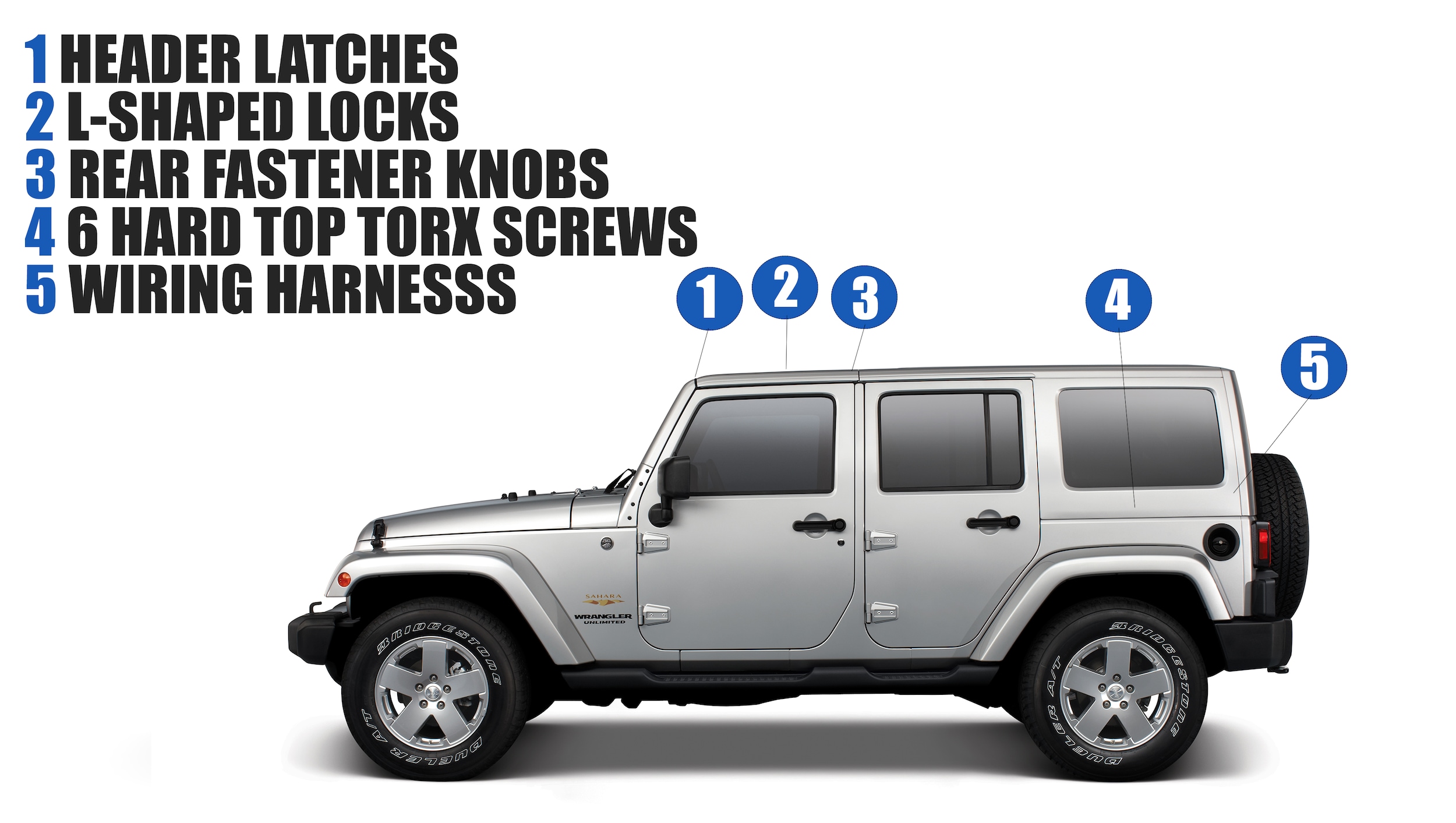
- Turn the latches above the windshield (usually 2-4).
- Unscrew the Torx bolts holding the panels (store bolts in a bag).
- Carefully lift out the panels and set them on a soft surface.
The panels are light enough for one person, but don’t drop them—they can crack.
3. Disconnect Electrical Connectors
Most modern Wranglers have wires for the rear defroster and wiper.
- Open the rear tailgate.
- Find the wiring harness at the rear left (driver’s side).
- Gently unplug the connector by pressing the tab.
- Remove the washer fluid hose (just pull straight out).
This step is critical—pulling the roof without disconnecting these can damage your wiring.
4. Remove Main Hardtop Bolts
The main hardtop is secured with Torx bolts along the inside edges.
- Find all bolts along the roll bar and rear cargo area.
- Use the correct Torx wrench (usually T40 or T50) to unscrew them.
- Place all bolts in a storage bag or tray.
On most Wranglers, you’ll remove 6-8 bolts for the main top.
5. Lift Off The Hardtop
The hardtop is heavy—about 100 to 140 pounds (45–63 kg), depending on the model.
- With a friend, stand on each side of the Jeep.
- Grip the top near the back corners and lift straight up.
- Carefully walk the top backward, clearing the roll bar.
- Set the hardtop on padded ground or a cart.
If you’re alone, consider using a hoist system (see below).
6. Store The Hardtop Safely
Don’t just leave the hardtop on the ground. Damage or scratches can lower its value.
- Place it on a soft blanket or foam pads.
- Keep it in a garage or covered area, away from direct sun and moisture.
- If possible, use a hardtop storage cart for easy movement.
Using A Hardtop Hoist: Easier Removal For One Person
If you often drive solo, a hardtop hoist can make removal simple.
- Ceiling-mounted hoists use pulleys to lift the hardtop.
- Most kits support 120–200 pounds, enough for all Wrangler tops.
- You can remove and store the top in your garage ceiling in less than 15 minutes.
Average cost: $150–$300. Installation takes about an hour.
Pro tip: Always check your ceiling beams can support the load before installing a hoist.
Common Mistakes To Avoid
Beginner Jeep owners often make these errors when removing the hardtop:
- Forgetting to disconnect wiring: This can cause expensive electrical repairs.
- Losing bolts: Always use a hardware bag or magnetic tray.
- Lifting alone: The top is heavy and awkward—get help to avoid injury.
- Storing top on bare ground: This leads to scratches or cracks.
- Forcing stuck bolts: Use gentle pressure and a little WD-40 if needed.
What To Do With The Hardtop Off
Once the roof is off, you have options:
- Install a soft top: Keeps out rain, but easy to fold back.
- Go topless: Perfect for sunny, dry days.
- Add sunshade mesh: Protects from sunburn without losing the open-air feel.
Remember, weather can change quickly. Keep a cover or emergency poncho in your Jeep just in case.
Is It Safe To Drive Without A Hardtop?
Yes, it’s safe and legal in most places. However, consider these points:
- Seat belts: Always wear them—no roof means less rollover protection.
- Loose items: Secure gear inside, as wind will blow things around.
- Rain: Keep an eye on the forecast to avoid getting soaked.
Some US states have rules about doorless or roofless driving. Check your local laws for details.
Hardtop Vs. Soft Top: Quick Comparison
Wondering about using a soft top instead? Here’s how the two compare:
| Feature | Hardtop | Soft Top |
|---|---|---|
| Weather Protection | Excellent | Good |
| Noise Level | Quieter | Louder |
| Security | High | Medium |
| Weight | Heavy | Light |
| Ease of Removal | Harder | Easy |
Most Jeep owners switch between the two based on season or trip type.
How Long Does It Take To Remove A Hardtop?
With the right tools and a helper, the job takes 20–40 minutes for most people. The first time might take longer, but with practice, you can do it faster. Using a hoist adds about 10 minutes for setup but makes solo removal possible.
Real-world Example: Removing A Jl Wrangler Hardtop
Here’s what a typical owner might do:
- Mike owns a 2021 Wrangler JL.
- He parks in his driveway, grabs his T40 wrench and a friend.
- They remove the 6 freedom panel bolts, then the 8 main bolts.
- Mike unclips the wiring harness and washer hose.
- Together, they lift the top and set it on foam pads in the garage.
- Total time: 35 minutes.
Insight: Many beginners forget the washer fluid hose, causing leaks when they reinstall. Always check for two connections at the back.

Credit: www.youtube.com
Cost To Replace A Damaged Hardtop
If you drop or crack your hardtop, replacements are expensive:
- New OEM hardtop: $2,500–$4,000
- Used hardtop: $1,000–$2,000
- Repairs for cracks: $200–$500
Tip: Insurance may cover damage, but check your policy.
Weather Tips For Topless Driving
Without your hardtop, you’re exposed to sun, rain, and wind.
- Use a bikini top or mesh cover for sun protection.
- Store a towel and seat cover for sudden showers.
- In hot climates, seats can get extremely hot—use light towels or covers.
UV rays can fade your interior, so park in shade when possible.
Credit: www.saffordofwinchester.com
Storage Solutions For Your Hardtop
Proper storage prevents warping and damage.
- Hardtop cart: Wheeled carts make moving and storage easy.
- Wall mounts: Keep your top off the ground and save floor space.
- Ceiling hoist: Lift the top overhead for maximum garage room.
Here’s a quick look at storage options:
| Storage Option | Cost | Space Needed | Protection Level |
|---|---|---|---|
| Cart | $150–$300 | Low | High |
| Wall Mount | $50–$100 | Medium | Medium |
| Ceiling Hoist | $150–$350 | None (overhead) | High |
Two Insights Beginners Overlook
- Weatherproofing after removal: With the hardtop off, water can enter the Jeep from the smallest rain. Always close windows fully and keep a waterproof cover in your vehicle.
- Marking your bolts: Many people mix up the bolt locations. Use a labeled organizer or a photo on your phone to match each bolt to its spot for easier reinstallation.

Credit: www.saffordofspringfield.com
Frequently Asked Questions
How Much Does A Jeep Wrangler Hardtop Weigh?
Most Wrangler hardtops weigh between 100 and 140 pounds (45–63 kg), depending on the model and whether it’s a two-door or four-door. This makes it a two-person lift for safety.
Can I Remove The Hardtop By Myself?
It is possible, but not recommended without a hoist system. The top is large and awkward to handle. Using a hoist or getting help from a friend is safest.
Will Removing The Hardtop Void My Warranty?
No, removing your hardtop will not void your warranty if you follow the manufacturer’s instructions. Damaging wiring or hardware during removal, however, may not be covered.
Where Should I Store My Hardtop?
Store your hardtop in a dry, shaded place. Use padded surfaces, a hardtop cart, or a ceiling hoist to avoid scratches or warping. Avoid long-term sun exposure.
Are There Legal Issues With Driving Without A Roof?
Driving without a roof is legal in most US states, but some places require at least side mirrors and seat belts. Always check your local laws.
Taking the hardtop off your Jeep Wrangler opens up a new world of adventure. With the right tools, a little practice, and careful steps, the process becomes easy and routine. Remember to store the top safely, protect your interior from weather, and always secure your gear. For more on Jeep modifications and safety, visit the official Jeep website. Enjoy your open-air experience and drive safe!