
Are Jeep Wranglers Rear Wheel Drive: Essential Facts Explained
 Reading Time: 8 minutes
 Are Jeep Wranglers Rear Wheel Drive?
Jeep Wranglers have a strong reputation for off-road ability and rugged style. Many people wonder about their drivetrain—specifically, whether they are rear wheel drive (RWD), four wheel drive (4WD), or something else. If you’re new to vehicles or considering a Wrangler, understanding the basics is important for making the right choice.
This article explains whether Jeep Wranglers are rear wheel drive, how their drivetrain works, and what that means for daily driving and off-roading. You’ll also see practical examples, data tables, and clear answers to common questions.
What Does Rear Wheel Drive Mean?
Rear wheel drive means that the engine sends power only to the rear wheels. Most classic sports cars and trucks use this setup. Rear wheel drive offers:
- Better acceleration on dry roads
- Simpler mechanics than all wheel drive systems
- Good for towing and handling heavy loads
However, rear wheel drive can be less effective on slippery surfaces like snow or mud. In these conditions, the rear wheels may lose traction.
Are Jeep Wranglers Rear Wheel Drive?
Most Jeep Wranglers are not pure rear wheel drive. Instead, almost all Wrangler models come standard with four wheel drive (4WD). This means power can go to all four wheels when needed.
But there’s a detail many beginners miss: Wranglers use a part-time 4WD system. In normal driving, you use “2H” (two-wheel drive, high range) mode, which sends power only to the rear wheels. So, on paved roads, a Wrangler acts like a rear wheel drive vehicle. When you switch to “4H” or “4L,” power goes to all wheels.
In summary:
- Most Wranglers = Part-time 4WD (rear wheels in 2H, all wheels in 4H/4L)
- No modern Wrangler is rear wheel drive only

Credit: www.lutherauto.com
How The Jeep Wrangler Drivetrain Works
Jeep Wranglers use a transfer case to control how power flows. Here’s how it works in simple terms:
- 2H (Two-Wheel Drive, High Range):
- Power goes only to the rear wheels.
- Used for everyday driving on dry pavement.
- 4H (Four-Wheel Drive, High Range):
- Power splits between front and rear wheels.
- Used for rain, mud, gravel, or snow.
- 4L (Four-Wheel Drive, Low Range):
- Power splits, but with extra torque.
- Used for off-roading, climbing, or deep snow.
This table shows how each mode works:
| Mode | Wheels Powered | When to Use |
|---|---|---|
| 2H | Rear Only | Dry roads, city driving |
| 4H | Front & Rear | Rain, light off-road, snow |
| 4L | Front & Rear (low gear) | Steep hills, rocks, deep mud |
Key Insight For Beginners
Many first-time Jeep owners don’t realize that using 4WD on dry pavement can damage the drivetrain. Always use 2H for regular roads, and save 4H/4L for loose or slippery surfaces.
Generations And Drivetrain Options
Jeep Wrangler has evolved through several generations:
- YJ (1987–1995)
- TJ (1997–2006)
- JK (2007–2018)
- JL (2018–present)
All mainstream Wranglers since 1987 have used part-time 4WD as standard. The Jeep Wrangler 4xe (plug-in hybrid) and some special trims add all wheel drive (AWD) for better traction, but pure RWD is not offered.
Here’s a quick look at recent Wrangler drivetrains:
| Model Year | Default Drivetrain | Selectable Modes |
|---|---|---|
| 1987–2006 (YJ, TJ) | Part-time 4WD | 2H, 4H, 4L |
| 2007–2018 (JK) | Part-time 4WD | 2H, 4H, 4L |
| 2018–present (JL) | Part-time 4WD / AWD (optional) | 2H, 4H, 4L, Auto (AWD) |
What About 2wd Jeep Wranglers?
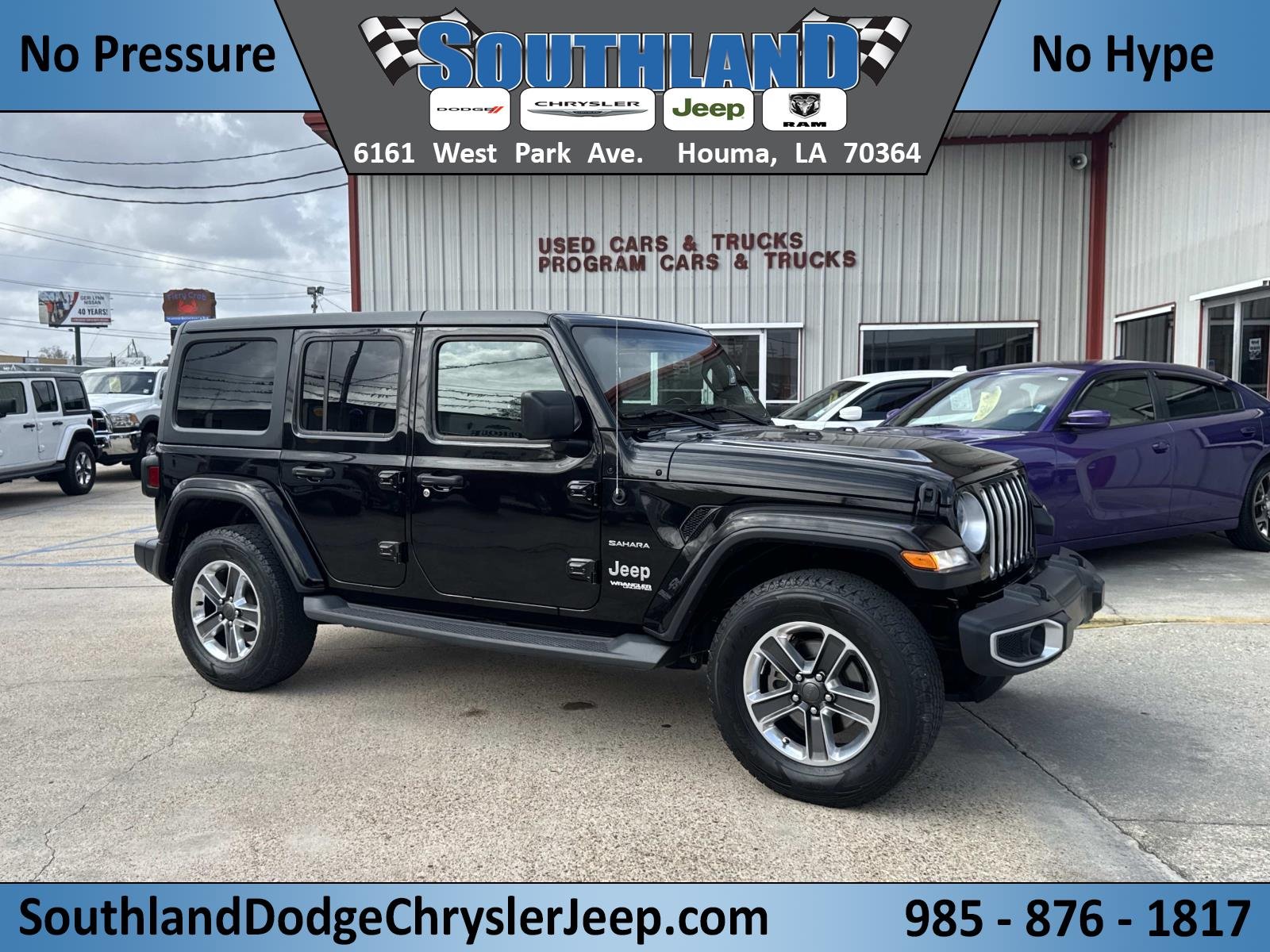
Some early Jeep models (like the CJ series) had rear wheel drive, but Wranglers sold in the US are almost always 4WD. Very rare export or fleet models may have been 2WD, but this is not standard.
Credit: www.southlanddodgechryslerjeep.com
Real-world Example: Driving A Wrangler In Everyday Life
Let’s say you drive a 2022 Jeep Wrangler JL. Here’s what you’ll experience:
- On a sunny day, you keep the transfer case in 2H. Your Wrangler acts like a rear wheel drive SUV.
- It rains or snows. You shift to 4H for better grip. Now, both axles get power.
- Off-road on a steep hill? Switch to 4L for extra torque.
This flexibility is why Wranglers are popular for both city and adventure use. Most people use 2H 90% of the time.
4wd Vs. Rear Wheel Drive: Key Differences
It’s easy to confuse 4WD and RWD, but they have clear differences. Here’s a simple comparison:
| Feature | Rear Wheel Drive (RWD) | Jeep Wrangler (Part-time 4WD) |
|---|---|---|
| Wheels Powered (Default) | Rear | Rear (2H Mode) |
| Can Switch to 4WD? | No | Yes |
| Off-Road Ability | Low | High |
| Winter Traction | Lower | Higher (with 4H/4L) |
| Fuel Economy | Usually better | Lower (4WD adds weight) |
| Complexity | Simple | More complex |
Why Jeep Uses Part-time 4wd
Jeep’s part-time system gives drivers control. You decide when you want extra traction. This system is:
- Proven: Jeep has used it for decades.
- Durable: Fewer electronics, more mechanical parts.
- Simple to maintain: Less to go wrong compared to full-time AWD.
Some newer models (like the Sahara and Rubicon) offer a full-time “Auto” mode. This acts like all wheel drive—you never need to think about switching modes.
Common Beginner Mistakes And Tips
If you’re new to Jeep Wranglers, it’s easy to make a few mistakes. Avoid these:
- Using 4WD on dry pavement: This can damage the transfer case and tires. Use 2H unless roads are slippery.
- Forgetting to shift out of 4WD: After leaving snow or mud, return to 2H for better fuel economy and handling.
- Assuming all Wranglers are AWD: Only some trims have full-time AWD. Most are part-time 4WD.
Two Practical Tips
- Practice shifting: Try switching between 2H and 4H in an empty parking lot. Learn how the lever feels.
- Check your owner’s manual: Each Wrangler generation has small differences. Always follow the guide for your model.
Off-roading: Why 4wd Matters
Wranglers are famous for their off-road performance. 4WD makes this possible. Here’s why:
- Climbing: 4WD splits power, so if one wheel slips, others keep moving.
- Mud and sand: All four tires dig in, giving more grip.
- Safety: On steep or loose surfaces, 4WD prevents getting stuck.
Rear wheel drive alone is rarely enough for serious off-roading. This is why Jeep insists on 4WD as standard.
Fuel Economy: Rwd Vs. 4wd
One reason some people want rear wheel drive is for better fuel economy. 4WD adds weight and mechanical drag. But because Wranglers can run in 2H mode, their fuel use is close to RWD SUVs when in that mode.
Here’s a typical fuel economy comparison:
- Jeep Wrangler (4WD): 17–25 mpg (varies by engine)
- Mid-size SUV (RWD): 20–27 mpg
The difference is small for most drivers, especially if you mostly use 2H.
Weather And Traction: Everyday Scenarios
In rain, snow, or ice, 4WD is a big advantage. Here’s how to use it:
- Rain: If you feel wheels slipping, switch to 4H.
- Snow/Ice: 4H gives better control. If stuck, use 4L.
- Dry roads: Always use 2H for best results.
Remember, good tires are just as important as 4WD. Even the best system can’t help with bald tires.
Do All Wranglers Have Four Wheel Drive?
Almost all Wranglers have 4WD. Here’s what you need to know:
- Standard: Part-time 4WD on all trims
- Optional: Full-time AWD on Sahara, Rubicon, 4xe, and some special editions
- No RWD-only option in current US models
If you want a rear wheel drive Jeep, you’ll need to look at other models like the Jeep Grand Cherokee (base trims).
Used Wrangler Buyers: What To Watch For
If you’re buying a used Wrangler, always check:
- Transfer case works: Test shifting from 2H to 4H and 4L.
- No strange noises: Clicking or grinding can mean worn gears.
- Owner’s manual present: Ensure you know how to use the system.
Don’t be shy about asking for a short test drive on a loose surface. A working 4WD system is key to Wrangler value.
Wrangler Drivetrain In Everyday Language
To sum up, think of your Wrangler like this:
- On regular days, it’s a rear wheel drive SUV (in 2H).
- When you need more grip, it becomes four wheel drive.
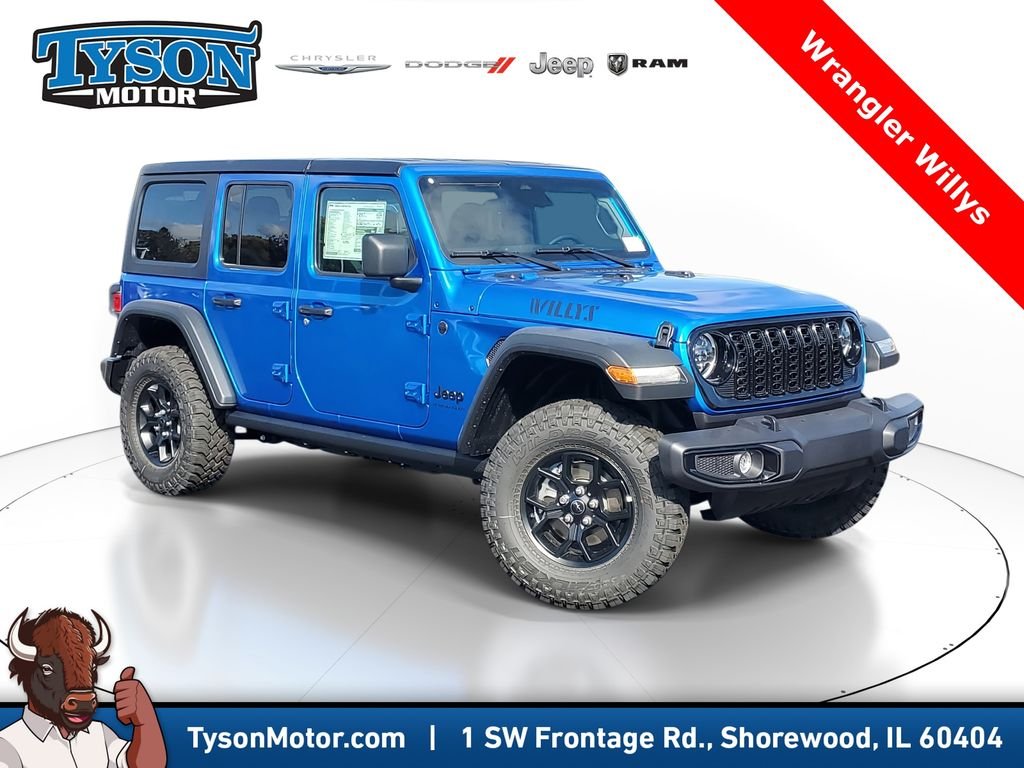
- No Wrangler is only rear wheel drive—part-time 4WD is standard.
This is a big reason Wranglers hold their value and have a loyal following.
Credit: www.tysonmotor.com
Are There Any Pure Rwd Jeeps?
Yes, but not Wranglers. Some other Jeep models—like base trims of the Compass, Cherokee, and Grand Cherokee—can be ordered as front or rear wheel drive. But the Wrangler is designed for adventure, so Jeep keeps 4WD standard.
For more technical details, see the Jeep Wrangler Wikipedia page.
Frequently Asked Questions
Is It Safe To Drive A Jeep Wrangler In 2h All The Time?
Yes. For dry roads and highways, 2H is the best mode. It saves fuel and reduces wear. Only use 4H or 4L when roads are slippery or you’re off-road.
Can I Drive In 4wd (4h) All The Time?
No. Driving in 4H on dry pavement can damage the drivetrain and tires. Use 4H only when roads are wet, snowy, or loose.
Do Any New Jeep Wranglers Come With Rear Wheel Drive Only?
No. All US Wrangler models come with part-time 4WD or, in some trims, full-time AWD. There is no RWD-only Wrangler currently available.
Is A Jeep Wrangler Good For Snow And Ice?
Yes, if you use 4H or 4L. The 4WD system gives much better traction than RWD alone. Always use good winter tires for best results.
How Do I Know If My Wrangler Is In 2h Or 4h?
Check the lever or dial near the gear shifter. The dashboard may also show a light when 4WD is engaged. Shift only when stopped or moving slowly, as your owner’s manual recommends.
Jeep Wranglers offer a flexible drivetrain system that suits many needs. While they aren’t rear wheel drive-only, their part-time 4WD system lets you enjoy the best of both worlds. If you understand how to use each mode, your Wrangler will perform well on the street, in snow, and off-road—making it a smart choice for drivers who want adventure and confidence.