How To Change Cabin Air Filter On Jeep Cherokee KL: DIY
 Reading Time: 11 minutes
Changing the cabin air filter on a U.S.-market Jeep Cherokee KL is a simple job that usually takes about 15 to 30 minutes. The filter sits behind the glove box. In most Cherokee KL models, you can replace it with basic hand tools, or no tools at all.
A clean filter helps reduce dust, pollen, smoke, and road debris inside the cabin. Replace the filter with the correct part for your Cherokee’s model year, engine, and HVAC system.
Before You Start
Confirm that your vehicle is a Jeep Cherokee KL. In the United States, the KL generation generally covers the 2014 through 2023 model years. Filter shape and fit can vary by year, trim, and supplier, so check the vehicle fit guide before buying a replacement.
What you need
- A new cabin air filter
- A small flashlight
- A clean cloth or vacuum
- A trim tool, if needed
- Your Jeep Cherokee owner’s manual
Most replacements do not require a screwdriver. However, some filter covers or glove-box parts may fit tightly. A plastic trim tool can help prevent scratches.
Safety steps
- Park the Jeep on a level surface.
- Turn off the ignition.
- Remove the key or keep the key fob away from the vehicle.
- Set the parking brake.
- Keep the glove box open while you work.
- Do not force plastic clips in cold weather, since they can break more easily.
You do not need to disconnect the battery for a normal cabin filter replacement. Avoid disturbing wiring, air-bag parts, or electrical connectors behind the glove box.
How often should you replace it?
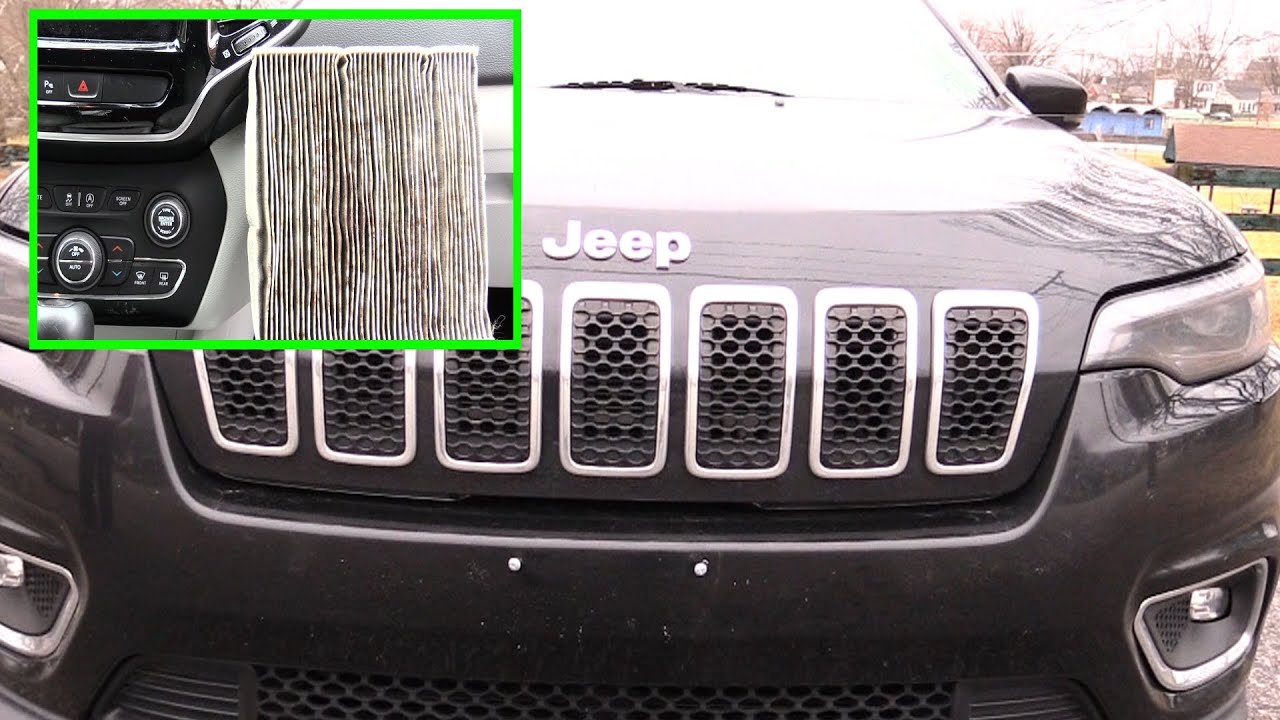
Jeep service schedules can vary by model year and driving conditions. A practical interval is about every 15,000 to 30,000 miles, but dusty roads, wildfire smoke, heavy traffic, construction zones, and high pollen can shorten that interval.
Replace the filter sooner if you notice:
- Weak airflow from the vents
- A musty or dirty smell
- More dust inside the cabin
- Fan noise caused by leaves or debris
- Fogging that takes longer than normal to clear
- Reduced airflow when the fan is on high
The filter is not the same as the engine air filter. The cabin filter cleans air entering the passenger compartment, while the engine air filter protects the engine intake.

How to Change the Cabin Air Filter on a Jeep Cherokee KL
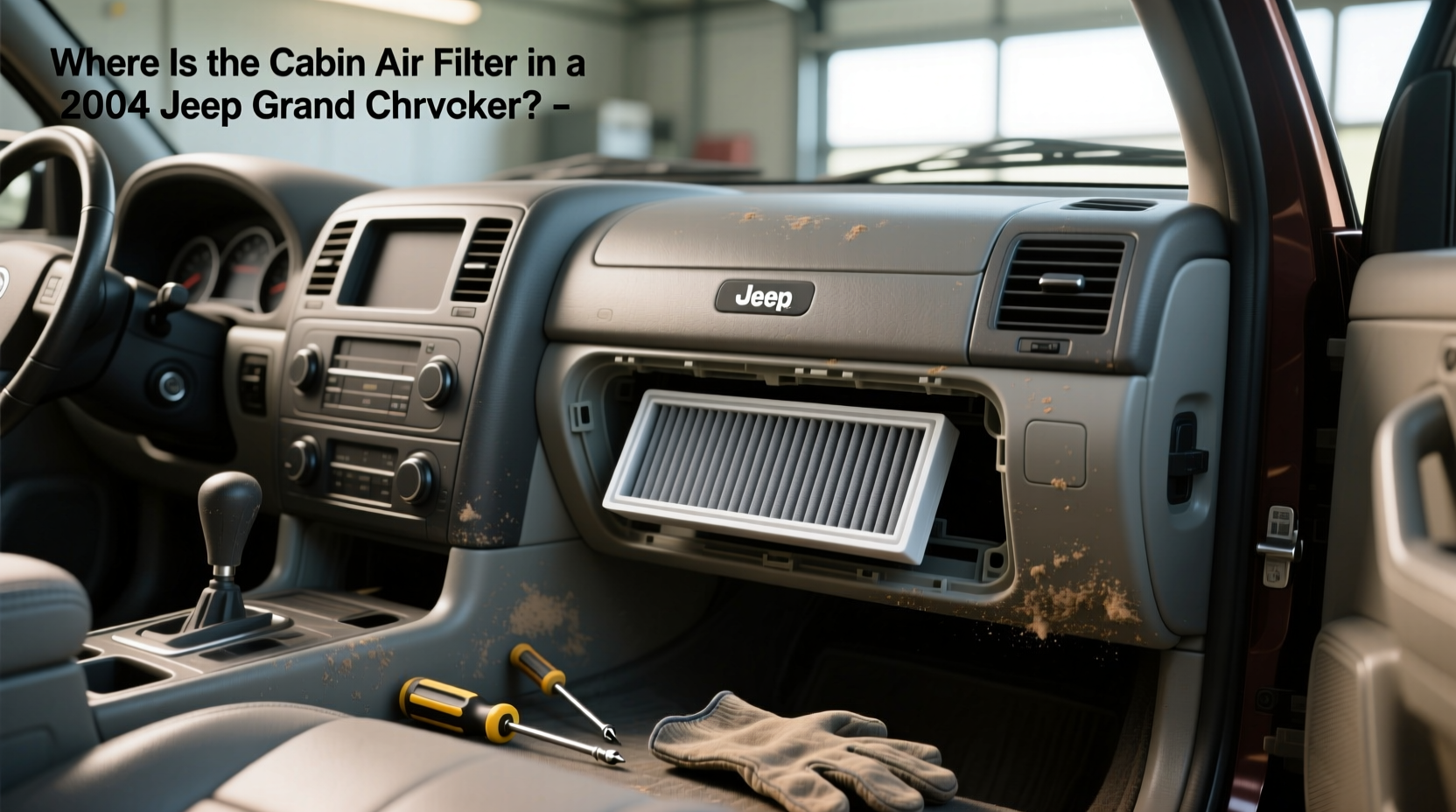
The filter is behind the glove box. You will first lower or remove the glove box, then remove the filter access cover and slide out the old filter.
1. Empty the glove box
Remove all items from the glove box. Small items can fall behind the box and block the filter cover.
Open the glove box fully. Look for a small damper cord or strap on the side of the glove box. Depending on the model year, this cord may limit how far the box opens.
2. Release the glove-box stops
The glove box uses side stops to keep it from dropping too far. Press inward on the sides of the glove box near the upper edges. This allows the stops to pass the opening.
Some Cherokee KL models may need a slightly different release motion. If the box does not lower, inspect the sides for a retaining tab or stop rather than pulling harder.
Let the glove box drop gently. Do not allow it to hang by a damper cord or wiring.
3. Disconnect the glove-box damper
If your Cherokee has a damper cord or strap, disconnect it from the glove box or its mounting point. The exact attachment style can differ by model year.
Use your fingers when possible. If a small plastic clip resists removal, use a plastic trim tool. Do not pry against painted surfaces or pull on nearby wiring.
After the damper is disconnected, lower the glove box farther or remove it from the opening, depending on the design of your vehicle.
4. Locate the cabin filter cover
Look behind the glove box toward the HVAC housing. You should see a narrow rectangular cover. This cover protects the cabin air filter.
The cover usually has a retaining tab or clips. Use your fingers to release the tab. If it is tight, gently use a plastic trim tool.
Do not remove unrelated panels. The cabin filter access cover is normally a small, rectangular door directly behind the glove-box area.
5. Remove the old filter
Pull the filter straight out of the HVAC housing. If space is limited, bend the filter slightly as it comes out, but do not tear it and leave pieces inside the housing.
Pay attention to:
- The airflow arrow
- The filter’s position
- The direction of the pleats
- Any foam edge or sealing strip
- Leaves, dirt, or moisture inside the housing
Take a photo before removal if you are unsure about the filter direction.
6. Inspect and clean the filter housing
Use a flashlight to inspect the empty filter slot. Remove loose leaves and dirt with a vacuum or clean cloth.
Do not spray cleaner into the HVAC housing. Moisture can damage electrical parts, create odors, or encourage mold growth. If you find standing water, heavy mold, or a damaged housing, stop and investigate the cause before installing the new filter.
7. Install the new filter
Compare the new filter with the old one before inserting it. The length, width, thickness, and sealing edge should match.
Follow the airflow arrow printed on the replacement filter. On many Jeep Cherokee KL filters, the arrow points downward, but the marking on your replacement filter is the best guide. Filter brands can use different markings, so do not rely on memory alone.
Slide the filter into the housing without crushing the pleats. The filter should sit flat and fill the opening. If it does not fit, remove it and check the direction. Never force a filter that is too large or incorrectly shaped.
8. Reinstall the filter cover
Place the access cover back over the filter. Press it into position until the retaining tab or clips lock.
Check the edges of the cover. It should sit evenly, with no large gaps. A loose cover can allow unfiltered air to bypass the filter and may cause rattles.
9. Reinstall the glove box
Reconnect the glove-box damper or strap. Align the glove box with its supports, then press the sides inward as needed so the stops pass back into place.
Close the glove box slowly. Make sure it latches and sits level with the surrounding dashboard.
10. Test the HVAC system
Start the Jeep and run the blower at several speeds. Test the air from the dash, floor, and defrost vents.
Confirm that:
- Airflow is normal
- The blower does not make a new scraping sound
- The glove box closes correctly
- No trim panel rattles
- The air does not have a new plastic or musty odor
A small amount of loose dust may blow out after replacement. Persistent odor or weak airflow may point to another HVAC problem.

Filter Direction and Fit
The airflow arrow is the safest way to install a Jeep Cherokee KL cabin filter. The arrow shows the direction air should move through the filter, not necessarily the direction the filter slides into the housing.
Many Cherokee KL replacement filters use a downward airflow direction. However, the correct direction can depend on the filter design and marking. If the filter says “air flow” with an arrow, follow that arrow. If it says “UP,” follow the “UP” marking instead.
What if the new filter does not fit?
Check these items in order:
- Confirm the filter part number matches your model year.
- Compare the old and new filter dimensions.
- Check whether the filter is upside down.
- Look for a bent pleat or damaged sealing edge.
- Make sure the access cover is fully removed.
- Check for debris inside the filter slot.
Do not trim the filter to make it fit. A modified filter may leak around the edges or collapse inside the housing.
Why filter design matters
Cabin filters may be made from:
- Standard pleated paper
- Synthetic fiber
- Activated carbon
- Anti-odor or odor-control media
A basic particulate filter can catch common dust and pollen. A carbon filter may help reduce some odors and certain gases, but it does not remove every exhaust odor or replace a functioning HVAC system.
The most important features are correct fit, proper sealing, and the correct airflow direction.
Common Problems After Replacement
Most problems come from an incorrect filter, a loose cover, or debris left in the housing.
Weak airflow
Possible causes include:
- The filter is installed backward
- The filter is too thick
- The filter is not fully seated
- The blower motor has debris
- The evaporator or HVAC case is dirty
- Another vent or duct is blocked
Remove the filter and compare its direction with the airflow marking. If airflow remains weak with the filter removed briefly for testing, the problem may be deeper in the HVAC system.
Do not operate the vehicle for long without the filter. Use this only as a short diagnostic check.
New rattling or fan noise
A leaf or piece of old filter material may have fallen into the blower area. The filter cover may also be loose.
Turn the blower off and inspect the filter housing. If the noise continues, do not reach into the blower while it is connected or running. A technician may need to inspect the blower motor and fan wheel.
Musty smell remains
A new filter may not remove an odor already present in the HVAC case. Common causes include moisture, a dirty evaporator, wet carpeting, or a blocked drain.
Check for dampness around the passenger-side floor and glove-box area. If the carpet is wet or the odor returns quickly, have the HVAC system inspected rather than repeatedly replacing filters.
The glove box will not close
Check that:
- The damper cord is connected correctly
- The glove box stops are seated
- No wiring is trapped
- The filter cover is fully locked
- The filter is not protruding from the housing
- Items inside the glove box are not blocking the latch
Never force the glove box shut. Misaligned plastic parts can crack or prevent the latch from working.
Cabin Air Filter Replacement Checklist
Use this checklist before finishing the job:
- The replacement filter matches the Jeep Cherokee KL model year.
- The old filter was removed without leaving debris behind.
- The filter housing is clean and dry.
- The airflow arrow is in the correct direction.
- The filter is fully seated.
- The access cover is locked.
- The glove-box damper is connected.
- The glove box opens and closes normally.
- The blower works at all speeds.
- No new rattle or scraping sound is present.
A filter replacement is successful when the filter fits evenly, the cover seals, the glove box latches, and the HVAC system produces normal airflow without new noise.

How Much Does It Cost to Replace a Jeep Cherokee KL Cabin Filter?
A do-it-yourself replacement usually costs the price of the filter. The final amount depends on the brand, filter material, and local U.S. pricing.
A repair shop or dealership will charge for both the filter and labor. Professional replacement may make sense if:
- The glove box or dashboard is damaged
- The filter cover will not release
- Water is entering the HVAC case
- The blower motor is noisy
- You find mold or heavy contamination
- You are not comfortable working near dashboard wiring
The filter itself is a routine maintenance item. A damaged HVAC housing or blower system is a separate repair and should not be treated as a filter problem.

Frequently Asked Questions
Does a Jeep Cherokee KL have a cabin air filter?
Yes. U.S.-market Jeep Cherokee KL models use a cabin air filter in the HVAC air inlet behind the glove box. The exact filter part number can vary by model year and configuration.
Which way does the Jeep Cherokee cabin air filter go?
Install the filter according to the airflow arrow or “UP” marking printed on the filter. Many Cherokee KL filters use a downward airflow direction, but always follow the marking on the filter you purchased.
Do I need tools to change the filter?
Usually, no. The glove box and filter cover are commonly released by hand. A plastic trim tool and flashlight can help if the parts are tight or difficult to see.
Can I wash and reuse the cabin air filter?
Most paper and synthetic cabin filters are disposable. Washing them can damage the filter media and reduce filtration. Replace a dirty disposable filter instead.
Some reusable filters are designed for cleaning, but they must be specifically labeled as washable and reusable. Follow that product’s care instructions.
Why does my Jeep still smell after I install a new filter?
The odor may come from moisture, mold, a dirty evaporator, wet carpet, or a blocked HVAC drain. A new filter cannot clean contamination already inside the HVAC case. If the smell returns quickly, inspect the vehicle for water entry or seek professional diagnosis.
How do I know whether my filter needs replacement?
Inspect it for gray or black dirt, packed dust, leaves, moisture, or a damaged frame. Reduced airflow and musty odors are also useful signs. Replace it based on condition and driving environment, not mileage alone.
Conclusion
To change the cabin air filter on a Jeep Cherokee KL, empty and lower the glove box, remove the filter cover, slide out the old filter, and install the new one in the marked airflow direction. Clean the housing, lock the cover, reconnect the glove-box damper, and test the blower.
Use a filter made for your exact Cherokee model year. If the new filter does not fit, airflow remains weak, or moisture and odors continue, treat the issue as an HVAC inspection rather than forcing another filter into place.