

How To Fix Jeep JK Electronic Throttle Light: Easy Guide
 Reading Time: 12 minutes
If the electronic throttle control light comes on in a 2007–2018 Jeep Wrangler JK, first scan the Jeep for diagnostic trouble codes. Then inspect the battery, throttle body, accelerator pedal sensor, wiring, and related connectors. Many JK throttle faults come from low system voltage, dirty throttle components, damaged wiring, or a failing sensor.
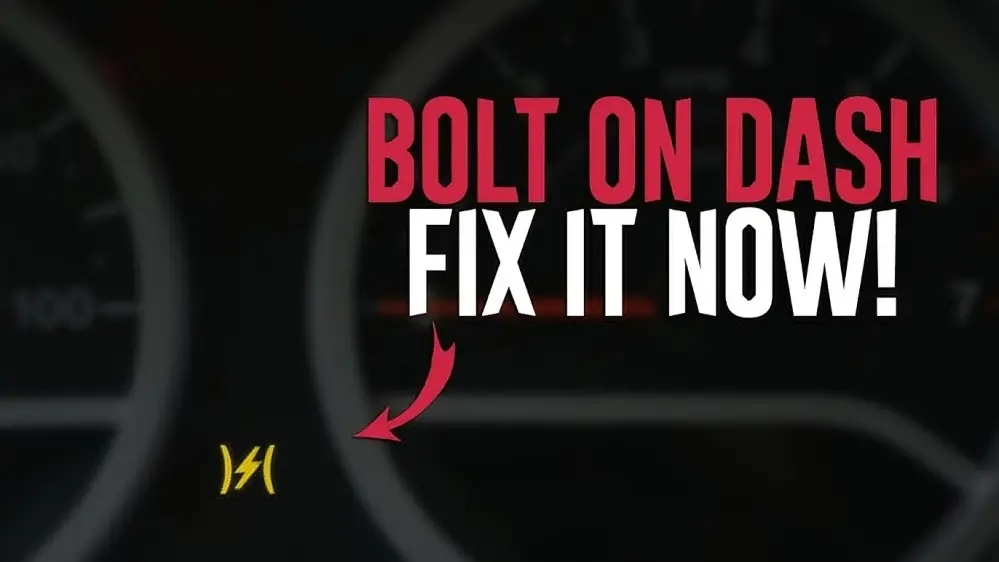
A flashing lightning-bolt symbol, reduced engine power, rough idle, stalling, or poor throttle response means the Jeep may have entered limp mode. Drive only far enough to reach a safe place or repair shop if the Jeep cannot respond normally to the accelerator.
This guide applies to Jeep Wrangler JK models sold in the United States, including versions with the 3.8L and 3.6L engines. Component details and relearn steps can vary by model year and engine.
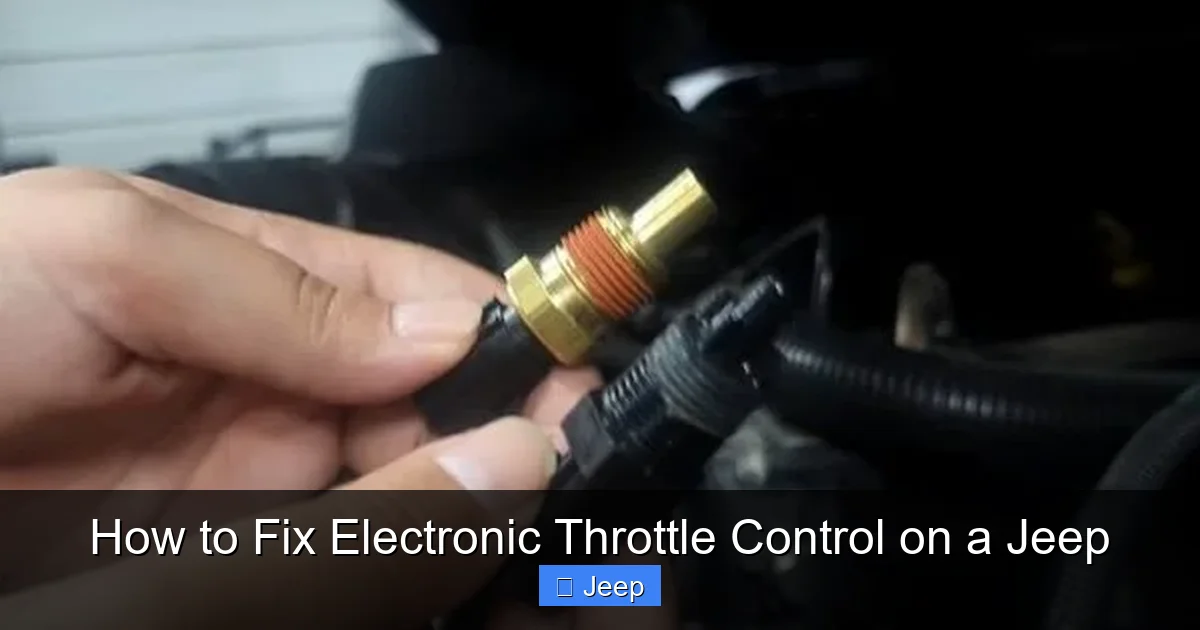
What the Electronic Throttle Control Light Means
The electronic throttle control system controls engine power without a traditional mechanical cable between the accelerator pedal and throttle plate. The system uses several parts that must agree with one another:
- Accelerator pedal position sensors
- Throttle position sensors
- Electronic throttle motor
- Engine computer, also called the PCM
- Wiring and electrical connectors
- Battery and charging system
When you press the accelerator, the pedal sensors send a signal to the PCM. The PCM then moves the throttle plate with an electric motor. It compares the requested throttle position with the actual position.
If the signals do not match, the PCM may turn on the red lightning-bolt warning light and limit engine power.
Common symptoms
A throttle control problem may cause:
- Slow or delayed acceleration
- High or low idle
- Engine stalling
- Surging
- A throttle pedal that feels unresponsive
- Reduced power message
- Check engine light
- Difficulty starting
- The Jeep entering limp mode
A warning light by itself does not prove that the throttle body is bad. The same light can result from a weak battery, a bad connector, or an accelerator pedal sensor fault.

Is It Safe to Drive With the Throttle Control Light On?
Drive only if the Jeep responds normally and the light is steady. Avoid highways, steep hills, towing, and heavy traffic until you find the cause.
Stop driving and arrange a tow if:
- The light is flashing
- The Jeep has little or no throttle response
- The engine stalls repeatedly
- The engine races at idle
- The Jeep cannot maintain a safe speed
- Multiple warning lights appear
- You smell burning plastic or see damaged wiring
The throttle system is related to engine power control. A sudden loss of power can create a serious risk in traffic. Do not keep driving simply because the Jeep still moves.

First Step: Scan the Jeep for Trouble Codes
The best first repair step is to use an OBD-II scan tool. A scan tool reads the code stored by the PCM and helps identify which circuit needs testing.
Plug the tool into the OBD-II port below the dashboard. Turn the ignition on without starting the engine, then follow the tool instructions.
Common codes may include:
| Code | General meaning | Possible area to inspect |
|---|---|---|
| P0121 | Throttle position sensor range or performance | Throttle body or wiring |
| P0221 | Throttle position sensor “B” range or performance | Throttle body circuit |
| P2101 | Throttle actuator motor range or performance | Throttle body, motor, or wiring |
| P2110 | Forced limited power | Often a result of another throttle fault |
| P2135 | Throttle position sensor correlation | Sensor signals or connector |
| P2138 | Accelerator pedal position correlation | Pedal sensor or wiring |
These descriptions are general. The exact meaning can depend on the model year, engine, and other stored codes.
Read codes before clearing them
Write down all stored and pending codes before clearing anything. Also record freeze-frame data if the scan tool provides it. This data may show engine speed, battery voltage, temperature, and vehicle speed when the fault occurred.
Do not replace the throttle body only because you see a code related to the throttle. A code identifies a circuit or performance problem. It does not always identify the failed part.
Check for related codes
Look for codes involving:
- Low battery voltage
- Charging voltage
- Accelerator pedal position
- Throttle position
- CAN communication
- Engine ground or power supply
A low-voltage code can appear before a throttle code. In that case, test the battery and charging system before installing throttle parts.
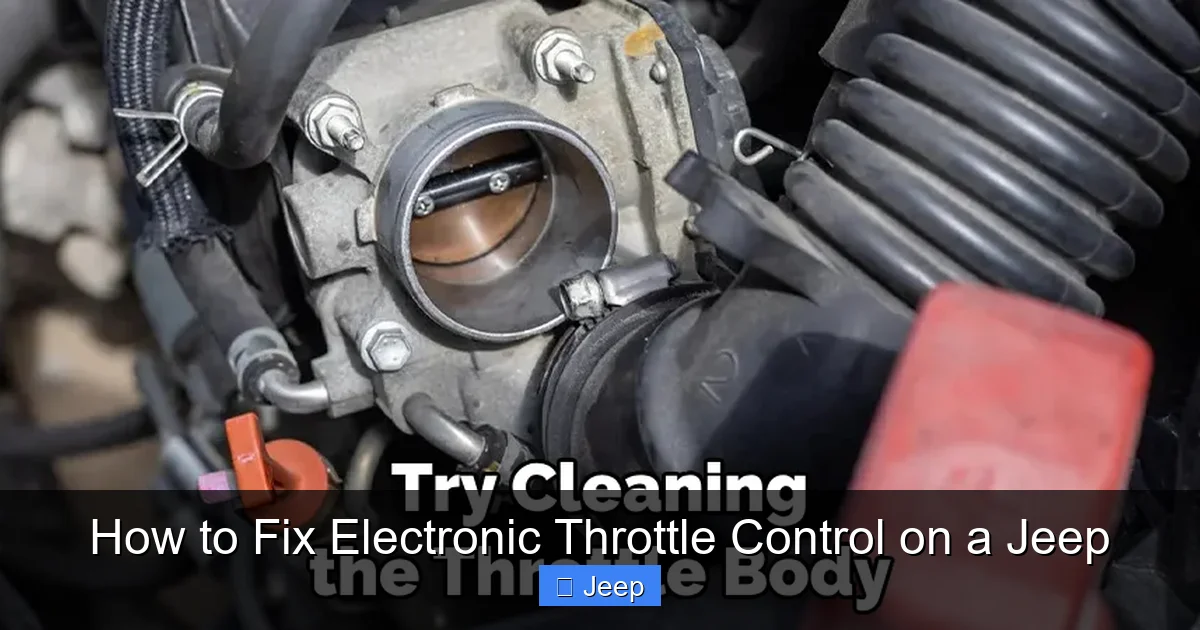
Check the Battery and Charging System
A weak battery is one of the easiest causes to overlook. Electronic throttle systems need stable voltage. A weak battery, poor terminal connection, or failing alternator can create false sensor faults.
With the Jeep off for several hours, a fully charged 12-volt battery often measures about 12.6 volts at the terminals. A much lower reading suggests a low state of charge or a battery problem, but voltage alone does not prove that the battery is healthy.
With the engine running, charging voltage should remain stable. The exact reading can vary with temperature, load, and charging strategy. A professional battery and alternator test is more useful than a single voltage check.
Inspect:
- Battery terminals for looseness or corrosion.
- The negative cable where it connects to the engine and body.
- The positive cable and main fuse connections.
- Engine ground straps.
- Alternator wiring.
- Voltage drop during cranking.
Clean and tighten the connections if needed. Disconnect the negative battery cable before cleaning heavily corroded terminals, and keep metal tools from touching both battery terminals at once.
If the battery is weak, charge or replace it before continuing. Then clear the codes only after recording them and see whether the fault returns.
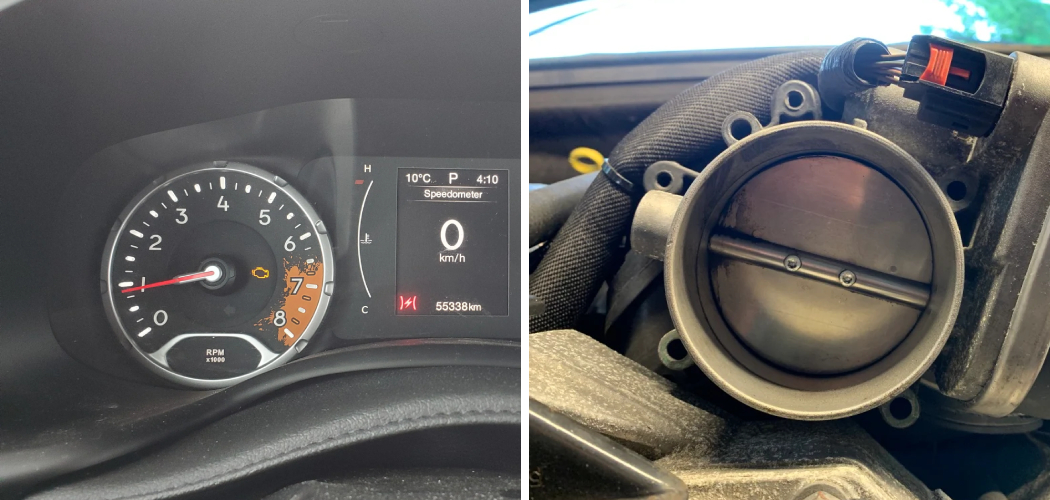
Inspect the Throttle Body and Air Intake
The throttle body controls the air entering the engine. Dirt around the throttle plate can affect idle and throttle movement, but cleaning is not a guaranteed fix for every electronic throttle warning.
With the engine off, inspect the air tube between the air filter housing and throttle body. Look for:
- Cracks
- Loose clamps
- Disconnected hoses
- Oil-soaked areas
- Damaged wiring near the intake
- A throttle body connector that is not fully locked
If the throttle body is dirty, remove the intake tube as needed. Use throttle-body cleaner on a clean cloth. Do not flood the throttle body or spray cleaner into the electrical motor housing.
Do not force the throttle plate open with excessive pressure. The plate is connected to an electric motor and position sensors. Rough handling can damage the assembly.
After cleaning, allow the cleaner to evaporate. Reconnect the intake tube and make sure every clamp is tight. An intake leak can cause poor idle, although it is not the most common cause of a red lightning-bolt light.
When cleaning will not solve the problem
Cleaning is unlikely to repair:
- A failed throttle motor
- A worn internal position sensor
- Broken wiring
- A damaged connector
- A failed accelerator pedal sensor
- A PCM fault
If the same code returns immediately after cleaning, continue diagnosis instead of repeating the cleaning process.

Inspect the Throttle Body Connector and Wiring
The throttle body sits in an area exposed to heat, water, dirt, and engine movement. A loose terminal or damaged wire can interrupt the sensor signal and trigger the warning light.
With the ignition off, inspect the throttle body connector. Look for:
- Bent or pushed-back pins
- Green corrosion
- Moisture
- Broken locking tabs
- Chafed insulation
- Wires pulled tight near the connector
- Oil or dirt inside the plug
Check the accelerator pedal connector too. The pedal assembly contains position sensors, and its wiring can be disturbed by water, trim work, or movement around the driver footwell.
Do not probe sealed connectors with oversized test leads. A damaged terminal may lose tension and create a new fault. Use proper back-probe tools and a wiring diagram when checking circuits.
A digital multimeter can help test:
- Reference voltage
- Sensor ground
- Signal voltage
- Continuity
- Voltage drop under load
The exact pin locations and expected values vary by year and engine. Use a factory service manual or reliable wiring information for your specific Wrangler JK. Do not apply battery voltage to a sensor signal wire.

Test the Accelerator Pedal Position Sensor
The accelerator pedal assembly uses electronic position sensors. The PCM compares the signals from those sensors. If they disagree, the Jeep may limit throttle operation.
Possible signs of a pedal sensor problem include:
- No response when pressing the pedal
- Intermittent acceleration
- A throttle light that appears when moving the pedal
- A P2138-type correlation code
- Normal throttle body wiring but incorrect pedal signals
A scan tool that displays live data can show accelerator pedal position. Press the pedal slowly while watching the readings. The values should change smoothly rather than jump, drop out, or disagree.
This test is more useful than simply guessing from the warning light. If the signal drops out when the pedal moves, inspect the pedal connector and wiring before replacing the pedal assembly.
Do not confuse the accelerator pedal sensor with the throttle position sensor. The pedal tells the PCM what the driver requests. The throttle position sensor reports what the throttle plate actually does.

Decide Whether the Throttle Body Needs Replacement
Replace the throttle body only after basic power, ground, wiring, and sensor checks support that conclusion.
A throttle body becomes more likely when:
- The same throttle motor or position code returns
- Power and ground are correct
- The connector and wiring pass inspection
- The throttle plate binds or the motor does not respond
- Live data shows an incorrect or unstable throttle position
- The fault remains after battery voltage is confirmed
Use the correct throttle body for the Jeep’s engine and model year. The 3.8L and 3.6L engines do not use identical parts in every application.
Before installing a part, compare the connector, mounting pattern, throttle opening, and catalog application. A visually similar part may not communicate correctly with the PCM.
Used throttle bodies can create repeat faults if their internal sensors are worn. A new or properly remanufactured part from a reliable source may reduce that risk, but the diagnosis still matters.
Clear the Code and Complete the Throttle Relearn
After the repair, use a scan tool to clear the stored codes. Then follow the correct throttle or idle relearn procedure for the specific Jeep.
Some JK models can complete learned-position steps through an ignition cycle. Other repairs may require a scan tool or a factory service procedure. Do not rely on a generic “pedal dance” unless it is documented for your exact engine and year.
A safe post-repair process is:
- Confirm that the throttle body, intake tube, and connectors are secure.
- Start the engine without pressing the accelerator.
- Let the engine idle and reach normal operating temperature.
- Watch for warning lights or unstable idle.
- Use a scan tool to check live throttle and pedal data.
- Take a short road test in a safe area.
- Rescan the Jeep for pending and stored codes.
If the warning light returns, the repair is not complete. A code that returns during the road test provides useful evidence about the remaining fault.
Disconnecting the battery may erase some learned values, but it does not repair a failed sensor or wiring problem. It can also erase useful diagnostic information and reset other vehicle settings.

Quick Diagnostic Decision Table
Use this table as a starting point, not as a substitute for testing.
| Symptom or finding | More likely areas | Best next step |
|---|---|---|
| Warning appears after a weak start | Battery, terminals, grounds | Load-test battery and inspect connections |
| P2138 or pedal correlation code | Accelerator pedal sensor or wiring | Check pedal live data and connector |
| P2101 returns after cleaning | Throttle body, motor, wiring | Test power, ground, and position signals |
| Light appears after rain or washing | Connector moisture or damaged wiring | Inspect and dry connectors; repair seals |
| Throttle plate sticks physically | Carbon buildup or damaged body | Inspect and clean carefully |
| Several unrelated electrical codes | Low voltage, ground, or network issue | Test battery, alternator, and grounds |
| Code returns immediately after clearing | Active electrical or component fault | Stop replacing parts and test the circuit |
The most useful clue is often the combination of the code, symptom, and operating condition. A single code without that context can lead to an unnecessary part replacement.

Common Mistakes to Avoid
Replacing the throttle body first
The throttle body is a common suspect, but not every throttle code means the assembly has failed. Battery voltage, connectors, and pedal sensors can create similar symptoms.
Clearing the code without recording it
Clearing codes removes information that can help identify the fault. Always record the code and freeze-frame data first.
Spraying cleaner into the electronics
Throttle-body cleaner belongs on the air passage and a cloth. Excess liquid can damage electrical parts or contaminate sensors.
Forcing the throttle plate
The plate is motor-driven. Excess force can damage the motor or internal gears.
Ignoring grounds
A poor engine ground can affect several sensors at once. Check grounds before assuming the PCM or throttle body is defective.
Driving in limp mode for days
Limited power may disappear after a restart, but that does not mean the fault is fixed. Intermittent throttle faults can return without warning.
Using a generic relearn procedure
The correct procedure depends on the Wrangler’s year, engine, and replacement part. Use model-specific service information.

When to Use a Professional Jeep Technician
A professional diagnosis is the safer choice when the Jeep has no throttle response, stalls, or shows multiple electrical faults.
Seek help if:
- You do not have a scan tool
- The code returns after basic checks
- Wiring must be tested under load
- The PCM may need programming
- The throttle body has been replaced but the light remains
- The Jeep has water damage
- The engine enters limp mode repeatedly
A shop can compare live data from the accelerator pedal and throttle body, perform voltage-drop tests, and verify the repair with a road test. Ask for the exact code and test results before approving a major part replacement.
Frequently Asked Questions
Can I reset the electronic throttle control light on a Jeep Wrangler JK?
You can clear the code with a compatible OBD-II scan tool, but clearing it does not fix the cause. If the fault remains, the light will return. Record the code first so useful diagnostic data is not lost.
Will disconnecting the battery fix the throttle light?
Usually, no. Disconnecting the battery may reset some learned values and temporarily remove the warning, but it cannot repair a bad sensor, weak connection, or failed throttle motor.
Can a bad battery cause the lightning-bolt light?
Yes. Low voltage during starting or unstable charging voltage can cause electronic throttle faults. Test the battery, terminals, grounds, and alternator before replacing throttle components.
How much does it cost to fix the electronic throttle control light?
The cost depends on the cause. Cleaning a dirty throttle body or repairing a connector may cost much less than replacing a throttle body, accelerator pedal assembly, or PCM. Diagnostic labor may be required before the repair can be identified.
Can I drive my Jeep Wrangler JK with the lightning-bolt light on?
Only if the light is steady and the Jeep responds normally. If power is reduced, the light flashes, or the engine stalls, stop driving and arrange a safe repair or tow.
Final Recommendation
To fix the electronic throttle control light on a Jeep Wrangler JK, scan the Jeep first, test battery voltage, inspect the throttle and pedal connectors, and verify the wiring before replacing parts. Clean the throttle body only when inspection shows contamination, and use the correct relearn procedure after a repair.
If the warning returns or the Jeep loses throttle response, treat the problem as a safety issue and have a qualified technician perform circuit and live-data tests.


