
Best And Worst Years For Jeep Wrangler JK And JL: Buy Smart
 Reading Time: 13 minutes
For U.S. used-car buyers, 2016–2018 Wrangler JK models are a practical starting point, while 2021–2023 gasoline-powered Wrangler JL models deserve a closer look if you want a newer daily driver. Shop the 2012 JK and first-year 2018 JL more carefully because they introduce important engine or platform changes that warrant extra checks.
These are buying shortlists, not proven reliability rankings. A stock Wrangler with clear service records can be a better buy than a neglected vehicle from a preferred model year. In the United States, road-salt exposure, flood history, off-road use, and poorly installed lift kits can change the answer as much as the year on the title.
This guide separates documented concerns from buying judgment. It also explains why the 2018 model year, engine choice, transmission, and recall history matter before you spend money.

Best and Worst Wrangler Years at a Glance
Favor a well-maintained, later-production example over an early model with an unclear history. Use the table below to build a shortlist, then judge each vehicle on its condition.
| Model years | Generation | Buying assessment | Main reason |
|---|---|---|---|
| 2016–2017 | JK | Strong starting point | Later JK production, with the established 3.6-liter V6 |
| 2018 JK | JK | Worth shortlisting | Final JK model year; must not be confused with the 2018 JL |
| 2013–2015 | JK | Consider with records | Can offer value, but engine condition and repair history matter |
| 2007–2011 | JK | Buy on condition, not reputation | Older 3.8-liter models now face substantial age-related risks |
| 2012 | JK | Higher-scrutiny year | First JK year for the 3.6-liter Pentastar; early cylinder-head concerns need attention |
| 2018 JL | JL | Higher-scrutiny year | First JL year, with specific early-production recall and steering checks |
| 2019–2020 | JL | Case-by-case purchase | Check steering behavior, service updates, batteries, and powertrain history |
| 2021–2023 gasoline models | JL | Reasonable newer shortlist | Later than the initial launch, but engine and transmission still change the risk |
| 2024 and newer | JL | Do not assume “best” yet | Less long-term evidence; features and warranties do not prove durability |
| Any 4xe or EcoDiesel | JL | Evaluate separately | Distinct powertrains, maintenance needs, and recall considerations |
The key limit: this table is an editorial buying framework. It is not based on an age-adjusted dataset that proves one year has the lowest failure rate.
Raw complaint totals cannot settle that question. Older vehicles have had more time to fail, sales volumes differ, and owners do not report every problem.
JK vs. JL: Know Which Wrangler You Are Buying
The Wrangler JK covers U.S. model years 2007–2018; the JL began with the 2018 model year. Both generations were sold as 2018 vehicles.
That overlap can cause real confusion in used listings. A seller may write “2018 Wrangler” without saying which generation it is.
| Feature | Wrangler JK | Wrangler JL |
|---|---|---|
| U.S. model years | 2007–2018 | 2018 onward |
| Main gasoline engines | 3.8-liter V6, then 3.6-liter V6 | 3.6-liter V6 and 2.0-liter turbo four-cylinder, depending on year |
| Common automatic transmissions | Four-speed with the 3.8; five-speed with the 3.6 | Eight-speed on common gasoline versions |
| General buying trade-off | Often a lower purchase price, but more age-related wear | More modern road manners and features, with more system complexity |
| Main inspection focus | Rust, engine condition, leaks, and modifications | Steering, electronics, battery systems, and powertrain-specific issues |
Do not rely on the listing title alone. Confirm the generation, engine, transmission, and factory equipment through the VIN, build information, and inspection.
The NHTSA VIN decoder can help verify vehicle details. The correct Jeep owner’s manual explains the systems fitted to that model.

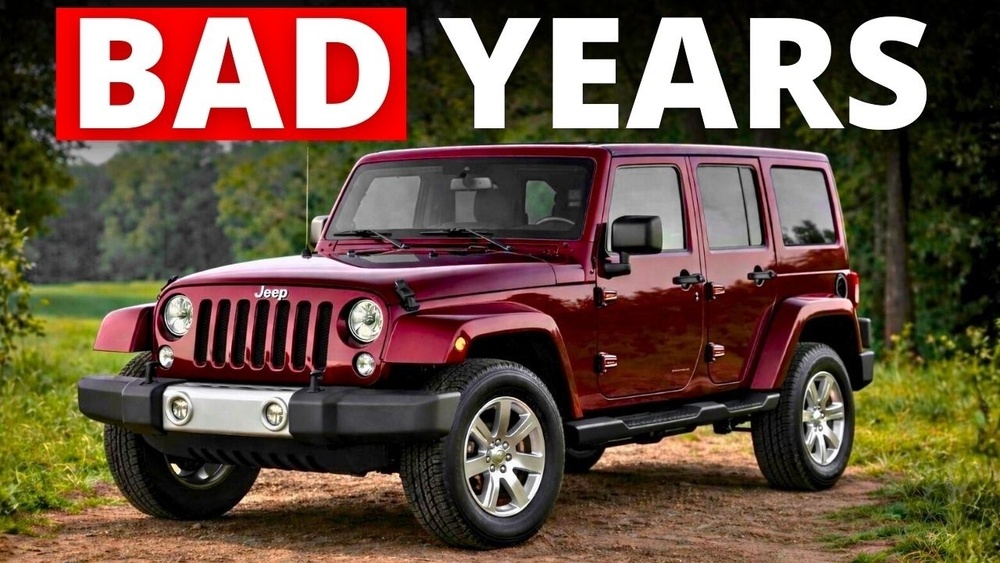
Best Jeep Wrangler JK Years: Start With 2016–2018
The 2016, 2017, and 2018 JK are sensible first choices for buyers who want a later JK. They avoid the first model year of the JK’s 3.6-liter engine and come from the mature end of the generation.
That is a reason to shortlist them, not proof that they cannot fail. These vehicles still need checks for oil leaks, valvetrain noise, cooling faults, rust, and worn steering parts.
Why later JK years make sense
The JK gained the 3.6-liter Pentastar V6 for 2012. Automatic models also moved to a five-speed transmission from the older four-speed used with the 3.8-liter engine.
For many buyers, the later powertrain offers a more useful balance of performance and drivability. Choosing a later JK also avoids making an early engine-production year the default choice.
A 2018 JK deserves special attention if you want the last version of this generation. Just confirm that it is actually a JK rather than a first-year JL.
Are 2013–2015 JK models worth buying?
Yes, if the price and condition make sense. There is no sound basis for rejecting every mid-generation JK.
For these years, ask for records of engine work, oil-leak repairs, cooling-system service, and routine maintenance. Have a shop investigate persistent ticking, misfires, or oil near the engine’s oil-filter housing.
Do not pay a premium for a preferred year while ignoring poor care. A clean 2015 can be a better purchase than a rusty, heavily modified 2017.

Worst Jeep Wrangler JK Years: Why 2012 Needs More Scrutiny
The 2012 JK is the clearest year to approach with added engine checks. It introduced the 3.6-liter Pentastar to the Wrangler, and certain early engines were covered by a manufacturer warranty extension for the left cylinder head.
A warranty extension is not a safety recall. It also does not mean that every engine in the affected model years will fail.
What to check on a 2012 JK
Ask whether the vehicle has had cylinder-head repairs. A dealer may be able to check VIN-specific service or warranty history, though records may not capture every repair performed elsewhere.
During the inspection, look for:
- A rough idle or recurring misfire.
- Stored or pending engine fault codes.
- Unexplained coolant loss or overheating.
- Persistent valvetrain noise.
- Missing records for major engine work.
A qualified technician should diagnose these signs. A misfire can have several causes; it does not prove that the cylinder head is faulty.
Are 2007–2011 JK models the worst?
Not automatically. Their age is now a major part of the risk. These models use the 3.8-liter V6 rather than the later 3.6-liter engine.
Check oil level, oil-use history, leaks, cooling-system condition, and service records. On automatic models, assess shift quality during both cold and warm operation.
An older JK from a dry climate may have a sounder frame than a newer vehicle exposed to years of road salt. Conversely, low mileage does not protect a vehicle that sat wet, leaked inside, or received little care.
For U.S. buyers in the Northeast, Midwest, and other salt-use areas, a lift inspection is essential. Structural rust can turn an appealing price into an unsafe purchase.

Best Jeep Wrangler JL Years: Shortlist 2021–2023 Gasoline Models
The 2021–2023 gasoline JL is a reasonable starting point for a newer used Wrangler. These years are beyond the first launch period, but that alone does not establish a lower failure rate.
The most useful next step is to choose a powertrain. A 3.6-liter automatic, a 2.0-liter turbo, and a manual-transmission JL do not have the same inspection needs.
3.6-liter V6: A familiar choice, not a risk-free one
The 3.6-liter V6 suits buyers who prefer a naturally aspirated gasoline engine. Check for oil leaks, unusual valvetrain noise, cooling problems, and a complete maintenance history.
Some JL configurations add eTorque equipment. Confirm the exact system rather than assuming every 3.6-liter Wrangler has the same layout.
2.0-liter turbo: Judge the individual vehicle
The 2.0-liter turbo is not automatically a bad choice because it has a turbocharger. It does, however, require attention to the correct oil, service schedule, cooling system, and any signs of leaks or poor running.
Drive it under varied, legal road loads after it warms up. Hesitation, warning lights, overheating, or unexplained coolant loss need diagnosis before purchase.
Why not name 2024 or newer the best?
A newer vehicle may have less wear and remaining factory coverage. Neither proves long-term reliability.
New model years also have less accumulated evidence. Buy them for their condition, equipment, warranty terms, and price—not an unsupported claim that the newest year is the most durable.

Worst Jeep Wrangler JL Years: Inspect the 2018 Launch Model Closely
The 2018 JL deserves extra care because it was the first year of a new generation. Specific concerns include an early-production frame-weld recall and steering complaints that require more than a quick drive around the block.
NHTSA recall 18V675 addressed an improperly welded front track-bar bracket on certain 2018–2019 Wranglers. The track bar helps locate the front axle. A bracket problem can affect steering control.
The recall applies to specific vehicles, not every Wrangler from those years. Confirm VIN applicability and remedy status through NHTSA’s recall lookup.
Check steering on 2018–2020 models
Manufacturer service guidance addressed steering concerns on certain early JL vehicles, including steering-gear-related repairs. A technical service bulletin is not the same as a recall, and it does not prove that every listed vehicle needs the same repair.
On a safe test drive, watch for:
- Excessive steering play.
- A need for constant corrections.
- Pulling that persists on a reasonably level road.
- Shimmy after a road joint or bump.
- Unstable behavior at normal highway speeds.
Tires, alignment, worn joints, loose parts, and lift geometry can also cause poor steering. Do not accept “all Wranglers do that” as a diagnosis.
Does that make every 2018 JL a bad buy?
No. A properly repaired, well-kept 2018 JL may be worth buying at the right price.
The issue is uncertainty. An early JL with no records, a suspension lift, and vague steering needs a much stronger inspection than a stock example with documented work.

Engine, Transmission, and Recall History Can Matter More Than Year
Do not apply one model-year ranking to every JL powertrain. Several configurations introduce concerns that cut across year-based lists.
Manual-transmission JL: Verify clutch recall work
Certain manual-transmission Wranglers have been subject to recalls involving clutch pressure-plate overheating. NHTSA recall 23V116 is one relevant campaign.
Check the VIN for applicable campaigns and completed remedies. A normal-feeling clutch on a short drive does not prove that recall work is complete.
Wrangler 4xe: Treat the battery system as a separate buying decision
The Wrangler 4xe is a plug-in hybrid, not simply a gasoline JL with a different trim badge. Its high-voltage battery, charging equipment, warranty coverage, and recall status require separate checks.
Certain 4xe vehicles have been subject to high-voltage battery fire recalls. Recall scope and owner instructions can change, so verify the VIN through both NHTSA and Mopar’s recall lookup.
If an active recall directs owners not to charge or to park away from structures, follow those instructions. Do not rely on a seller’s claim that the vehicle “has never had a problem.”
EcoDiesel: Match the vehicle to your use
The 3.0-liter EcoDiesel adds diesel emissions equipment and distinct service requirements. Repeated short trips can complicate ownership because diesel exhaust-treatment systems need suitable operating conditions.
Verify applicable recalls, fuel-system work, emissions-system history, and the correct maintenance schedule. Lower fuel use alone does not establish lower total ownership cost.
Stop-start batteries: Diagnose the system
Many gasoline JL configurations use an auxiliary battery as part of the stop-start system. Battery faults can contribute to warning messages or starting problems.
Do not assume every electrical fault needs only a small battery replacement. Ask a shop to test the fitted batteries, charging system, connections, and stored codes.
How to Inspect a Used Wrangler Before You Buy
Arrange an independent pre-purchase inspection with a shop familiar with Wranglers. A model-year list is a filter; the inspection is the decision tool.
Use this sequence before leaving a deposit.
- Confirm the vehicle. Verify the VIN, generation, engine, transmission, title status, and factory equipment.
- Check recalls. Review NHTSA and Mopar records. Ask for proof of completed remedies.
- Read the service history. Look for consistent oil changes and documented repairs, not just a clean vehicle-history report.
- Start it cold. Ask the seller not to warm the engine first. Listen for abnormal noise and watch for rough running.
- Scan the modules. Check stored and pending codes. Incomplete emissions readiness may indicate recent code clearing, though it does not prove deception.
- Inspect it on a lift. Check the frame, suspension mounts, brake lines, leaks, skid plates, and signs of impact.
- Assess modifications. Inspect lift components, tire clearance, steering geometry, axle gearing, and wiring.
- Road-test it safely. Check braking, steering, shifting, vibration, and normal highway behavior.
- Verify four-wheel-drive operation. Follow the owner’s manual and use a suitable surface. Do not test a locked part-time system on dry pavement.
- Price the faults. Obtain written estimates before negotiating.
Know which findings justify walking away
Structural corrosion, unresolved steering faults, overheating, title inconsistencies, or a seller who refuses an independent inspection are strong reasons to stop.
A lift kit is not proof of abuse. It does add variables. Large tires can increase loads on steering, brakes, wheel bearings, and driveline parts, especially when supporting changes were skipped.
Do not attempt to provoke severe steering shake during a test drive. If the vehicle becomes unstable, slow down safely and have it inspected.
What the Evidence Can—and Cannot—Tell You
Public records identify known defects and repair guidance; they do not provide a complete best-to-worst reliability ranking.
These source types answer different questions:
| Source | What it can establish | What it cannot establish |
|---|---|---|
| NHTSA safety recalls | A defined safety defect and affected vehicle population | Overall reliability of every vehicle in that year |
| Manufacturer service bulletins | Diagnostic or repair guidance for specified conditions | That every listed vehicle has the fault |
| Owner complaints | Reported symptoms and potential patterns | A verified, exposure-adjusted failure rate |
| Service records and inspection | Evidence about the Wrangler being sold | A guarantee against future repairs |
Useful primary resources include NHTSA’s vehicle records, Mopar’s VIN-specific recall tool, and Jeep’s owner manuals.
Live browsing was not available for this article. Current recall status, newly issued campaigns, and competitor pages were therefore not independently checked. The year recommendations are a qualified synthesis, not a fresh statistical study or hands-on vehicle test.
Next questions that affect the purchase
The following are inferred buyer needs, not claims of verified search demand.
| Question | Buyer stage and basis | Competitor coverage | Reader benefit and evidence | Priority and placement |
|---|---|---|---|---|
| Is this 2018 a JK or JL? | Before shortlisting; model-year overlap | Not checked | Prevents comparison errors; VIN and factory specifications | High; generation section |
| Does the powertrain change the recommendation? | During comparison; distinct systems and recalls | Not checked | Avoids applying gasoline advice to a 4xe or diesel; manuals and recall records | High; powertrain section |
| Can a preferred year still be a poor buy? | Before purchase; rust and modifications vary | Not checked | Prevents false confidence; independent inspection | High; inspection section |

FAQs
Is a two-door Wrangler more reliable than a four-door Unlimited?
Door count alone is not a sound reliability test. Compare the engine, transmission, maintenance, rust, modifications, and actual use. Wheelbase and body style affect how the vehicle drives, but they do not replace an inspection.
Does Rubicon trim make a used Wrangler a better buy?
Only if you need its off-road equipment and the vehicle is sound. Locking differentials and other specialized components add capability, but they also need inspection. Rubicon badges do not prove gentle use or better maintenance.
How many miles is too many for a used JK or JL?
There is no universal cutoff. Mileage matters alongside age, service history, corrosion, engine hours, and use. Treat an odometer reading as one clue rather than a pass-or-fail score.
Should I trust a vehicle-history report that shows no accidents?
Use it as one source, not a guarantee. Reports may miss unreported damage, private repairs, water intrusion, or off-road impacts. A physical inspection can reveal evidence that never reached a database.
Is an extended warranty worth buying for a used Wrangler?
Read the contract before deciding. Check exclusions for modifications, seals, diagnostics, existing faults, and off-road use, plus the deductible and labor-rate limits. A warranty is not a substitute for inspecting the vehicle before purchase.
Conclusion
Start with 2016–2018 JK models or 2021–2023 gasoline JL models, then let condition decide. Give the 2012 JK and 2018 JL extra scrutiny rather than treating them as automatic rejects.
Before buying, confirm the exact generation and powertrain, check the VIN for recalls, and book an independent inspection. The best used Wrangler is not simply the one from the “best year.” It is the one whose condition, records, repairs, and price stand up to close review.