How To Start Jeep: Easy Step-By-Step Guide
 Reading Time: 10 minutes
 Introduction
To start a Jeep in the United States, place the transmission in Park—or Neutral for a manual transmission—press the brake pedal, and turn the ignition key or press the ENGINE START/STOP button. Keep the key fob inside the vehicle. The exact procedure can vary among U.S.-market Jeep models such as the Wrangler, Grand Cherokee, Gladiator, Compass, Renegade, Cherokee, Wagoneer, and Grand Wagoneer.
If the Jeep does not start, check the transmission position, brake-pedal input, key-fob battery, battery condition, fuel level, and warning messages before repeatedly trying the ignition.

Before You Start a Jeep
Before starting any Jeep, make sure the vehicle is safe and ready to operate.
- Park on a stable surface whenever possible.
- Confirm that the transmission is in Park (P) for an automatic Jeep.
- For a manual Jeep, place the transmission in Neutral and fully depress the clutch pedal.
- Apply the parking brake, especially on an incline.
- Keep the key fob inside the vehicle for keyless ignition systems.
- Check that the fuel level is sufficient.
- Make sure the exhaust area is clear of snow, mud, or other obstructions.
- Do not start the engine in an enclosed garage unless the vehicle can be moved outside immediately.
A Jeep may prevent the engine from starting if it does not detect the required brake or clutch-pedal input. Automatic-transmission models generally require the brake pedal to be pressed, while manual-transmission models commonly require the clutch pedal to be fully depressed.
What the ignition positions mean
Traditional Jeep keys generally use these positions:
- LOCK/OFF: The engine and most vehicle systems are off.
- ACC: Accessories such as the radio may operate without the engine running.
- ON/RUN: The vehicle’s electronic systems activate, and warning lights perform a startup check.
- START: The starter motor turns the engine.
On push-button models, pressing the button without the brake pedal usually cycles through accessory and run modes. Pressing the button while holding the brake starts the engine.
Confirm the transmission position
An automatic Jeep normally will not start unless the transmission is in Park or, on many models, Neutral. If the gear indicator does not clearly show “P,” move the shifter firmly into Park, keep your foot on the brake, and try again.
If the Jeep starts only in Neutral, the vehicle may have a shifter-position sensor, brake-switch, or transmission-range issue. That condition should be inspected rather than treated as a normal starting method.
How to Start a Jeep With a Push Button
Most newer Jeep models with keyless ignition use an ENGINE START/STOP button.
- Carry the programmed key fob inside the Jeep.
- Close the doors and sit in the driver’s seat.
- Confirm that the automatic transmission is in Park.
- Press and hold the brake pedal.
- Press the ENGINE START/STOP button once.
- Release the button after the engine starts.
- Check the instrument panel for warning lights or messages.
For a manual-transmission Jeep:
- Place the transmission in Neutral.
- Press the clutch pedal fully to the floor.
- Apply the brake pedal if required by the model.
- Press the ENGINE START/STOP button.
- Keep the clutch depressed until the engine starts.
Do not hold the start button continuously after the engine has started. The vehicle’s control system normally stops the starter automatically. If the engine does not start, wait briefly before trying again rather than rapidly pressing the button.
If the push-button Jeep says “Key Fob Not Detected”
A “key fob not detected” message usually means the vehicle cannot communicate with the fob. Possible causes include:
- A weak or depleted key-fob battery
- The fob being outside the cabin
- Radio-frequency interference
- A damaged or unprogrammed fob
- A vehicle battery with low voltage
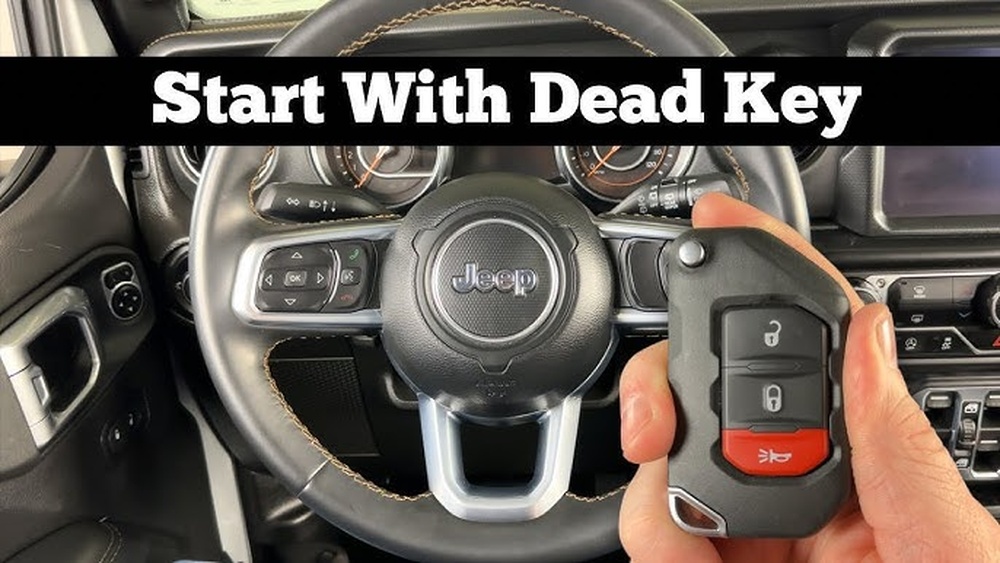
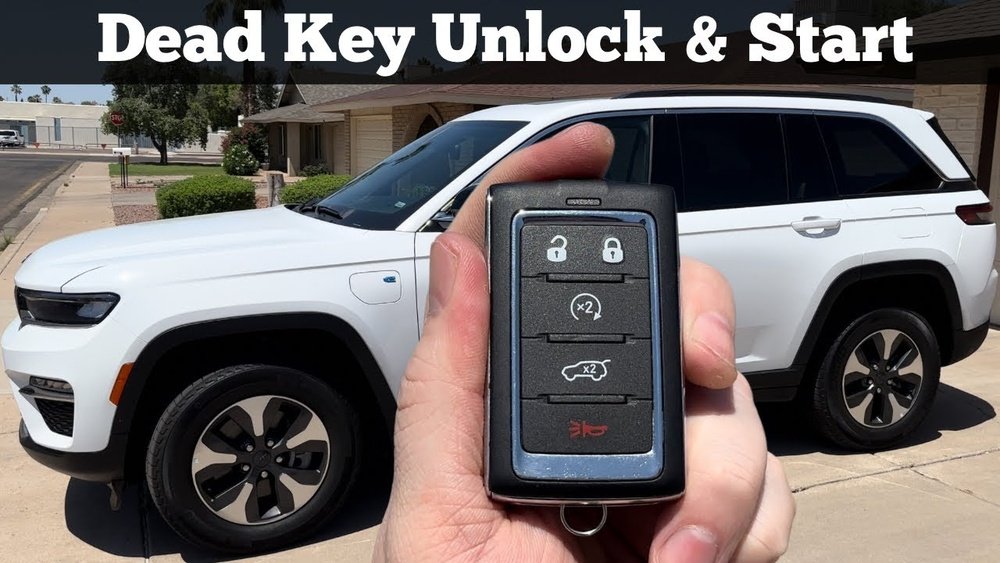
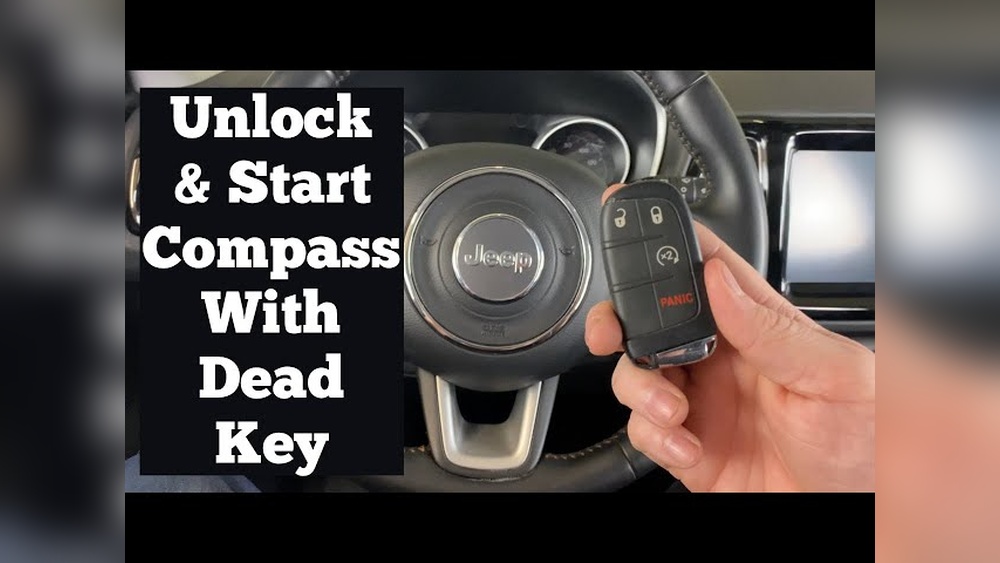
Many Jeep models provide an emergency starting method that uses the key fob itself. The precise location and procedure vary by model and year. Common designs require placing the fob against a designated spot near the start button or using a backup receiver area. Consult the owner’s manual for the exact Jeep model instead of assuming the location.
If the backup method works but normal starting does not, replace the key-fob battery with the type specified in the owner’s manual. If the backup method also fails, the problem may involve the vehicle battery, immobilizer system, or key programming.
How to Start a Jeep With a Traditional Key
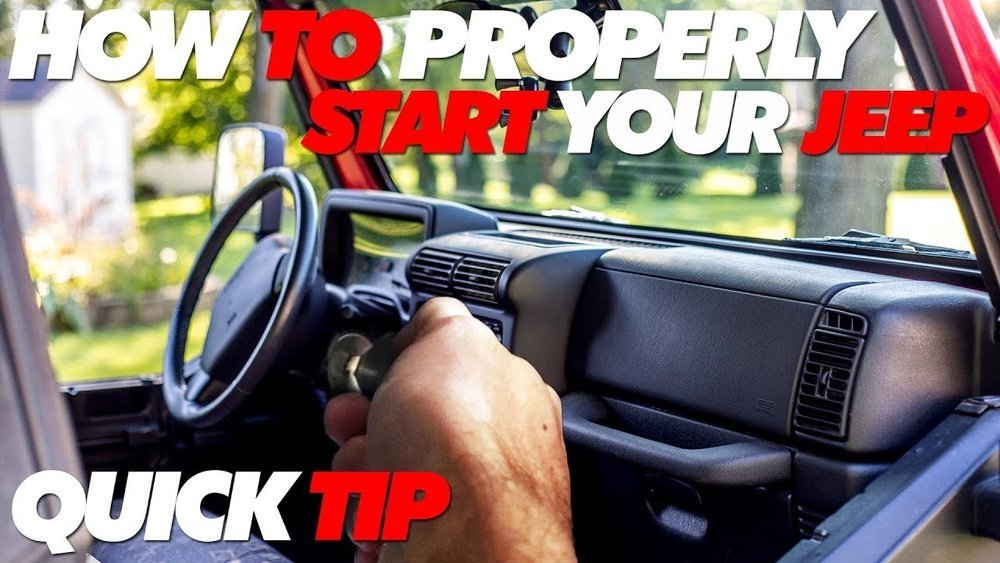
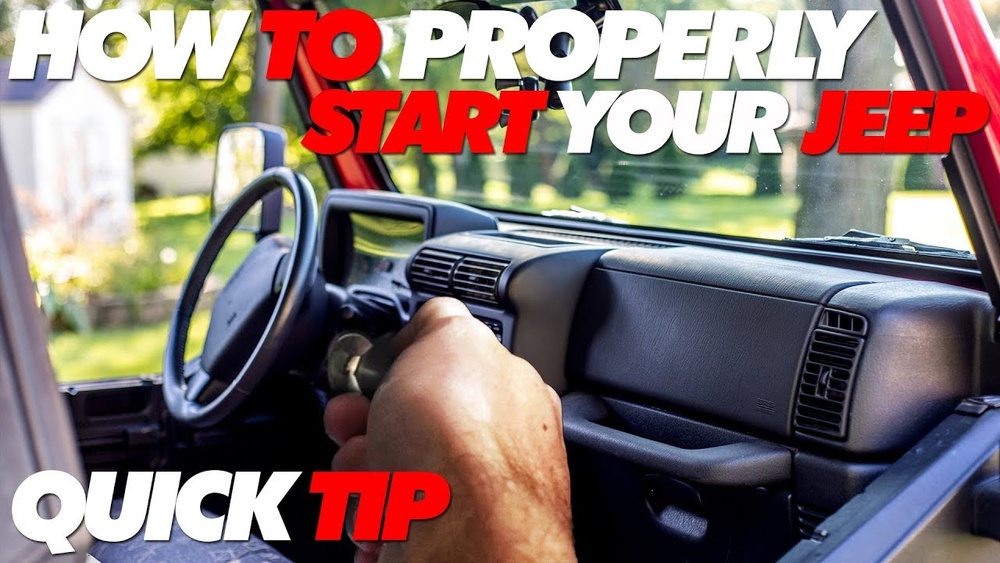
To start a Jeep with a mechanical ignition key:
- Sit in the driver’s seat and confirm the transmission is in Park.
- Press and hold the brake pedal.
- Insert the key into the ignition.
- Turn the key to the START position.
- Release the key as soon as the engine starts.
The key should spring back from START to ON/RUN automatically. Do not keep the key turned to the starter position after the engine is running because doing so can damage the starter system.
If the engine cranks but does not run, turn the key back to OFF and wait several seconds before trying again. Repeated long cranking can discharge the battery and place unnecessary strain on the starter.
Starting a Jeep in cold weather
A gasoline-powered Jeep normally starts by using the regular key or push-button procedure, although cold temperatures can reduce battery performance and make engine oil more viscous.
A diesel-equipped Jeep may display a Wait To Start or glow-plug indicator. In that case:
- Turn the ignition to ON/RUN without starting.
- Wait for the glow-plug indicator to turn off.
- Press the clutch or brake as required.
- Turn the key to START or press the start button.
The waiting period depends on temperature and vehicle design. Follow the instrument-panel instructions and the model-specific manual.
How to Use Jeep Remote Start
Many U.S.-market Jeep vehicles offer remote start through the key fob, the connected vehicle system, or both. Availability depends on the vehicle’s model year, equipment, subscription status, and regional configuration.
Remote start with the key fob
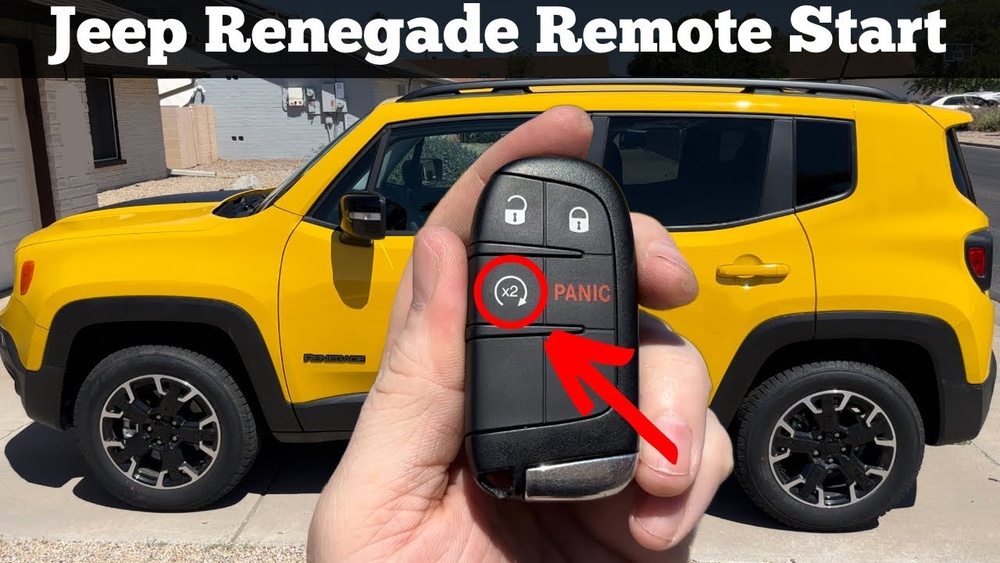
On equipped Jeep models, the typical key-fob sequence is:
- Press the Lock button.
- Press the Remote Start button twice within the time specified by the owner’s manual.
- Wait for the vehicle’s exterior light or other confirmation.
- Approach the Jeep with the key fob.
- Enter the vehicle and press the brake pedal.
- Press the ENGINE START/STOP button if the system requires takeover authorization.
Remote-start systems generally require conditions such as:
- Doors, hood, and liftgate closed
- Vehicle in Park
- Adequate fuel
- No serious engine or emissions fault
- Vehicle battery and key-fob battery within operating range
Remote start is not a substitute for checking the vehicle. Make sure the Jeep is outside or in a properly ventilated location before using it. Never use remote start in an enclosed garage.
Remote start through a connected app
Some Jeep vehicles can be started through a manufacturer-connected mobile application when the vehicle is equipped and the service is active. The app may require an account, a compatible vehicle, cellular coverage, and an active service plan. Features can change by model year and subscription terms, so verify current availability through the official Jeep or Mopar documentation for the specific vehicle.
What to Do if a Jeep Will Not Start
The sound and dashboard behavior provide useful clues. Use the following sequence, beginning with the safest and simplest checks.
| Symptom | Likely causes | Useful first checks |
|---|---|---|
| No sound or response | Dead battery, key not detected, incorrect gear position, brake or clutch not recognized | Check battery power, key location, Park/Neutral, and pedal input |
| Single click | Weak battery, poor battery connection, starter or relay problem | Inspect terminals and try a properly rated jump-start procedure |
| Rapid clicking | Low battery voltage | Stop repeated attempts and test or charge the battery |
| Engine cranks but does not start | Fuel, ignition, immobilizer, sensor, or engine-control issue | Check fuel, warning messages, and security indicator |
| Starts and immediately stalls | Immobilizer issue, fuel delivery, air or sensor problem | Check security light and arrange diagnosis if it continues |
| “Key Fob Not Detected” | Weak fob battery, interference, damaged or unprogrammed fob | Use the model-specific backup fob position and replace the fob battery |
| “Service Shifter” or gear warning | Shifter, transmission-range sensor, or electrical fault | Confirm Park; do not force the shifter |
If nothing happens when you press the start button
Check these items in order:
- Verify that the key fob is inside the cabin.
- Press the brake pedal firmly.
- Confirm that the transmission display shows Park.
- Try starting in Neutral only if the owner’s manual permits it.
- Check whether the interior lights are unusually dim.
- Look for a security, key, or battery warning.
- Try the fob’s documented backup-start method.
Dim interior lights, flickering electronics, or repeated clicking commonly indicate low battery voltage. A battery can have enough power to illuminate the dashboard but not enough to operate the starter.
If the engine cranks but will not start
Cranking means the starter is turning the engine, but combustion is not occurring. Check:
- Fuel level and fuel-quality concerns
- Security or immobilizer warnings
- Engine warning messages
- Unusual flooding or repeated-start conditions
- Loose or damaged battery connections
- Recent repairs, water exposure, or aftermarket electrical equipment
Avoid disconnecting electrical components or replacing sensors based only on a guess. A diagnostic scan and professional testing may be more effective than replacing parts at random.
If the Jeep battery is dead
A jump start may restore operation, but it does not repair the reason the battery discharged. Before connecting cables, read the owner’s manual for the approved jump-start points and procedure. Some Jeep models use designated remote terminals rather than connecting directly to the battery.
General precautions include:
- Use a suitable donor vehicle or approved jump pack.
- Confirm the electrical systems and voltage are compatible.
- Keep both vehicles from touching.
- Connect cables only to the specified positive and negative points.
- Keep sparks, cigarettes, and flames away from the battery.
- Stop if the battery is cracked, leaking, swollen, or frozen.
- Remove the cables in the reverse order specified by the manual.
If the Jeep requires frequent jump starts, have the battery, charging system, starter, and parasitic electrical draw tested.
What to Do After the Jeep Starts
A successful start is not the end of the check. Look at the instrument panel before driving.
Some warning lights briefly appear during the normal startup self-test and then turn off. A warning light that remains illuminated may require attention. A flashing check-engine light, oil-pressure warning, overheating warning, or brake warning should be treated seriously. Pull over safely and consult the owner’s manual or a qualified technician.
Before moving:
- Confirm the engine is running smoothly.
- Check that the transmission is in the intended gear.
- Release the parking brake only when ready to move.
- Adjust mirrors and seat while stationary.
- Confirm that the path around the Jeep is clear.
- Let the vehicle complete any required startup process without unnecessary high engine speed.
Do not use extended idling as a substitute for maintenance. If a Jeep repeatedly takes longer than usual to start, stalls, produces unusual noises, or shows new warning messages, schedule a diagnosis.

Common Mistakes When Starting a Jeep
Pressing the start button without the brake
Without the brake pedal, many push-button Jeeps switch to accessory or run mode instead of starting the engine. Press the brake firmly before pressing the button.
Leaving the automatic transmission slightly out of Park
A shifter that appears to be in Park may not be fully engaged or electronically recognized. Move it deliberately into Park and check the gear display.
Using the wrong key fob
A spare or replacement fob may not start the vehicle unless it has been correctly programmed. A lock button can sometimes operate without proving that the fob is authorized to start the engine.
Repeatedly trying a weak battery
Repeated start attempts can drain the battery further. If the starter clicks or the electronics become dim, stop and test the battery or use the approved jump-start procedure.
Attempting to start in an unsafe location
Do not start a Jeep in an enclosed garage or where exhaust could enter a building. Keep people away from moving parts and never work beneath a vehicle supported only by a jack.
Assuming every Jeep starts the same way
A push-button Wrangler, keyed Compass, diesel-equipped vehicle, and manual-transmission Gladiator may have different requirements. The owner’s manual for the exact model year remains the controlling reference for emergency procedures, fuse locations, remote start, and key-fob backup operation.

Frequently Asked Questions About Starting a Jeep
Why does my Jeep say “Press Brake and Push Button to Start”?
The vehicle is not detecting the required brake-pedal input. Press the brake firmly while the transmission is in Park, then press the start button once. If the message remains, the brake-light switch, fuse, battery, or related control system may need inspection.
Can I start a Jeep without the key fob?
Usually, a Jeep with keyless ignition requires an authorized key fob. If the fob battery is weak, many models have a backup starting procedure that uses a designated location for the fob. The location differs by model and year, so use the owner’s manual.
Can I start a Jeep in Neutral?
Many automatic Jeeps can start in Neutral, but the standard position is Park. A manual Jeep generally starts in Neutral with the clutch fully depressed. If a vehicle starts only in Neutral, have the transmission-position or shifter system checked.
Why does my Jeep crank but not start?
The starter may be working while fuel delivery, ignition, engine sensors, immobilizer authorization, or engine-control systems are preventing combustion. Check fuel and dashboard warnings, then seek professional diagnosis if the problem continues.
How long should I hold the Jeep start button?
Press the start button once while holding the required brake or clutch pedal. The vehicle normally controls starter engagement automatically. Do not repeatedly hold or rapidly press the button unless the owner’s manual specifically instructs you to do so.
Conclusion
Starting a Jeep is usually straightforward: use the correct key or programmed key fob, place the vehicle in the required transmission position, press the brake or clutch, and operate the key or start button. If the Jeep does not start, identify whether there is no response, a clicking sound, or normal cranking without ignition. That distinction helps separate battery and starting-system problems from fuel, security, or engine-control issues.
For the safest and most accurate procedure, use the owner’s manual for the exact U.S.-market Jeep model and model year. Stop repeated attempts and obtain professional assistance when warning lights, damaged batteries, electrical faults, or persistent starting problems are present.