
Jeep P0420 2: Causes, Fixes & Diagnosis
 Reading Time: 11 minutes
 Introduction
For a Jeep sold in the United States, P0420 means “Catalyst System Efficiency Below Threshold—Bank 1.” The code indicates that the engine computer has detected that the catalytic converter on Bank 1 is not reducing emissions as effectively as expected.
The wording “Jeep P0420 2” does not normally identify Bank 2. It may refer to a scan-tool count, a second stored fault, or a reader displaying additional code information. If the vehicle actually has a Bank 2 catalyst problem, the usual code is P0430, not P0420.
Do not replace the catalytic converter immediately. A failing oxygen sensor, exhaust leak, misfire, fuel-mixture problem, or oil- or coolant-contaminated catalyst can produce the same diagnostic trouble code. The most reliable repair begins with confirming every stored code and testing the related systems in the correct order.
What Jeep Code P0420 Means
P0420 is a generic OBD-II powertrain code used by Jeep and other vehicle manufacturers. The engine control module, or ECM, compares oxygen-sensor signals before and after the catalytic converter.
A properly functioning catalytic converter stores and releases oxygen while converting pollutants, including:
- Carbon monoxide
- Unburned hydrocarbons
- Oxides of nitrogen
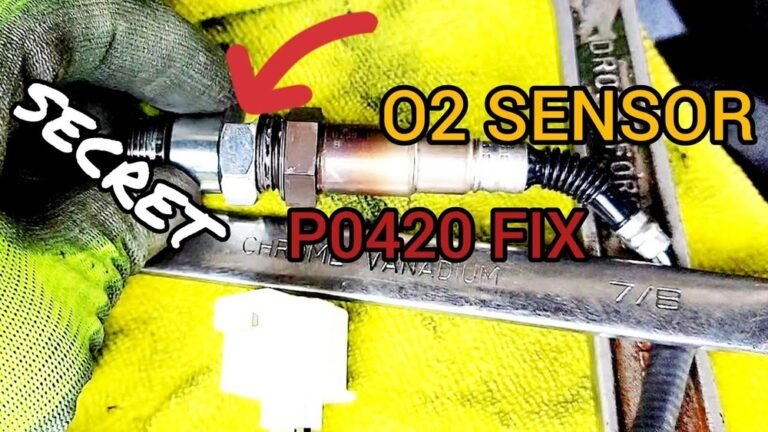
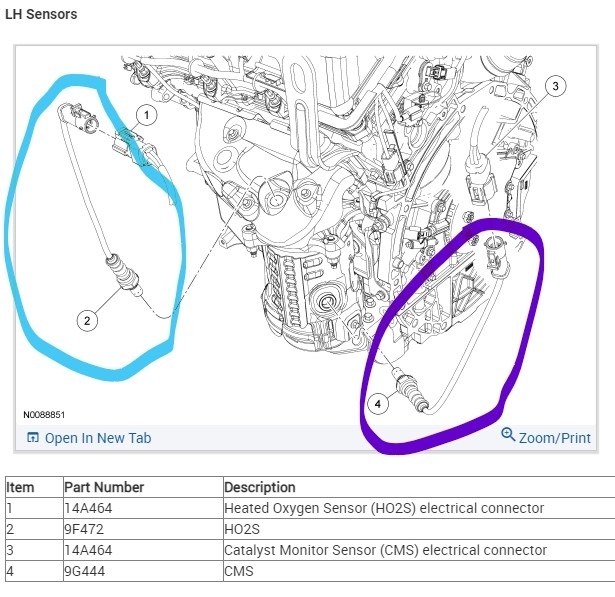
The upstream oxygen sensor monitors exhaust conditions before the converter. The downstream oxygen sensor monitors the exhaust after the converter.
When the converter is working properly, the downstream sensor signal is generally more stable than the upstream signal. If the downstream signal begins to resemble the upstream signal too closely, the ECM may determine that the catalytic converter is not meeting its expected efficiency level and set P0420.
Bank 1 versus Bank 2
“Bank” identifies a group of engine cylinders:
| Term | Meaning |
|---|---|
| Bank 1 | The side of the engine containing cylinder 1 |
| Bank 2 | The opposite cylinder bank on a V-type engine |
| Inline engine | Usually has only one cylinder bank |
| P0420 | Catalyst efficiency below threshold, Bank 1 |
| P0430 | Catalyst efficiency below threshold, Bank 2 |
On an inline-four Jeep engine, there is normally only one bank, so P0420 applies to the vehicle’s only catalytic-converter bank. On a V6 or V8, the engine has two banks, making the P0420-versus-P0430 distinction important.
The exact location of cylinder 1 and the oxygen sensors varies by Jeep engine. Always confirm sensor identification in the service information for the specific model year, engine, and drivetrain.

Why a Jeep Displays “P0420 2”
A scan tool may display “P0420 2” for several reasons. The number does not automatically mean “Bank 2.”
Possible meanings include:
-
The scan tool has recorded P0420 twice.
Some devices show the number of occurrences, ignition cycles, or times the code was detected. -
P0420 appears with another code.
The display may place a sequence number beside the code. Check the complete diagnostic report for additional codes such as P0300, P0171, P0174, P0136, or P0430. -
The code is pending or confirmed.
Many scan tools show current, pending, permanent, or stored codes separately. -
The vehicle has a second diagnostic code.
A code reader may abbreviate or format multiple codes in a confusing way. -
The scan tool uses nonstandard wording.
Low-cost readers sometimes label data fields poorly or provide generic descriptions that do not match Jeep service terminology.
The correct next step is to write down the entire code list, including whether each code is current, pending, or permanent. Do not diagnose the Jeep from the “2” alone.

Common Causes of Jeep P0420
The most common cause is a catalytic converter that has genuinely lost efficiency, but several upstream problems can trigger the code.
1. Worn or damaged catalytic converter
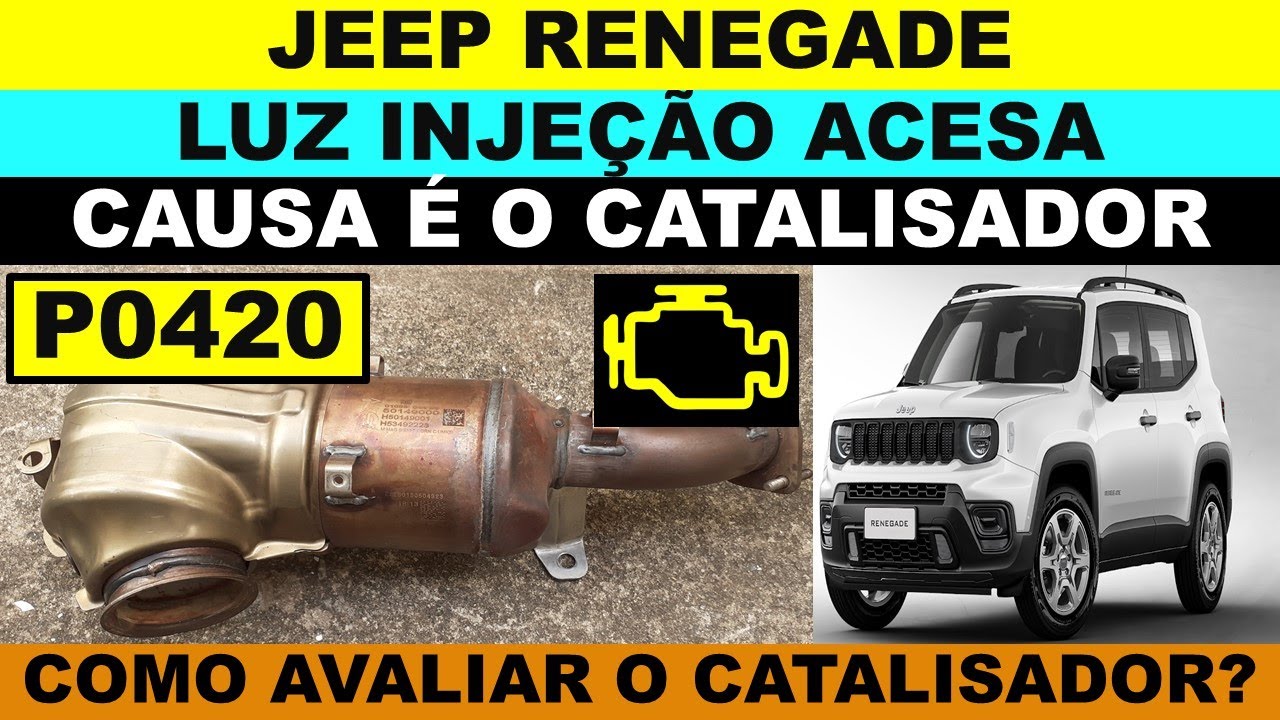
A catalytic converter can deteriorate with age, high mileage, physical impact, overheating, or contamination. Internal catalyst material may become chemically inactive, cracked, or loose.
A converter is more likely to be the true cause when:
- P0420 returns after other engine problems are repaired
- The downstream oxygen-sensor behavior indicates low catalyst oxygen storage
- The vehicle has a history of misfires or excessive oil consumption
- The exhaust smells strongly of sulfur or rotten eggs
- The converter rattles internally
- Emissions-test results show elevated pollutants
A catalytic converter can fail without producing obvious drivability symptoms.
2. Exhaust leak near the oxygen sensors
A leak before or near the downstream oxygen sensor can draw outside air into the exhaust stream. The added oxygen may distort the sensor reading and make the ECM believe the converter is underperforming.
Inspect:
- Exhaust manifolds
- Manifold gaskets
- Flexible exhaust sections
- Catalytic-converter flanges
- Sensor-thread areas
- Welds and pipe connections
A small leak may be difficult to hear, especially when the exhaust is cold or the engine is under load.
3. Failing downstream oxygen sensor
The rear oxygen sensor helps the ECM evaluate catalyst performance. If it responds too slowly, becomes biased, or has a heater or wiring fault, it can contribute to a false P0420 diagnosis.
However, replacing the sensor based only on P0420 is not a reliable strategy. The sensor should be tested, and related oxygen-sensor codes should be considered.
4. Engine misfire
A misfire sends unburned fuel into the catalytic converter. That fuel can overheat and permanently damage the catalyst.
Check for codes such as:
- P0300: Random or multiple-cylinder misfire
- P0301–P0308: Cylinder-specific misfire
- Ignition-coil or spark-plug faults
- Fuel-injector problems
- Vacuum leaks
- Low compression
If a Jeep has an active misfire, repair that problem before replacing the converter. Continuing to drive with a severe misfire can make the converter failure worse and may create a fire risk.
5. Rich or lean air-fuel mixture
A fuel-control problem can reduce converter life or produce misleading oxygen-sensor readings. Potential causes include:
- Vacuum leaks
- Dirty or defective fuel injectors
- Incorrect fuel pressure
- Exhaust leaks
- Faulty mass-airflow or manifold-pressure data
- Evaporative-emissions problems
- Engine coolant-temperature sensor issues
- Unmetered air entering the intake
Codes such as P0171, P0172, P0174, or P0175 can be more important than P0420 because they may identify the condition that damaged the catalyst.
6. Oil or coolant entering the exhaust
Internal engine problems can contaminate the catalyst. Possible sources include worn piston rings, valve-seal problems, cylinder-head-gasket failure, or other coolant and oil leaks.
Blue exhaust smoke suggests oil consumption. Persistent white exhaust smoke with coolant loss may indicate coolant entering the combustion chambers. Either condition should be diagnosed before installing a new catalytic converter.
Symptoms Associated With P0420
P0420 may appear with no noticeable change in how the Jeep drives. The most common symptom is an illuminated Check Engine Light.
Other possible symptoms include:
- Reduced fuel economy
- Failed emissions inspection
- Sulfur-like exhaust odor
- Sluggish acceleration
- Exhaust rattling
- Loss of power if the converter is restricted
- Rough running if another engine fault is present
A P0420 code by itself does not prove that the catalytic converter is clogged. A restricted converter usually requires additional testing, such as exhaust backpressure or vacuum behavior under load.
A flashing Check Engine Light is more urgent than a steady light. A flashing light commonly indicates a severe misfire that can damage the catalytic converter. Reduce driving and address the misfire promptly.

How to Diagnose Jeep P0420
Use this sequence to avoid replacing expensive parts unnecessarily.
1. Confirm the exact code and vehicle information
Record:
- Jeep model and model year
- Engine size
- Mileage
- Two-wheel-drive or four-wheel-drive configuration
- Exact stored and pending codes
- Freeze-frame data
- Whether the Check Engine Light is steady or flashing
A code from a 3.6-liter V6 may require a different sensor and bank interpretation than a code from a four-cylinder Jeep.
2. Check for other codes first
Diagnose misfire, fuel-trim, oxygen-sensor, and air-fuel-ratio codes before treating P0420 as a converter failure.
For example:
- P0300–P0308: Address the misfire first.
- P0171 or P0174: Investigate a lean condition.
- P0172 or P0175: Investigate a rich condition.
- P0130–P0167: Inspect oxygen-sensor circuits and operation.
- P0430: Investigate Bank 2 rather than assuming P0420 applies to both banks.
3. Inspect the exhaust system
With the engine cold, visually inspect the exhaust for:
- Broken or missing fasteners
- Black soot around joints
- Cracked manifolds
- Damaged flex pipes
- Loose heat shields
- Impact damage
- Missing or damaged oxygen-sensor wiring
Do not touch the exhaust while it is hot. Use a smoke machine or approved exhaust-leak testing method when a visual inspection is inconclusive.
4. Review fuel-trim data
A scan tool can display short-term and long-term fuel trims. Fuel trim that remains substantially positive may suggest a lean condition; strongly negative trim may suggest a rich condition.
Fuel-trim interpretation depends on engine operating state, temperature, load, sensor accuracy, and the specific Jeep engine. Treat it as a diagnostic clue, not a standalone verdict.
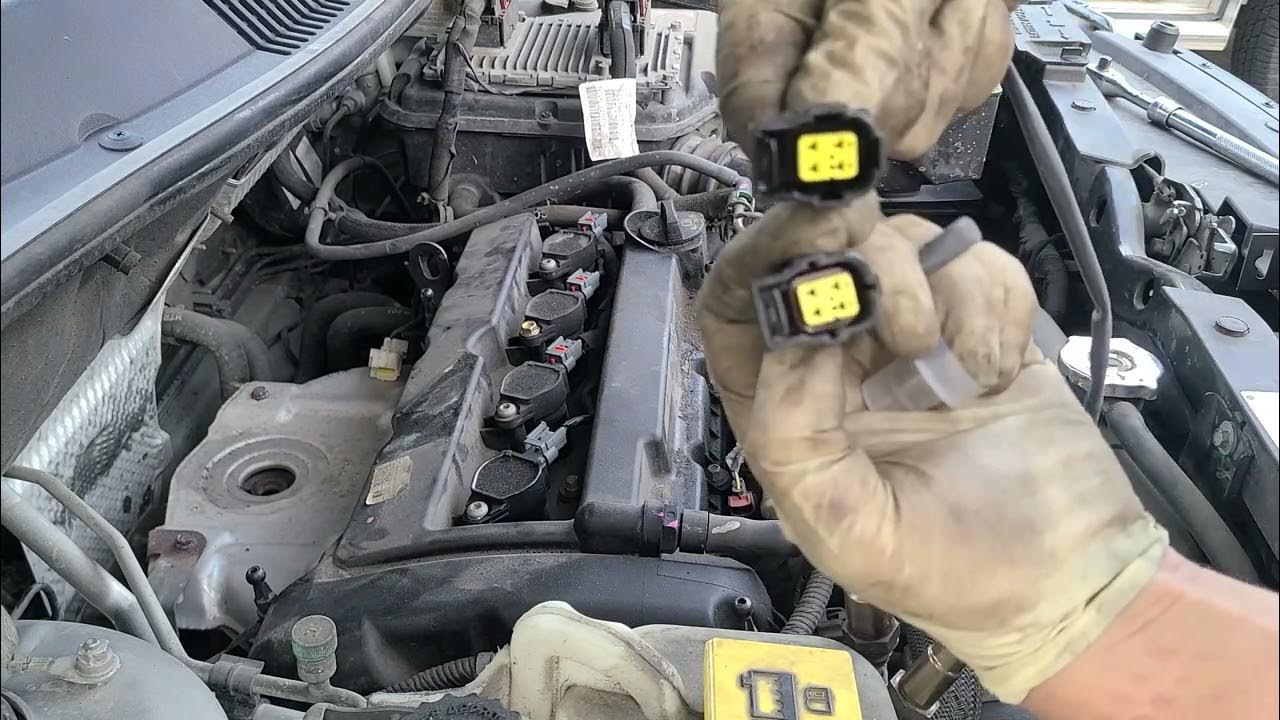
5. Evaluate oxygen-sensor operation
A technician can compare the upstream and downstream sensor signals after the engine reaches operating temperature.
In broad terms:
- The upstream sensor normally responds rapidly to changing air-fuel conditions.
- The downstream sensor should generally show a more controlled, less repetitive pattern when the catalyst is storing oxygen effectively.
- Similar, rapidly changing signals from both sensors can support a low-efficiency diagnosis.
Sensor voltage alone is not enough. Some Jeep applications use different sensor strategies, and a scan tool may show air-fuel-ratio data rather than a simple oxygen-voltage waveform.
6. Test for a restricted catalytic converter when symptoms support it
If the Jeep has poor power, excessive heat, or an exhaust rattle, test for restriction. Appropriate methods may include:
- Exhaust backpressure testing
- Intake-vacuum behavior under load
- Temperature comparison across the converter
- Manufacturer-approved scan-tool tests
A temperature difference across the converter can provide useful information but should not be treated as conclusive by itself. A converter can be chemically ineffective without being physically blocked.
7. Clear the code only after repairs
After correcting the confirmed cause, clear the diagnostic code with a scan tool or follow the appropriate service procedure. Then complete the required drive cycle so the catalyst monitor can run.
Disconnecting the battery may erase useful adaptive data and may not remove a permanent code. It also does not repair the underlying problem.
Jeep P0420 Repair Options
The correct repair depends on the test results.
| Confirmed cause | Appropriate repair |
|---|---|
| Exhaust leak | Repair or replace the leaking section, gasket, or hardware |
| Misfire | Repair ignition, fuel, compression, or air-induction fault |
| Lean or rich condition | Correct the fuel, air, sensor, or vacuum problem |
| Failed oxygen sensor | Replace the defective sensor with a correct application part |
| Damaged wiring | Repair wiring, connectors, grounds, or sensor circuits |
| Contaminated converter | Correct the oil- or coolant-consumption problem and replace the converter if damaged |
| Inefficient converter | Replace the converter with a properly certified part for the Jeep and its emissions configuration |
| Restricted converter | Replace the converter after identifying and repairing the cause of overheating |
For a Jeep registered in the United States, catalytic-converter replacement must comply with applicable federal and, where relevant, state emissions requirements. California and other states with stricter emissions rules may have additional requirements. Verify the vehicle’s emissions label and local rules before purchasing a replacement part.
Do not install a converter designed for a different engine, emissions package, or model year. An incorrect part may cause repeat codes, emissions-test failure, or legal compliance problems.

How Much Does It Cost to Fix P0420?
Repair cost varies widely because P0420 can result from a relatively small exhaust leak or a major catalytic-converter replacement.
The final price depends on:
- Jeep model and engine
- Number and location of converters
- OEM versus compliant aftermarket parts
- Labor access
- Rust or seized fasteners
- Additional engine repairs
- State emissions requirements
- Whether oxygen sensors and hardware also require replacement
A diagnostic fee may be worthwhile because replacing a converter without addressing a misfire, rich condition, or oil-consumption problem can cause the replacement converter to fail again.
The least expensive repair is not always the lowest total cost. A cheap, incorrect, or noncompliant converter may create another Check Engine Light or emissions-inspection failure.

Can You Drive a Jeep With P0420?
A Jeep with a steady Check Engine Light and no severe symptoms may remain driveable for a short period, but postponing diagnosis has risks.
Driving becomes more urgent when the vehicle has:
- A flashing Check Engine Light
- Severe loss of power
- Engine misfire or shaking
- Excessive exhaust heat
- A strong fuel or sulfur odor
- Smoke
- A converter rattle
- Signs of a restricted exhaust
An active misfire can overheat the catalytic converter. A restricted converter can reduce power and increase exhaust temperature. Stop driving and seek professional diagnosis if the Jeep is running badly, losing power, or producing abnormal heat or smoke.

Common Mistakes When Diagnosing Jeep P0420
Replacing the converter immediately
P0420 is a system-performance code, not a direct instruction to replace one part. Check for misfires, leaks, fuel-mixture faults, and sensor problems first.
Assuming “2” means Bank 2
P0420 identifies Bank 1. Bank 2 catalyst efficiency is generally P0430. Confirm the complete scan-tool output.
Installing an oxygen-sensor spacer
A spacer may alter sensor readings without correcting emissions performance. It can also create additional faults and may violate emissions requirements. It is not a proper repair for a failed catalyst.
Clearing the code before recording data
Clearing codes can erase freeze-frame information and reset readiness monitors. Record the data first.
Testing the oxygen sensors while the engine is cold
Catalyst-monitoring data is meaningful only after the engine and exhaust reach the conditions required by the vehicle’s diagnostic strategy.
Ignoring the original cause of converter failure
A new converter can be damaged by a continuing misfire, excessive fuel, oil consumption, or coolant contamination.
Frequently Asked Questions
Is Jeep P0420 serious?
It can be minor or serious depending on the cause. A chemically weak converter may only illuminate the Check Engine Light, while an unresolved misfire or restricted converter can cause additional engine and exhaust damage.
Does P0420 always mean the catalytic converter is bad?
No. Exhaust leaks, oxygen-sensor faults, fuel-mixture problems, misfires, and engine-fluid contamination can set the code or contribute to it.
Is P0420 Bank 1 or Bank 2?
P0420 is Bank 1. P0430 is generally the corresponding catalyst-efficiency code for Bank 2.
Will P0420 clear itself?
The code may turn the Check Engine Light off if the monitor passes during later drive cycles, but the fault may remain stored or return. Do not rely on automatic clearing as proof that the problem is fixed.
Can bad spark plugs cause P0420?
Bad spark plugs can cause a misfire, and an ongoing misfire can damage the catalytic converter or create conditions that trigger P0420. Diagnose any misfire code before replacing the converter.
Should I use an OEM catalytic converter?
Use a converter that is correctly certified and approved for the Jeep’s exact emissions configuration. OEM may be appropriate in some cases, while a compliant aftermarket unit may meet the application requirements in others. The vehicle’s emissions label and local regulations determine what is acceptable.
Conclusion
Jeep P0420 means catalyst efficiency below threshold on Bank 1; “P0420 2” does not normally mean Bank 2. Confirm the complete code list, check for misfires and fuel-mixture faults, inspect the exhaust for leaks, evaluate oxygen-sensor data, and test the catalytic converter before replacing parts.
If the Check Engine Light is flashing, the Jeep is misfiring, or the exhaust is severely restricted or overheating, limit driving and arrange prompt professional diagnosis. The next practical step is to obtain a full scan report with freeze-frame data and identify the Jeep’s exact model year, engine, and emissions configuration.