Are Jeep Wranglers All Wheel Drive? Everything You Need to Know
 Reading Time: 9 minutes
 Are Jeep Wranglers All Wheel Drive?
The Jeep Wrangler is famous around the world for off-roading, adventure, and its unique look. Many new buyers, especially those new to SUVs, wonder about its drive system. Is the Jeep Wrangler all-wheel drive (AWD)? Or does it use a different system? Understanding this is important before you buy or drive a Wrangler, especially if you want to use it in rain, snow, or tough terrain.
In this article, you’ll get a clear, beginner-friendly explanation of Jeep Wrangler’s drive system. We’ll look at what all-wheel drive means, how it’s different from four-wheel drive (4WD), and what Wranglers actually offer. We’ll also compare the drive systems, show practical examples, and answer common questions. Whether you plan to buy a Wrangler or just want to learn more, this guide will make things simple.
What Is All-wheel Drive (awd)?
All-wheel drive means a vehicle can send power to all four wheels at the same time. This helps the car grip the road better in slippery conditions, such as rain or snow. AWD systems are usually “on” all the time, so drivers don’t need to press any buttons or pull any levers.
- AWD is common in cars, crossovers, and some SUVs.
- It’s designed for on-road use and light off-roading.
- Good for city driving, wet roads, or mild dirt trails.
There are two main types of AWD:
- Full-time AWD: Always active, sends power to all wheels automatically.
- Part-time AWD: Works mostly in two-wheel drive but switches to all wheels when needed.
AWD systems use computers and sensors to decide how much power goes to each wheel. If one wheel slips, the system sends more power to the wheels with grip.
What Is Four-wheel Drive (4wd)?
Four-wheel drive is different from AWD. 4WD is designed for tough off-road situations—like deep mud, rocks, or steep hills. In most 4WD vehicles, drivers must turn the system on or off manually.
Key points about 4WD:
- Part-time 4WD: Driver selects when to use four-wheel drive. Most of the time, the vehicle is in two-wheel drive.
- Full-time 4WD: Always active, but often includes options to lock differentials or use “low range” for extra power.
4WD systems are usually found in trucks and off-road vehicles. They use strong parts to survive hard use.
4wd Vs Awd: Key Differences
Here’s a simple comparison:
| Feature | AWD | 4WD |
|---|---|---|
| Where Used | Crossover SUVs, cars | Trucks, off-road SUVs |
| When Active | Always or automatic | Driver-selected |
| Best For | Wet roads, mild trails | Rough terrain, off-roading |
| Complexity | More electronics | Stronger parts, simple controls |
Are Jeep Wranglers All-wheel Drive?
The short answer: Jeep Wranglers are not all-wheel drive in the traditional sense. Most Jeep Wranglers use a four-wheel drive (4WD) system, not AWD.
Why Aren’t Jeep Wranglers Awd?
Wranglers are built for serious off-road use. Their 4WD system gives you more control. You can choose when to use 4WD, which helps in difficult terrain. AWD systems are usually automatic, but Jeep’s focus is on strength and flexibility.
Which Drive System Do Wranglers Use?
Most Jeep Wranglers come with the Command-Trac or Rock-Trac 4WD systems. These let you switch between two-wheel drive (2H), four-wheel high (4H), and four-wheel low (4L) using a lever.
Main Modes:
- 2H (Two-wheel drive, high range): Power goes only to the rear wheels. Used for regular, dry roads.
- 4H (Four-wheel drive, high range): Power goes to all wheels. Good for snow, sand, or dirt roads.
- 4L (Four-wheel drive, low range): Extra torque for climbing rocks, deep mud, or tough trails.
Some newer Jeep Wrangler models (like the Sahara trim) offer a system called Selec-Trac. This system can switch between 2WD and 4WD automatically, similar to AWD, but it’s still technically a part-time 4WD system with more convenience.
Practical Example: Driving A Wrangler In Snow
Imagine you’re driving a Jeep Wrangler on a snowy road:
- With 2H: The rear wheels might slip, especially if the snow is deep or icy.
- With 4H: Power goes to all wheels, so you get better grip and control.
- With AWD (in other vehicles): The system automatically sends power to each wheel, but it may not handle deep snow as well as Wrangler’s 4WD.
Tip: Always use 4H in slippery conditions with your Wrangler. Don’t use 4L on paved roads—it’s for off-road only.
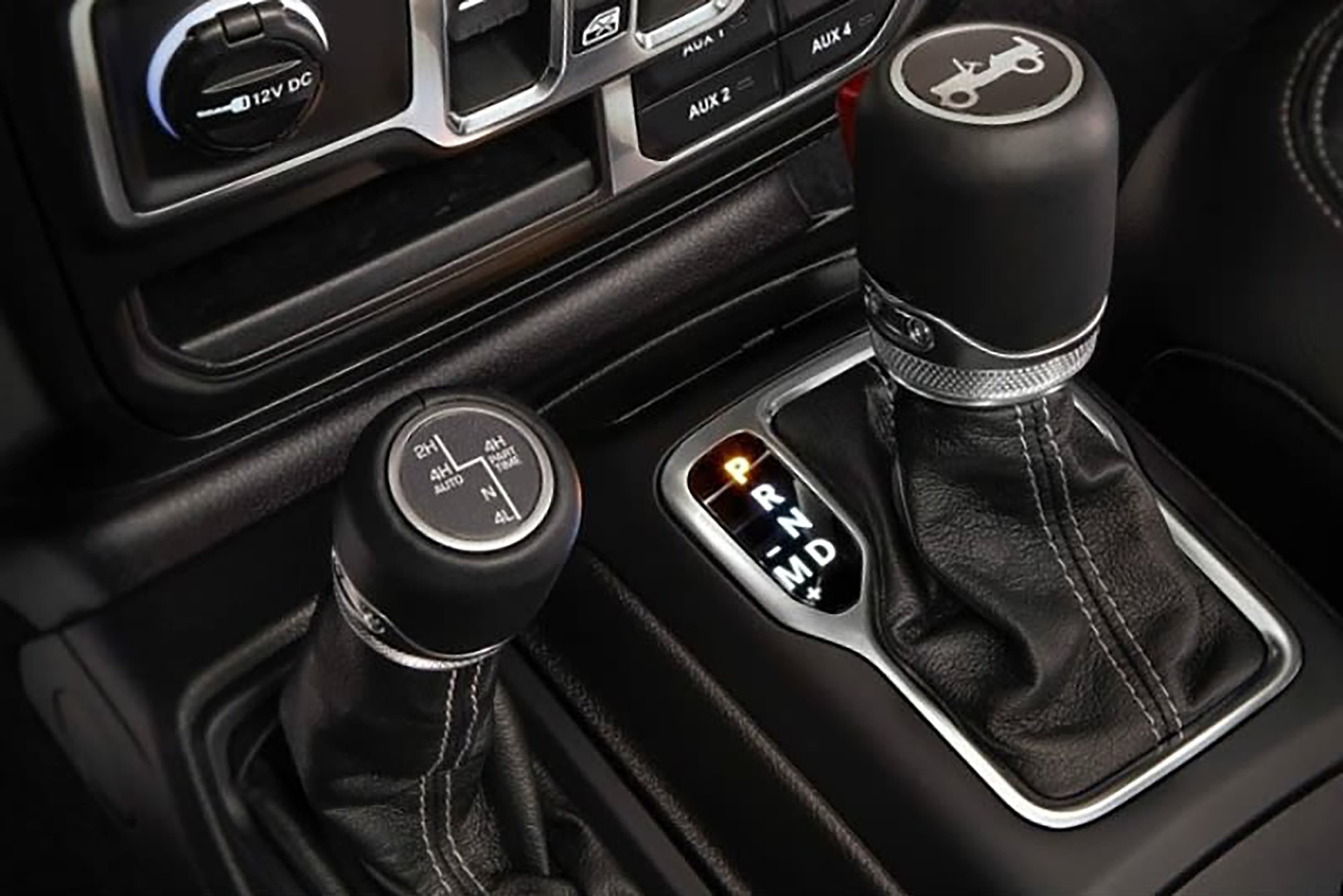
Credit: www.quadratec.com
Jeep Wrangler Drive System Options By Model
Wrangler models have offered different drive systems over the years. Here’s a summary of recent choices:
| Wrangler Model | Standard Drive System | Optional Drive System |
|---|---|---|
| Sport | Command-Trac 4WD | None |
| Sahara | Command-Trac 4WD | Selec-Trac 4WD (auto mode) |
| Rubicon | Rock-Trac 4WD | None |
| Willys | Command-Trac 4WD | None |
- Command-Trac: Part-time 4WD, driver controls modes.
- Selec-Trac: Adds automatic mode, acts like AWD on pavement, but still a 4WD system.
- Rock-Trac: Special for off-roading, with “low range” for tough terrain.
How To Use Jeep Wrangler’s 4wd System
Using 4WD in a Wrangler is simple, but you need to understand when to use each mode.
- 2H: Use for normal, dry roads.
- 4H: Use for rain, snow, sand, or when roads are slippery.
- 4L: Use only for very rough conditions—deep mud, rocks, steep hills.
Switching tips:
- You can shift between 2H and 4H while driving (at low speeds).
- To use 4L, stop the vehicle first, then shift to neutral before moving the lever.
Beginner mistake: Some people use 4WD on dry pavement. This can damage the drivetrain and cause tire wear.

Credit: www.registerguard.com
Awd Vs 4wd: Which Is Better For You?
Choosing between AWD and 4WD depends on your needs.
- AWD is better for:
- City driving
- Light off-road use
- People who want simple, automatic systems
- 4WD (like in Wrangler) is better for:
- Serious off-roading
- Deep snow, mud, or sand
- Drivers who want control over drive modes
Important insight: AWD is easier for beginners because you don’t need to think about it. But for real off-road fun or adventure, 4WD is unbeatable.
Real-world Test: Wrangler Vs Awd Suv
Let’s compare how a Wrangler and a typical AWD SUV perform in tough conditions:
| Situation | Jeep Wrangler (4WD) | Typical AWD SUV |
|---|---|---|
| Deep Snow | Excellent, with 4H or 4L | Good, but may get stuck sooner |
| Highway in Rain | Good in 4H, but not as smooth as AWD | Excellent, smooth automatic grip |
| Rocky Trails | Excellent, with 4L | Poor, not designed for hard off-road |
| Everyday Driving | Best in 2H (rear-wheel drive) | AWD always working, less thinking needed |
Common Misunderstandings About Jeep Wrangler’s Drivetrain
Many new owners make mistakes about Wrangler’s drive system.
- Myth: All Jeeps are AWD. (Fact: Most Wranglers are 4WD, not AWD.)
- Myth: You can use 4WD all the time. (Fact: Only use 4WD on slippery or loose surfaces.)
- Myth: 4WD is better than AWD in every situation. (Fact: AWD is smoother on pavement and in light snow.)
Non-obvious insight: If you mostly drive on city streets, an AWD SUV may be better. If you plan to go off-road or live in a rural area, Wrangler’s 4WD is the right choice.
Selec-trac: The “almost Awd” Wrangler
The Selec-Trac system (available on some Wrangler trims) is the closest thing to AWD in the Wrangler lineup. It lets you put the transfer case in “Auto” mode. In this mode, the system sends power to the wheels that need it, even on dry pavement.
- For people who want AWD convenience but Wrangler style, Selec-Trac is a good option.
- Still, even Selec-Trac is a 4WD system at its core.
Tip: Ask the dealer which transfer case your Wrangler has before you buy.
What About Other Jeep Models?
Some Jeep models, like the Grand Cherokee, do offer true AWD systems. These are made for comfort and safety on all kinds of roads, not just trails.
- Jeep Cherokee and Grand Cherokee: Many trims have AWD or full-time 4WD.
- Jeep Compass and Renegade: Offer both AWD and 4WD options.
If you want a Jeep with AWD for easy city driving, consider these models instead of the Wrangler.
Should Beginners Worry About 4wd Controls?
New drivers sometimes worry about using 4WD. But Wrangler’s controls are simple once you understand the basics.
- The lever or knob is easy to use.
- Clear labels show each mode (2H, 4H, 4L).
- Your owner’s manual explains when to use each one.
Tip: Practice shifting between modes in a safe, open area before going off-road.
Extra insight: Some people forget to shift back to 2H after off-roading. This can waste fuel and wear out parts.
Off-roading And Safety With Jeep Wrangler 4wd
Wranglers are built for adventure, but safety comes first.
- Always slow down before switching to 4L.
- Don’t use 4WD on dry, paved roads.
- Check your tires—good tires help as much as 4WD or AWD.
- Learn recovery basics (like using a tow strap) if you plan to off-road.
If you want to learn more about safe off-roading, the National Park Service has tips for beginners.
Frequently Asked Questions
Is The Jeep Wrangler Awd Or 4wd?
The Wrangler uses 4WD. Only some trims with Selec-Trac offer an “auto” mode similar to AWD, but it’s still a 4WD system.
Can I Use 4wd On Dry Pavement?
No. You should use 2H on dry roads. Using 4WD on pavement can damage the drivetrain.
Which Wrangler Model Has “auto” 4wd?
The Sahara (and some special trims) offer the Selec-Trac system, which includes an “Auto” mode. This acts like AWD but is technically 4WD.
Is Awd Better Than 4wd For Snow?
For deep snow or off-road snow, 4WD (like in Wrangler) is better. For light snow on city streets, AWD is easier and more automatic.
Does Every Jeep Have 4wd?
No. Many Jeep models (like Cherokee or Grand Cherokee) offer AWD or both AWD and 4WD. The Wrangler is mainly 4WD.
Credit: www.autonationchryslerdodgejeepramnorthrichlandhills.com
Final Thoughts
The Jeep Wrangler is not all-wheel drive in the usual sense. Instead, it uses a strong, flexible 4WD system designed for off-road fun and serious conditions. Some modern Wranglers offer a mode that acts like AWD, but it’s still part of a 4WD setup. If you want adventure and control, the Wrangler’s system is a great choice. If you want “set it and forget it” grip for city driving, look at Jeep’s other models with AWD. Learning these differences will help you choose the right vehicle and use it safely every day.