
Where To Put Coolant In Jeep Compass: Find The Reservoir
 Reading Time: 6 minutes
For Jeep Compass owners in the United States, engine coolant goes into the coolant reservoir, also called the expansion tank. With the engine completely cool, find the translucent tank under the hood and add the coolant specified in your Compass owner’s manual. Do not open the coolant cap when the engine is hot.
The reservoir’s position and the correct coolant can vary by model year and engine. Use the labels on your vehicle and its manual rather than relying on the tank’s location, coolant color, or another Compass owner’s instructions.
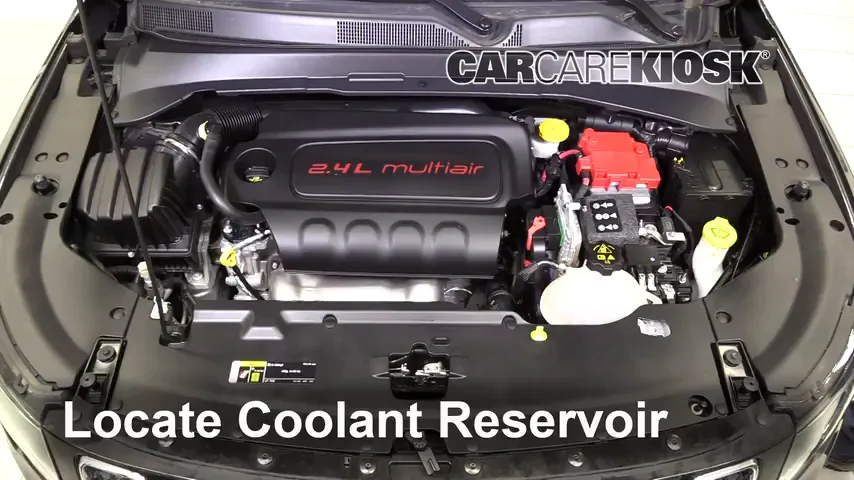
Where is the coolant reservoir on a Jeep Compass?
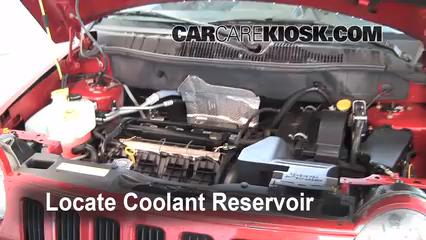
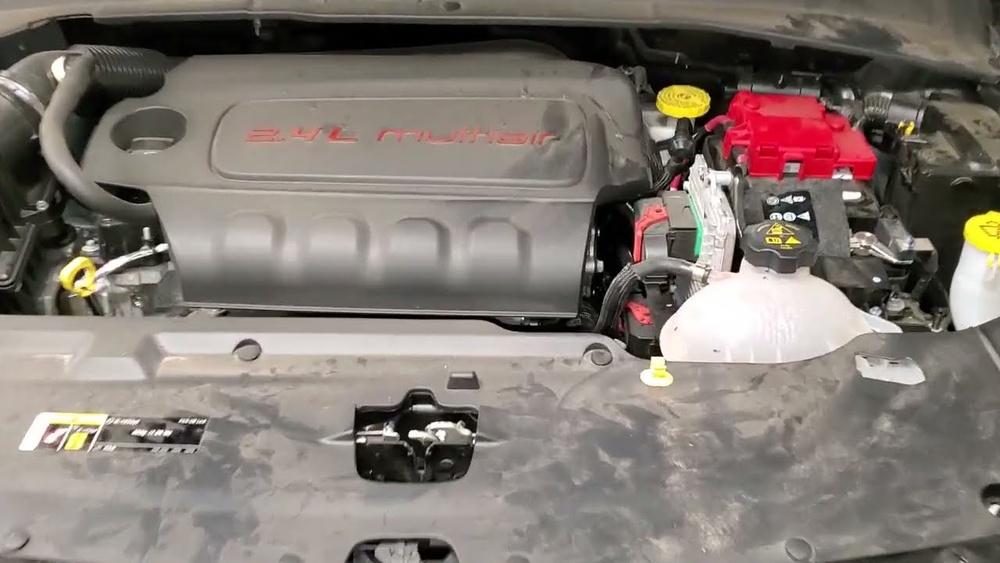
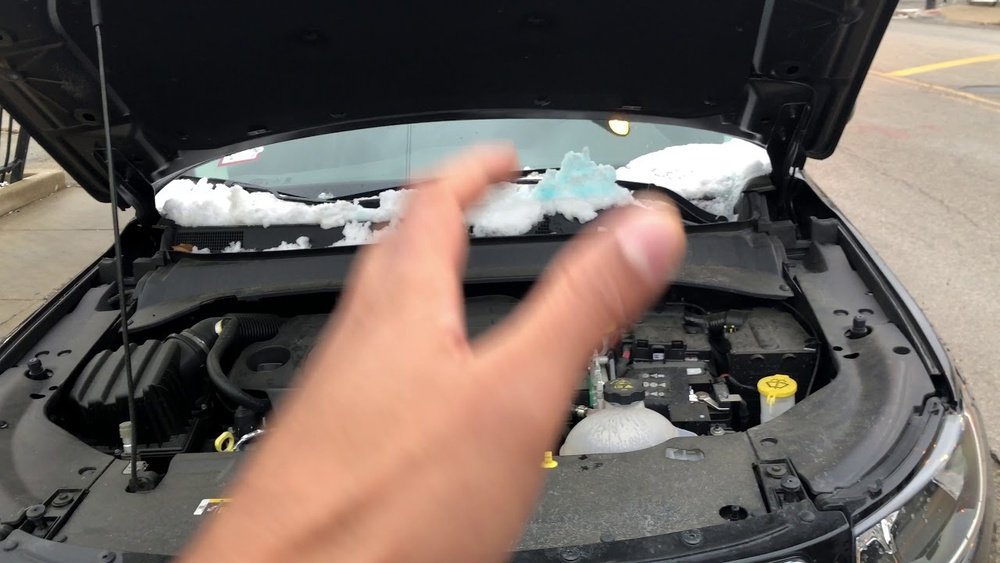
The coolant reservoir is a translucent plastic tank in the engine compartment. Look for a cap with a coolant warning symbol or a hot-pressure warning, and check for MIN and MAX level marks on the tank.
Its exact position can vary between Jeep Compass model years and engine setups. If you do not see it right away, use the engine-compartment diagram in your owner’s manual. Do not choose a tank based on location alone.
Check the markings before adding fluid:
- Coolant reservoir: Often translucent, with MIN and MAX lines and a pressure-warning cap.
- Windshield washer-fluid tank: Usually marked with a windshield spray symbol; its cap may be blue.
- Brake-fluid reservoir: Marked for brake fluid and not used for engine coolant.
If the tank or cap is not clearly marked, stop and check the manual before pouring anything in. Adding coolant to the wrong reservoir can cause damage.
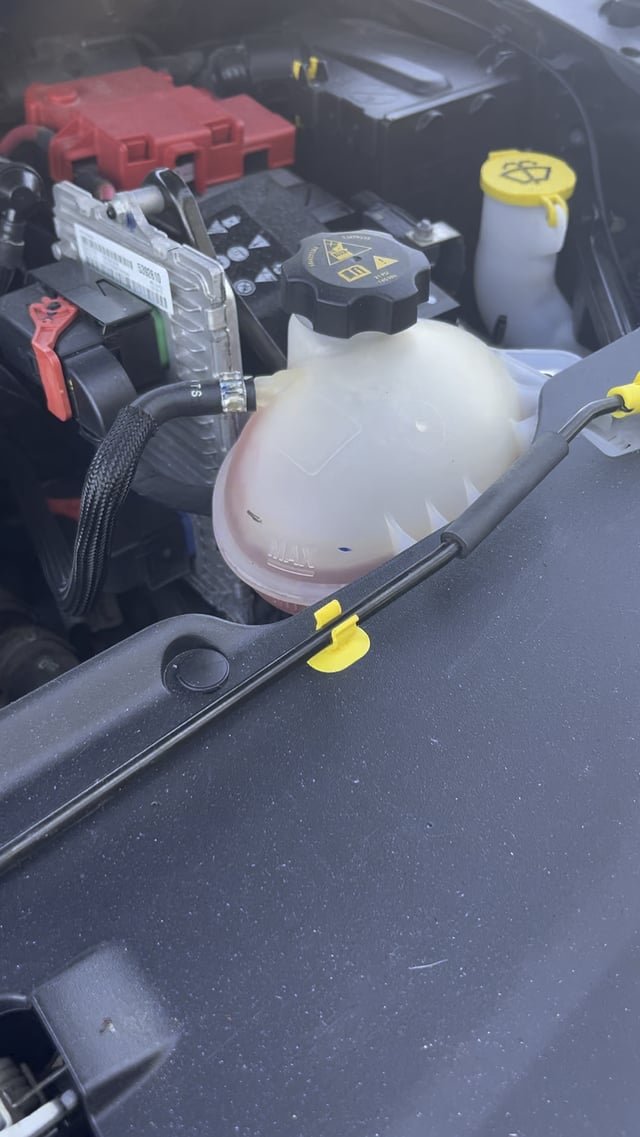
How to add coolant to a Jeep Compass
Add coolant only when the Compass is parked on level ground, the engine is off, and the engine and cooling system are fully cool. Follow these steps:
- Check the owner’s manual. Confirm the coolant specification for your model year and engine.
- Find the coolant reservoir. Match its cap and markings to the manual.
- Check the level while cold. The fluid should sit between the MIN and MAX marks.
- Remove the cap slowly. Do this only when the system is fully cool. If you hear a hiss or see steam, stop and wait.
- Add the correct coolant. Pour it into the reservoir’s fill opening. Stop at the MAX line; do not fill above it.
- Secure the cap. Tighten it as directed in the manual, then clean up any spilled fluid.
Use premixed coolant or prepare concentrate only as its label and the owner’s manual direct. After adding coolant, check the level again when the engine is cold. Never judge the level right after a drive, because heat can make the coolant expand.

Which coolant does a Jeep Compass need?
Use the coolant specification listed in the owner’s manual for your Compass’s model year and engine. Jeep has used different coolant requirements across model years, so a fluid that worked in one Compass may not be right for another.
Do not select coolant by color alone. Different formulas can look alike, and color does not confirm that a coolant meets the required specification. Check the manual and the coolant container for the matching specification before use.
If you cannot confirm the right fluid, do not guess or mix products. Ask a Jeep dealer or a qualified repair shop to identify the correct coolant using your vehicle details. Avoid adding plain water as a substitute for the specified coolant.
How much coolant should you add?
Add only enough coolant to bring the cold level to the MAX mark. The amount depends on how low the reservoir is; there is no single top-up amount for every Jeep Compass.
If the level is just below MIN, add a small amount, then check the level again. If the reservoir is empty, or the coolant level drops soon after you top it up, the vehicle may have a leak or another cooling-system problem. A simple top-up may not fix the cause.
The reservoir’s MIN and MAX marks are for checking the coolant level, not for measuring the total capacity of the cooling system. Use the owner’s manual or a qualified repair shop for capacity and service-fill information.
What to do if the coolant level keeps dropping
A coolant level that repeatedly falls is not normal routine maintenance. Check the level only when the engine is cold, and look for signs of a leak, such as a sweet smell, wet areas under the vehicle, or a low-coolant warning.
Do not keep topping up the reservoir without finding out why the level is falling. A leak, a damaged cap, or another cooling-system fault may need professional diagnosis. Coolant can be toxic to people and animals, so clean up spills promptly and keep the fluid away from children and pets.
If the temperature gauge rises into the danger range, a warning appears, or steam comes from under the hood, pull over somewhere safe and turn off the engine. Do not remove the coolant cap. Let the vehicle cool and arrange for roadside help or service if needed.
Key Takeaways
- Put coolant in the coolant reservoir, not the washer-fluid or brake-fluid reservoir.
- Check the level only when the engine is fully cool and the vehicle is on level ground.
- Use the coolant specification listed for your Compass’s model year and engine.
- Fill only to the MAX mark. If the tank is empty or the level keeps dropping, seek service.
FAQs
Can I add coolant to my Jeep Compass when the engine is warm?
Wait until the engine and cooling system are fully cool. A hot cooling system can be under pressure, and opening its cap may release hot coolant or steam and cause serious burns.
Can I use any coolant that says it is compatible with Jeep?
Use coolant only if its label confirms the specification required for your Compass, as listed in the owner’s manual. “Compatible with Jeep” alone may not identify the correct formula for your model year and engine.
Is it safe to drive with low coolant?
Do not drive if the coolant is below the safe range and the engine is overheating, a warning is on, or you see steam. If the level is only slightly low and there are no warning signs, check the manual and top it up correctly before driving; have recurring coolant loss checked.
Why is the coolant reservoir empty?
An empty reservoir can indicate coolant loss or a cooling-system fault. Do not assume that adding coolant is enough to make the vehicle safe to drive, especially if it has overheated or the fluid drops again.
Does the coolant color tell me which type to buy?
No. Coolant color is not a reliable way to identify its specification. Check the owner’s manual and the product label.
Conclusion
On a Jeep Compass, add coolant through the marked coolant reservoir under the hood. Check the level with the engine fully cool, use the fluid specified for your exact model year and engine, and stop at the MAX line. If the tank is empty, the vehicle overheats, or the level keeps falling, have the cooling system checked rather than relying on repeated top-ups.