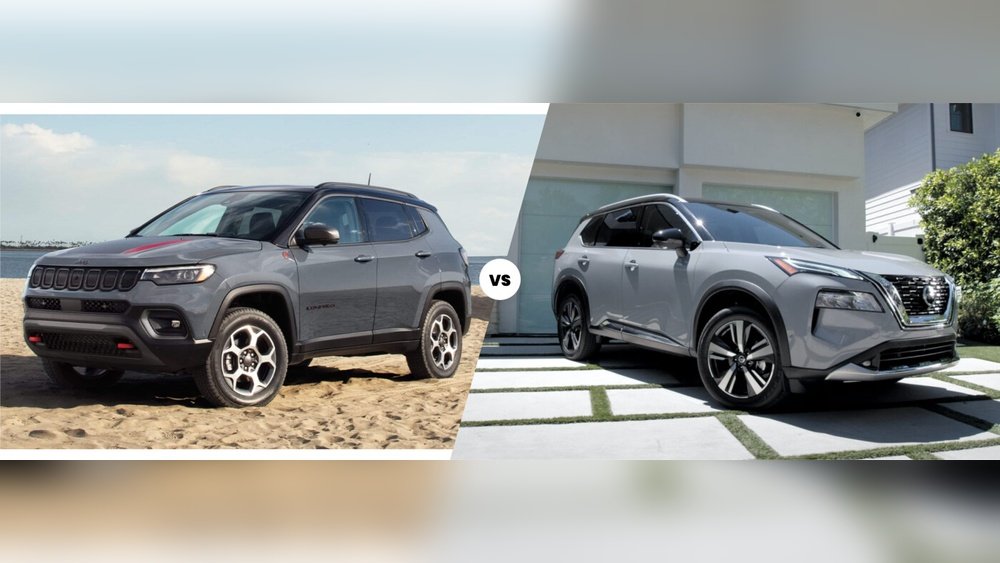
Nissan Rogue Vs Jeep Compass: Ultimate SUV Showdown
 Reading Time: 7 minutes
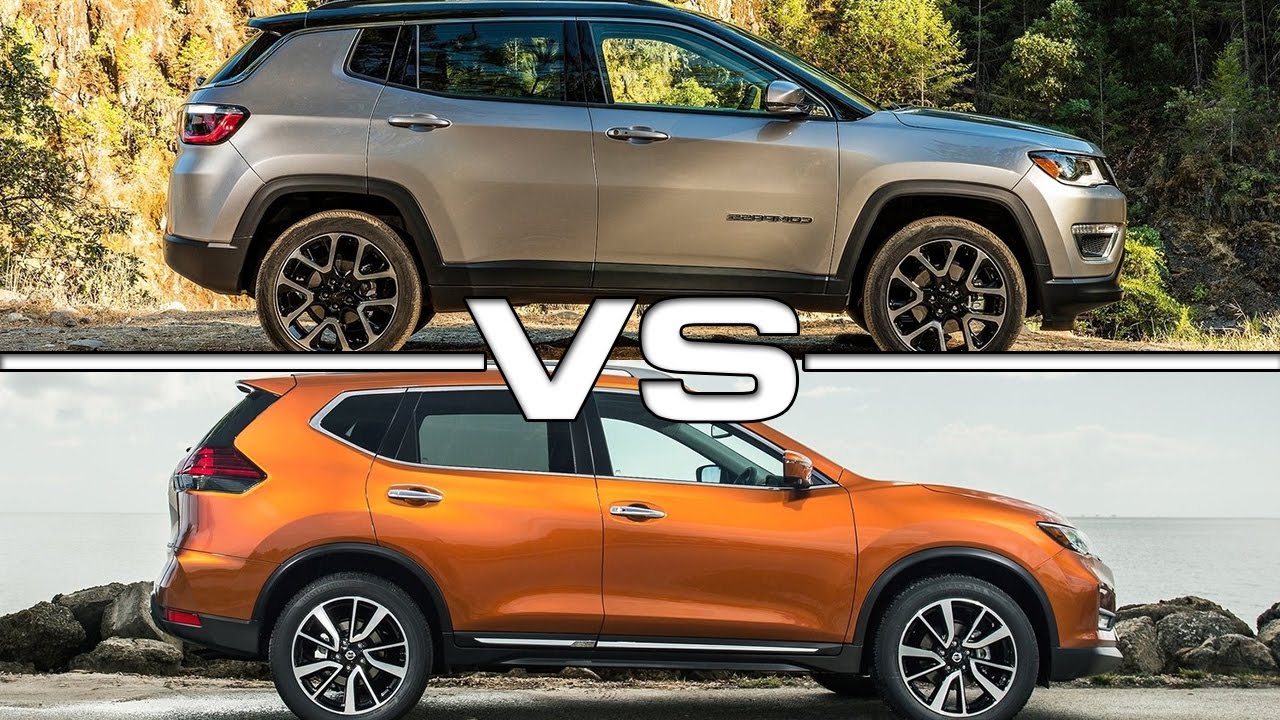
 When you look for a compact SUV, you want a car that fits your lifestyle. Two popular choices in the US market are the Nissan Rogue and the Jeep Compass. Both look stylish and offer modern features, but they target different drivers. If you’re comparing them for daily use, family needs, or weekend adventures, this guide will break down everything you need to know.
Overview: Nissan Rogue And Jeep Compass
The Nissan Rogue is known for comfort, smart technology, and excellent fuel efficiency. It’s a top choice for city driving and small families. On the other side, the Jeep Compass has a strong reputation for rugged design and off-road ability. It attracts drivers who love adventure but still want a practical car for city life.
Both models fit the compact SUV category, but their strengths are different. Let’s look deeper at how they compare.
Price And Value
Buying a car is a big investment. Price and value matter for most buyers.
| Model | Base Price (2024) | Top Trim Price |
|---|---|---|
| Nissan Rogue | $28,850 | $39,130 |
| Jeep Compass | $28,400 | $39,535 |
- The base prices of both cars are very close.
- The Nissan Rogue often offers more standard safety features at the base price.
- The Jeep Compass lets you customize with more off-road options, but you may pay extra for some features.
Non-obvious insight: Many buyers overlook that the Rogue’s standard equipment saves you money. For example, its base trim usually includes more advanced safety systems than the Compass.
Tip: Check what’s included in the trim you want—not just the sticker price. Dealer incentives and financing options also affect your total cost.
Engine Performance And Driving Experience
Performance is about more than just horsepower. It’s how the car feels every day.
Nissan Rogue Engine
- 1.5-liter turbocharged 3-cylinder
- 201 horsepower
- 225 lb-ft torque
- CVT (Continuously Variable Transmission)
- Front-wheel drive standard; All-wheel drive optional
Jeep Compass Engine
- 2.0-liter turbocharged 4-cylinder
- 200 horsepower
- 221 lb-ft torque
- 8-speed automatic transmission
- All-wheel drive standard
Driving feel: The Rogue’s engine offers quick acceleration and is quieter on highways. The Compass feels a bit stronger at low speeds and handles rough roads well. The Rogue’s CVT helps with fuel economy, but some drivers prefer the Compass’s traditional automatic for smoother shifts.
Non-obvious insight: The Compass’s standard AWD gives you better grip in rain or snow, which is rare at its price point.
Fuel Efficiency
Gas mileage is important, especially with rising fuel prices.
| Model | City (mpg) | Highway (mpg) | Combined (mpg) |
|---|---|---|---|
| Nissan Rogue (FWD) | 30 | 37 | 33 |
| Nissan Rogue (AWD) | 28 | 35 | 31 |
| Jeep Compass (AWD) | 24 | 32 | 27 |
- The Nissan Rogue is a clear winner for fuel efficiency.
- Over one year, with 15,000 miles driven, the Rogue can save you about $200–$300 in fuel compared to the Compass.
Tip: If you drive mostly in the city, the Rogue’s smaller engine and CVT transmission help you spend less at the gas station.

Credit: www.planet-nissan.com
Interior Comfort And Space
Your car’s interior matters for daily drives and long trips.
Nissan Rogue Interior
- Seats up to five people
- Rear seats: Roomy, best-in-class for legroom
- Cargo space: 36.5 cubic feet behind rear seats (up to 74.1 cubic feet with seats down)
- Quality materials, especially in higher trims
- User-friendly touchscreen
Jeep Compass Interior
- Seats five people
- Rear seats: Less legroom than Rogue
- Cargo space: 27.2 cubic feet behind rear seats (up to 59.8 cubic feet with seats folded)
- Rugged look, but some hard plastics in lower trims
- Touchscreen is easy to use
Non-obvious insight: The Rogue’s rear doors open almost 90 degrees, making it much easier to load child seats or big items. Many families find this a game-changer.
Example: If you often carry sports gear or groceries, the Rogue gives you noticeably more room.
Technology And Infotainment
Modern SUVs must keep you connected and entertained.
| Feature | Nissan Rogue | Jeep Compass |
|---|---|---|
| Touchscreen Size | 8″ (base) / 9″ (higher trims) | 10.1″ (all trims) |
| Apple CarPlay / Android Auto | Standard | Standard |
| Wireless Charging | Available | Available |
| Navigation | Optional | Optional |
| Premium Audio | Bose (higher trims) | Alpine (higher trims) |
- Both offer Apple CarPlay and Android Auto on all trims.
- The Compass has a slightly larger standard screen, but the Rogue’s system is more intuitive for many users.
Tip: If you’re not tech-savvy, the Rogue’s interface is simpler, with fewer menus to navigate.
Credit: www.youtube.com
Safety Features
Safety is a top concern for families and commuters.
Nissan Rogue Safety
- Nissan Safety Shield 360 standard:
- Automatic emergency braking
- Blind spot warning
- Rear cross-traffic alert
- Lane departure warning
- High beam assist
- Rear automatic braking
- IIHS Top Safety Pick
Jeep Compass Safety
- Standard features:
- Forward collision warning
- Active lane management
- Blind spot monitoring
- Rear cross-traffic alert
- Optional:
- Adaptive cruise control
- Parking assist
- Not IIHS Top Safety Pick, but strong crash ratings
Non-obvious insight: The Rogue’s Rear Automatic Braking is rare in this price range. It helps prevent parking accidents, a common source of small repairs.
Driving And Handling
How a car feels on the road is just as important as the specs.
- Nissan Rogue: Smooth ride, quiet cabin, easy steering. Great for city streets and highways. Not ideal for heavy off-roading, but handles snowy roads with AWD.
- Jeep Compass: Tighter suspension, more feedback from the road. Feels at home on dirt or gravel. The Trailhawk version is excellent for off-road use, with higher ground clearance and special tires.
Tip: If you want to go camping or explore trails, the Compass Trailhawk is one of the best in the class. If you mostly drive on pavement, the Rogue feels more refined.
Reliability And Ownership Costs
You want a car that doesn’t surprise you with repairs.
- Nissan Rogue has a strong reliability record. Maintenance costs are below average for compact SUVs. Common repairs are rare, and parts are easy to find.
- Jeep Compass is reliable for the segment but can be more expensive to repair, especially if you use it off-road often.
Example: According to J.D. Power, the Rogue scores above average for dependability, while the Compass is average.
Tip: Check warranty coverage. Both offer 3 years/36,000 miles basic and 5 years/60,000 miles powertrain warranties.
Off-road Ability
This is where the Jeep Compass stands out.
- Compass Trailhawk: Special version for off-roading
- Raised suspension
- Skid plates
- Off-road tires
- Selec-Terrain system (choose snow, sand, mud, rock)
- Nissan Rogue: Not designed for serious off-roading. AWD helps on snow and gravel, but ground clearance and tires are for paved roads.
Non-obvious insight: Many buyers think all SUVs are good off-road. In reality, only a few, like the Compass Trailhawk, are truly capable on rough terrain.
Tip: If you need to tow, both can pull small trailers. The Rogue (1,500 lbs max) and Compass (2,000 lbs max) can handle small boats or campers.
Credit: www.elmwoodcdjr.com
Practical Ownership: Which Suits You?
Your best choice depends on how you use your car.
- Choose the Nissan Rogue if:
- You want comfort for daily drives and trips.
- Fuel efficiency is important.
- You need more cargo space and easy access.
- You prefer a quiet, refined ride.
- Choose the Jeep Compass if:
- You plan to drive off-road or in rough weather often.
- You like a rugged look.
- You want standard AWD at a low price.
- You don’t need as much cargo space.
Example: A family who carpools and takes road trips will likely prefer the Rogue. An outdoor lover who visits trails and campsites will benefit from the Compass.
Resale Value
Buying a car is not just about today. Think about the future value.
- Nissan Rogue holds its value well, especially in higher trims.
- Jeep Compass also does well, but off-road use can lead to more wear and reduce resale value.
Tip: Keeping up with maintenance and avoiding heavy off-road use helps both cars keep their value.
Real-world Owner Experiences
What Do Actual Drivers Say?
- Rogue owners love the easy-to-drive feel, quiet cabin, and good gas mileage. Many mention the roomy back seat and smooth ride.
- Compass owners like the confident handling in bad weather and on rough roads. Some say the cabin is not as quiet, and the back seat can feel tight for adults.
Non-obvious insight: Many new SUV buyers miss that test-driving both on the same day is the best way to feel the differences. Bring your family or your usual gear to see what fits best.
Frequently Asked Questions
Is The Nissan Rogue Good For Snow?
Yes. The Nissan Rogue with AWD handles snow and ice well. Its traction control and stability systems help keep you safe. However, for heavy snow, special winter tires are always a smart idea.
Does The Jeep Compass Come With All-wheel Drive?
Yes. All 2024 Jeep Compass models come with AWD as standard. This makes it a strong choice for people who live in areas with tough weather or want to drive off-road.
Which Suv Has Better Gas Mileage?
The Nissan Rogue wins for fuel economy. You can expect about 33 mpg combined, while the Compass offers about 27 mpg combined. Over time, the Rogue can save you money on gas.
Is The Rogue Bigger Inside Than The Compass?
Yes. The Nissan Rogue has more space for passengers and cargo. Its rear seats are roomier, and the trunk is much larger, making it better for families or anyone who carries a lot of stuff.
Where Can I Find More Details On Each Suv?
You can find official specs and more details on the car makers’ websites. For example, visit the Nissan USA Rogue page or check the Jeep site for the Compass.
Choosing between the Nissan Rogue and Jeep Compass comes down to your lifestyle. The Rogue is the comfortable, efficient pick for daily life and long drives. The Compass is better for adventure and rough roads. Take a test drive, check what matters most to you, and you’ll make a smart choice for years to come.