
Is Jeep Cherokee AWD or 4WD? Your Complete Guide
 Reading Time: 7 minutes
 Is Jeep Cherokee Awd Or 4wd?
Buying a Jeep Cherokee can be exciting, but it often brings up a common question: is this SUV an AWD or 4WD vehicle? The answer is not as simple as yes or no. The Jeep Cherokee lineup offers different drivetrains depending on the model and trim. Understanding the difference between AWD and 4WD, and knowing what your Cherokee uses, is important for daily driving, off-roading, and even resale value.
If you’re a beginner, choosing between AWD and 4WD can feel confusing. This article will break down the differences, how each system works, which Cherokee trims have AWD or 4WD, and what this means for you as a driver. You’ll also see real-world examples, practical data, and easy-to-understand comparisons, helping you make the best choice for your needs.
Understanding Awd Vs 4wd
Before diving into the Cherokee itself, let’s clarify these terms.
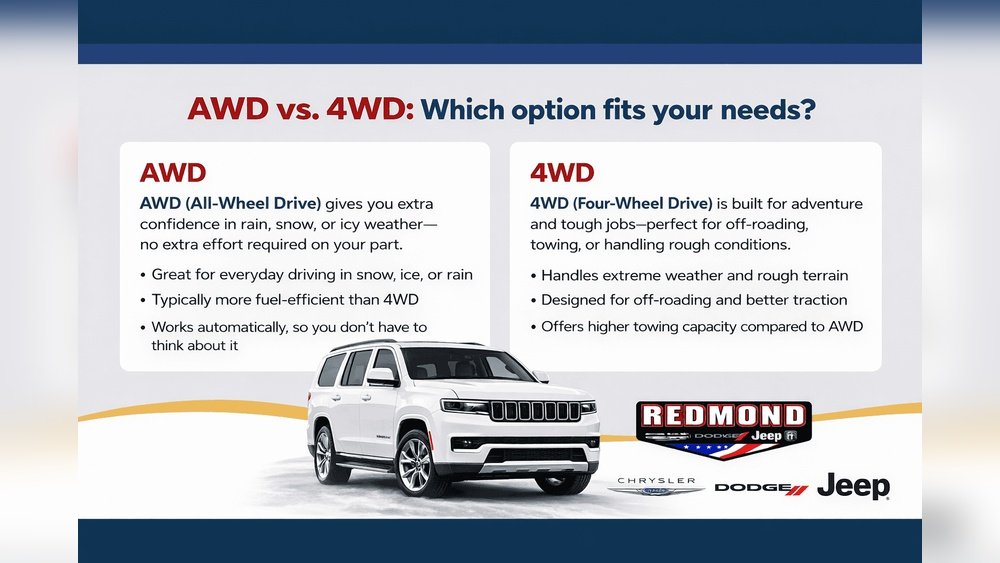
- AWD (All-Wheel Drive) means power goes to all four wheels automatically. The system adjusts itself to improve traction, especially on wet or slippery roads. It’s great for city and highway driving, and light snow or rain.
- 4WD (Four-Wheel Drive) is usually found on more rugged vehicles. It can be switched on or off, sending power to all four wheels when needed—especially useful for off-roading, deep snow, mud, or rough terrain.
Key Differences
Here’s a basic comparison:
| Feature | AWD | 4WD |
|---|---|---|
| Operation | Automatic | Driver-controlled |
| Best Use | On-road, light off-road | Off-road, severe conditions |
| Complexity | Simpler for user | More choices, manual modes |
| Fuel Efficiency | Generally better | Lower due to weight |
Many drivers think AWD and 4WD are the same, but they’re not. AWD is about convenience, while 4WD is about capability.
Jeep Cherokee Drivetrain Options
The Jeep Cherokee is unique because it offers both AWD and 4WD, depending on the trim and model year. Understanding what each version provides is essential for picking the right one.
Cherokee Drivetrain Systems
Jeep calls their systems Jeep Active Drive (AWD) and Jeep Active Drive Lock (4WD). Here’s a quick look:
- Jeep Active Drive I: Basic AWD system, available on most trims.
- Jeep Active Drive II: More advanced AWD with additional gear range for moderate off-roading.
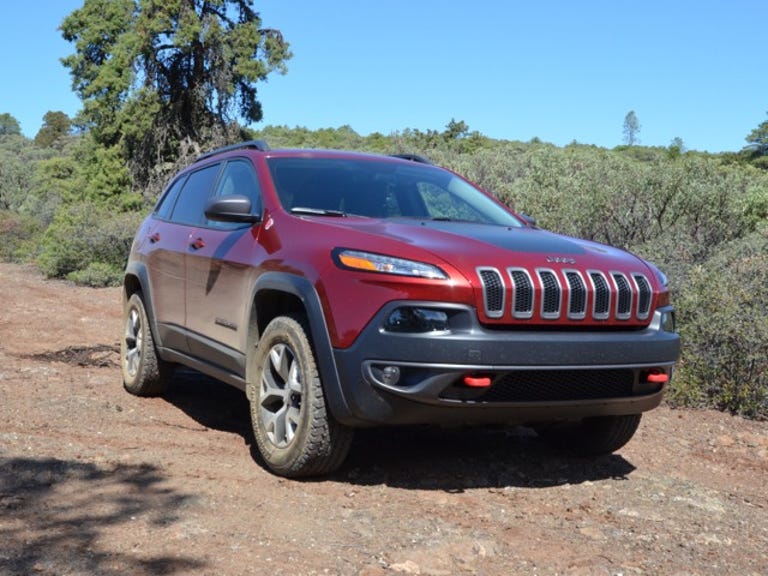
- Jeep Active Drive Lock: True 4WD system, mostly on the Trailhawk trim, includes a rear locker for tough terrain.
Which Trims Offer Awd Or 4wd?
Not every Cherokee is built the same. Here’s a simple breakdown for recent model years (especially 2014–2023):
| Trim | Standard Drivetrain | Available Option |
|---|---|---|
| Latitude | FWD | AWD (Active Drive I) |
| Latitude Plus | FWD | AWD (Active Drive I) |
| Limited | FWD | AWD (Active Drive I or II) |
| Trailhawk | 4WD (Active Drive Lock) | — |
| High Altitude | FWD | AWD (Active Drive I or II) |
- AWD: Most Cherokees with Jeep Active Drive I/II
- 4WD: Only the Trailhawk with Jeep Active Drive Lock

Credit: www.lutherauto.com
How Jeep’s Awd And 4wd Work
Jeep’s AWD and 4WD systems are engineered for different types of drivers.
Jeep Active Drive I (awd)
- Fully automatic
- Adjusts power to each wheel when needed
- No driver action required
- Good for snow, rain, and mild dirt roads
Jeep Active Drive Ii (advanced Awd)
- Adds a low gear for better control on hills or sand
- Still automatic, but offers more capability
- Useful for people who face steeper or rougher roads
Jeep Active Drive Lock (4wd)
- Includes all features of Active Drive II
- Adds a rear locking differential for extreme off-road
- Driver can manually select 4WD modes for mud, sand, rocks
- Exclusive to the Trailhawk trim
Real-world Examples
Let’s look at how these systems perform in common situations.
- City Commuting in Winter
- A Cherokee with AWD (Active Drive I) automatically sends more power to slippery wheels. You don’t need to do anything—just drive. This helps in icy mornings or rainy days.
- Family Road Trip on Highways
- AWD makes long trips smoother, with no need to switch modes. Fuel economy is better compared to heavier 4WD systems.
- Weekend Off-Road Adventure
- The Trailhawk’s 4WD (Active Drive Lock) lets you lock the rear axle. This means both rear wheels turn together, useful for climbing rocks or crossing mud. You get extra modes for sand, mud, and snow.
Credit: www.cnet.com
Which System Is Right For You?
Choosing between AWD and 4WD depends on your lifestyle.
- AWD (Active Drive I or II) is best for:
- Daily city or highway driving
- Occasional snow or rain
- Drivers who want simplicity
- 4WD (Active Drive Lock) is best for:
- Regular off-roading
- Deep snow, mud, or sand
- Drivers who want maximum capability
If you only drive on paved roads or in the city, AWD is enough. If you plan to explore trails or live in areas with harsh winters, 4WD might be better.
Performance And Fuel Economy
It’s important to know how these systems affect performance and gas mileage.
Performance
- AWD: Smooth operation, less driver input, great for most conditions
- 4WD: More control, but requires knowledge to use properly
Fuel Economy
AWD uses less fuel than 4WD, because 4WD systems are heavier and more complex.
For example, the 2022 Jeep Cherokee:
- AWD (Active Drive I):
- 21 MPG city / 29 MPG highway (with 2.4L engine)
- 4WD (Trailhawk/Active Drive Lock):
- 18 MPG city / 24 MPG highway (with 3.2L V6)
These numbers show the cost of extra capability.
Common Mistakes Beginners Make
Many new buyers misunderstand AWD and 4WD systems. Here are some errors to avoid:
- Assuming all Cherokees are 4WD: Most are AWD, only Trailhawk is true 4WD.
- Using 4WD on dry pavement: 4WD is for low-traction surfaces. Using it on dry roads can damage parts.
- Ignoring fuel economy: 4WD systems cost more to run, so consider your needs.
- Not checking the trim: Always confirm the drivetrain before buying.
Maintenance Differences
AWD and 4WD need different care. Both require regular maintenance, but 4WD parts are more complex and expensive.
- AWD: Fewer moving parts, less frequent service.
- 4WD: Needs transfer case and differential fluid changes, especially if you off-road often.
A simple maintenance schedule:
| Drivetrain | Service Item | Interval |
|---|---|---|
| AWD | Transfer case fluid | Every 60,000 miles |
| 4WD | Differential fluid | Every 30,000 miles |
| 4WD | Transfer case fluid | Every 30,000 miles |
Following the schedule helps prevent costly repairs.

Credit: www.kengarff.com
Resale Value And Market Demand
AWD Cherokees are more common and easy to sell. 4WD Trailhawks can be rarer and fetch higher prices among off-road fans.
- AWD models: Good for most buyers, especially in snowy states.
- 4WD Trailhawk: Niche appeal, valued by adventure drivers.
Used car prices may reflect this difference. Always compare with similar models in your region.
Insurance And Ownership Costs
Insurance companies may charge more for 4WD models, since they’re used in riskier conditions. Maintenance costs are also higher for 4WD due to more complex parts.
- AWD: Lower insurance, cheaper to own
- 4WD: Slightly higher insurance and service bills
Check with your insurance provider before deciding.
Non-obvious Insights
- AWD systems on the Cherokee can handle light off-roading. Many people think AWD is only for city roads, but Jeep’s AWD is better than most rivals for dirt and gravel.
- 4WD Trailhawks often come with other upgrades. The Trailhawk is not just about 4WD; it adds skid plates, tow hooks, and higher ground clearance, making it better for real adventures.
How To Tell If Your Cherokee Is Awd Or 4wd
If you already own a Cherokee and are unsure:
- Check the rear of your SUV. Trailhawk badges often mean 4WD.
- Look for “Active Drive Lock” in the settings or manual.
- VIN (vehicle identification number) can be checked at a dealer.
- Ask your dealer for the build sheet, which lists all features.
What The Experts Say
According to the official Jeep website, the Trailhawk is the only Cherokee with true 4WD (Active Drive Lock). All other trims offer advanced AWD as an option or standard.
Industry reviewers agree: for everyday driving and occasional bad weather, AWD is perfect. For serious off-road use, the Trailhawk’s 4WD is the best choice.
Frequently Asked Questions
Is The Jeep Cherokee Always Awd?
No. Most Jeep Cherokee models offer AWD as an option, but base trims often come with front-wheel drive (FWD). You must choose AWD when buying, or pick a trim that includes it.
Which Jeep Cherokee Is 4wd?
Only the Trailhawk trim is true 4WD with Jeep Active Drive Lock. All other trims use AWD systems.
Can I Take An Awd Cherokee Off-road?
Yes, but with limits. The AWD system can handle light trails, gravel, and snow. For serious rock crawling or deep mud, the 4WD Trailhawk is better.
Does 4wd Cost More To Maintain?
Usually, yes. 4WD systems have more moving parts and need extra care, especially if you use them off-road. Regular fluid changes are important.
How Can I Know If My Cherokee Is Awd Or 4wd?
Check your owner’s manual or the “4WD Lock” button on the console. Only Trailhawks have the full 4WD setup with extra drive modes and a rear locker.
Finding the right Jeep Cherokee depends on how you drive and what you need. AWD models are smart for most owners, offering safety and confidence in bad weather. If adventure is your goal, the Trailhawk’s 4WD system is a real upgrade.
Always confirm the drivetrain before buying, and enjoy your Cherokee wherever the road—or trail—takes you.