How to Store Jeep Hardtop: Expert Tips for Safe Storage
 Reading Time: 7 minutes
 Storing your Jeep hardtop the right way can protect your investment, save space, and make reinstalling it much easier. For new Jeep owners, the process may seem confusing. Hardtops are heavy, awkward to carry, and can be damaged if you store them incorrectly. The good news: with a little planning, you can keep your Jeep hardtop safe, clean, and ready for the next season.
This guide will walk you through everything you need to know about how to store Jeep hardtop. You’ll find practical tips, real examples, and answers to common questions—so your hardtop stays in top shape year after year.
Why Proper Storage Matters
A Jeep hardtop is not just a cover—it’s a valuable, expensive part of your vehicle. New replacement hardtops can cost $2,000 or more, depending on the model. If you want to avoid cracks, scratches, or water leaks, storing it correctly is essential.
- Hardtops are heavy: Most weigh between 80–140 pounds.
- They’re large: A Wrangler 2-door hardtop is about 55 inches long and 37 inches wide. A 4-door version is even bigger.
- Damage is costly: Even small cracks can let water inside, causing mold or rust.
Common Storage Methods Compared
Choosing the right storage method depends on your space, budget, and how often you swap tops. Here’s a quick look at the most popular ways to store a Jeep hardtop:
| Storage Method | Pros | Cons |
|---|---|---|
| On the Ground (Padded) | Cheap, easy, no tools needed | Takes floor space, risk of damage from bumps |
| Hardtop Stand or Cart | Mobile, keeps top upright, safer | Requires purchase, takes some space |
| Wall-Mounted Rack | Saves floor space, secure | Requires installation, not mobile |
| Ceiling Hoist | Best for small garages, no floor space needed | Installation effort, need good ceiling support |

Credit: www.youtube.com
Step-by-step: Preparing Your Hardtop For Storage
Before you store your Jeep hardtop, take these simple steps. This will protect the top and make it easier to reinstall later.
- Clean the Hardtop
- Wash the outside with car-safe soap and water.
- Wipe down the inside, especially around seals and windows.
- Dry thoroughly to prevent mold.
- Inspect for Damage
- Look for any cracks, chips, or worn weatherstripping.
- Fix small issues now to avoid bigger problems later.
- Remove Hardware
- Take off all bolts, knobs, and clamps.
- Store these in a labeled bag or container.
- Keep the bag with the top or in your glove box.
- Protect the Seals
- Apply a silicone protectant to rubber seals.
- This keeps them soft and stops cracking.
- Cover the Top
- Use a soft, breathable cover or old blanket.
- Avoid plastic, which can trap moisture.
Storing On The Ground (padded)
This is the simplest method, and works well if you have extra space.
- Lay down thick moving blankets or foam pads.
- Place the hardtop upside-down (window facing up) on the padding.
- Never rest the top directly on concrete—this can scratch or crack the finish.
- Keep the top away from high-traffic areas.
Pro tip: Slide a sheet of cardboard under the padding to add an extra layer of protection.
Using A Hardtop Stand Or Storage Cart
A hardtop stand or rolling cart is a popular upgrade for Jeep owners. These stands hold the top upright, off the ground, and often have wheels for easy movement.
- Most stands cost between $150–$350.
- Look for models with padded arms and locking wheels.
- Stands can fit in a garage corner, freeing up floor space.
Example: The TopLift Pro Storage Cart can hold both 2-door and 4-door hardtops, and rolls easily for one-person handling.
Key Benefits
- Reduces risk of damage during storage or moving.
- Lets you cover the top without trapping moisture underneath.
- Makes reinstallation easier—just roll the cart to your Jeep.
Wall-mounted Racks
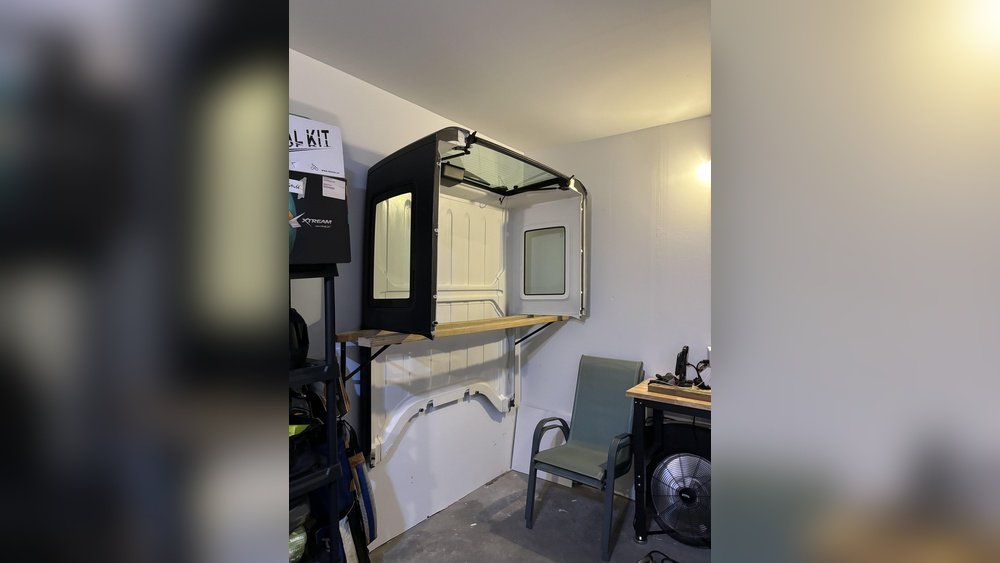
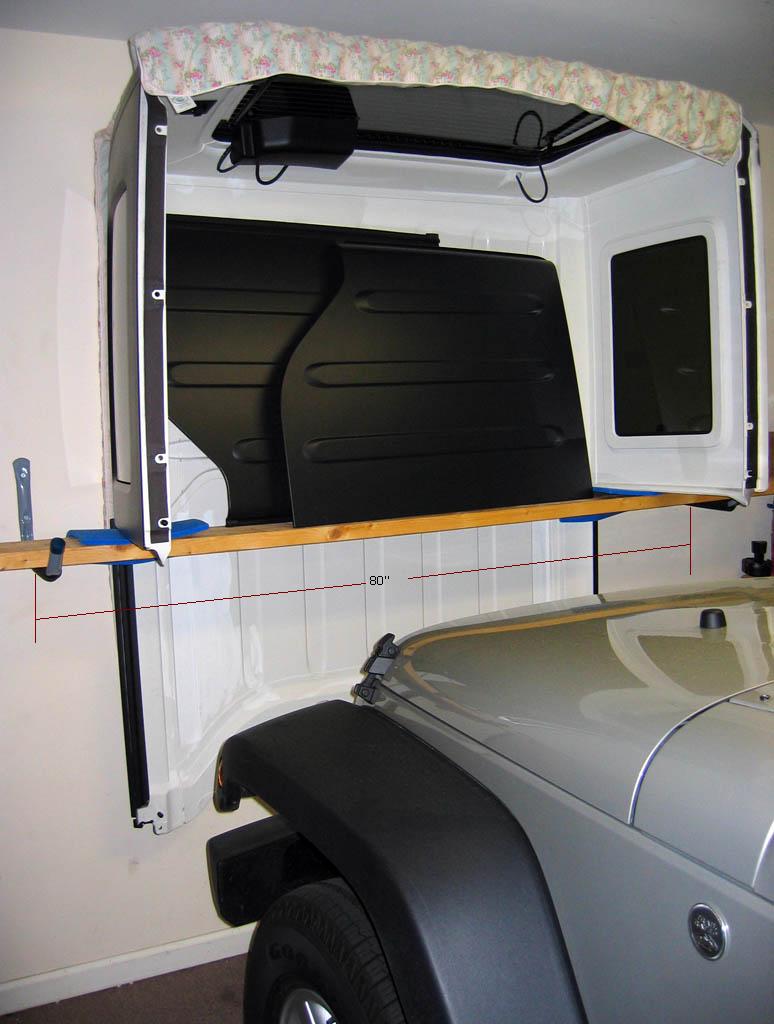
If you want to save floor space, a wall-mounted rack is a smart choice. These systems hang your hardtop vertically on the garage wall.
- Typical rack cost: $100–$250.
- Requires drilling into wall studs for safety.
- Use padded hooks to prevent scratches.
Beginner insight: Always check that your wall can support at least 100 pounds before installation.
Basic Installation Steps
- Locate wall studs using a stud finder.
- Mount the rack at a comfortable height for lifting.
- Use all provided hardware—never substitute weak screws.
Credit: www.wranglerforum.com
Ceiling Hoist Systems
A ceiling hoist is the best space-saver for small garages. It lifts your hardtop overhead with pulleys and straps, keeping it out of the way.
| Feature | Ceiling Hoist | Floor Stand |
|---|---|---|
| Space Used | No floor space needed | Uses garage floor space |
| Installation | Requires ceiling mounting | Usually ready to use out of box |
| Cost | $120–$350 | $150–$350 |
| One-person Operation | Yes, often easier | Yes, for most carts |
- Always use a hoist rated for at least 200 pounds.
- Double-check all knots and hooks before lifting.
- Lower the top slowly to avoid swinging.
Non-obvious tip: If your garage ceiling is unfinished, add a plywood board between joists to spread the weight.
Outdoor Storage: What To Know
Storing your Jeep hardtop outdoors is possible, but riskier. Weather, UV rays, and animals can all cause damage.
- Never store a hardtop directly on grass or dirt.
- Use a waterproof, breathable cover—never just a tarp.
- Elevate the top on pallets or blocks to keep it dry.
Example: In a humid climate, moisture trapped under a tarp can cause mildew in just a few weeks.
For most Jeep owners, indoor storage is best. If you must store outdoors, check the top often for leaks or pests.
Mistakes To Avoid
Even experienced owners make mistakes when storing Jeep hardtops. Here’s what beginners often get wrong:
- Storing on Concrete: Direct contact can lead to scratches, cracks, or temperature stress.
- Using Plastic Tarps: These trap moisture, causing mold or mildew.
- Stacking Items: Never pile boxes or tools on top of your hardtop.
- Ignoring Weatherstripping: Dry, cracked seals will leak when you reinstall the top.
- Improper Hardware Storage: Losing bolts means delays and extra costs.
Pro insight: Take photos of your hardware and attachment points before removal. This makes reinstallation much faster.
How To Lift And Move Your Hardtop Safely
A Jeep hardtop is heavy and awkward to handle alone. Here’s how to do it safely:
- Get help from a friend, especially for 4-door hardtops.
- Wear gloves to improve grip.
- Always lift with your legs, not your back.
- If using a hoist, double-check all connections before operating.
Example: The average 4-door Wrangler hardtop weighs about 140 pounds. Two people can usually lift it, but a hoist makes it much safer.
Long-term Storage Tips
If you plan to store your hardtop for several months (like over summer), take a few extra steps:
- Check the top monthly for dust, insects, or leaks.
- Reapply silicone protectant to seals every 2–3 months.
- If possible, open the cover occasionally to let air circulate.
- Keep the storage area cool and dry—ideal temperature is below 80°F, with humidity under 60%.
How To Store Freedom Panels
Many Jeep hardtops come with removable Freedom Panels over the driver and passenger seats. These smaller panels need special care too.
- Store panels flat, not upright, to avoid warping.
- Use a padded bag or case (often included with your Jeep).
- Keep them away from heavy objects that could crush them.
Beginner mistake: Storing panels on their edge can cause the seals to deform and leak.
Cost Comparison: Storage Solutions
Different storage solutions fit different budgets. Here’s a quick price comparison:
| Solution | Average Cost | Best For |
|---|---|---|
| Padded Ground Storage | $0–$30 | Budget owners, lots of space |
| Hardtop Stand/Cart | $150–$350 | Easy moving, frequent swaps |
| Wall Rack | $100–$250 | Saving floor space |
| Ceiling Hoist | $120–$350 | Small garages, solo users |
| Outdoor with Cover | $50–$100 | Last resort only |
Pro tip: Investing in a good stand or hoist can protect your hardtop from $500–$2,000 in potential damage.
Real-world Example
Mike, a new Jeep Wrangler owner in Texas, used to store his hardtop on the garage floor. After a year, he noticed fine scratches and a mildew smell. He switched to a wall-mounted rack with padding and now his top stays clean and damage-free, even during humid summers.
Key lesson: The right storage method prevents expensive repairs and keeps your Jeep looking sharp.

Credit: www.youtube.com
Frequently Asked Questions
How Heavy Is A Jeep Hardtop?
Most 2-door Jeep hardtops weigh around 80–100 pounds. The 4-door versions can weigh 120–140 pounds. Always check your owner’s manual for the exact weight before lifting.
Can I Store My Hardtop Outside During Winter?
It’s possible, but not ideal. If you must, use a waterproof, UV-resistant cover and keep the top elevated off the ground. Inspect often for signs of water or animal damage. Indoor storage is always safer.
Is It Safe To Hang A Hardtop From The Ceiling?
Yes, if you use a proper hoist system and attach it to strong ceiling joists. Never hang a hardtop from weak supports or with homemade hooks. Follow all instructions and test the system before storing your top.
What’s The Best Way To Store Hardware And Bolts?
Place all bolts, knobs, and clamps in a labeled bag. Keep the bag in your glove box or attach it to the hardtop with tape. Taking photos before removal can help you remember where each piece goes.
Are There Professional Storage Services For Jeep Hardtops?
Some auto shops and storage facilities offer seasonal hardtop storage. Prices range from $100–$300 per season. Check local Jeep clubs or dealerships for recommendations. For more details on Jeep hardtop care, visit the official Jeep website.
Storing your Jeep hardtop may seem tricky at first, but with these tips, you’ll keep it safe, clean, and ready for your next adventure. Choose the storage solution that fits your space and budget, and remember: a little preparation now can save you a lot of trouble later.