How Do I Put My Jeep in 4 Wheel Drive: Step-by-Step Guide
 Reading Time: 8 minutes
 If you’ve just bought your first Jeep or are curious about how to use 4 wheel drive, you’re not alone. Many new Jeep owners feel a little confused when it’s time to switch from two-wheel drive to four-wheel drive. Knowing when and how to use this feature can help you drive safely in snow, mud, sand, and rocky trails. This guide will walk you through the basics, explain the four main types of Jeep 4WD systems, and give step-by-step instructions for using each one. You’ll also learn some important tips, see useful data, and get answers to common questions.
Why 4 Wheel Drive Matters
A Jeep with 4 wheel drive sends power to all four wheels, not just two. This helps your vehicle grip the road better when things get slippery or rough. With 4WD, you can:
- Drive on snowy or icy roads with more confidence.
- Climb steep hills or rocky paths.
- Get through mud or sand without getting stuck.
But it’s not only about turning a lever or button. Understanding your Jeep’s 4WD system is important for your safety and your vehicle’s health.
The 4 Main Types Of Jeep 4wd Systems
Not all Jeeps use the same 4WD setup. Knowing which system your Jeep has is the first step. Let’s look at the four main types:
- Part-Time 4WD (Command-Trac)
- Full-Time 4WD (Quadra-Trac)
- Active 4WD (Selec-Trac)
- Rock-Trac 4WD
Each system works a bit differently. Below, you’ll find a dedicated section for each, with clear instructions and real examples.
Part-time 4wd (command-trac)
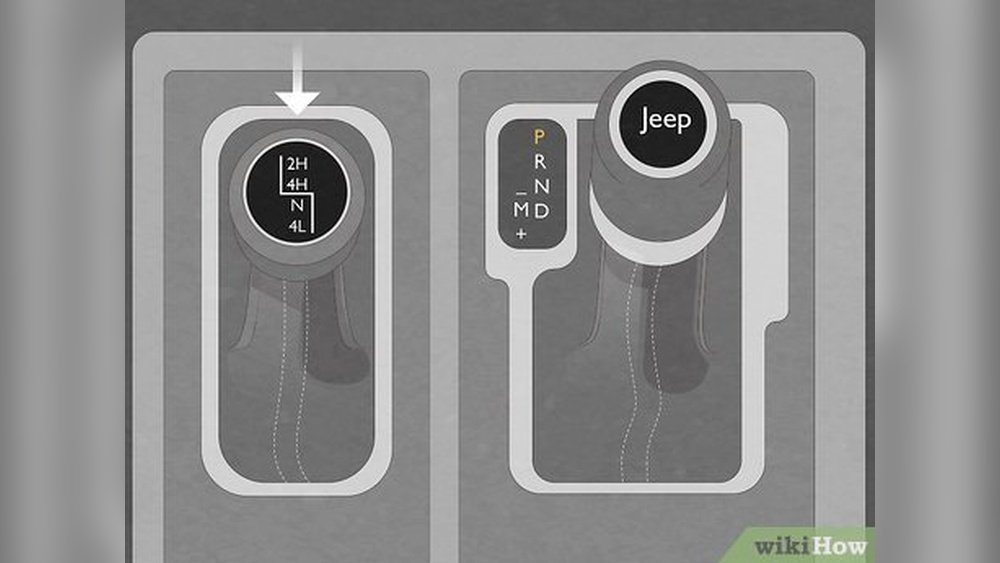
Many Wrangler and Gladiator models use the Command-Trac system. This is a “shift-on-the-fly” system, meaning you can switch from 2WD to 4WD while driving (at low speeds).
How It Works
- Default is 2H (Two-Wheel High) for normal roads.
- Use 4H (Four-Wheel High) for slippery surfaces.
- 4L (Four-Wheel Low) is for tough off-road situations.
Step-by-step: Engaging Command-trac
- Check your speed. You can shift from 2H to 4H while moving (usually under 45 mph). For 4L, stop the Jeep and shift to neutral.
- Move the lever. Pull the 4WD lever from 2H to 4H for extra traction.
- For 4L, stop, shift to neutral, and then push the lever to 4L.
- Return to 2H for normal roads to prevent damage.
When To Use
- 2H: Dry pavement, highways.
- 4H: Wet, snowy, or muddy roads.
- 4L: Deep sand, mud, steep hills, or rocks.
Example
Imagine driving on a snowy mountain road. You feel your tires slipping. With Command-Trac, shift to 4H at low speed, and your Jeep will grip the road better.
Common Mistake
Don’t use 4H or 4L on dry pavement. The system isn’t designed for that and could damage your drivetrain.
Full-time 4wd (quadra-trac)
Some Grand Cherokee and Wagoneer models use Quadra-Trac. This system can stay in 4WD all the time, even on dry roads.
How It Works
- Has an Auto mode that changes power between front and rear wheels as needed.
- 4H and 4L settings for more control in tough situations.
Step-by-step: Using Quadra-trac
- Select Auto for daily driving. The system does everything for you.
- Switch to 4H when you need steady 4WD—like in snow or sand.
- For 4L, stop, shift to neutral, then turn the knob or lever to 4L.
When To Use
- Auto: Everyday roads, both dry and wet.
- 4H: Heavy rain, snow, loose gravel.
- 4L: Off-road, deep mud, or steep climbs.
Example
You’re driving in changing weather. It starts raining heavily. The Quadra-Trac’s Auto mode sends more power to the wheels that need it, keeping you safe without extra steps.
Common Mistake
Forgetting to switch to 4L in deep mud or rocks. The Auto mode is good, but 4L gives more torque for tough spots.
Active 4wd (selec-trac)
Some Cherokee and Wrangler models have Selec-Trac. This system can run in both 2WD and full-time 4WD. It’s popular for daily drivers who also go off-road sometimes.
How It Works
- 2WD mode for regular driving.
- 4WD Auto mode lets the Jeep decide when to send power to all wheels.
- 4H and 4L for more control.
Step-by-step: Using Selec-trac
- Start in 2WD for dry pavement.
- Turn the dial or move the lever to 4WD Auto in rain, snow, or dirt.
- Shift to 4H for tougher roads.
- Stop and shift to neutral before switching to 4L for off-road conditions.
When To Use
- 2WD: Dry, smooth roads.
- 4WD Auto: Changing road conditions, like light snow.
- 4H: Deep snow, mud.
- 4L: Off-road obstacles, deep sand.
Example
You’re driving on the highway and see a snowstorm ahead. With Selec-Trac, you can safely switch to 4WD Auto, and your Jeep will adjust as the road gets worse.
Common Mistake
Not returning to 2WD after the road improves. This causes extra wear on your tires and uses more gas.
Rock-trac 4wd
The Rock-Trac system is found on Jeep Rubicon models. It’s designed for serious off-roading and gives you maximum control in rocky or steep terrain.
How It Works
- Offers 4H and 4L modes, plus advanced features like locking differentials.
- Delivers extra torque for climbing or crawling.
Step-by-step: Using Rock-trac
- Start in 2H for city driving.
- Shift to 4H on loose gravel or snow.
- Stop, shift to neutral, then move to 4L for rock crawling or steep hills.
- Engage lockers if needed for extreme grip (follow your Jeep’s manual).
When To Use
- 2H: Normal driving.
- 4H: Snow, sand, light trails.
- 4L: Rocks, steep climbs, deep mud.
Example
You’re on an off-road trail with large rocks. Switch to 4L and engage the lockers. This helps your Jeep crawl slowly and safely over obstacles.
Common Mistake
Using lockers on pavement. Lockers are only for off-road, low-speed use.

Credit: www.brownsjeepchryslerdodge.com
Quick-reference Comparison: Jeep 4wd Systems
Here’s a simple table to show the main features and best uses for each system.
| 4WD System | Best For | Can Use on Dry Pavement? | How to Switch |
|---|---|---|---|
| Command-Trac | Off-road, snow, mud | No | Lever shift |
| Quadra-Trac | All weather, mixed roads | Yes (Auto mode) | Dial or knob |
| Selec-Trac | Changing conditions | Yes (Auto mode) | Dial/lever |
| Rock-Trac | Extreme off-road | No | Lever, lockers |
Practical Tips For Beginners
Switching to 4 wheel drive isn’t difficult, but these tips can help you avoid problems and get the best performance from your Jeep.
- Read your owner’s manual. Each Jeep model is a little different.
- Shift at the right speed. For most systems, you can go from 2H to 4H under 45 mph. Always stop and shift to neutral before using 4L.
- Listen and feel. When you switch modes, you may hear a “clunk” or feel a slight change. This is normal.
- Don’t use 4WD on dry pavement. Unless your system says it’s safe (like Quadra-Trac Auto), you could damage your drivetrain.
- Practice in a safe area. Try engaging and disengaging 4WD in a parking lot before heading off-road.

Credit: www.wikihow.com
How 4wd Affects Fuel Economy
Using 4 wheel drive can lower your miles per gallon (MPG). In general, 4WD uses more energy because the engine is driving more wheels. Here’s a quick look:
| Mode | Estimated MPG Loss |
|---|---|
| 2WD | None |
| 4H | -2 to -4 MPG |
| 4L | -4 to -8 MPG |
If you use 4WD when you don’t need it, you’ll spend more on gas.
Real-world Example: Jeep Wrangler In Snow
Let’s say you own a 2023 Jeep Wrangler with Command-Trac. You’re driving to work and snow starts to fall. The road gets slippery. Here’s what you do:
- Slow down below 45 mph.
- Pull the lever from 2H to 4H. You’ll feel the Jeep grip the road better.
- Drive carefully. The 4WD will help, but you still need to steer and brake gently.
- Switch back to 2H when the road is clear.
If you get stuck or the hill is too steep, stop, shift to neutral, and move to 4L. This gives maximum power to all four wheels.
Jeep 4wd Maintenance Tips
Keeping your 4WD system in good shape is important. Here’s how to make it last:
- Use 4WD regularly. Even if you don’t need it, engage the system once a month. This keeps parts lubricated.
- Check fluids. 4WD systems have special fluids—check your owner’s manual for the right type.
- Listen for noise. Grinding or whining sounds can mean a problem. Get it checked right away.
- Inspect after off-roading. Check for leaks, damage, or mud stuck in important parts.
- Service on time. Follow your manual for service intervals, especially for transfer case and differentials.
Advanced 4wd Features
Modern Jeeps have advanced features to make off-roading easier:
- Hill Descent Control: Helps you go down steep hills slowly.
- Off-Road+ Mode: Adjusts throttle and traction for rough terrain.
- Sway Bar Disconnect: Lets your wheels move more for better traction.
These are only found on some models, so check your manual. If you’re planning serious off-roading, practice using these features in a safe place first.
Table: Quick Guide For Switching Modes
Here’s a simple reference for when and how to use each mode.
| Mode | When to Use | How to Engage |
|---|---|---|
| 2H | Dry pavement | Default, no action needed |
| 4H | Snow, mud, rain | Shift lever/dial at low speed |
| 4L | Deep sand, rocks, steep hills | Stop, shift to neutral, then engage |
| Auto | Changing conditions | Turn dial or lever, system decides |
Two Non-obvious Insights For Beginners
- Tires matter as much as 4WD. Even with the best 4WD system, worn or wrong tires can leave you stuck. Always check your tire pressure and tread before any trip.
- 4WD doesn’t stop you faster. Many beginners think 4WD helps with braking on ice or snow. It only helps with traction when moving forward—not stopping. Use gentle braking and keep your distance.
Where To Learn More
For more technical details, visit the official Four-wheel drive Wikipedia page.
Frequently Asked Questions
What’s The Difference Between 4h And 4l?
4H (Four-Wheel High) is for driving at normal speeds on slippery roads. 4L (Four-Wheel Low) is for very slow driving in deep mud, sand, or climbing rocks. 4L gives you more power but lower speed.
Can I Switch To 4wd While Driving?
You can shift from 2H to 4H while moving (usually under 45 mph) in most Jeep systems. To go to 4L, you must stop and shift to neutral first.
Is It Ok To Leave My Jeep In 4wd All The Time?
With full-time 4WD systems (like Quadra-Trac or Selec-Trac Auto), yes. For part-time systems, no—use 4WD only when needed to avoid damage and save fuel.
Does 4wd Help With Braking?
No. 4WD helps you move forward in slippery conditions but does not improve stopping. Always drive slowly and leave space in snow or ice.
How Often Should I Use My Jeep’s 4wd?
Engage your 4WD system at least once a month, even if you don’t need it. This keeps the parts lubricated and ready for use.
Putting your Jeep in 4 wheel drive can seem hard at first, but with practice, it becomes second nature. Always know your system, use the right mode for the road, and take care of your vehicle. This will keep you safe and help your Jeep last for years to come.

Credit: www.youtube.com