Do All Jeep Wranglers Have 4 Wheel Drive? Truth Revealed!
 Reading Time: 8 minutes
 Are you curious whether every Jeep Wrangler comes with 4-wheel drive? If you’re thinking about buying one or just want to understand what makes this rugged vehicle so capable, this question matters a lot.
Knowing if your Jeep Wrangler has 4WD affects how it handles tough roads, off-road trails, and even everyday driving. You’ll discover the truth about Jeep Wrangler’s drivetrain options, what sets different models apart, and how to choose the right one for your needs.
Keep reading to clear up the confusion and get the most from your Jeep experience.
Jeep Wrangler 4wd Basics
The Jeep Wrangler is known for its off-road ability. Most Jeep Wrangler models come with four-wheel drive (4WD). This system helps the vehicle move on rough or slippery surfaces. Understanding the basics of Jeep Wrangler 4WD helps buyers choose the right model.
4WD sends power to all four wheels. This improves traction and control on tough terrain. Jeep offers different types of 4WD systems in its Wranglers.
Standard 4wd Features
Most Jeep Wranglers have solid front and rear axles. This design is strong and durable for off-road use. The 4WD system can be engaged or disengaged by the driver. It allows the Jeep to switch between two-wheel drive and four-wheel drive.
Standard 4WD includes a transfer case. This part controls power distribution between front and rear wheels. It often has low-range gears for extra torque. This feature helps climb steep hills or cross tough obstacles.
Part-time Vs Full-time 4wd
Part-time 4WD is common in Wranglers. Drivers manually switch it on when extra traction is needed. It should not be used on dry pavement to avoid drivetrain damage.
Full-time 4WD works automatically. It sends power to all wheels all the time. This system is better for daily driving and slippery roads. Some newer Jeep Wranglers offer full-time 4WD as an option.
Choosing between part-time and full-time depends on how you drive. Off-road enthusiasts often prefer part-time 4WD. Those who use their Jeep daily may like full-time 4WD for convenience.
Credit: www.quadratec.com
Trim Levels And Drive Options
The Jeep Wrangler offers a variety of trim levels and drive options tailored to different driving needs. Each trim has unique features that affect its four-wheel-drive capabilities. Understanding these differences helps buyers choose the right Wrangler for their adventures.
X And Sahara Models
The X and Sahara trims focus on comfort and style. They come with part-time four-wheel drive systems. This setup lets drivers switch between two-wheel and four-wheel drive modes. It balances fuel efficiency with off-road ability. These models suit drivers who want Jeep’s rugged look without extreme off-roading features. They often have more tech and convenience options for daily use.
Rubicon’s Unique Setup
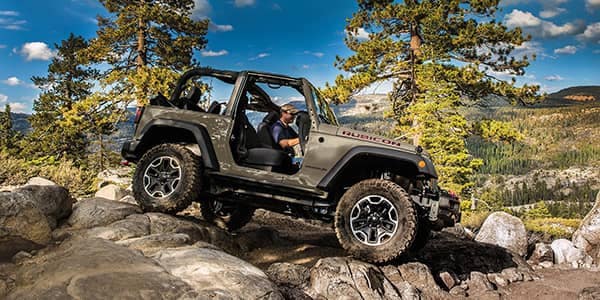
The Rubicon trim is built for serious off-road performance. It features a heavy-duty four-wheel-drive system with locking differentials. This setup provides maximum traction on tough terrain. Rubicon models include enhanced suspension and larger tires. The transfer case offers more drive modes than other trims. This makes it easier to handle mud, rocks, and steep hills. The Rubicon is ideal for drivers who demand the best off-road capability from their Jeep.
Why Some Wranglers Lack 4wd
Not all Jeep Wranglers come with four-wheel drive (4WD). Some models lack this feature for specific reasons. These Wranglers focus on other benefits rather than off-road capability. Understanding why some Wranglers do not have 4WD helps buyers choose the right vehicle.
Fuel Economy Considerations
Four-wheel drive systems add weight and complexity to a vehicle. This extra weight can reduce fuel efficiency. Some Wrangler models skip 4WD to improve gas mileage. Drivers who mostly use their Jeep on paved roads may prefer better fuel economy. Without 4WD, the engine works less hard, saving fuel. Jeep offers these models for buyers who value daily driving comfort.
Cost And Market Positioning
Adding a 4WD system increases the vehicle’s cost. Some Wrangler trims target buyers with a lower budget. Removing 4WD helps reduce the price and attract more customers. These models still keep the classic Jeep style and open-air experience. Jeep positions these Wranglers as more affordable options. This strategy broadens the market, giving buyers more choices.
Transfer Case Variations
The transfer case plays a key role in how Jeep Wranglers handle different terrains. It controls the power flow between the front and rear wheels. Different Jeep Wrangler models use different transfer cases. These variations affect driving experience and off-road capability.
Two common types are the four-position and five-position transfer cases. Each offers unique settings for different driving needs. Understanding these helps clarify Jeep Wrangler’s four-wheel-drive systems.
Four-position Transfer Case
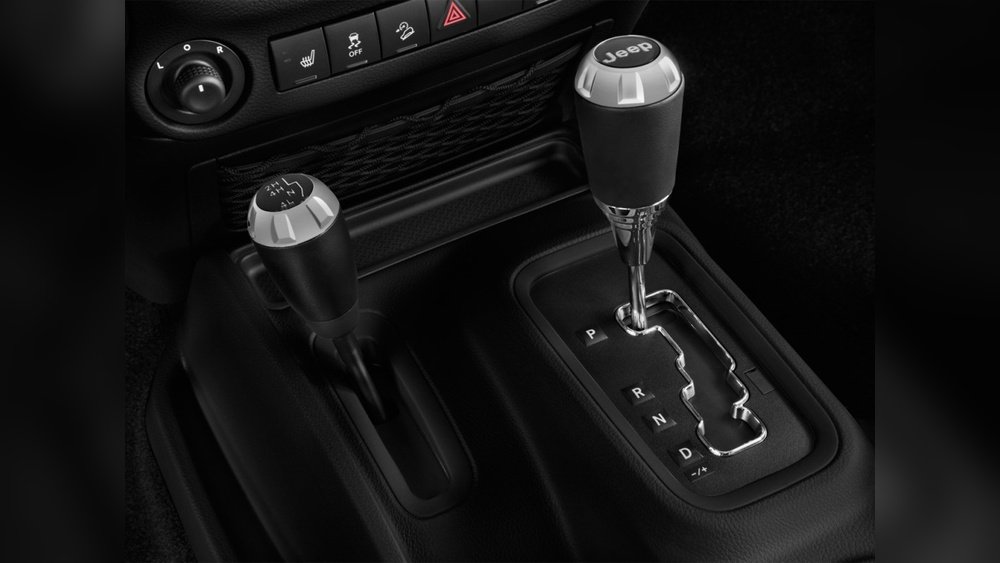
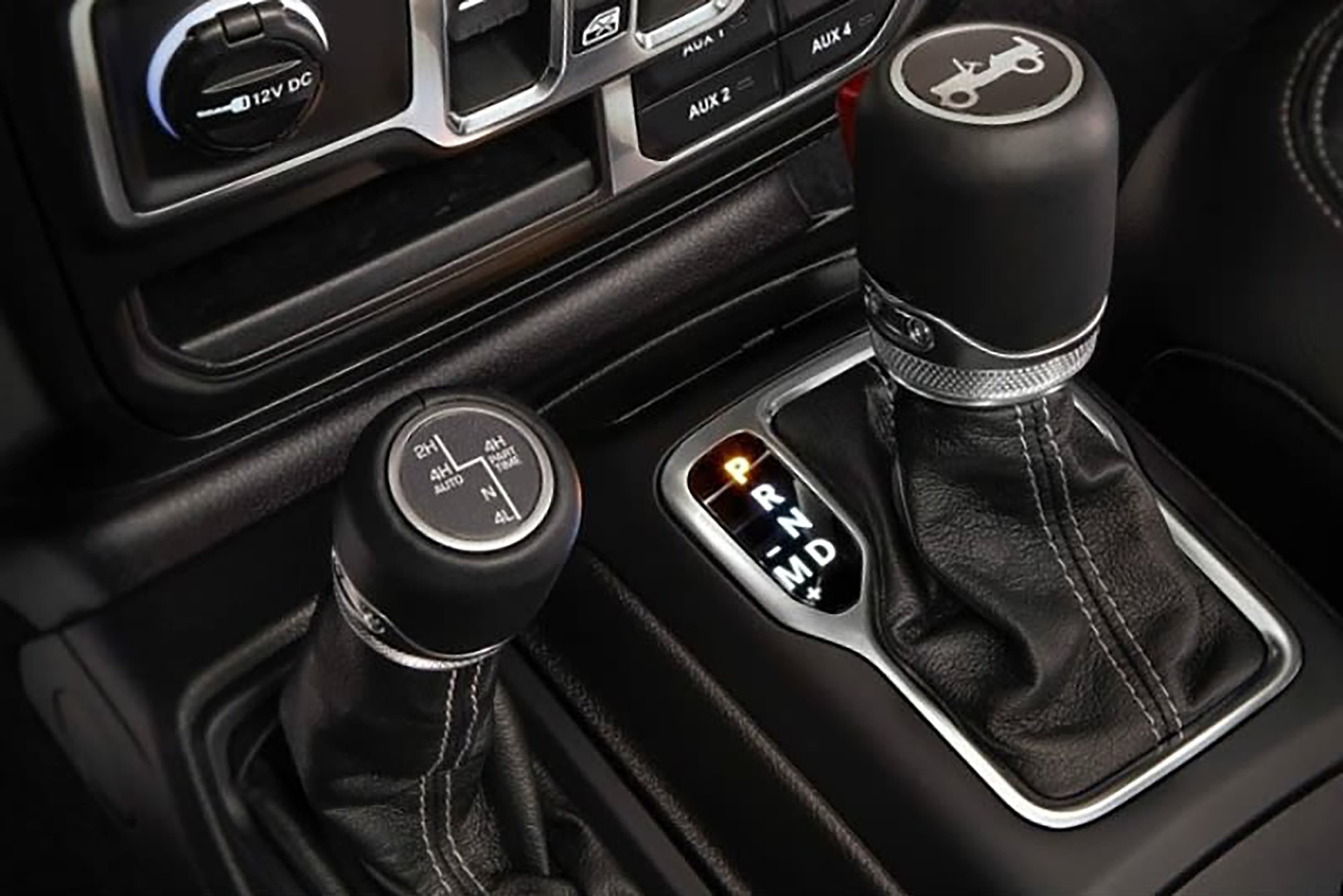
The four-position transfer case is simple and effective. It allows drivers to choose between four drive modes:
- 2H (two-wheel drive, high range)
- 4H Part-Time (four-wheel drive, high range)
- Neutral (disengages drive)
- 4L (four-wheel drive, low range)
This setup suits most off-road situations. Drivers switch modes manually using a lever. It provides solid traction when needed and better fuel economy in 2H mode.
Five-position Transfer Case
The five-position transfer case offers an extra mode for full-time four-wheel drive. Its positions include:
- 2H (two-wheel drive, high range)
- 4H Part-Time (four-wheel drive, high range)
- 4H Full-Time (four-wheel drive, high range, with center differential)
- Neutral (disengages drive)
- 4L (four-wheel drive, low range)
This system gives more flexibility. The full-time mode allows seamless driving on pavement and off-road. It reduces tire wear and adds convenience for daily driving.
Off-road Capabilities
The Jeep Wrangler is known for its strong off-road abilities. These capabilities come from smart design choices that help the vehicle handle tough terrains. The Wrangler’s off-road features make it a favorite among adventure seekers and trail riders.
Two key elements boost its performance: solid axles and locking differentials. These parts work together to keep the Jeep stable and powerful on rough paths.
Solid Axles For Durability
All Jeep Wranglers have solid front and rear axles. Solid axles are tough and last longer than independent ones. They give better ground clearance and can handle heavy loads. This makes the Jeep more reliable on rocky or uneven roads. Solid axles also provide better wheel articulation. This means the wheels can move up and down more freely. It helps keep the tires on the ground for better traction.
Locking Differentials On Rubicon
The Rubicon trim adds locking differentials for extra off-road power. Locking differentials make both wheels on an axle turn at the same speed. This helps when one wheel is slipping on mud or rocks. The locked wheels push the Jeep forward without losing grip. This feature improves climbing ability and control on tricky surfaces. Locking differentials are a big reason the Rubicon is so popular with off-road drivers.

Credit: www.registerguard.com
Aftermarket 4wd Solutions
Many Jeep Wrangler models come with 4-wheel drive from the factory. Yet, some versions lack this feature. For those Jeep owners, aftermarket 4WD solutions offer a way to add off-road capability. These upgrades let drivers enjoy rugged terrain and better traction. The options vary in complexity and cost, making it possible to customize your Jeep to fit your needs.
Upgrading Non-4wd Models
Some Jeep Wranglers come only with 2-wheel drive. Owners can upgrade these vehicles to 4WD by installing aftermarket kits. These kits include transfer cases, driveshafts, and differentials. The process may require professional help to ensure proper fit and function. Adding 4WD transforms your Jeep into a more capable off-road machine. It also increases vehicle value and expands adventure possibilities.
Popular Modifications
Many Jeep enthusiasts choose popular 4WD modifications. Common upgrades include electronic locking differentials and upgraded transfer cases. Another option is adding a dual-range transfer case for better low-speed control. Suspension lifts and larger tires often accompany 4WD upgrades. These parts improve ground clearance and traction on rough trails. Drivers gain confidence tackling mud, snow, rocks, and sand with these modifications.
Comparing 4wd And Awd In Jeeps
Understanding the difference between 4WD and AWD in Jeeps helps clarify what each system offers. Jeep Wranglers are famous for their off-road capability, largely due to their 4WD systems. AWD also appears in some Jeep models but serves a different purpose. Both systems improve traction but work in unique ways. This section breaks down these differences for better insight.
Differences In System Design
4WD, or four-wheel drive, sends power to all four wheels equally. It is usually part-time, allowing drivers to switch it on or off. This system is ideal for rough terrain and off-road driving. AWD, or all-wheel drive, sends power to all wheels automatically. It adjusts power delivery depending on road conditions. AWD is always on and better for on-road use and light off-road paths.
Jeeps with 4WD have rugged parts like solid axles and low-range gears. This helps in tough conditions like mud, snow, or rocks. AWD systems use more complex differentials and electronics. They focus on maintaining grip on slippery roads and provide smoother driving on highways.
When Awd Might Be Offered
AWD is less common in traditional Jeep Wranglers. It appears more in Jeep’s crossover SUVs or smaller models. These vehicles target drivers who want good all-weather traction but do not need heavy off-road gear. AWD suits city driving and occasional trips on dirt roads.
Some newer Jeep models may offer AWD to improve fuel efficiency and daily comfort. AWD is easier to use because it needs no driver input. Jeep Wrangler keeps 4WD as its main system due to its off-road focus. AWD fits better with Jeep models designed for mixed driving needs.
Credit: www.executivejeep.net
Frequently Asked Questions
Do All Jeep Wranglers Come With 4wd?
Not all Jeep Wranglers come with 4WD. Most models include part-time 4WD, while some base trims may have rear-wheel drive.
Is There A 2wd Jeep Wrangler?
No, Jeep Wrangler models come standard with 4WD. There is no factory 2WD Jeep Wrangler available.
Which Jeep Models Are 4×4?
Jeep Wrangler, Grand Cherokee, Cherokee, Compass, Renegade, and Gladiator offer 4×4 or four-wheel-drive options. Rubicon trims specialize in off-road 4×4.
How To Know If A Jeep Wrangler Is In 4 Wheel Drive?
Check the 4WD indicator light on the dashboard; it illuminates when 4-wheel drive engages. Also, verify the transfer case lever or knob is set to 4WD mode. Test by driving slowly—4WD provides better traction and control compared to 2WD.
Conclusion
Not every Jeep Wrangler comes with four-wheel drive by default. Most models offer it as a standard feature, especially the Rubicon trim. Some trims focus more on fuel economy and street driving, so they may not have 4WD. Knowing the model and trim helps decide if 4WD is included.
Four-wheel drive adds off-road power and control. Choose the right Wrangler based on your driving needs.