Jeep Grand Cherokee Air Mattress Setup: Camping Guide
 Reading Time: 16 minutes
For campers in the United States, a Jeep Grand Cherokee can serve as a simple sleeping platform for road trips, dispersed camping, and overnight stays at many U.S. campgrounds. The most reliable setup uses the rear seats folded flat, the front seats moved forward, a properly sized air mattress, and safe ventilation.
The key is to measure your exact Jeep before buying gear. Grand Cherokee cargo space changes by model year, trim, seat design, and whether you own a two-row Grand Cherokee or a three-row Grand Cherokee L. A mattress that fits one generation may not fit another.
This guide explains how to prepare the vehicle, choose a mattress, build the sleeping area, manage heat and moisture, and camp safely inside a Jeep Grand Cherokee.

What You Need for a Jeep Grand Cherokee Camping Setup
A comfortable Jeep camping setup needs more than an air mattress. Start with these basic items:
- An air mattress that fits the cargo area
- A 12-volt or rechargeable air pump
- A sleeping bag or camping quilt
- A small pillow or compressible camp pillow
- A blanket or foam pad for insulation
- Window covers or sunshades
- A battery pack or power station
- A headlamp
- Water and food stored outside the sleeping area
- A small trash bag
- A first-aid kit
- A carbon monoxide alarm designed for camping use
- A tire repair kit and emergency supplies
Choose equipment that leaves enough room for your body. An oversized mattress can press against the side panels, block the liftgate, or prevent the rear seats from folding correctly.
Measure before you buy
Measure the space with the rear seats folded and the front seats moved to your normal driving position. Record:
- Length from the back of the front seats to the liftgate.
- Width at the widest point.
- Width between the wheel wells.
- Height from the cargo floor to the roof.
- The height difference between the folded seatbacks and cargo floor.
Use the narrowest width for mattress planning. The wheel wells often create the real limit, not the widest part of the cargo bay.
A simple rule is:
Mattress width should be slightly less than the narrowest cargo width, and mattress length should be shorter than the usable floor length.
Do not rely only on a product listing that says “fits SUVs.” A Grand Cherokee has curved side panels and a tapered cargo area. Universal SUV mattresses may fit loosely, tightly, or not at all.
Check your model and seating layout
The Jeep Grand Cherokee has been sold in several generations. The two-row models usually provide the most useful space for sleeping. The Grand Cherokee L has a third row, which changes the available length and floor shape.
Before setting up camp, confirm:
- Your rear seats fold flat enough for your mattress.
- The seat belts and headrests do not create sharp pressure points.
- The front seats can move far enough forward.
- The liftgate can close without touching the mattress.
- Your mattress does not cover emergency tools or required cargo.
Your Jeep owner’s manual is the best source for seat-folding instructions and cargo limits. Use the manual for your exact model year rather than assuming that another Grand Cherokee has the same interior layout.
How to Prepare the Jeep for Sleeping
Prepare the Jeep during daylight. A good setup is easier to inspect, level, and adjust before dark.
1. Park in a legal, safe place
Use a permitted campsite, a private property location with permission, or a legal dispersed camping area. Check local rules before sleeping in a vehicle. Some public lands, rest areas, beaches, and trailheads restrict overnight vehicle use.
Select ground that is:
- Level from side to side
- Firm and free of rocks
- Away from dead trees and falling branches
- Above flood-prone areas
- Clear of active roads and trail traffic
- Suitable for your vehicle’s clearance and traction
Engage the parking brake. If the surface slopes, point the vehicle uphill only when local conditions and your vehicle manual support that choice. Do not use rocks or improvised objects as wheel chocks unless they are stable and appropriate.
2. Empty and clean the cargo area
Remove unnecessary gear. A clean cargo area gives you more room and prevents hard objects from pressing through the mattress.
Move these items to the front seats or a secure outside storage area:
- Tools
- Coolers
- Shoes
- Cooking equipment
- Water jugs
- Recovery gear
- Sharp objects
- Heavy electronics
Do not place heavy objects on top of the mattress. They can cause leaks or make the sleeping surface uneven.
3. Fold the rear seats
Follow the instructions in your Jeep owner’s manual. Fold the rear seatbacks fully and check for a level transition between the seatbacks and cargo floor.
If the floor has a step or slope, use a firm foam pad, folded blanket, or purpose-built sleeping platform to reduce the difference. Avoid loose boxes that can shift while you sleep.
A level surface matters because your body will slide toward the low side during the night. It also helps the air mattress spread evenly.
4. Move the front seats forward
Move the front seats forward only as far as needed. Keep enough space to drive safely when you leave camp. If another person will drive, adjust the seats again before starting the vehicle.
Do not sleep in a position that interferes with the steering wheel, pedals, gear selector, airbags, or seat controls.
5. Protect the interior
Use a clean groundsheet, cargo liner, or thin blanket under the mattress. This protects the carpet from moisture and grit.
Do not use a thick, slippery plastic sheet by itself. It may allow the mattress to move during the night. A fabric layer or non-slip mat usually provides better control.

How to Choose the Right Air Mattress
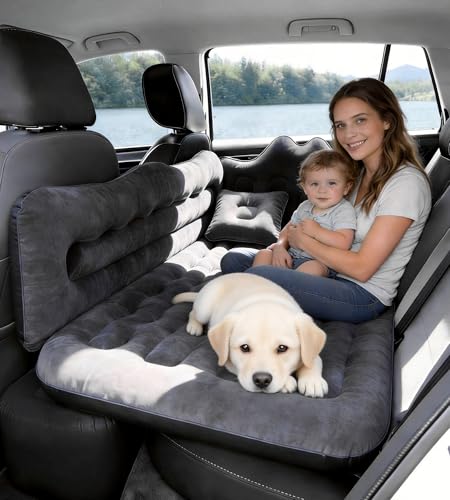
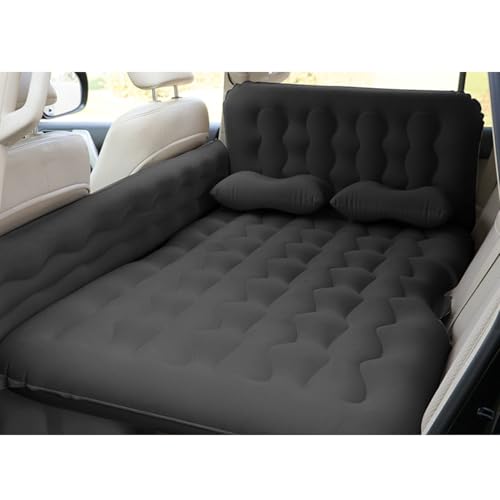
The best air mattress for a Grand Cherokee is not always the thickest one. It must fit the vehicle and provide enough support without wasting headroom.
Use an SUV or vehicle mattress
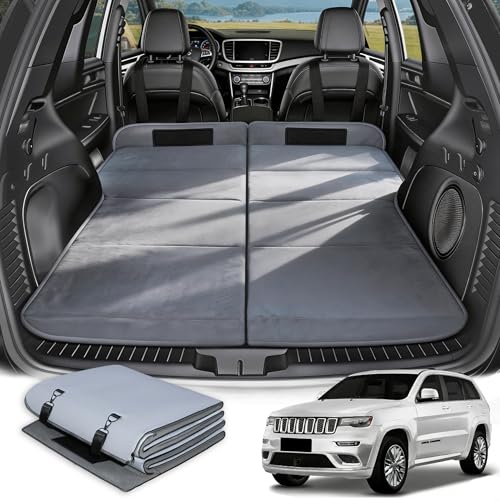
A vehicle mattress often has a tapered shape, separate air chambers, or a cutout for the space between the wheel wells. These features can make it easier to fit than a standard twin mattress.
Common options include:
| Mattress type | Best use | Main advantage | Main limitation |
|---|---|---|---|
| SUV-specific mattress | Frequent vehicle camping | Better fit for cargo shapes | Often costs more |
| Full-size air mattress | Two adults, if space allows | More sleeping width | May be too wide or long |
| Twin air mattress | One adult | Easier to fit | Less room to move |
| Folding foam pad | Cold-weather or simple setups | No leak risk and good insulation | Takes more storage space |
| Self-inflating pad | One person or compact camping | Comfortable and easy to pack | Usually narrower |
Many standard home air mattresses are too tall for vehicle use. A tall mattress can reduce headroom and make it harder to sit up or change clothes.
Think about insulation, not only softness
Air can become cold at night. An air mattress with little insulation may feel comfortable at first but draw heat from your body later.
Add a foam pad, blanket, or insulated sleeping mat between your body and the air mattress. This layer also reduces squeaking and protects the mattress from rough fabric or seat hardware.
For cold conditions, use a sleeping bag rated for the expected temperature. Do not treat the air mattress as a substitute for a properly rated sleep system.
Select a pump that matches your power plan
A 12-volt pump can inflate the mattress from the Jeep’s accessory outlet. A rechargeable pump works when the vehicle is off, but it needs to be charged before the trip.
Do not run the vehicle only to inflate a mattress inside a closed or partly closed area. Carbon monoxide from exhaust can build up quickly, especially near buildings, walls, snowbanks, or other vehicles.
Test the pump at home. Confirm that:
- The valve adapter fits.
- The cord reaches the mattress.
- The pump does not overheat.
- You can deflate the mattress without damaging the valve.

Step-by-Step Jeep Grand Cherokee Air Mattress Setup
Follow this sequence for a stable and comfortable setup.
Step 1: Set up the vehicle before inflating
Park, apply the parking brake, fold the seats, and clear the cargo area. Place your protective layer on the floor.
Inflate the mattress only after you confirm its position. A fully inflated mattress is harder to move through the liftgate.
Step 2: Test-fit the deflated mattress
Place the mattress in the cargo area while it is still flat or partly rolled. Center it between the side panels.
Check these points:
- The corners do not catch on trim.
- The valve remains reachable.
- The mattress does not cover the liftgate latch.
- The mattress does not force the rear seats upward.
- You can close the liftgate without compression.
If the fit is tight, deflate it and change the position. Do not force an inflated mattress into a space that is too narrow.
Step 3: Inflate in stages
Inflate the mattress to about half firmness first. Check the edges and corners. Then add air until the surface supports your body without bottoming out.
A mattress that is too firm can feel hard and may place extra stress on seams. A mattress that is too soft can allow your hips to press into the floor or seatbacks.
Follow the mattress manufacturer’s instructions. Some air mattresses are designed for a specific pressure or inflation method.
Step 4: Add insulation and bedding
Place your foam pad or blanket over the mattress. Add a sleeping bag, sheet, or quilt.
Keep bedding away from:
- The liftgate latch
- Interior lights
- Cargo hooks
- Seat-belt buckles
- Door handles
- Sharp trim
- Electrical outlets
Step 5: Arrange ventilation
Ventilation reduces condensation and helps control heat. Open the windows slightly on both sides if weather and security conditions allow. Use mesh window screens to block insects.
Do not depend on the liftgate being open for ventilation. Rain, wind, insects, wildlife, and security concerns can make an open liftgate unsafe or uncomfortable.
Never use a fuel-burning stove, lantern, charcoal grill, propane heater, or other combustion device inside the Jeep. Cracking a window does not make indoor combustion safe.
Step 6: Perform a final safety check
Before going to sleep:
- Turn off the engine.
- Remove the key or secure the key fob.
- Confirm the transmission is in Park.
- Keep the driver’s seat and controls accessible.
- Store shoes and an emergency light nearby.
- Check that the liftgate and doors can open from inside.
- Keep your phone charged.
- Make sure the carbon monoxide alarm is working.
- Keep the area around the Jeep free of loose flames and fuel.

How to Stay Warm, Cool, and Dry
Temperature control is the hardest part of sleeping in a vehicle. The Jeep protects you from wind and rain, but it does not replace a tent’s ventilation or a home’s insulation.
Reduce condensation
Condensation forms when warm, moist air from your breath contacts cold glass or metal. Two people create more moisture than one person, and wet clothing makes the problem worse.
Reduce moisture by:
- Using window screens
- Opening windows slightly
- Drying wet clothing outside the sleeping area
- Avoiding wet boots inside the Jeep
- Wiping moisture from the windows in the morning
- Ventilating the Jeep before packing
Do not seal the Jeep completely while sleeping. A sealed cabin can become damp and uncomfortable.
Stay warm without unsafe heaters
Use layers, a warm sleeping bag, a hat, and an insulated mattress pad. These methods are safer than trying to heat the Jeep with a portable fuel-burning heater.
Never use a propane heater, camping stove, charcoal, candle, or lantern inside a closed vehicle. Carbon monoxide has no reliable smell or color, and ventilation may not prevent dangerous exposure.
If you feel headache, dizziness, nausea, weakness, confusion, or unusual sleepiness, leave the vehicle immediately and seek fresh air. Call 911 if symptoms are severe or do not improve.
Stay cool in warm weather
Park in shade when allowed, but inspect the area for falling branches. Open windows with screens on opposite sides to create cross-ventilation.
Avoid sleeping with the engine running to power the air conditioner. Vehicle exhaust can enter the cabin, and idling may be restricted at some campgrounds or public areas.
If the night remains too hot, use the Jeep as gear storage and sleep in a permitted tent or another safe shelter.

How to Organize Gear in a Small Jeep
Good organization makes the Jeep feel larger and improves safety.
Use soft bags instead of rigid bins near your head and feet. Store items by when you will need them:
- Emergency items near the driver’s door
- Water within easy reach
- Clothing in a soft duffel
- Food in a sealed container
- Shoes near the liftgate
- Cooking gear outside the sleeping area
- Electronics near a charging source
Keep heavy objects low and close to the vehicle’s center. Secure loose items so they do not become projectiles during sudden braking.
Avoid storing food inside the Jeep overnight in areas with bears or other wildlife. Follow local food-storage rules. In some U.S. parks and forests, food, trash, toiletries, and scented items must be stored in a bear-resistant container or approved locker.

Jeep Grand Cherokee Sleeping Setup: Common Problems and Fixes
The mattress does not fit
Possible causes:
- The mattress is too wide between the wheel wells.
- The cargo area narrows near the liftgate.
- The front seats are too far back.
- The mattress is designed for a different SUV.
Fix: Measure the narrowest point again. Deflate the mattress, move the front seats forward, and test it diagonally only if the position still allows safe access and a closed liftgate. If it remains tight, use a narrower vehicle mattress or a foam pad.
The mattress slides during the night
Possible causes:
- Smooth cargo flooring
- Mattress pressure is too low
- The Jeep is parked on a slope
- Bedding creates a pulling force
Fix: Add a non-slip mat beneath the mattress. Recheck the parking surface and inflate the mattress to the manufacturer’s recommended firmness.
Your hips touch the floor
Possible causes:
- The mattress is underinflated.
- The mattress is too thin.
- The seatback transition is uneven.
- The mattress has a slow leak.
Fix: Inspect the valve and seams. Add a foam pad beneath the mattress. If the leak continues, patch it according to the manufacturer’s instructions or replace the mattress.
You wake up wet or the windows fog
Likely cause: Condensation.
Fix: Improve cross-ventilation, remove wet gear, and dry the interior each morning. Window covers can reduce light, but they may also limit airflow if they block the windows completely.
You cannot close the liftgate
Possible causes:
- The mattress is too thick.
- Bedding is caught in the latch.
- The mattress is positioned too far rearward.
- Cargo is pressing against the hatch.
Fix: Deflate the mattress and reposition it. Keep the latch area clear. Never drive with the liftgate unable to close securely.
The rear seats do not lie flat
Possible causes:
- The seatbacks are not fully released.
- Headrests or cargo covers are interfering.
- Your trim has a different folding design.
- The floor has a built-in slope.
Fix: Check the owner’s manual. Do not force the seat mechanism. Use a thin, firm platform or foam pad to smooth the surface.
Safety Rules for Sleeping Inside a Jeep
Sleeping inside a vehicle has risks that are easy to overlook.
Never sleep with the engine running
This is the most important rule. Carbon monoxide can enter the cabin from an exhaust leak, nearby traffic, snow, walls, or changing wind. An open window does not guarantee safety.
Turn the engine off before sleeping. Do not rely on the vehicle’s climate system for overnight heating or cooling.
Do not cook inside the Jeep
Fuel-burning devices need outdoor ventilation. Cooking inside can cause fire, carbon monoxide exposure, and damage from heat or spills.
Cook outside, away from the vehicle, bedding, dry grass, and other flammable materials. Follow fire restrictions and campground rules.
Keep exits usable
Do not pack gear against every door. At least one door and the liftgate should open from inside without moving heavy items.
Test the exit before sleeping. A mattress should improve comfort, not trap you.
Watch the weather
A Grand Cherokee can protect you from light rain and wind, but it is not a storm shelter for every hazard. Move to a safer location during:
- Flash-flood warnings
- Severe thunderstorms
- Tornado warnings
- High winds near trees
- Extreme heat or cold
- Heavy snow that can block exhaust outlets
If snow is falling, keep the exhaust outlet clear. Never sleep in a vehicle with a blocked tailpipe.
Follow vehicle load limits
Mattresses, passengers, water, food, recovery tools, and camping gear all add weight. Stay within the vehicle’s payload and cargo limits listed on the driver-door information label and in the owner’s manual.
Heavy items should be secured and placed low. Do not remove safety equipment or modify seat-belt systems to create more room.

Is Sleeping in a Jeep Grand Cherokee Better Than Using a Tent?
A Jeep sleeping setup is useful when you want faster setup, better protection from rain, and a raised sleeping surface. It can also work well for solo travel and short trips.
A tent is often better when you need:
- More room to sit and change clothes
- Better airflow in warm weather
- Space for two adults and gear
- A separate place to store wet equipment
- Less condensation inside the sleeping area
A roof-top tent can provide more floor space but adds cost, weight, wind resistance, and setup requirements. It may also affect garage clearance and vehicle handling.
The best option depends on trip length, weather, passenger count, and how much gear you carry. For one person on a short trip, the Jeep may be enough. For two adults, a ground tent or larger shelter may be more comfortable.
Quick Jeep Camping Checklist
Use this checklist before leaving home:
- Measure the cargo area
- Confirm the mattress fits your model year
- Test the pump and valve
- Check for leaks
- Fold and test the rear seats
- Pack a foam pad for insulation
- Bring window screens
- Charge your power bank
- Pack a working flashlight
- Carry a first-aid kit
- Bring a carbon monoxide alarm
- Check weather and fire restrictions
- Confirm overnight parking is legal
- Store food according to local wildlife rules
- Practice setting up at home
A home test is worth the effort. Spend one night with the mattress in the Jeep, even if you sleep in your driveway. You will find problems with fit, airflow, storage, and comfort before they affect a remote trip.

Frequently Asked Questions
Can two adults sleep inside a Jeep Grand Cherokee?
Two adults may fit in some two-row Grand Cherokee models with a wide, low-profile mattress, but comfort depends on body size, mattress shape, and available length. Measure the narrowest width and usable length before buying. The Grand Cherokee L may have less useful space when the third row is in use.
Can you sleep in a Jeep with the windows closed?
You can physically sleep with the windows closed, but moisture and heat can build up. Slightly open windows with mesh screens usually provide better airflow. Never run the engine or use a fuel-burning heater to control the temperature while sleeping.
Do the back seats fold flat in a Jeep Grand Cherokee?
The rear seatbacks fold in Grand Cherokee models, but the exact movement and floor angle vary by generation and trim. Check your owner’s manual and test the surface before purchasing a mattress.
What size air mattress fits a Jeep Grand Cherokee?
There is no single size that fits every Grand Cherokee. A narrow SUV mattress, twin mattress, or tapered vehicle mattress may work depending on the model year. Measure the space between the wheel wells and the distance from the front seats to the liftgate.
How do you prevent condensation when sleeping in a Jeep?
Use cross-ventilation, window screens, dry bedding, and dry clothing. Wipe the windows each morning and air out the vehicle before packing. Two sleepers and wet gear will increase moisture.
Is it legal to sleep in a Jeep at a rest area or trailhead?
Rules vary by state, county, land agency, and property owner. Some U.S. rest areas allow short rest stops but prohibit overnight camping. Check posted signs and the official website for the specific location before settling in.
Conclusion: Build the Setup Around Fit and Safety
The best Jeep Grand Cherokee air mattress setup is measured, low, ventilated, and easy to exit. Fold the rear seats, smooth the floor, test-fit the mattress, add insulation, and keep essential gear within reach.
Do not run the engine while sleeping. Do not cook inside the Jeep. Check local camping rules, watch the weather, and use the owner’s manual for model-specific instructions.
Before your first trip, test the complete setup at home. If the mattress fits, the liftgate closes, the windows ventilate, and you can reach your emergency gear, your Grand Cherokee can become a practical shelter for many short camping trips.