
Jeep Cherokee XJ Death Wobble: Fix Track Bar Bushings
 Reading Time: 14 minutes
A Jeep Cherokee XJ with death wobble often has wear in the track bar, track bar bushings, track bar bolts, or mounting brackets. The fix is not to tighten one part at random. Raise the front axle safely, watch each steering and suspension joint while someone moves the steering wheel, then repair every part that shows play.
This guide applies mainly to North American Jeep Cherokee XJ models built from 1984 through 2001. Death wobble can also come from loose wheel bearings, worn tie-rod ends, bad ball joints, bent wheels, poor tire balance, or incorrect alignment. The track bar is a common cause, but it is not the only cause.
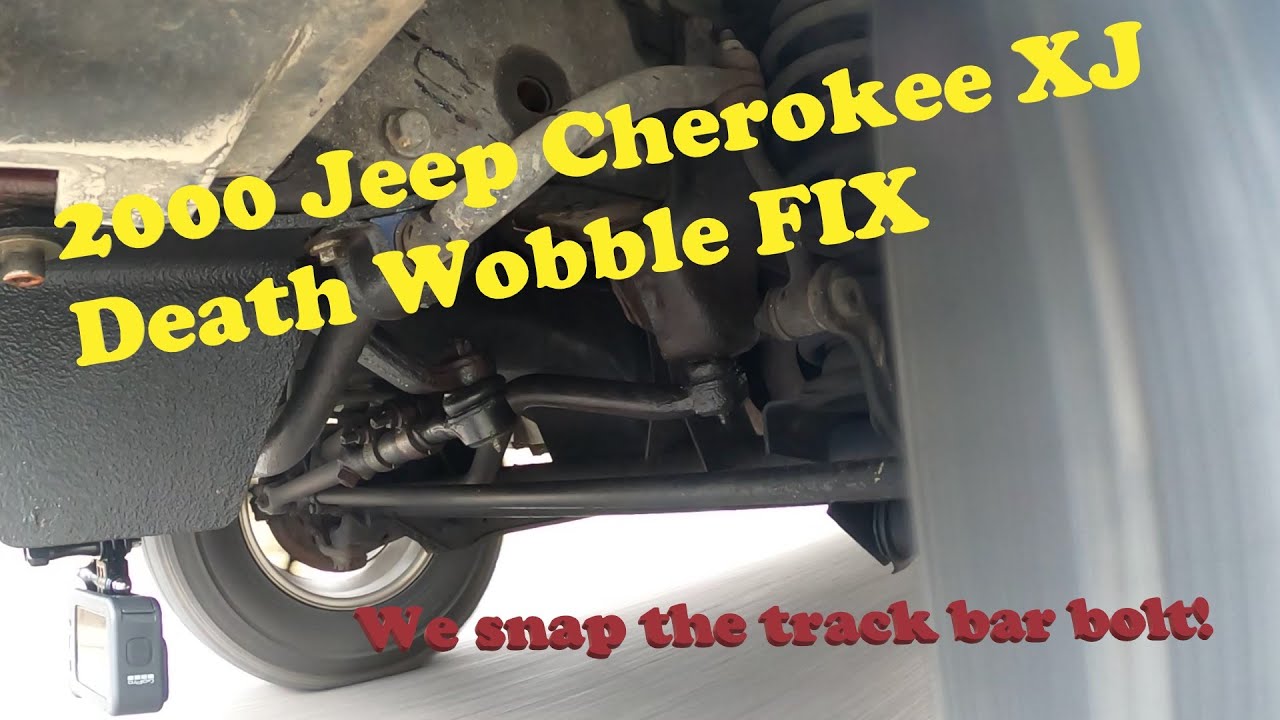
What Death Wobble Is and Why the Track Bar Matters
Death wobble is a rapid side-to-side shake of the front axle and steering wheel. It usually begins after the Jeep hits a bump, bridge joint, pothole, or uneven road surface at highway speed. The shake may continue until the vehicle slows down.
The XJ uses a solid front axle. The track bar, also called a Panhard rod, keeps that axle centered under the body. One end connects to the axle. The other end connects to the frame-side bracket.
The track bar does not steer the Jeep. It controls side-to-side axle movement.
When a track bar bushing, bolt, or bracket has play, the axle can shift sideways. That movement changes the steering geometry. The tires then steer the axle back and forth. This can create a loop:
- A road bump moves the axle.
- The axle shifts sideways through a loose track bar.
- The steering linkage changes angle.
- The tires steer the axle in the opposite direction.
- The loose joint allows the movement to repeat.
A worn track bar may cause death wobble, but replacing it without checking the rest of the front end may not solve the problem.
Safety Before You Inspect or Repair the Jeep
Do not drive a Jeep that has severe or repeated death wobble until you find the cause. The shaking can make the driver lose control and can damage steering or suspension parts.
Use these safety rules:
- Park on a hard, level surface.
- Set the parking brake.
- Chock the rear wheels.
- Use a floor jack with enough capacity for the Jeep.
- Support the front axle with rated jack stands.
- Never rely on the jack alone.
- Keep hands away from pinch points while the steering wheel is moving.
- Do not place any part of your body under an unsupported vehicle.
- Wear eye protection when working below the Jeep.
- Use a torque wrench during final assembly.
For a basic inspection, the Jeep can remain on the ground. For wheel, ball-joint, and underbody checks, follow safe lifting practice and the service information for your exact model year.
If a track bar bracket is cracked, badly wallowed out, or partly torn from the unibody, stop driving the Jeep. That repair may require welding and professional inspection.
How to Diagnose Death Wobble on a Cherokee XJ
The fastest useful test is a controlled steering test. Keep the Jeep on the ground with the tires pointing straight ahead. Have a helper turn the steering wheel slowly left and right through a small range while you watch the front axle and steering joints.
The helper should not turn the wheel far enough to move the Jeep. You are looking for loose movement, not testing steering effort.
Check the track bar first
Watch both ends of the track bar:
- The frame-side bolt and bushing
- The axle-side bolt and bushing
- The track bar bracket
- The axle bracket welds
- Any movement between the bolt sleeve and bracket
A good joint moves as part of the axle. It should not show a clear delay, clunk, or sideways shift between the bolt sleeve and bracket.
Replace or repair the part if you see:
- The bushing sleeve moving inside the rubber
- The bolt moving inside the bracket hole
- A loud clunk
- Crushed or split rubber
- A track bar that shifts before the axle responds
- Cracks around the bracket welds
- An oval-shaped bolt hole
Do not judge the bushing by appearance alone. Some bushings look acceptable but still allow movement under load.
Inspect the steering linkage
Watch the tie-rod ends and the drag link while the helper moves the steering wheel. The studs should rotate, but they should not show loose up-and-down or side-to-side movement.
Check the:
- Tie-rod ends
- Drag-link ends
- Pitman-arm connection
- Steering damper mounts
- Tie-rod tube
- Drag-link tube
A steering damper can reduce the feel of a shake, but it cannot repair a loose joint. Installing a heavier damper may hide a problem for a short time while the worn part continues to deteriorate.
Check wheel bearings and ball joints
Raise the front axle only after securing the Jeep on stands. Grasp each tire at the 12 and 6 o’clock positions and rock it. Movement can point to a wheel bearing or ball-joint problem, but this test is not conclusive by itself.
Then grasp the tire at the 3 and 9 o’clock positions. Movement may point to steering linkage or wheel-bearing play.
Use a pry bar carefully under the tire or axle as appropriate for your service procedure. Watch the ball joints and wheel bearing while applying light force. Do not place fingers near moving joints.
Check tires, wheels, and alignment
Inspect all four tires for:
- Uneven wear
- Missing tread blocks
- Broken belts
- Cupping
- Low pressure
- Different tire sizes
- Mud packed inside a wheel
- A bent rim
Have the tires balanced if they show no damage. A tire or wheel problem can start a shake, but balance alone will not fix a loose track bar.
Check front toe after suspension work. Incorrect toe can make the Jeep more sensitive to bumps. A professional alignment is useful after replacing a track bar or repairing a bracket.
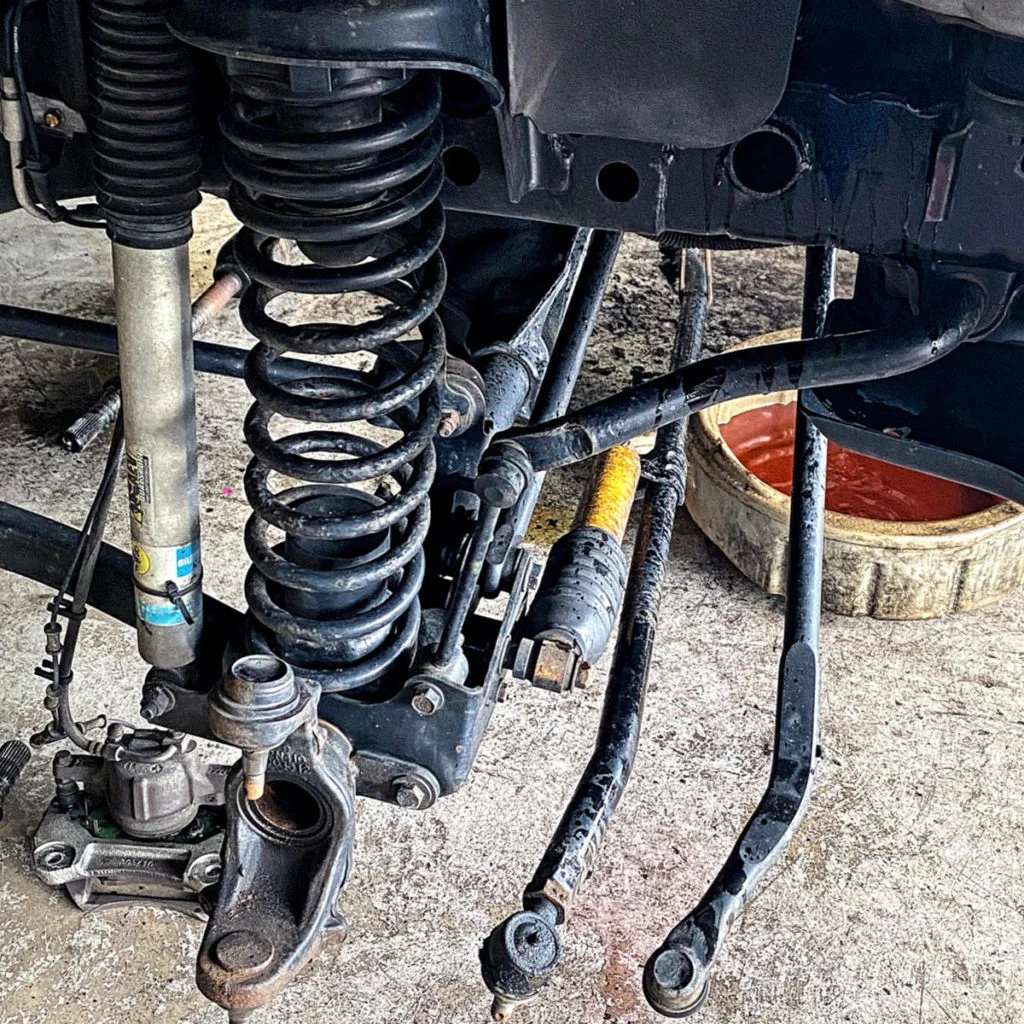
Track Bar or Track Bar Bushing: Which Part Should You Replace?
Replace only the bushing when the track bar itself is straight, the sleeves are sound, and the brackets and bolt holes are tight and round.
Replace the complete track bar when:
- The bar is bent.
- The joint or bushing is not serviceable.
- The metal sleeve is damaged.
- The threads or fastener are damaged.
- The axle has been lifted and the original bar no longer provides the needed adjustment.
- The bar has visible damage from a collision or off-road impact.
A stock-height XJ usually needs a stock-length replacement track bar. A lifted XJ may need an adjustable track bar, but adjustment does not automatically fix death wobble. The bar must be set so the axle sits centered under the body, and the bracket must remain strong.
Avoid using a track bar that is too short or too long for the suspension height. A poor length can shift the axle sideways and change steering geometry.
Polyurethane bushings may feel firmer than rubber, but firmness is not the same as correct fit. The bushing must match the track bar and its sleeves. A tight bushing installed in a damaged bracket still leaves a safety problem.

How to Replace a Jeep Cherokee XJ Track Bar
The exact bolt size and torque can vary by model year, replacement part, and fastener. Use the factory service manual or the instructions supplied with the replacement part for the final torque value.
Tools and parts
Prepare:
- Replacement track bar or correct bushing
- Floor jack
- Jack stands
- Wheel chocks
- Socket and wrench set
- Breaker bar
- Torque wrench
- Penetrating oil
- Paint marker
- Pry bar
- Bushing press or suitable removal tools if replacing only the bushing
- Service information for the exact XJ year
Do not assume the old bolt is the correct replacement. Compare the new fastener, sleeve, and nut with the original before assembly.
Step 1: Record the current setup
Before removal, mark the position of an adjustable track bar. Measure from a fixed body point to the axle on both sides. These measurements are not a substitute for alignment, but they help you return the axle close to its current position.
Take photos of the washers, spacers, and bolt direction. Some replacement track bars use different hardware.
Step 2: Support the Jeep safely
Park on level ground. Chock the rear wheels. Support the front axle so it cannot move freely while you remove the track bar.
Keep the axle close to normal ride height unless the replacement instructions say otherwise. Large changes in suspension position can make the bolts difficult to remove and can load the bar.
Step 3: Loosen both track bar bolts
Apply penetrating oil if the hardware is rusty. Loosen the frame-side and axle-side fasteners, but do not remove them until the Jeep is stable.
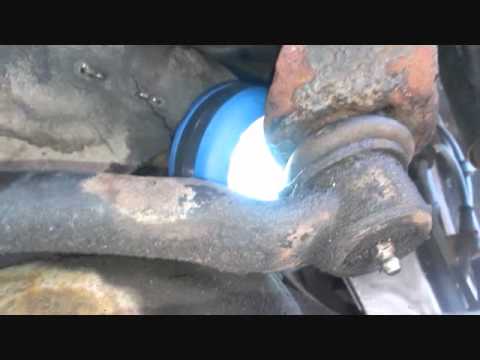
If the bolt spins with the nut, hold the bolt head with a suitable wrench. Do not heat a suspension fastener near rubber, brake lines, fuel lines, or other heat-sensitive parts.
Step 4: Remove the old track bar
Support the bar as you remove the bolts. If the bar is under side load, the bolt may not slide out easily. A small change in axle position with a jack can relieve the load.
Never use a hammer on a loaded bolt while your hands are near the bracket opening. Keep the axle supported and move it only in small, controlled steps.
Step 5: Inspect the brackets and bolts
Clean the bracket areas and check for:
- Elongated holes
- Cracked welds
- Bent metal
- Rust between bracket layers
- Worn bolt shanks
- Damaged threads
- Missing washers or sleeves
A new track bar cannot hold a loose bracket together. A wallowed hole may require a proper repair, such as reinforcement and correctly sized hardware, performed by a qualified welder.
Step 6: Install the replacement
Fit the new track bar in the same general position as the old one. Install the hardware finger-tight first.
If the bar is adjustable, do not use the threaded section to force the axle into place. Center the axle by measuring both sides, then set the bar according to the manufacturer’s instructions.
Avoid tightening rubber-bushed joints with the suspension hanging at full droop unless the instructions specifically allow it. Many rubber bushings are designed to rest near normal ride height. Tightening them at the wrong angle can preload the rubber and shorten its life.
Step 7: Torque the fasteners correctly
Set the Jeep at the required ride height and torque the track bar fasteners with a calibrated torque wrench. Use the exact value for your XJ year and hardware.
Do not guess at torque. Do not use an impact gun for final tightening. If the replacement manufacturer lists a different value from the factory manual, confirm whether the difference relates to the supplied bolt, nut, washer, or joint design.
Step 8: Recheck the installation
Confirm that:
- The bolts are fully seated.
- The nuts have their locking feature or proper retention.
- The bar clears the differential, cover, steering linkage, and suspension.
- The bracket has no new cracks.
- Brake hoses and wiring are not stretched.
- The axle is reasonably centered.
- The tires point straight ahead.
After a short, slow test drive, inspect the hardware again. Recheck the fasteners after the first drive and again after several drives if the part maker recommends it.

How to Replace Track Bar Bushings
Some Cherokee XJ track bars use a bushing that can be replaced. Others use a joint or assembly that is better replaced as a complete unit. Confirm the design before buying a bushing.
Remove the track bar and press the old bushing out with the correct tool. Do not burn the rubber out with a torch unless you have verified that no nearby coating, grease, paint, or plated metal can release harmful fumes. Pressing is cleaner and gives better control.
Inspect the metal sleeve and the bore after removal. Remove rust and dirt, but do not grind the bore larger. If the sleeve is worn or the bar eye is distorted, replace the complete track bar.
Install the new bushing straight. A bushing that starts at an angle can tear or deform. Use only the lubricant specified by the bushing maker. Petroleum grease can damage some rubber materials.
After installation, center the bushing sleeve before inserting the bolt. Tighten the fastener at the correct suspension height and use the specified torque.
If the new bushing quickly develops play, look for a damaged track bar eye, a loose bracket, incorrect bushing size, or an under-torqued fastener.

What to Do If Death Wobble Continues
If the wobble remains after the track bar repair, do not keep replacing random parts. Repeat the inspection and check the other links in the system.
Use this order:
| Check | What to look for | Likely action |
|---|---|---|
| Track bar bracket | Cracks, movement, oval holes | Repair or replace bracket |
| Track bar bolts | Loose, bent, worn shank | Replace and torque correctly |
| Tie-rod ends | Joint movement or torn boots | Replace worn joint |
| Drag link | Loose ends or bent tube | Repair or replace |
| Ball joints | Play under load | Replace affected parts |
| Unit bearings | Wheel movement or roughness | Replace bearing assembly |
| Tires and wheels | Cupping, belt damage, imbalance | Repair, balance, or replace |
| Alignment | Incorrect toe or steering wheel position | Perform an alignment |
| Suspension lift | Poor track bar length or geometry | Correct the setup |
Check the track bar again with the Jeep on the ground. A worn part may move only when the axle is loaded.
Inspect the frame-side bracket closely. On older XJs, corrosion, repeated impact, and oversized tires can place extra stress on the bracket. A bracket can look intact from above while cracking near a weld.
If the Jeep has a lift kit, check more than track bar length. Look at caster, control-arm bushings, steering linkage angles, bump-stop clearance, and front axle centering. A lifted suspension may need geometry corrections that a new stock track bar cannot provide.

Common Mistakes That Do Not Fix Death Wobble
Replacing only the steering damper
A steering damper controls vibration felt through the steering linkage. It does not hold the axle in place. Replace it only when it is worn or damaged, not as a substitute for repairing loose suspension parts.
Tightening bolts without finding movement
A loose bolt may be the cause, but a bolt that has damaged the bracket hole will loosen again. Inspect the hole, sleeve, bolt, and bracket together.
Installing harder bushings without checking fit
A firm bushing can reduce movement only when the parts fit correctly. It cannot correct a bent track bar or cracked bracket.
Balancing tires before checking suspension play
A tire balance is useful, but it does not repair a loose joint. Inspect safety-critical joints first.
Measuring lift height and guessing track bar length
Two Jeeps with the same lift height may have different brackets, control arms, and axle positions. Set an adjustable bar by axle centering and the manufacturer’s procedure.
Tightening rubber bushings at full droop
This can twist the rubber at normal ride height. Follow the component instructions and tighten at the specified suspension position.

Signs the Repair Worked
A successful repair should produce all of these results:
- No visible track bar movement during the steering test
- No clunk from the track bar or bracket
- No play in tie-rod ends, ball joints, or wheel bearings
- A stable steering wheel on a controlled road test
- No repeated shake after bumps
- Correct tire pressure and balanced wheels
- A proper alignment after suspension repairs
Test the Jeep on a quiet road at low speed first. Increase speed slowly. Do not deliberately drive over a bump to test the wobble.
If the shake returns, stop the test and inspect the Jeep again. Death wobble can damage parts over time, so a return of the symptom is a reason to continue diagnosis, not to install a larger steering damper.
When to Use a Professional Mechanic
Have a qualified Jeep or suspension technician inspect the vehicle when:
- The track bar bracket is cracked or torn.
- The unibody mounting area is rusted.
- A bolt hole is enlarged.
- The axle cannot be centered.
- Ball-joint or wheel-bearing play is difficult to identify.
- The Jeep has major suspension modifications.
- You do not have safe lifting equipment.
- The wobble is severe or returns after repairs.
A professional alignment is also wise after replacing steering or suspension parts. Ask for the measured readings, not just a statement that the alignment is complete.
Frequently Asked Questions
Can a bad track bar cause death wobble by itself?
Yes. A worn track bar bushing, loose bolt, bent bar, or damaged bracket can allow enough axle movement to start death wobble. However, other worn parts can create the same symptom or make a track bar problem worse.
Should I replace both track bar bushings?
Replace both if both show play, cracking, or deterioration. If one bushing is worn and the other is sound, replacing only the damaged serviceable bushing may be reasonable. Replace the complete bar when the bar eye, sleeve, or joint is damaged.
Does a lift kit cause death wobble?
A lift kit does not guarantee death wobble, but it can change axle position, caster, steering angles, and track bar geometry. Poor installation, incorrect parts, worn original parts, and bad alignment can make the problem more likely.
Can I drive my Cherokee XJ with death wobble?
Avoid driving it at highway speed until the cause is found. If wobble starts while driving, hold the steering wheel firmly, ease off the accelerator, and slow down without abruptly braking or turning. Pull over when safe and inspect the Jeep.
Do I need an alignment after replacing the track bar?
An alignment is recommended, especially if the track bar length, axle position, tie rod, control arms, or steering parts changed. At minimum, check front toe and steering wheel position.
How do I know if the track bar bracket is bad?
Watch the bracket while a helper moves the steering wheel. Any bracket movement, cracking, shifting weld, or elongated bolt hole is a defect. A bracket repair may require welding and should be checked by someone experienced with unibody Jeep repairs.
Final Recommendation
Start with a loaded-vehicle inspection of the track bar, both bushings, bolts, and mounting brackets. Replace worn parts with correctly matched components, repair any damaged bracket or hole, torque the hardware at the correct suspension height, and then inspect the steering joints, ball joints, wheel bearings, tires, and alignment.
The safest fix for Cherokee XJ death wobble is a complete diagnosis. A new track bar may solve the problem, but only when the rest of the front suspension is sound.