
How To Fix Electronic Throttle Light Jeep Patriot: Guide
 Reading Time: 12 minutes
A Jeep Patriot with an electronic throttle control (ETC) warning light may have a weak battery, a dirty throttle body, a damaged wiring connector, a faulty accelerator pedal sensor, or a problem inside the throttle body. The safest repair path is to scan the Jeep for diagnostic trouble codes, check battery voltage, inspect the throttle and wiring, then test or replace the failed part.
Do not keep driving if the Jeep enters limp mode, will not respond to the accelerator, stalls, or shows a flashing check engine light. Pull over safely and arrange a diagnosis.
This guide applies to Jeep Patriots sold in the United States, including common U.S.-market models from 2007 through 2017 with the 2.0L or 2.4L gasoline engine. Exact parts, codes, and relearn steps can vary by model year and engine.
What the Electronic Throttle Control Light Means
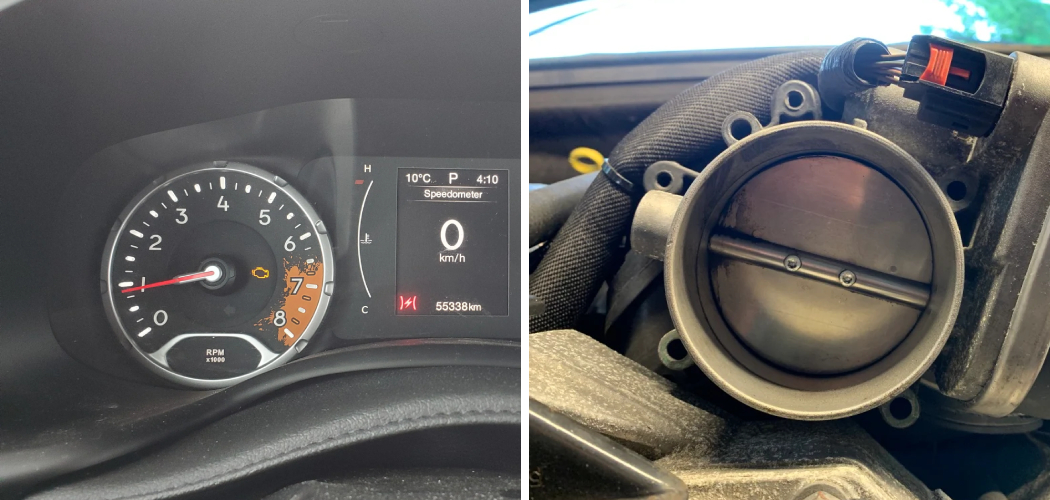
The ETC warning light is usually shown as a red lightning bolt between two curved lines. It means the powertrain control module detected a problem in the system that controls engine airflow and throttle response.
Older vehicles used a mechanical cable between the accelerator pedal and throttle plate. The Jeep Patriot uses electronic signals instead. The accelerator pedal has position sensors, and the engine computer uses those signals to control an electric motor in the throttle body.
The ETC system includes:
- Accelerator pedal position sensors
- Electronic throttle body
- Throttle position sensors
- Throttle actuator motor
- Engine control module
- Wiring, connectors, fuses, and grounds
- Battery and charging system
The light does not identify one specific failed part. It is a warning that the computer saw a signal, voltage, or throttle movement outside the expected range.
A Jeep Patriot may show one or more of these symptoms:
- Reduced engine power
- Slow or delayed acceleration
- Engine idle surging
- Stalling
- Rough idle
- Poor fuel response
- Throttle stuck near idle
- Check engine light
- Limp-home mode
- The vehicle starts but barely moves
First Check: Is It Safe to Drive?
Stop driving and tow the Jeep if the accelerator stops responding, the engine stalls in traffic, or the ETC light flashes with severe shaking. A loss of throttle control can make it hard to merge, climb a hill, or move away from danger.
You may be able to drive a short distance to a repair shop when all of these conditions are true:
- The light is steady, not flashing.
- The engine responds normally to the accelerator.
- The Jeep does not stall.
- There is no severe misfire or strong fuel smell.
- The temperature gauge remains normal.
- Brakes, steering, and transmission operation are normal.
Keep the trip short and avoid highways if the vehicle is in reduced-power mode. If the Jeep repeatedly loses power, do not assume that turning the engine off has fixed the problem.
How to Diagnose the ETC Light on a Jeep Patriot
The best first step is to read the stored diagnostic trouble codes. A code gives you a direction; it does not always name the part that must be replaced.
1. Scan the Jeep for trouble codes
Use an OBD-II scanner at the diagnostic port below the dashboard. Many auto parts stores in the United States offer code scans, but ask for the exact code numbers and descriptions. A basic code reader may not show all manufacturer-specific data.
Common ETC-related codes may include:
| Code | General meaning | Possible causes |
|---|---|---|
| P0121 | Throttle or pedal position range/performance problem | Sensor signal, wiring, throttle body |
| P0122 | Throttle position sensor signal too low | Short, poor connection, failed sensor |
| P0123 | Throttle position sensor signal too high | Wiring fault, sensor fault |
| P0221 | Second throttle position sensor range/performance problem | Throttle body or wiring |
| P0222 | Second throttle position sensor signal too low | Connector, wiring, sensor |
| P0223 | Second throttle position sensor signal too high | Sensor or circuit problem |
| P2101 | Throttle actuator motor range/performance problem | Binding throttle plate, motor, power supply |
| P2110 | Forced limited-power mode | The computer reduced throttle operation |
| P2118 | Throttle actuator motor current or range problem | Throttle body, power, wiring |
| P2135 | Throttle or pedal sensor voltage disagreement | Sensor mismatch, connector, wiring |
| P2122/P2127 | Accelerator pedal position signal too low | Pedal sensor or circuit |
| P2123/P2128 | Accelerator pedal position signal too high | Pedal sensor or circuit |
These descriptions are general. Confirm the code definition for the exact year and engine before buying parts.
Record all codes and freeze-frame data before clearing anything. Freeze-frame data can show engine speed, coolant temperature, vehicle speed, and voltage when the fault occurred.
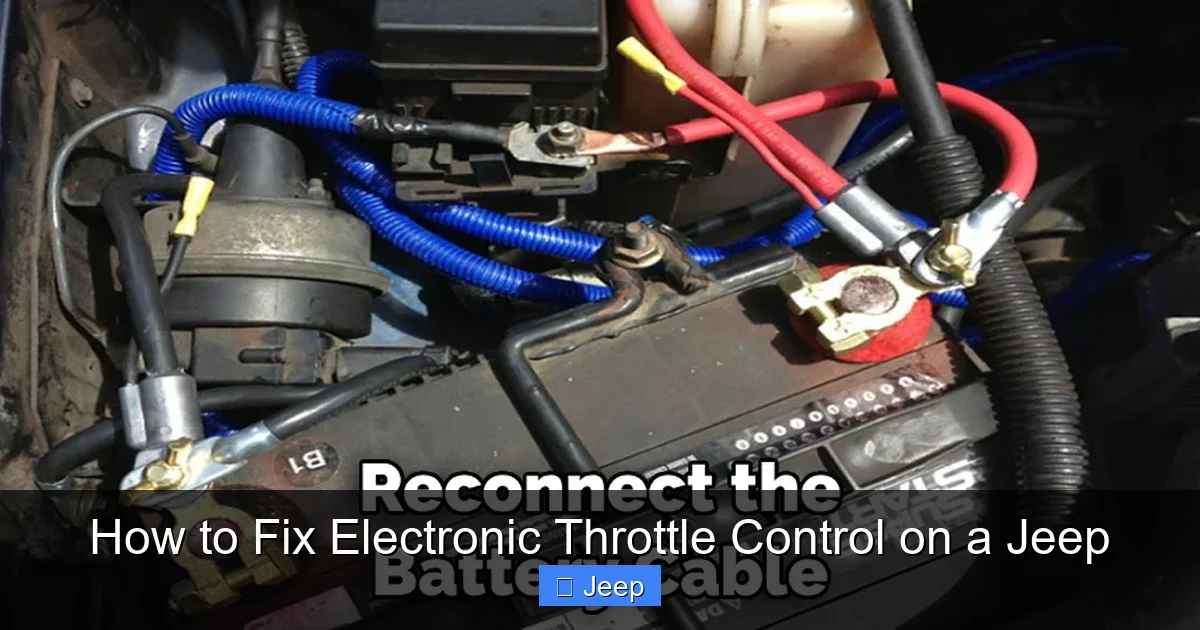
2. Check the battery and charging system
Low voltage can cause false or multiple electronic throttle codes. It is especially common after a weak start, a discharged battery, a jump-start, or battery replacement.
With the engine off, a fully charged 12-volt battery often measures close to 12.6 volts at room temperature. A reading near 12.2 volts suggests a partly discharged battery, while a much lower reading may indicate a weak or discharged battery.
With the engine running, charging voltage is commonly above the resting battery voltage. The exact value can change with temperature and the vehicle’s charging strategy. If the battery light is on, the engine cranks slowly, or voltage changes sharply, test the battery, alternator, cables, and grounds before replacing throttle parts.
Inspect:
- Battery terminals
- Negative battery cable
- Engine ground strap
- Fuse-box connections
- Corroded ground points
- Loose or damaged power cables
Do not disconnect the battery before recording the codes. Removing power may erase useful information and can create additional settings that need to be restored.
3. Inspect the throttle body connector
Turn the ignition off before disconnecting any connector. Locate the throttle body on the intake manifold and inspect its electrical plug.
Look for:
- Broken locking tabs
- Bent or pushed-back terminals
- Green or white corrosion
- Water or oil inside the connector
- Loose wires near the plug
- Chafed insulation
- Rodent damage
- A connector that does not lock firmly
Do not probe sealed terminals with a large test lead. Use the correct back-probe tool and wiring diagram if electrical testing is needed. A poor connection can create the same code as a failed throttle body.
4. Inspect the accelerator pedal connector
The accelerator pedal assembly also contains position sensors. Check the connector above the pedal for looseness, water, damaged wires, or signs that the harness is being pulled.
Do not spray cleaner into the pedal assembly. If the scan data shows that the pedal sensors disagree or the pedal signal drops out, the pedal assembly or its wiring may need further testing.
5. Check the throttle body for dirt or binding
Carbon buildup around the throttle plate can affect airflow and idle control. Remove the intake tube only when the engine is cool and the ignition is off.
Look for:
- Heavy black carbon around the throttle plate
- Oil residue from the crankcase ventilation system
- A damaged intake tube
- Cracks or air leaks after the throttle body
- A throttle plate that appears stuck
Do not force the electronic throttle plate open by hand. The actuator and gears can be damaged. Follow the service information for the specific Patriot if the plate must be moved during cleaning.

How to Clean the Jeep Patriot Throttle Body
Cleaning may help when the throttle body has carbon buildup and the throttle plate moves correctly. Cleaning will not repair a failed motor, worn sensor, broken gear, or damaged wiring.
What you need
- Safety glasses
- Nitrile gloves
- Throttle-body cleaner approved for electronic throttle bodies
- Clean, lint-free cloths
- Screwdrivers or sockets for the intake tube
- Flashlight
- Your Jeep Patriot service information
Avoid using harsh solvent, carburetor cleaner, or compressed air on electrical parts unless the product and service instructions allow it.
Cleaning steps
- Park on a level surface, set the parking brake, and let the engine cool.
- Turn the ignition off and remove the key.
- Disconnect the negative battery cable only if the service procedure for your model calls for it.
- Remove the air-intake tube from the throttle body.
- Inspect the tube for cracks and loose clamps.
- Spray cleaner onto a cloth rather than flooding the throttle body.
- Wipe carbon from the accessible bore and the edge of the throttle plate.
- Keep liquid away from the electrical connector and actuator housing.
- Reinstall the intake tube and tighten the clamps.
- Reconnect the battery if it was removed.
- Start the engine and allow it to idle without repeatedly pressing the accelerator.
The engine may idle poorly for a short time after cleaning or battery disconnection while the computer restores its learned settings. The exact throttle or idle relearn procedure differs by year and engine. Use the factory service procedure or a capable scan tool instead of relying on a generic “pedal dance.”
A successful cleaning should produce stable idle, normal pedal response, and no return of the ETC light during a short test drive. If the light returns, retrieve the codes again. The fault still needs diagnosis.
What to Do If Cleaning Does Not Fix the Light
If the same ETC code returns, do not keep cleaning the throttle body or replace random parts. Use the code and live data to separate a throttle-body fault from a pedal, wiring, voltage, or computer problem.
A throttle body is more likely when:
- The code points to throttle actuator performance.
- The throttle plate binds or does not move as commanded.
- Two throttle position signals disagree.
- The connector and wiring pass inspection.
- Battery and charging voltage are normal.
- The light returns immediately after starting.
The accelerator pedal is more likely when:
- The code points to accelerator pedal position.
- Pedal signals drop out or disagree in live data.
- The throttle body responds correctly during testing.
- The fault changes when the pedal harness is moved carefully.
- The Jeep loses throttle response without visible throttle-body damage.
Wiring or power supply is more likely when:
- Several unrelated low-voltage codes appear.
- The fault is intermittent.
- The problem began after water intrusion, repair work, or a jump-start.
- Voltage or ground tests fail.
- The code changes when a connector or harness is moved.
A computer problem is less common
The engine control module should be considered only after power, grounds, connectors, wiring, sensors, and the throttle body have been tested. Replacing a computer based only on an ETC code is an expensive and unreliable shortcut.
Replacing the Throttle Body or Accelerator Pedal
A replacement throttle body may be required if the actuator motor, position sensor, or internal gear mechanism has failed. On some Patriot models, these components are serviced as one throttle-body assembly rather than as separate internal parts.
Use a part that matches:
- Model year
- Engine size
- U.S. emissions configuration
- Connector design
- Original equipment part number or verified replacement number
A similar-looking throttle body is not necessarily compatible. Confirm the application with a reliable parts catalog or the vehicle identification number.
The accelerator pedal assembly may also contain integrated sensors. If it fails, replacing the entire pedal assembly may be the correct repair. Do not install a used part without checking compatibility and condition.
After replacement, the Jeep may need an electronic throttle or idle relearn. Some repairs can be completed through an ignition-cycle procedure, while others require a scan tool. Follow the instructions for the exact Patriot model.
Common Mistakes to Avoid
Clearing the code without fixing the cause
A cleared warning light is not proof of a repair. The computer may need several drive cycles before the fault returns.
Replacing the throttle body first
A weak battery, loose ground, or damaged connector can produce a throttle code. Test the simple causes first.
Spraying cleaner into the throttle motor
Liquid can damage the actuator or contaminate the electronics. Apply cleaner to a cloth and keep it away from the electrical housing.
Forcing the throttle plate
The throttle plate is controlled by an electric motor and gears. Manual force can damage the mechanism.
Ignoring a damaged intake hose
An air leak near the throttle body can cause poor idle and driveability problems. It may not be the main ETC fault, but it can add confusing symptoms.
Driving with reduced power
Limp mode is a protective strategy, not a normal operating mode. Continued driving may leave you without enough power to control the vehicle safely.
Disconnecting the battery too soon
Battery disconnection can erase diagnostic evidence. Scan and record the codes first.

When to Use a Professional Repair Shop
A qualified technician is the safer choice when the Jeep has intermittent loss of throttle, several electrical codes, wiring damage, or a fault that returns after cleaning.
Professional diagnosis is especially useful when:
- The light returns immediately.
- The Jeep will not accelerate.
- The engine stalls.
- The scan tool shows conflicting sensor values.
- A wiring fault is suspected.
- The battery and alternator test normally.
- The repair requires throttle or idle relearn.
- The vehicle has been exposed to water or a collision.
Ask the shop for the stored codes, test results, and failed component before approving parts replacement. A good diagnosis should explain why the part failed and whether the wiring, battery, and grounds were checked.
Quick Troubleshooting Decision Table
| Symptom | First check | Likely direction |
|---|---|---|
| ETC light after a weak start | Battery and charging voltage | Battery, alternator, or ground |
| Light appears with P0121 or P2135 | Throttle and pedal live data | Sensor disagreement or wiring |
| Reduced power with P2110 | Full code scan and throttle test | Forced limp mode |
| Rough idle after throttle cleaning | Intake tube and relearn procedure | Air leak or lost learned values |
| No accelerator response | Stop driving and scan vehicle | Pedal, throttle body, or wiring |
| Intermittent warning after rain | Connectors and harnesses | Moisture or corrosion |
| Light returns after replacing a part | Verify code and wiring | Wrong part or unresolved circuit fault |
Frequently Asked Questions
Can I drive my Jeep Patriot with the ETC light on?
Only for a short distance when throttle response is normal, the light is steady, and the engine is not stalling or misfiring. Do not drive if the Jeep is in severe limp mode or the accelerator does not respond normally.
Will disconnecting the battery reset the ETC light?
It may clear some stored information, but it does not repair the fault. It can also erase freeze-frame data and create a need for relearn procedures. Scan the vehicle before disconnecting the battery.
Can a bad battery cause the electronic throttle light?
Yes. Low voltage or poor battery connections can disrupt electronic throttle signals and set multiple warning codes. Test the battery, charging system, cables, and grounds before replacing the throttle body.
Does throttle-body cleaner fix an ETC warning?
It can help when carbon buildup restricts throttle movement. It will not fix a failed sensor, motor, gear, connector, or wire. Use cleaner safely and do not force the throttle plate.
How much does it cost to fix the ETC light?
The cost depends on the cause. A diagnosis or connector repair may cost less than replacing a throttle body or accelerator pedal. Labor rates, parts quality, model year, and the need for programming or relearn work all affect the final price. Get the diagnostic result before approving a repair.
Does every ETC light mean the throttle body must be replaced?
No. The fault may be in the battery, alternator, ground, wiring, accelerator pedal, intake system, or throttle body. The diagnostic code and test results should determine the repair.
Final Recommendation
Start with safety, then scan the Jeep Patriot before clearing the warning. Check battery voltage, grounds, fuses, connectors, wiring, and the intake tube. Clean the throttle body only when carbon buildup is visible and use the correct procedure for the model year.
If the code returns, the Jeep loses throttle response, or live data shows sensor disagreement, stop replacing parts by guesswork. Have the throttle system tested with a capable scan tool and a wiring diagram. The correct fix may be a connection, pedal assembly, throttle body, charging-system repair, or relearn—not always the component that first appears in an online code description.
Reliable Reference Points
- NHTSA Vehicle Safety Recalls — Check for safety recalls using the Jeep Patriot’s 17-digit VIN.
- Mopar Owner’s Manual and Vehicle Resources — Consult the manual for the exact U.S.-market model year.
- EPA Vehicle and Engine Information — Background on U.S. vehicle emissions and diagnostic requirements.