
Should I Buy A Jeep Compass: Pros And Cons
 Reading Time: 9 minutes
Introduction
For U.S. drivers, the Jeep Compass can make sense if you want a compact SUV with four-wheel drive and a higher-riding feel, but it is not the right fit for everyone. The answer depends on the model year, price, driving needs, and how it compares with other small SUVs you are considering.
A Compass may suit you if you value all-weather traction, manageable size, and available off-pavement features. Look elsewhere if your top priorities are strong fuel economy, generous rear-seat and cargo space, or the lowest possible ownership costs. Before you buy, check the exact vehicle’s equipment, history, recall status, and price.

Quick answer: Is a Jeep Compass worth buying?
Buy a Jeep Compass if you want a compact SUV with standard four-wheel drive on recent models and you find one at a competitive price. It is a weaker choice if you need class-leading space, a hybrid powertrain, or a proven low-cost option for long-term ownership.
The Compass is a small SUV, not a midsize family vehicle. Its size is convenient in town, while its four-wheel-drive system can help with traction on snow-covered roads and other slippery surfaces. Four-wheel drive does not shorten stopping distances or make it safe to drive too fast for conditions.
A new or used Compass should earn your approval through its price, condition, and fit for your daily needs—not just its Jeep badge. Compare it with other small SUVs, and drive the exact model you plan to buy.

What the Jeep Compass offers
The Compass is a compact SUV sold in the United States. Recent versions pair a turbocharged engine with an automatic transmission and four-wheel drive. Equipment and performance vary by model year and trim, so confirm the details on the vehicle’s window sticker or build sheet.
For example, the 2025 U.S. Compass uses a 2.0-liter turbocharged four-cylinder engine rated at 200 horsepower and 221 lb-ft of torque, with an eight-speed automatic transmission and standard four-wheel drive. These figures describe that model year; they should not be applied to every used Compass.
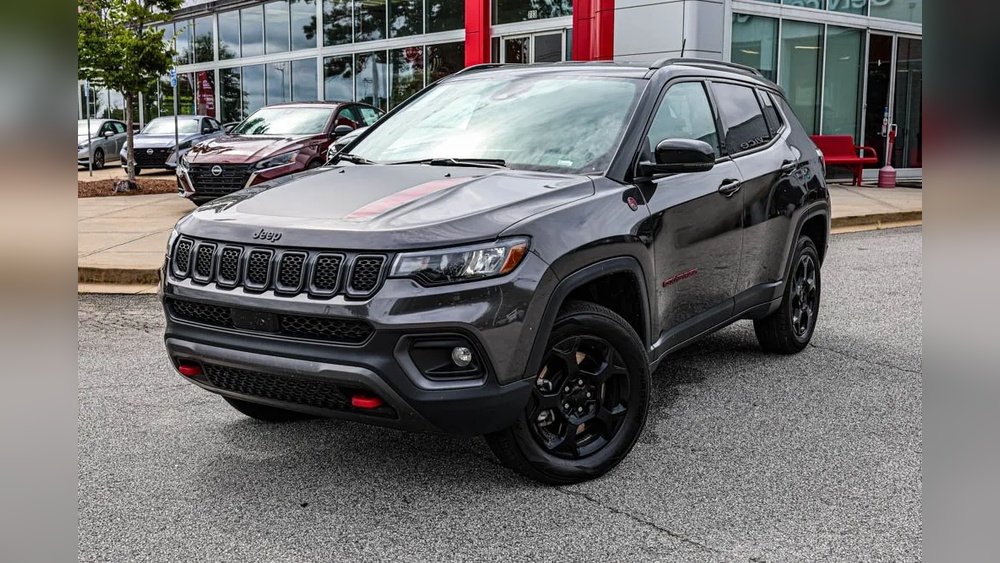
Jeep offers trims with different equipment and intended uses. The Trailhawk trim is aimed more at buyers who want extra off-pavement capability. That does not make every Compass a serious off-road vehicle, nor does it remove the need to check tires, ground clearance, and the specific terrain before driving off paved roads.
For current specifications, confirm the model year and trim on Jeep’s Compass page. For fuel economy, look up the exact year, engine, and drivetrain at FuelEconomy.gov. EPA ratings are estimates; your actual fuel use will depend on traffic, weather, speed, and driving habits.

The main advantages and trade-offs
The Compass’s strongest case is its mix of compact size and four-wheel-drive availability. Its limitations matter just as much, especially if you plan to carry adults in the back seat, haul bulky items, or keep the vehicle for many years.
| What matters | Where the Compass may fit | What to check |
|---|---|---|
| Snow and wet roads | Recent U.S. models offer standard four-wheel drive | Tires, braking, and safe winter driving still matter |
| City use | Its compact-SUV size can be easier to park than a larger SUV | Check visibility, turning feel, and parking sensors on the trim |
| Cargo and passengers | It can handle everyday errands and smaller loads | Test the rear seat and cargo area with your own gear |
| Rougher roads | Some trims add features aimed at trail use | Confirm the trim’s equipment and the limits of the route |
| Fuel costs | The exact result depends on model year and use | Compare EPA ratings for the exact vehicle, not another trim |
| Long-term ownership | A well-kept vehicle with clear service records may be worth considering | Get an inspection and compare local repair and insurance costs |
The main trade-off is capability versus value. If you want four-wheel drive in a compact package, the Compass deserves a test drive. If you want maximum space or a hybrid option, compare other small SUVs before you decide.
Four-wheel drive can help a vehicle move on slippery surfaces, but it does not guarantee control. Winter tires, cautious speeds, and longer following distances remain important. If you often drive in snow, ask about the tires fitted to the Compass and budget for suitable seasonal tires if needed.
Which Jeep Compass model years should you consider?
Choose a Compass by its exact year, powertrain, condition, and price—not by a broad claim that one generation is always reliable or unreliable. Equipment and mechanical details changed over time.
In the U.S., 2017 marked the start of the second-generation Compass. Many 2017–2022 models use a 2.4-liter four-cylinder engine, while 2023 and later models use a 2.0-liter turbocharged engine. Check the specific vehicle’s original specifications, because engines, drivetrains, and features can vary by year and configuration.
A newer model is not automatically the better deal. A lower-priced used Compass may be a sensible buy if it has a clean title, complete maintenance records, no unresolved recalls, and passes an independent inspection. A newer vehicle may offer updated equipment, but its price, mileage, warranty status, and condition still matter.
Before buying any used Compass:
- Check its history. Review title status, reported damage, ownership, and service records. A history report is useful, but it cannot reveal every past issue.
- Check recalls by VIN. Use the NHTSA recall lookup. Ask the seller or dealer to confirm that open recalls have been repaired.
- Arrange an independent inspection. Have a qualified mechanic check the engine, transmission, drivetrain, brakes, tires, suspension, and signs of leaks or prior collision repairs.
- Test every feature. Try the climate controls, screen, cameras, driver-assistance features, and all four doors and windows.
- Confirm coverage in writing. Ask whether any factory warranty remains and whether it transfers to you. Check the warranty booklet and the vehicle’s in-service date rather than relying on a seller’s verbal claim.
No single recall search, history report, or short test drive proves a vehicle is trouble-free. Use them together, and walk away if the seller will not allow a reasonable inspection.

What will a Jeep Compass cost to own?
The purchase price is only one part of the cost. Estimate fuel, insurance, maintenance, repairs, registration, taxes, and financing before you commit. Costs vary by state, driver, model year, trim, mileage, and vehicle condition.
To estimate fuel expense, use this simple calculation:
Annual fuel cost = yearly miles ÷ your expected miles per gallon × local price per gallon
For example, if you drive 12,000 miles per year, get 25 mpg in your normal use, and pay $3.50 per gallon, the estimate is $1,680 per year. This is a hypothetical calculation, not a prediction of a particular Compass’s fuel use or your local gas price.
Use the EPA rating for the exact model year and configuration as a starting point, then adjust for your own driving. Frequent short trips, high speeds, cold weather, heavy loads, and stop-and-go traffic can change fuel economy.
Ask an insurer for a quote using the vehicle identification number (VIN) before you buy. For a used Compass, also request a pre-purchase inspection quote and price any repairs the mechanic identifies. A low sticker price may not be a good deal if the vehicle needs tires, brakes, or other work soon.
How to decide after a test drive
A test drive should answer whether the Compass fits your real routes, passengers, and gear. Drive the exact trim and model year you plan to buy; a different version may feel or function differently.
- Set up the driver’s seat. Check whether you can reach the pedals and controls comfortably, and whether you have a clear view in all directions.
- Drive on more than one type of road. Include city streets, a faster road, and rough pavement if possible. Listen for unusual noises and notice how the vehicle accelerates, shifts, brakes, and rides.
- Check the back seat and cargo area. Bring the people, child seats, stroller, sports gear, or luggage you expect to carry. Confirm that everything fits without making the cabin uncomfortable.
- Try the controls. Pair your phone if supported, test the camera and climate system, and make sure the screens and buttons are easy for you to use.
- Review the deal before signing. Compare the out-the-door price, loan terms, fees, warranty, and any add-ons. Focus on the total cost, not only the monthly payment.
If the vehicle pulls to one side, has warning lights, shifts harshly, or makes a persistent noise, ask for the cause to be checked before purchase. A seller’s assurance is not a substitute for an inspection by a qualified mechanic.

What should you compare it with?
Compare the Compass with small SUVs that match your budget and driving needs. The right alternative depends on the exact trim and model year, so compare equipment and prices rather than assuming every version of a competing model is better.
- Toyota RAV4 Hybrid: Consider it if fuel economy is a major priority and the hybrid’s price and availability work for you.
- Honda CR-V: Include it if cabin space and everyday family use matter more than Jeep-specific styling or trail-focused equipment.
- Subaru Forester: Compare it if standard all-wheel drive and visibility are high on your list. Confirm the trim, price, and cargo space that suit you.
- Mazda CX-5: Test-drive it if road feel and cabin materials matter to you. Check how its rear-seat and cargo space fit your needs.
These are starting points, not blanket rankings. Compare the vehicle’s purchase price, warranty, safety equipment, fuel economy, insurance quote, and condition. For used models, compare vehicles with similar mileage and service history.
Frequently asked questions
Is a Jeep Compass good in snow?
Four-wheel drive can help a Compass gain traction when moving on snow, but it cannot guarantee safe handling or shorter stopping distances. Tires, speed, road conditions, and driver skill matter. Use winter tires where appropriate and leave extra room to stop.
Is the Jeep Compass a good family SUV?
It can work for a small household, but families should test the rear seat and cargo space with their own child seats and gear. If you regularly carry several passengers or bulky items, compare larger small SUVs before buying.
Should I buy a new or used Jeep Compass?
A new Compass may offer newer equipment and a clearer warranty, while a used one may cost less up front. Compare the total price, loan terms, warranty status, mileage, service history, and inspection results. Neither choice is automatically the better value.
How do I check for open recalls?
Enter the vehicle’s VIN in the NHTSA recall lookup. Ask a Jeep dealer to confirm whether any open recall work has been completed. A recall search does not replace a mechanical inspection.
Does every Jeep Compass have the same fuel economy?
No. EPA ratings vary by model year and configuration, and real-world fuel use varies with driving conditions. Check the exact vehicle at FuelEconomy.gov.
Conclusion: Should you buy one?
A Jeep Compass is worth considering if you want a compact SUV with four-wheel drive and the specific vehicle offers good value for its condition and equipment. It is less compelling if your main goals are low fuel costs, maximum passenger or cargo space, or the lowest possible ownership expense.
Compare the Compass with at least two other small SUVs, check the exact model year’s specifications and recall status, and arrange an inspection for a used vehicle. Buy only when the price, condition, and day-to-day fit all make sense.