How to Put Jeep Cherokee in 4 Wheel Drive: Easy Step-by-Step Guide
 Reading Time: 8 minutes
 Jeep Cherokee is a popular choice for drivers who want adventure and flexibility. One of its biggest strengths is the 4 wheel drive system. But if you’re new to 4WD, you might wonder: how do you actually put a Jeep Cherokee in 4 wheel drive? The answer depends on your model, the type of 4WD system, and the driving conditions. This guide will explain everything clearly, step by step, so even first-time Jeep owners can drive with confidence.
Understanding Jeep Cherokee 4 Wheel Drive Systems
Jeep Cherokee models come with different 4WD systems. Each one has its own way to engage 4 wheel drive. Understanding these systems is the first step to using them safely.
- Command-Trac: Found in older and some basic models. Offers part-time 4WD.
- Selec-Trac: Allows both full-time and part-time 4WD.
- Quadra-Trac: Automatic 4WD system, found in some Grand Cherokee trims.
- Active Drive I & II: Modern automatic systems in newer Cherokees.
Knowing which system your Jeep has is important. You can check your owner’s manual or look at the 4WD selector inside your Jeep.
Quick Comparison Of Major Cherokee 4wd Systems
| System Name | Type | Main Feature | Year/Model Range |
|---|---|---|---|
| Command-Trac | Manual, Part-Time | Driver selects 2WD/4WD | Older Cherokee, Some Wrangler |
| Selec-Trac | Manual/Automatic | Full/Part-Time 4WD | Cherokee XJ, some newer |
| Quadra-Trac | Automatic | Seamless 4WD | Grand Cherokee |
| Active Drive I & II | Automatic | Intelligent 4WD modes | 2014+ Cherokee |
Insight: Many beginners confuse “automatic” 4WD with “always on.” In reality, automatic systems can switch between 2WD and 4WD by themselves, but you still need to know how and when this happens.
When Should You Use 4 Wheel Drive?
Before switching to 4WD, it’s important to know when you actually need it. 4WD is not for every road. Using it at the wrong time can damage your Jeep or cause safety problems.
Best times to use 4WD:
- Snowy or icy roads
- Loose sand or mud
- Steep off-road trails
- Wet grass or gravel
When NOT to use 4WD:
- Dry pavement or highway driving
- Tight turns on hard surfaces
Data Example: According to the National Highway Traffic Safety Administration, using 4WD on dry pavement can increase tire wear by up to 40% and make steering harder.
Tip: Always slow down before engaging 4WD, and shift back to 2WD when you’re back on dry, flat roads.

Credit: www.reddit.com
How To Put Jeep Cherokee In 4 Wheel Drive: Step-by-step For Each System
Let’s break down the process for each of the four main systems found in Jeep Cherokees. Each one needs a slightly different approach.
1. Command-trac System
This is a classic, mechanical 4WD system. You must shift it manually, often using a lever next to the driver’s seat.
How to engage Command-Trac 4WD:
- Stop or drive slowly (under 45 mph).
- Place the transmission in Neutral or keep it in Drive (for 4HI).
- Pull the 4WD lever from 2H (2WD High) to 4H (4WD High) for normal 4WD.
- For tough conditions (deep snow, mud), stop the Jeep completely.
- Shift the transmission to Neutral.
- Move the lever from 4H to 4L (4WD Low) for maximum traction.
- Return to 2H for regular driving on normal roads.
Practical Example: You’re driving on a snowy mountain road. You slow down, shift to 4H for better grip, and continue safely.
Common beginner mistake: Trying to shift into 4L while moving. Always stop before shifting into 4L.
2. Selec-trac System
Selec-Trac gives you more choices. It has a dial or lever with several modes: 2WD, 4WD Auto, 4WD High, and 4WD Low.
How to use Selec-Trac:
- For light snow or rain: Turn the dial to 4WD Auto. The system will switch between 2WD and 4WD as needed.
- For deeper snow or mud: Shift to 4WD High. You can do this while moving slowly (under 55 mph).
- For challenging off-road: Stop, put the transmission in Neutral, and switch to 4WD Low.
- When road conditions improve, return to 2WD or 4WD Auto.
Key insight: Many drivers leave Selec-Trac in 4WD Auto all winter. It’s safe, but switching to 2WD on dry days improves fuel economy.
3. Quadra-trac System
Quadra-Trac is an automatic system. You don’t need to manually select 4WD most of the time. The Jeep decides when to send power to all wheels.
Using Quadra-Trac:
- Just drive normally. The system senses wheel slip and engages 4WD as needed.
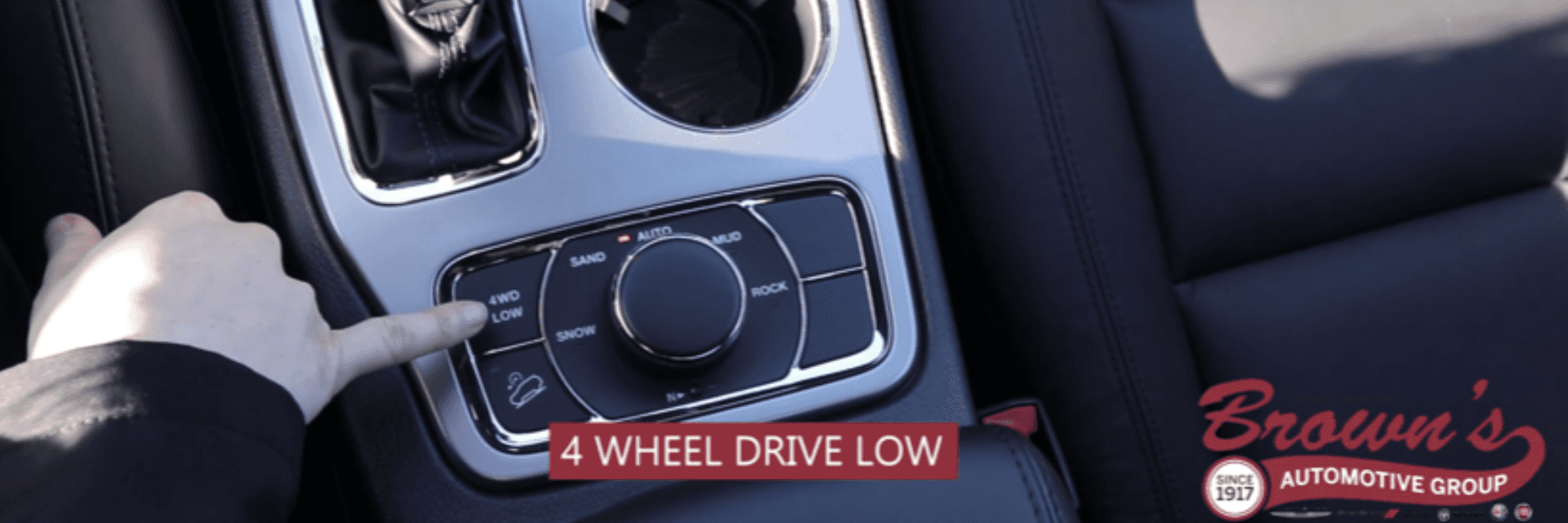
- For extreme situations, some models have a 4WD Low button or lever. Stop the vehicle, shift to Neutral, and select 4WD Low.
Example: You’re on a muddy trail and feel the wheels slipping. Quadra-Trac sends power to all four wheels without you touching anything.
Pro tip: If you plan to drive in very rough conditions, familiarize yourself with the 4WD Low control before you need it.
4. Active Drive I & Ii Systems
These are found in 2014 and newer Jeep Cherokees. They are smart, computer-controlled systems.
- Active Drive I: Fully automatic. No driver action needed for most conditions.
- Active Drive II: Adds a low-range gear for serious off-road.
How to engage:
- For Active Drive I, just drive. The system switches between 2WD and 4WD as conditions change.
- For Active Drive II, to use 4WD Low:
- Stop the vehicle.
- Put the transmission in Neutral.
- Turn the 4WD Low knob or press the button (depends on model).
- Return to Drive or Reverse and continue.
Important: Active Drive II lowers your speed but increases torque—great for climbing or deep mud.
Insight: Many beginners don’t realize Active Drive I is always working in the background. If you see a “4WD” light flash briefly, it means the system is doing its job.
Step-by-step Table: Engaging 4wd In Different Cherokee Systems
Here’s a quick look at how to put each system in 4WD:
| System | 4WD High | 4WD Low | Can Shift While Moving? |
|---|---|---|---|
| Command-Trac | Yes (slow speeds) | No (must stop) | 4H: Yes, 4L: No |
| Selec-Trac | Yes (under 55 mph) | No (must stop) | 4H: Yes, 4L: No |
| Quadra-Trac | Automatic | No (must stop, if equipped) | 4L: No |
| Active Drive I | Automatic | Not available | Automatic |
| Active Drive II | Automatic | No (must stop) | 4L: No |
Credit: www.brownsjeepchryslerdodge.com
Safety Tips For Using Jeep Cherokee 4 Wheel Drive
Engaging 4WD adds traction, but it’s not magic. Here are some safety tips for beginners:
- Always slow down before shifting between modes.
- Do not use 4WD on dry pavement. This can damage your drivetrain.
- Check your tires. Good tires matter as much as 4WD for grip.
- Learn what the dashboard lights mean. For example, a flashing 4WD light usually means the system is shifting.
- Practice in a safe area. Try using 4WD in an empty, snowy parking lot before heading into more difficult terrain.
Practical data: According to Jeep’s own research, most 4WD system failures happen because drivers engage 4WD at the wrong speed or on the wrong surface.
What If 4 Wheel Drive Won’t Engage?
Sometimes, you might find your Jeep Cherokee’s 4WD isn’t working. Here’s what to check:
- Are you stopped or driving too fast? Many systems need the Jeep to be stopped or moving slowly.
- Is the transmission in Neutral? For 4L, you must be in Neutral.
- Warning lights? If you see a warning light, check the manual.
- Low fluid or electrical problem? These can cause 4WD to fail.
If nothing works, visit a certified Jeep mechanic. Don’t force the lever or dial.
Real-world Example: Snowy Commute
Imagine you’re driving a 2019 Jeep Cherokee with Active Drive II. You leave work, and the roads are covered in fresh snow.
- As you drive, the Jeep automatically switches to 4WD when the wheels start to slip.
- Traffic slows, and you reach a steep hill. You stop, shift to Neutral, and engage 4WD Low.
- The Jeep climbs easily, giving you control and confidence.
This example shows why knowing your system matters. Using 4WD correctly keeps you safe and protects your vehicle.
Common Questions And Myths
Myth: You can use 4WD all the time.
- Fact: 4WD is for special situations. Using it on dry roads can harm your Jeep.
Myth: Automatic 4WD means you never need to think about it.
- Fact: You still need to know when your system might need manual input, such as shifting to 4L.
Myth: All 4WD systems are the same.
- Fact: Each Jeep Cherokee system works differently. Always check your manual.
Cost And Maintenance: What To Expect
Using 4WD doesn’t cost extra each time, but there are some long-term things to consider:
- Fuel economy drops by 5–10% when using 4WD.
- Tire wear increases if you use 4WD on dry roads.
- Transfer case and differential fluids need regular checks (usually every 30,000 miles).
Tip: Check your owner’s manual for your Jeep’s maintenance schedule.
External Resource: For more about 4WD systems, see the Four-wheel drive Wikipedia page.
Troubleshooting: 4wd Warning Lights
If you see a warning light, don’t panic. Here are some common Jeep Cherokee dashboard lights:
- Solid 4WD light: System is engaged.
- Flashing 4WD light: System is switching modes.
- Check engine + 4WD light: There may be a problem. Stop and consult a professional.
Pro tip: Sometimes a flashing light means you tried to shift at the wrong speed or the wheels are spinning. Try stopping and shifting again.

Credit: www.youtube.com
Frequently Asked Questions
How Do I Know Which 4wd System My Jeep Cherokee Has?
Check your owner’s manual, look at the 4WD controls (lever, dial, or buttons), or use your VIN at the Jeep website. The controls and dashboard will give strong clues about your system.
Can I Switch To 4wd While Driving?
In most systems, you can shift to 4WD High at low speeds (under 45–55 mph). For 4WD Low, always stop and shift the transmission to Neutral before engaging.
Is It Ok To Drive In 4wd All The Time?
No. 4WD is for slippery, loose, or off-road surfaces. Using it on dry pavement increases wear and can damage the drivetrain.
Why Does My Jeep Cherokee Feel Different In 4wd?
You may notice more noise, a heavier steering feel, and slower acceleration. These are normal, especially in 4WD Low, because the system is working harder for traction.
What Should I Do If My 4wd System Won’t Engage?
Check your speed, make sure you’re in Neutral (for 4L), and look for warning lights. If it still won’t work, consult your owner’s manual or a Jeep dealer.
Jeep Cherokee’s 4WD system is a powerful tool, but only if you know how to use it. With this guide, you can confidently choose the right mode for any road. Practice in safe conditions, respect your Jeep’s limits, and you’ll get the best performance and safety from your 4 wheel drive system.