What Causes Jeep Death Wobble: Expert Insights and Fixes
 Reading Time: 8 minutes
 Jeep owners love their vehicles for off-road adventure, rugged looks, and strong build. But some Jeeps have a scary problem called death wobble. This sudden shaking can make your steering wheel move violently, the whole front of your Jeep vibrate, and driving feel unsafe. If you’re new to Jeeps or have just heard of death wobble, this guide will help you understand exactly what causes it, how to spot it, and what you can do to fix or prevent it.
Death wobble is not just a small shake; it’s an intense, fast vibration that happens mostly at certain speeds, often after hitting a bump. It can feel like your Jeep is out of control. This is not only frightening but also dangerous, especially on highways.
Many beginners don’t know what triggers death wobble or how to solve it. Let’s break down the causes and solutions in simple words, so you can drive your Jeep with confidence.
What Is Jeep Death Wobble?
Death wobble is a violent shaking of the front wheels, steering, and suspension. It usually happens in Jeeps with solid front axles, like the Wrangler and Cherokee. The wobble can appear suddenly, making your steering wheel shake from side to side.
- It mostly happens at speeds above 40 mph (64 km/h)
- Usually triggered by hitting a bump, pothole, or rough road
- Only stops when you slow down or stop completely
Many drivers confuse death wobble with normal vibration. But death wobble is much stronger and can cause loss of control. It’s important to know that death wobble is not caused by one single part—it’s a mix of parts and conditions working together.
Main Causes Of Jeep Death Wobble
Understanding the causes is key for fixing death wobble. Several parts can play a role, and even a small issue can trigger the wobble.
1. Worn Steering Components
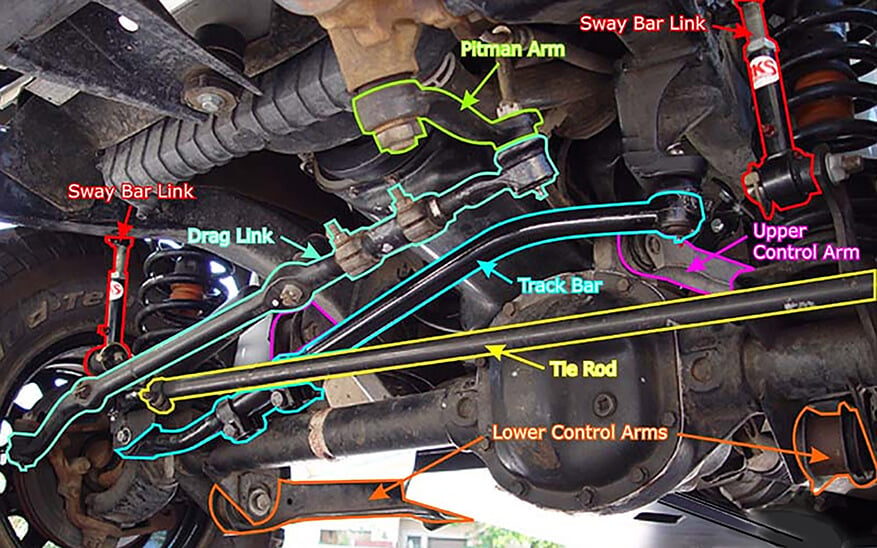
Steering parts like tie rods, drag link, and track bar connect your wheels and steering. If any of these are loose, bent, or worn out, your Jeep can start to shake.
- Check for worn bushings, ball joints, and end links
- Look for play in the steering wheel (more than 1 inch is a warning sign)
- Regularly inspect these parts, especially after off-roading
2. Loose Track Bar
The track bar (also called panhard rod) keeps your axle centered under the Jeep. If it’s loose or the bolts are not tight, the axle moves side-to-side, causing death wobble.
- Track bar bushings and mounts should be tight and undamaged
- Even a small movement can trigger wobble at high speeds
3. Bad Wheel Alignment
Wheel alignment is how your tires point and sit on the road. Poor alignment makes your Jeep unstable.
- Toe, camber, and caster angles must be correct
- After lifting your Jeep, alignment often changes and needs adjustment
4. Damaged Suspension Parts
Suspension parts like control arms, bushings, and shocks absorb bumps and keep your Jeep stable. Damaged or old suspension makes death wobble more likely.
- Look for cracked bushings, bent control arms, leaking shocks
- Upgrading to stronger suspension can help prevent wobble
5. Unbalanced Tires Or Wheels
If your tires or wheels are not balanced, they shake when spinning fast. This shaking can trigger death wobble, especially if other parts are weak.
- Make sure tires are properly balanced and inflated
- Large off-road tires are more likely to go out of balance
6. Bent Or Damaged Axle
A bent axle or worn axle bearings can cause uneven movement. This makes your Jeep shake and can start a death wobble.
- Off-road impacts can bend axles
- Check for leaks and strange noises from the axle
7. Weak Or Old Steering Damper
A steering damper is like a shock absorber for your steering. It helps reduce vibrations. If it’s weak or leaking, death wobble can happen more easily.
- The damper should be strong and not leaking fluid
- Replacing it can help, but won’t fix death wobble alone
8. Improper Lift Kits
Many Jeep owners install lift kits to make their vehicle higher. But if not installed correctly, lifts can change the suspension geometry and cause death wobble.
- Make sure all parts are compatible and installed correctly
- Professional alignment is needed after any lift
How Death Wobble Starts: Real Example
Let’s look at a real-world scenario to understand how death wobble begins:
- You drive your Jeep at 50 mph on the highway.
- You hit a small pothole.
- If your track bar bolts are slightly loose and your tires are out of balance, the front wheels shake side-to-side.
- The steering wheel starts to vibrate violently.
- The wobble continues until you slow down below 40 mph.
Many beginners miss the point that death wobble is often caused by more than one issue. For example, loose track bar plus bad tires equals wobble risk. Fixing only one part may not solve the problem.
Key Data: How Often Does Death Wobble Happen?
Death wobble is common in Jeeps with solid front axles, especially older models. Here’s a quick look at data:
| Jeep Model | Death Wobble Reports (%) | Most Common Cause |
|---|---|---|
| Wrangler (JK) | 42% | Loose track bar |
| Wrangler (TJ) | 38% | Worn steering parts |
| Cherokee (XJ) | 25% | Bad alignment |
This data shows that track bar and steering parts are main triggers. If you own a Jeep, check these first.
How To Diagnose Death Wobble
Diagnosing death wobble means checking each possible cause. Here are simple steps:
- Inspect the Track Bar: Wiggle it by hand. If it moves, tighten bolts or replace bushings.
- Check Steering Components: Look for play in tie rods, drag link, and ball joints.
- Inspect Suspension: Check for cracks, wear, or leaks in shocks and control arms.
- Balance Tires: Rotate and balance all wheels. Look for uneven wear.
- Check Wheel Alignment: Get a professional alignment check.
- Test Steering Damper: Push on the damper. If it moves too easily or leaks, replace it.
Many beginners forget to check multiple parts. Don’t stop after finding one problem—death wobble usually involves more than one.
Jeep Death Wobble Vs. Normal Vibration
It’s easy to mistake death wobble for regular vibration. Here’s how they differ:
| Feature | Death Wobble | Normal Vibration |
|---|---|---|
| Strength | Violent shaking | Mild shaking |
| Speed | Above 40 mph | Any speed |
| Trigger | Bumps or potholes | Constant |
| Stop Method | Slowing down | Does not stop |
This comparison helps beginners spot death wobble quickly.

Credit: www.cjponyparts.com
Practical Tips To Prevent Death Wobble
Preventing death wobble is easier than fixing it once it starts. Here are practical steps:
- Regularly inspect track bar and steering parts
- Balance and rotate tires every 5,000 miles
- Get wheel alignment after off-roading or lifting your Jeep
- Replace worn bushings and shocks
- Use quality parts for repairs
- Avoid cheap lift kits
Many Jeep owners skip inspections after off-roading, but rough terrain can loosen bolts and damage parts. Make it a habit to check your Jeep after every trip.
Common Mistakes Beginners Make
Knowing what not to do is just as important. Beginners often:
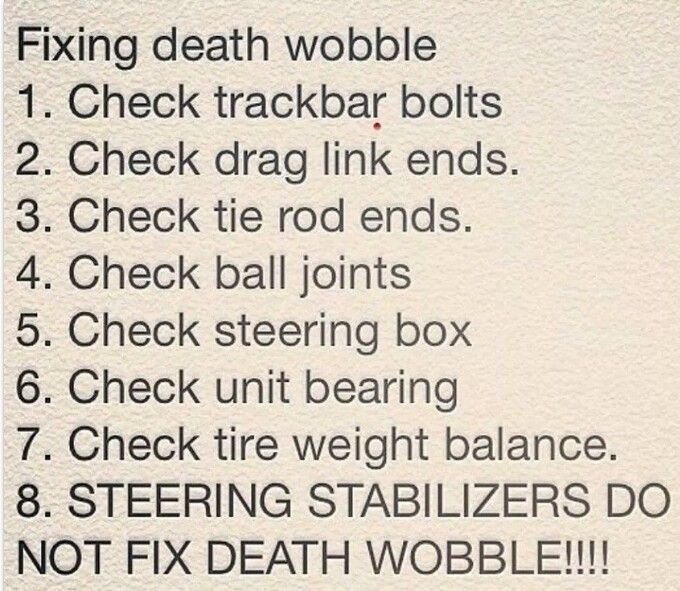
- Only replace the steering damper (won’t solve the problem by itself)
- Ignore tire balance and alignment
- Forget to check track bar mounts and bushings
- Use cheap replacement parts
- Delay repairs, making the wobble worse
Always fix death wobble quickly. Delays can lead to more damage and higher repair costs.
Credit: www.offroadelements.com
Repair Costs And Options
Fixing death wobble can be cheap or expensive, depending on the cause. Here’s a look at average costs:
| Repair | Cost Range (USD) | Time Needed |
|---|---|---|
| Track Bar Replacement | $150 – $400 | 1-2 hours |
| Steering Damper | $50 – $150 | 30-60 minutes |
| Wheel Alignment | $80 – $150 | 1 hour |
| Tire Balancing | $40 – $80 | 30 minutes |
| Control Arm Replacement | $200 – $600 | 2-3 hours |
If you’re unsure, get help from a trusted mechanic. Always ask for a full inspection, not just a single part replacement.
Jeep Death Wobble: Myths And Facts
Many myths confuse beginners. Let’s clear up a few:
- Myth: Death wobble happens only in old Jeeps.
Fact: It can happen in new Jeeps if parts are loose or damaged.
- Myth: Steering damper fixes death wobble.
Fact: It only masks symptoms, not the root cause.
- Myth: Only lifted Jeeps get death wobble.
Fact: Stock Jeeps can also suffer, especially after rough driving.
Always focus on the real cause, not quick fixes.
Credit: doubleblackoffroad.com
Expert Advice For Beginners
If you’re new to Jeeps:
- Inspect your Jeep every 3 months (not just once a year)
- Learn to check track bar, steering parts, and tire balance
- Keep records of repairs and inspections
- Ask local Jeep clubs for advice; many offer free inspections
- Use online forums or guides from trusted sources, like ExtremeTerrain
You’ll be safer and more confident with regular checks.
Frequently Asked Questions
What Is The First Thing I Should Check If My Jeep Has Death Wobble?
Check the track bar and its mounts. This is the most common cause. Make sure bolts are tight and bushings are not worn.
Can I Drive My Jeep If It Has Death Wobble?
It’s unsafe to drive with death wobble. Slow down and stop as soon as possible. Get it fixed before driving again.
Does Lifting My Jeep Increase Risk Of Death Wobble?
Yes, lifts change suspension geometry. Always get professional alignment and check all parts after lifting.
Can Worn Tires Alone Cause Death Wobble?
Worn or unbalanced tires can trigger death wobble, but usually there’s also a loose or worn steering or suspension part.
How Much Does It Cost To Fix Death Wobble?
Costs range from $50 to $600, depending on the cause. Simple fixes like tire balance are cheap, but replacing control arms or track bar is more expensive.
Jeep death wobble is scary, but you don’t have to live with it. With regular checks, quality repairs, and careful driving, you can prevent or fix death wobble. Remember, it’s usually a mix of parts, not just one. Take action early, and your Jeep will stay safe on any road.